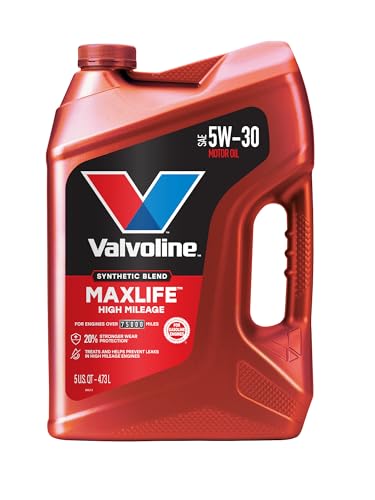
You are standing in the auto parts store holding two bottles of engine oil. One says 5W-30 and the other says 10W-40. Both claim to be full synthetic, both cost about the same, and neither bottle tells you in plain English which one belongs in your car. That alphanumeric code stamped on the front is actually a precise technical specification governed by two separate industry bodies, and once you understand it, choosing the right oil becomes straightforward.
This guide breaks down every number and letter on a typical engine oil bottle, explains what the SAE viscosity grade means in real-world terms, and covers the API service rating that tells you whether the oil meets current engine standards. By the end, you will know exactly what to look for and why your owner’s manual recommendation is the only number that truly matters.
The SAE Viscosity Grade: What Those Numbers Actually Measure
The Society of Automotive Engineers, known as the SAE, developed a standardized grading system for engine oil viscosity. Viscosity is simply a fluid’s resistance to flow. Thick honey has high viscosity. Water has low viscosity. Engine oil must flow quickly enough to protect cold metal at startup but remain thick enough to cushion bearings at full operating temperature.
When you see a grade like 5W-30, you are looking at two separate viscosity measurements combined into one rating. The SAE publishes these specifications in its J300 standard, which engine oil manufacturers must meet to use a particular grade on their label.
- The W number (cold rating): The W stands for Winter, not weight. The number before the W tells you how the oil flows at low temperatures. A lower W number means the oil stays thinner and flows more freely in the cold, reaching critical engine parts faster during a cold start. Common W ratings in the US are 0W, 5W, 10W, and 15W.
- The second number (hot rating): The number after the W describes the oil’s viscosity at 212 degrees Fahrenheit (100 degrees Celsius), roughly your engine’s normal operating temperature. A higher number means the oil maintains more thickness under heat. Common hot ratings are 20, 30, 40, 50, and 60.
So a 5W-30 oil flows like a thin, cold-weather grade at startup and maintains a 30-grade thickness once the engine warms up. A 10W-40 flows slightly less freely when cold but holds a thicker film at operating temperature. Neither is universally better. The correct choice depends entirely on your engine’s design and the climate you drive in.
Single-Grade Versus Multi-Grade Oil
Older engines, particularly those built before the 1980s, sometimes specify single-grade oils like SAE 30 or SAE 40. These have no W rating because they were not formulated to cover a wide temperature range. Single-grade oil was the standard before modern additive chemistry allowed one oil to perform across a broad thermal spectrum.
Multi-grade oils, which carry the W designation, were developed to solve a real problem: an oil thick enough to protect at high temperatures was often too thick to flow properly when the engine was cold, causing measurable wear during the first few seconds after startup. Polymer additives called viscosity index improvers allow multi-grade oils to behave like a thin oil when cold and a thicker oil when hot.
Nearly every passenger vehicle built in the last 30 years requires a multi-grade oil. If your vehicle’s manual calls for SAE 30, do not substitute 5W-30 without confirming compatibility with your manufacturer. For most modern cars, though, a multi-grade is the only appropriate choice.
The API Donut: Quality Rating and Engine Type
The American Petroleum Institute, or API, certifies engine oils through a rating system displayed as a circular symbol called the API Service Symbol, commonly known as the donut. This rating tells you two things: whether the oil meets minimum performance standards and whether it is formulated for gasoline or diesel engines.
- Gasoline engines (S prefix): Ratings beginning with S, such as SP, SN, SM, or SL, are for spark-ignition (gasoline) engines. SP is the current top-tier rating as of 2020 and supersedes all previous S grades. An oil rated SP also meets all requirements of older SN, SM, and SL ratings, so it is backward compatible.
- Diesel engines (C prefix): Ratings beginning with C, such as CK-4 or CJ-4, are for compression-ignition (diesel) engines. Some heavy-duty diesel oils carry both an S and a C rating, meaning they are formulated for both engine types.
- The energy conserving designation: At the bottom of the API donut, some oils display the words Energy Conserving. This indicates the oil has been tested to reduce friction and improve fuel economy under standardized SAE test conditions. This is not a performance claim but a tested and verified result.
API ratings matter because engine designs, emission standards, and piston materials have changed significantly over the decades. Oils rated SN and older do not contain the additive chemistry needed to protect direct-injection engines or turbocharged systems common in vehicles built after 2012. Using an outdated API rating in a modern engine can lead to deposits, sludge, and accelerated wear.
ILSAC Ratings and GF-6: The Other Quality Stamp
The International Lubricant Standardization and Approval Committee, or ILSAC, is a joint effort between US and Japanese automakers including GM, Ford, Stellantis, Toyota, and Honda. ILSAC ratings run alongside API ratings and appear on the same bottle as the starburst symbol, which indicates the oil meets both sets of requirements.
The current ILSAC grade is GF-6, which splits into two sub-categories introduced in 2020.
- GF-6A: Covers traditional multi-grade viscosities of 0W-20, 5W-20, 0W-30, 5W-30, and 10W-30. This grade emphasizes improved fuel economy, better low-speed pre-ignition protection (LSPI), and enhanced timing chain wear protection, all critical for modern turbocharged direct-injection engines.
- GF-6B: Covers ultra-low viscosity grades, specifically 0W-16. These very thin oils are designed for high-efficiency engines where the manufacturer has engineered internal tolerances specifically around this lower viscosity. GF-6B oils carry a distinct shield symbol rather than the traditional starburst, signaling that they should only be used when specifically called for.
If your owner’s manual recommends an ILSAC GF-6 oil, look for the starburst or shield symbol on the bottle. The API SP rating and ILSAC GF-6A are co-licensed, meaning an oil certified SP that carries the starburst meets both standards simultaneously.
Conventional, Synthetic Blend, and Full Synthetic: What the Labels Mean
In addition to viscosity grade and API rating, most oil bottles prominently display one of three base oil designations. These are not interchangeable, and the difference goes beyond marketing.
- Conventional (mineral) oil: Refined directly from crude petroleum. It contains natural wax and molecular inconsistencies that limit its performance at temperature extremes. Conventional oil typically requires more frequent changes and is suitable for older, simpler engines that specify it.
- Synthetic blend: A mixture of conventional base oil and synthetic base stocks. Blends offer better cold-weather performance and some oxidation resistance compared to straight conventional oil, at a lower cost than full synthetic. They are a reasonable middle ground for high-mileage vehicles or moderate-duty use.
- Full synthetic: Made from chemically engineered base stocks, either from Group III highly refined petroleum or Group IV polyalphaolefin (PAO) molecules. Full synthetic oils have uniform molecular structures that resist breakdown at high temperatures, flow readily in extreme cold, and provide better protection during startup. Most turbocharged engines and modern high-performance vehicles require or strongly recommend full synthetic.
It is important to note that the API and SAE do not regulate the terms conventional, synthetic blend, or full synthetic on labels. These are manufacturer designations. However, a legitimate full synthetic must use base stocks that meet certain performance thresholds to justify the viscosity grade and API rating on the bottle.
You can switch from conventional to synthetic in most engines without issue. The old myth that synthetic oil causes seals to leak in older engines has been disproven; modern synthetic oils do not dissolve or shrink gaskets. However, always consult your owner’s manual or a qualified mechanic before switching formulation types in a high-mileage engine with unknown seal history.
How to Read the Owner's Manual Recommendation
Every owner’s manual includes a lubrication section that specifies exactly which oil the manufacturer requires. This specification typically includes the SAE viscosity grade, the API minimum rating, and sometimes a specific OEM standard that goes beyond the API baseline.
Common OEM-specific standards you may see referenced include GM dexos1 Gen 3, Ford WSS-M2C961-A1, BMW Longlife-04, Mercedes-Benz 229.5, and Volkswagen 502.00 or 504.00. These standards impose additional testing requirements that the API and ILSAC ratings alone do not cover. If your manual specifies one of these OEM standards, you need an oil that explicitly carries that approval, not just the equivalent API grade.
Climate also plays a role in viscosity selection. Many owner’s manuals include a viscosity selection chart with temperature ranges. In consistently cold climates, a 0W or 5W cold rating provides faster oil delivery at startup. In hot climates or for vehicles that tow heavy loads, a thicker hot-side rating may be appropriate. When in doubt, use the viscosity the manual lists as its primary recommendation, as this is what the engine was designed and tested around.
- Never use a thinner viscosity than recommended, as this reduces the oil film thickness protecting bearings and cylinder walls.
- Never use a thicker viscosity than recommended in a modern engine, as this increases drag, reduces fuel economy, and can slow oil delivery to the valvetrain.
- If the manual gives a range, such as 0W-20 preferred or 5W-20 acceptable, the preferred grade is always the better choice when available.
High-Mileage Oils and Specialty Formulations
Beyond the standard viscosity and API designations, you will encounter several specialty formulations on store shelves. Understanding what these actually contain helps you decide whether they address a real need or are simply marketing differentiation.
- High-mileage oil: Typically defined as formulated for engines with more than 75,000 miles. These oils add seal conditioners, usually esters or other polar molecules, that cause rubber gaskets and seals to swell slightly, reducing minor seepage. They also often carry higher concentrations of detergents and antioxidants to address accumulated deposits. If your engine has minor leaks or uses a small amount of oil between changes, a high-mileage formulation is a reasonable choice.
- Racing or track oil: These often sacrifice the additive chemistry needed for emission system compatibility in exchange for higher zinc (ZDDP) levels that protect flat-tappet camshafts. Unless your vehicle is used exclusively on a track, these oils are not appropriate for street use and can damage catalytic converters over time.
- Diesel-specific oil: If you drive a diesel pickup truck, do not use a gasoline-rated oil. Diesel engines produce more soot, operate at higher combustion pressures, and require different additive packages, including higher levels of detergency. Current diesel ratings such as API CK-4 are designed around these demands.
For the vast majority of drivers with standard gasoline-powered vehicles, a full synthetic oil carrying the correct SAE viscosity grade, API SP rating, and any required OEM approval is all that is needed. Specialty formulations only add value when they address a specific, confirmed condition in your engine.
Frequently Asked Questions
Can I use 5W-30 instead of 5W-20 if that is what I have on hand?
In a true emergency, using 5W-30 in an engine that calls for 5W-20 for a short time will not cause immediate catastrophic damage. However, you should not make this a regular practice. Modern engines built for 5W-20, particularly naturally aspirated four-cylinder engines from Honda, Ford, and Toyota, are calibrated around that thinner viscosity for both protection and fuel economy. Running 5W-30 long-term can slightly reduce fuel economy and may not meet the oil pressure specifications the engine was designed around. Change to the correct grade at your next oil change opportunity.
Does a higher API rating mean better oil for my older car?
Generally yes, but with one important caveat. The current API SP rating is backward compatible, meaning it meets all the requirements of older SN, SM, and SL ratings. Using SP oil in a vehicle that originally called for SL is perfectly safe. The caveat is for pre-1988 flat-tappet engines with older camshaft designs. These engines benefit from higher levels of zinc dialkyldithiophosphate (ZDDP), an anti-wear additive that has been progressively reduced in modern API-rated oils to protect catalytic converters. If you own a classic car with a flat-tappet cam, consult a specialist about supplemental ZDDP additives or purpose-built classic car oils.
What does it mean when oil says it meets but does not exceed a certain API rating?
This language means the oil was formulated and tested to meet the minimum performance requirements of that API rating but was not submitted for the full certification process, or the manufacturer chose not to license the API mark. Some quality oils, particularly European-specification oils meeting OEM approvals like BMW Longlife or Mercedes-Benz standards, may not carry the API starburst or donut because those OEM approvals are more stringent in certain areas. In these cases, look for the OEM approval your manual specifies rather than relying solely on the API mark.
Is it safe to mix synthetic and conventional oil?
Yes. Modern synthetic and conventional motor oils are compatible and will not chemically react with each other in a harmful way. Topping off a conventional oil engine with synthetic, or vice versa, is acceptable in an emergency. That said, mixing dilutes the performance advantage of whichever product was superior. If you topped off with conventional oil in a vehicle that normally runs full synthetic, simply note it and change the oil at the appropriate interval. Do not extend the oil change interval when the blend composition is uncertain.
How do I know if my oil change interval should be 3,000 miles, 5,000 miles, or longer?
The 3,000-mile interval is outdated for virtually all vehicles built after 2000. This recommendation originated with conventional motor oils and older engine tolerances. Today, most manufacturers specify oil change intervals between 5,000 and 10,000 miles for vehicles using conventional oil, and between 7,500 and 15,000 miles for vehicles using full synthetic oil with a modern filtration system. Some BMW, Porsche, and Mercedes-Benz models specify up to 15,000-mile intervals under normal driving conditions. The only authoritative source for your interval is your owner’s manual. Vehicles with an oil life monitoring system, such as GM Oil Life System or Honda Maintenance Minder, use driving condition data to calculate the interval rather than relying on fixed mileage, and these systems are validated by the manufacturer for use with the recommended oil type.
The Bottom Line
The numbers and letters on an engine oil bottle represent a precise engineering specification, not a marketing claim. The SAE viscosity grade tells you how the oil behaves across temperature extremes, the API service rating confirms it meets current engine protection standards, and any OEM approval stamp tells you it has passed the manufacturer’s own validation tests. Match all three to your owner’s manual recommendation and you have chosen the right oil, regardless of which brand or bottle design it comes in.
Related Guides
- 7 Best Oil for Honda Engines (Researched and Compared)
- 7 Best 75W-140 Synthetic Gear Oil (Researched and Compared)
- 7 Best 10W40 Fully Synthetic Motorcycle Oils (Researched and Compared)
- 7 Best 0W-20 Synthetic Oil for Chevy Silverado in 2026 (Researched and Compared)
- 7 Best Synthetic Oil for Turbocharged Engines (Researched and Compared)
- 7 Best 5W-40 Synthetic Engine Oils (Researched and Compared)
