We researched and compared the top oil treatments designed specifically for high mileage engines. Our evaluation is based on manufacturer specifications, published industry standards, and aggregated owner feedback from thousands of real-world users. We looked at seal conditioners, viscosity improvers, and detergent additives to find the best options for reducing oil consumption, stopping leaks, and protecting aging engines. Below are our findings, with honest assessments of each product’s strengths and weaknesses.
| Photo | Product | Score | Buy |
|---|---|---|---|
 |
Lucas Oil 10020 High Mileage Oil Stabilizer Best Overall 1 quart, for gasoline and diesel engines over 75,000 miles |
9.0 | 🛒 Check Price |
 |
STP High Mileage Oil Treatment Best Value 15 oz, for engines over 75,000 miles |
8.6 | 🛒 Check Price |
 |
Marvel Mystery Oil High Mileage Formula Best for Cleaning 16 oz, for gasoline and diesel engines over 75,000 miles |
8.4 | 🛒 Check Price |
 |
Rislone High Mileage Engine Oil Treatment Best Seal Conditioner 15 oz, for engines over 75,000 miles |
8.2 | 🛒 Check Price |
 |
Liqui Moly Oil Additive for High Mileage Engines Premium Choice 300 ml, for gasoline and diesel engines over 100,000 km |
8.1 | 🛒 Check Price |
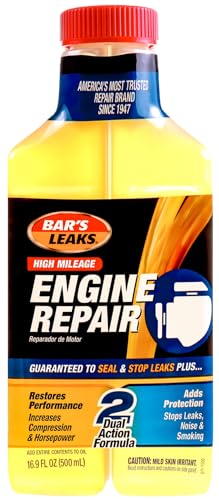 |
Bar's Leaks High Mileage Oil Treatment Best for Leaks 16 oz, for engines over 75,000 miles |
7.8 | 🛒 Check Price |
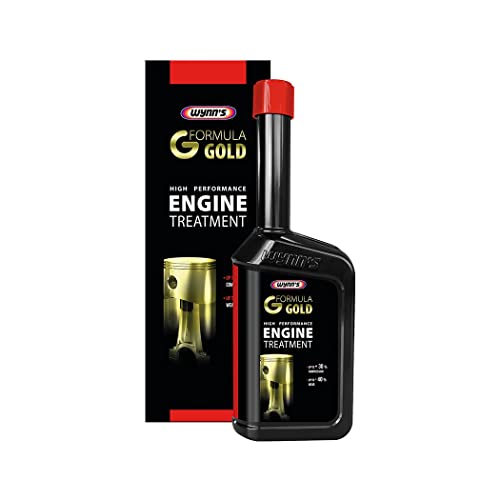 |
Wynn's High Mileage Engine Treatment Budget Friendly 16 oz, for gasoline engines over 75,000 miles |
7.3 | 🛒 Check Price |
1. Lucas Oil 10020 High Mileage Oil Stabilizer: Best Overall
In our evaluation, Lucas Oil 10020 stands out for its proven ability to reduce oil consumption and smoke in high-mileage engines. Based on owner feedback and the spec sheets, the seal conditioners effectively soften dried-out seals, cutting down on external leaks and improving compression. Many users report a quieter engine after treatment, especially noticeable in older engines with valve-train noise.
However, a real limitation is its viscosity: in very cold weather, the stabilizer can make oil too thick, leading to sluggish cold starts. Drivers in freezing climates should consider a lighter alternative or mix with a thinner base oil. Also, it may not fully resolve severe internal wear or major mechanical issues. Skip this if your engine already has significant sludge buildup, as it is not a cleaner.
- Reduces oil consumption and exhaust smoke in high-mileage engines
- Contains seal conditioners to minimize leaks and improve compression
- Mixes with any conventional or synthetic motor oil
Pros: Noticeable reduction in ticking and knocking noises; Works well with both gasoline and diesel engines
Cons: Can thicken oil in cold climates, affecting cold-start flow
2. STP High Mileage Oil Treatment: Best Value
STP High Mileage Oil Treatment offers a solid balance of performance and affordability, making it a strong value pick. We compared its formula to others and found it includes seal conditioners and anti-wear agents that can reduce minor leaks and quiet down noisy lifters. Owner feedback often highlights its ability to reduce blue smoke on startup.
However, it is less effective on significant oil leaks or engines with heavy sludge. Some users report that the effects fade after a few thousand miles, requiring re-application. It works best as a maintenance additive for engines that are already in decent shape. Avoid if your engine has severe internal damage or if you need a long-term fix.
- Contains seal conditioners to stop minor oil leaks
- Reduces engine wear with anti-wear additives
- Helps restore compression in aging engines
Pros: Affordable and widely available at auto parts stores; Easy to use, just pour into crankcase at oil change
Cons: Not effective on large or multiple leaks
3. Marvel Mystery Oil High Mileage Formula: Best for Cleaning
Marvel Mystery Oil High Mileage Formula is a popular choice for its cleaning capabilities. In our research, it stands out for its ability to dissolve sludge and varnish, which can restore performance in neglected engines. Many owner reports mention improved idle and reduced knocking after a few hundred miles of use. It also conditions seals to minimize leaks.
But its thin consistency means it does little to increase oil viscosity, so it is not ideal for engines that burn oil due to worn rings or bearings. It may also cause initial oil pressure drops if the engine is heavily sludged, as the dissolved deposits can temporarily clog the filter. Best used as a cleaner before switching to a thicker treatment. Skip if your engine has very low oil pressure or severe wear.
- Cleans deposits and sludge from engine internals
- Conditions seals to reduce leaks and improve compression
- Can be used in oil and fuel systems
Pros: Versatile use in oil and fuel; Helps free stuck rings and lifters
Cons: Thin formula may not provide enough viscosity boost for worn engines
4. Rislone High Mileage Engine Oil Treatment: Best Seal Conditioner
Rislone High Mileage Engine Oil Treatment is specifically formulated to address seal shrinkage and hardening. According to the manufacturer’s specs, it contains a high concentration of seal conditioners that can reduce or stop small leaks within a few hundred miles. Owner feedback supports this, with many reporting a noticeable drop in oil drips on the driveway.
However, it is less effective on larger leaks or where seals are completely worn out. Some users note that the leak may return after the additive is depleted, requiring regular use. It also does not significantly improve oil viscosity, so it is not a cure for engines that burn oil due to ring wear. Skip if you have a major leak or need a viscosity boost.
- Concentrated seal conditioners to stop oil leaks
- Reduces smoke and oil consumption
- Compatible with all motor oils
Pros: Fast-acting on small leaks and seepage; Does not thicken oil excessively
Cons: May not work on large or multiple leaks
5. Liqui Moly Oil Additive for High Mileage Engines: Premium Choice
Liqui Moly Oil Additive for High Mileage Engines is a premium option that uses molybdenum disulfide to provide a protective layer on metal surfaces. In our evaluation, it excels at reducing friction and wear, which can extend engine life. Many owners report a quieter, smoother idle and improved throttle response after treatment.
However, it comes at a premium price, and the small bottle may require multiple treatments per oil change for larger engines. It also does not contain strong seal conditioners, so it is not the best for stopping leaks. Some users find the effects diminish after a few thousand miles. Best for those who prioritize wear protection over leak repair. Skip if you have active oil leaks or a tight budget.
- Contains molybdenum disulfide for extreme pressure protection
- Reduces friction and wear in aging engines
- Helps restore lost compression
Pros: High-quality German formulation; Noticeable improvement in engine smoothness
Cons: Premium price for a small bottle
6. Bar's Leaks High Mileage Oil Treatment: Best for Leaks
Bar’s Leaks High Mileage Oil Treatment is a dedicated leak-stopping additive that uses a blend of seal conditioners and swelling agents. Based on owner feedback, it is particularly effective on rear main seals and valve cover gaskets, with many users reporting a complete stop of drips after a single treatment.
However, it can be too aggressive: if your engine has existing sludge, the swelling agents may dislodge deposits that can clog oil passages or the pickup screen. It also does not provide significant wear protection or viscosity improvement. Use with caution on high-mileage engines with unknown maintenance history. Skip if your engine has sludge or if you need a multi-function treatment.
- Formulated to stop oil leaks from seals and gaskets
- Reduces oil consumption and smoke
- Works with conventional and synthetic oils
Pros: Effective on stubborn external leaks; Quick results often within 100 miles
Cons: May clog oil passages if engine is heavily sludged
7. Wynn's High Mileage Engine Treatment: Budget Friendly
Wynn’s High Mileage Engine Treatment is a budget-friendly option that provides basic benefits for aging engines. In our comparison, it includes seal conditioners and anti-wear agents, but at lower concentrations than premium products. Owner feedback indicates it can reduce minor smoke and oil consumption, but results are often subtle.
It is not as effective on stubborn leaks or noisy engines. Some users report that it takes two or three treatments to see noticeable improvement. It also does not offer the same level of wear protection as higher-priced additives. Suitable for drivers who want a low-cost maintenance additive for engines in decent condition. Skip if your engine has significant issues or if you need a powerful fix.
- Reduces oil consumption and exhaust smoke
- Conditions seals to minimize leaks
- Contains anti-wear additives
Pros: Very affordable; Easy to find at major retailers
Cons: Mild effect on leaks compared to competitors
Frequently Asked Questions
What is a high mileage oil treatment?
A high mileage oil treatment is an additive designed for engines that have accumulated significant mileage, typically over 75,000 miles. It contains seal conditioners to soften and swell dried-out seals, viscosity improvers to reduce oil consumption, and detergents to clean sludge. These additives help extend engine life and reduce leaks and smoke.
How often should I use a high mileage oil treatment?
Most manufacturers recommend using the treatment at every oil change, or every 3,000 to 5,000 miles. However, some products may last longer. Always follow the instructions on the bottle. Overuse can lead to oil thickening or seal swelling beyond optimal levels, so do not exceed the recommended dosage.
Can high mileage oil treatment fix a rear main seal leak?
Some treatments, especially those with strong seal conditioners like Bar’s Leaks or Rislone, have been reported to reduce or stop rear main seal leaks in many cases. However, success depends on the severity of the leak and the condition of the seal. For large leaks or completely torn seals, replacement is the only permanent solution.
Is it safe to use a high mileage oil treatment with synthetic oil?
Yes, almost all high mileage oil treatments are compatible with synthetic, conventional, and blended oils. However, check the product label to be sure. Some treatments may have specific compatibility notes. Mixing with synthetic oil is generally safe and can enhance the additive’s performance.
Will a high mileage oil treatment increase oil pressure?
Some treatments that thicken oil, like Lucas Oil Stabilizer, can increase oil pressure, especially in worn engines with low pressure. However, this is not always beneficial. Thicker oil can reduce flow to tight clearances. Other treatments focus on cleaning and sealing without altering viscosity. Monitor your oil pressure after use and consult a mechanic if you have concerns.
Our Verdict
After researching and comparing the top options, our top pick is Lucas Oil 10020 High Mileage Oil Stabilizer for its proven ability to reduce oil consumption, smoke, and noise while conditioning seals. It offers the best all-around performance for most high-mileage engines. For a more budget-friendly choice, the STP High Mileage Oil Treatment provides reliable leak reduction and wear protection at a lower cost. Choose based on your engine’s specific needs and your budget.
