When your check engine light comes on, your first instinct might be to head straight to a repair shop. But every car sold in the US since January 1, 1996 is required by federal law to support the OBD2 (On-Board Diagnostics, second generation) standard, which means you can read the exact fault code yourself with an inexpensive scanner. Understanding what those codes mean can save you hundreds of dollars in diagnostic fees and help you have a more informed conversation with any mechanic you do choose to visit.
This guide explains how the OBD2 system works, how to retrieve and interpret trouble codes at home, and how to tell the difference between codes you can address yourself and those that need professional attention. No mechanical background is required.
What Is OBD2 and Why Every US Car Has It
OBD2 is a standardized self-diagnostic system mandated by the US Environmental Protection Agency (EPA) and California Air Resources Board (CARB). Starting with model year 1996, all passenger cars and light trucks sold in the United States must expose a standardized 16-pin data port, use a common set of diagnostic trouble code (DTC) formats, and report emissions-related faults through a malfunction indicator lamp, commonly called the check engine light.
The Society of Automotive Engineers (SAE) defines the code structure through standard J1979, while the protocol layers are defined across SAE J1850, ISO 9141-2, ISO 14230 (KWP2000), and ISO 15765-4 (CAN bus, used on virtually all vehicles since 2008). Because the standard is universal, one scanner works across makes and models, whether you drive a Ford F-150, a Honda Civic, or a Chevrolet Silverado.
The system monitors dozens of sensors continuously. When a sensor reading falls outside an acceptable range on two consecutive drive cycles, the ECU (engine control unit) logs a fault code and, in most cases, illuminates the check engine light. Some faults light the lamp on the first occurrence if they are severe enough to affect emissions significantly.
Understanding the DTC Code Format
Every OBD2 diagnostic trouble code follows the same five-character format defined by SAE J2012. Once you know how to decode the structure, you can get a rough idea of what a code means before you even look it up.
- First character (letter): Identifies the system. P = Powertrain (engine, transmission), B = Body (airbags, climate), C = Chassis (ABS, traction control), U = Network/communication bus.
- Second character (digit): 0 = standardized SAE code shared across all manufacturers. 1, 2, or 3 = manufacturer-specific code unique to that brand.
- Third character (digit): Sub-system. 1 = fuel and air metering, 2 = fuel injector circuit, 3 = ignition/misfire, 4 = auxiliary emissions, 5 = vehicle speed and idle control, 6 = computer and output circuits, 7 or 8 = transmission.
- Fourth and fifth characters (two digits): Specific fault number within that sub-system. These identify exactly which sensor or circuit triggered the fault.
Example: P0301 breaks down as Powertrain (P), SAE standard (0), ignition/misfire sub-system (3), cylinder 1 misfire detected (01). Even without a lookup table, you know immediately this is an engine misfire on cylinder 1, not a transmission or emissions-only issue.
How to Connect a Scanner and Pull Codes
The OBD2 port is almost always located under the dashboard on the driver side, within 24 inches of the steering column, as required by SAE J1962. It is a trapezoid-shaped 16-pin female connector. You do not need to lift the hood.
Follow these steps to retrieve codes:
- Step 1 – Turn the ignition to the ON position. You want the dashboard lights to illuminate but you do not need to start the engine. On push-button start vehicles, press the start button once without pressing the brake pedal.
- Step 2 – Plug the scanner into the OBD2 port. It only fits one way. The scanner should power on immediately from the port’s constant 12V supply (pin 16).
- Step 3 – Select your vehicle if prompted. Many scanners auto-detect the protocol. Some entry-level units ask for make, model, and year to load manufacturer-specific code definitions.
- Step 4 – Choose Read Codes or Scan. The scanner will query the ECU and display any stored DTCs. Most scanners distinguish between stored (confirmed) faults and pending faults (detected once, not yet confirmed).
- Step 5 – Write down every code shown. Do not clear codes immediately. The freeze-frame data stored alongside each code (engine RPM, coolant temp, vehicle speed at the moment of fault) is valuable diagnostic information you will lose if you erase too soon.
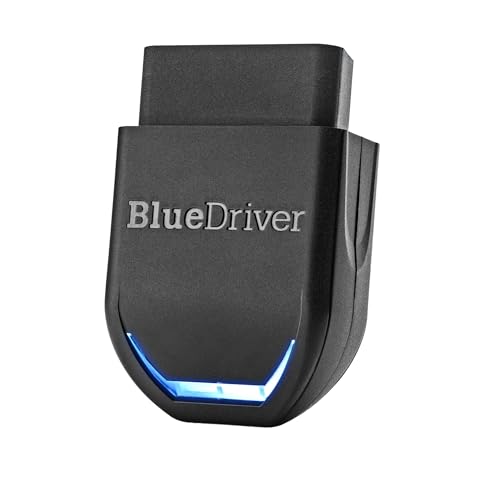
Bluetooth OBD2 adapters pair with smartphone apps and display the same information on your phone screen. The underlying data is identical to dedicated handheld scanners. Paid apps often include richer code libraries and live data graphing, but free apps are sufficient for reading and clearing basic codes.
Most Common OBD2 Codes and What They Actually Mean
The following codes account for the large majority of check engine lights seen on US roads. Knowing what they indicate helps you assess urgency before deciding on next steps.
- P0171 / P0174 (System Too Lean, Bank 1 / Bank 2): The engine is getting too much air or too little fuel. Common causes include a dirty mass airflow sensor, a vacuum leak, a clogged fuel injector, or a weak fuel pump. Not an emergency, but should be addressed within a few weeks to avoid catalyst damage.
- P0300 through P0312 (Random or Cylinder-Specific Misfire): The engine is misfiring. If the check engine light is flashing rather than steady, a misfire is currently active and severe enough to damage the catalytic converter. A flashing light means reduce speed and load immediately, do not ignore it. A steady light means the misfire was detected but is not currently catastrophic.
- P0420 / P0430 (Catalyst System Efficiency Below Threshold): The downstream oxygen sensor detects that the catalytic converter is not cleaning exhaust gases efficiently. This is an emissions-only fault that will not strand you, but it will cause you to fail an emissions inspection. Root cause could be the converter itself, oil burning, or an upstream oxygen sensor feeding the converter bad data.
- P0442 / P0455 / P0456 (Evaporative Emission System Leak, Small/Large/Very Small): The fuel vapor containment system has a leak. The most common cause is a loose or faulty gas cap. Re-tighten or replace the gas cap and drive two complete warm-up cycles before checking whether the code returns.
- P0128 (Coolant Temperature Below Thermostat Regulating Temperature): The engine is not reaching normal operating temperature. Almost always a thermostat stuck open. Fuel economy and cabin heat will suffer. Not dangerous short-term, but thermostat replacement is straightforward and inexpensive.
- P0700 series (Transmission Control System): Faults in this range indicate transmission issues. These warrant prompt attention, especially if accompanied by harsh shifts, slipping, or delayed engagement.
Pending Codes vs. Stored Codes vs. Permanent Codes
OBD2 scanners display three distinct categories of codes, and the difference matters when you are deciding whether a fault is active or has been cleared by someone else.
- Stored (Confirmed) Codes: The fault met the ECU’s threshold for logging (typically two consecutive drive cycles). The check engine light is on. These are the primary codes to address.
- Pending Codes: The ECU detected a problem once but has not yet confirmed it. The check engine light may not be on yet. Pending codes are early warnings. They often resolve on their own (a one-time sensor glitch) but are worth monitoring.
- Permanent Codes (also called Freeze-Frame Codes or PDTCs): Introduced by the EPA for model year 2010 vehicles onward, permanent diagnostic trouble codes cannot be erased by disconnecting the battery or using the scanner’s clear function. The only way to erase a PDTC is to actually fix the underlying fault and complete the required drive cycle. If a car has been cleared before a smog test and the light is now off but a PDTC remains, the vehicle will still fail inspection in states that check for PDTCs. This is an important protection against odometer-style code-clearing fraud on used cars.
When evaluating a used vehicle purchase, pulling OBD2 data before buying is a standard due-diligence step. A clean scanner reading with no stored or pending codes, and all readiness monitors showing ready, suggests the car has not had recent fault-clearing activity.
Readiness Monitors: What They Tell You
Beyond trouble codes, your OBD2 scanner can display the status of readiness monitors. These are self-tests the vehicle runs during normal driving to verify that each emissions-related system is functioning. There are up to eleven monitors depending on the vehicle:
- Catalyst monitor
- Heated catalyst monitor
- Evaporative system monitor
- Secondary air system monitor
- Oxygen sensor monitor
- Oxygen sensor heater monitor
- EGR (exhaust gas recirculation) monitor
- Continuous monitors: misfire, fuel system, comprehensive component
Each monitor shows either Ready/Complete or Not Ready/Incomplete. When a code is cleared or the battery is disconnected, all monitors reset to Not Ready. The vehicle must then complete specific drive cycles to re-run each test.
Most US states that conduct OBD2 emissions inspections (required under the EPA’s I/M240 or basic I/M program) will fail a vehicle if too many monitors show Not Ready, even if there are no active codes. For 1996 to 2000 model years, up to two incomplete monitors are typically allowed. For 2001 and newer, most states allow only one incomplete monitor. Check your specific state’s DMV or air quality management district rules, as they vary.
When to Fix It Yourself and When to Go to a Shop
Not every OBD2 code points to a job that requires a lift, specialty tools, or professional training. Use this framework to decide:
- Safe to address yourself (with basic tools and research): Loose gas cap (P0440, P0442, P0456), oxygen sensor replacement on accessible locations, spark plug and ignition coil replacement (P0300 series on most naturally aspirated engines), mass airflow sensor cleaning or replacement, thermostat replacement on many engines, PCV valve replacement, and vacuum line repair on visible hoses.
- Worth getting a professional diagnosis first: Transmission codes (P0700 series), airbag and SRS codes (B-codes), ABS codes (C-codes), recurring lean/rich codes after basic fixes, and any code where the freeze-frame data suggests the fault occurs under specific operating conditions that are hard to replicate.
- Go to a shop promptly: Any flashing check engine light (active misfire damaging the catalyst), codes accompanied by drivability symptoms like stalling or loss of power, and any code involving the fuel delivery system if you smell fuel or see fuel leak signs.
The OBD2 code is a starting point, not a parts-ordering list. A P0301 misfire on cylinder 1 could be a fouled spark plug, a failed coil, a stuck injector, a compression problem, or a timing chain issue. The code narrows the search area; it does not replace systematic diagnosis. Many auto parts chains in the US (AutoZone, O’Reilly, Advance Auto Parts) offer free code scanning at the counter if you do not own a scanner yet, which is a reasonable first step before investing further.
Frequently Asked Questions
Can I drive my car with the check engine light on?
It depends on whether the light is steady or flashing. A steady check engine light means a fault has been confirmed but is not causing immediate damage, and in most cases short-distance driving is acceptable while you diagnose the issue. A flashing or blinking check engine light means an active misfire is occurring that is damaging the catalytic converter in real time. With a flashing light, reduce your speed, avoid heavy acceleration, and drive directly to a shop or your driveway. Do not continue normal driving.
Will disconnecting the battery clear OBD2 codes?
Disconnecting the battery will clear stored and pending codes on most vehicles and will reset all readiness monitors to Not Ready. However, on vehicles from model year 2010 and newer, permanent diagnostic trouble codes (PDTCs) cannot be erased this way. The only method to clear a PDTC is to repair the underlying fault and complete the manufacturer-specified drive cycle so the system can verify the repair. Battery disconnection also clears radio presets, window auto-calibration, and throttle body adaptation on many modern vehicles, so it is not a free solution.
What is the difference between a generic OBD2 code and a manufacturer-specific code?
The second digit of the code identifies this. A 0 in that position (for example P0301) means it is a standardized SAE code with the same definition across all makes and models. A 1, 2, or 3 in that position (for example P1400) means it is manufacturer-specific and the definition varies by brand. An entry-level scanner will display manufacturer-specific codes but may show only the code number without a description. To get meaningful descriptions for manufacturer-specific codes, you need a scanner with the correct make-specific library loaded, or you need to look up the code in a service manual or reliable database for that specific vehicle brand.
Can an OBD2 scanner tell me if a used car I am buying has hidden problems?
An OBD2 scan is a valuable pre-purchase step. It can reveal active faults, pending faults, and whether monitors have been recently reset (suggesting codes may have been cleared shortly before the sale). On 2010 and newer vehicles, permanent codes survive clearing attempts and will still appear. However, an OBD2 scan does not replace a full pre-purchase inspection. It does not reveal mechanical wear, body damage, transmission fluid condition, or structural issues. Use it as one layer of due diligence alongside a test drive and a professional inspection, especially for higher-value purchases.
How do I know when my car is ready for an emissions test after clearing codes?
After codes are cleared, all readiness monitors reset to Not Ready. You need to complete a drive cycle that allows each monitor to run its self-test. The exact drive cycle varies by manufacturer, but a general approach is to start cold, idle for a few minutes, drive at moderate highway speeds for 10 to 15 minutes, decelerate without braking sharply, and drive at city speeds with several stop-and-go cycles. Check your scanner after each drive to see how many monitors have completed. Most states require all but one monitor (two for pre-2001 vehicles) to show Ready before the vehicle will pass an OBD2 inspection. Your state environmental or DMV agency website will list the exact monitor completion requirements for your state.
The Bottom Line
Reading your own OBD2 trouble codes is a straightforward skill that takes less than five minutes to learn and can save you a significant diagnostic fee every time the check engine light comes on. Understanding the five-character code format, the difference between stored and permanent codes, and when a steady light becomes a flashing emergency puts you in control of your vehicle’s health and your repair decisions.
Related Guides
- 7 Best OBD2 Scanners for Lexus in 2026 (Bidirectional and Full-System Tested)
- How to Clear a Check Engine Light
- What an OBD2 Freeze Frame Is and How to Read It for a Diagnosis
- 7 Best OBD2 Scanners for Subaru in 2026 (Real-World Tested)
- 7 Best OBD2 Scanners for Nissan in 2026 (Bidirectional and ABS Tested)
- 7 Best Bluetooth OBD2 Adapters for Cars in 2026 (Real-World Tested)
