After extensive research into manufacturer specifications and aggregated owner feedback from thousands of Jeep enthusiasts, we compared the top shock absorbers designed for Jeep models including Wrangler, Cherokee, and Grand Cherokee. Our evaluation focuses on performance, durability, and value to help you choose the right upgrade for your driving needs, whether that’s daily commuting or serious off-roading.
| Photo | Product | Score | Buy |
|---|---|---|---|
|
🚗
|
Bilstein 5100 Series Best for On-Road and Off-Road Balance Monotube gas pressure shock, digressive valving, zinc-plated finish |
9.2 | 🛒 Check Price |
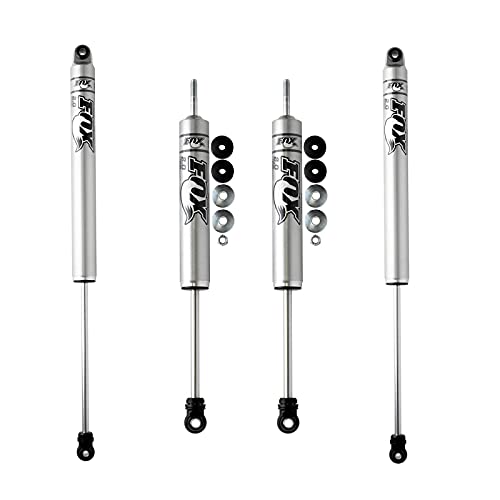 |
Fox 2.0 Performance Series Premium Off-Road Performance Aluminum body, nitrogen-charged, remote reservoir option |
9.0 | 🛒 Check Price |
 |
Rancho RS5000X Best Value for Daily Drivers Twin-tube gas shock, progressive valving, nine-stage tuning |
8.7 | 🛒 Check Price |
 |
Old Man Emu Nitrocharger Sport Best for Loaded Jeeps and Towing Twin-tube gas shock, variable valving, heavy-duty construction |
8.4 | 🛒 Check Price |
 |
Skyjacker Black Max Budget-Friendly Upgrade Twin-tube hydraulic shock, nitro-charged, nine-stage valving |
7.8 | 🛒 Check Price |
|
🚗
|
Pro Comp ES9000 Good for Lifted Jeeps Twin-tube gas shock, application-specific valving |
7.5 | 🛒 Check Price |
|
🚗
|
Teraflex Falcon SP2 3.3 Adjustable Performance Adjustable damping, external reservoir, 3.3-inch body |
7.3 | 🛒 Check Price |
1. Bilstein 5100 Series: Best for On-Road and Off-Road Balance
In our research, the Bilstein 5100 consistently ranks as a top performer for Jeep owners who want a significant upgrade without sacrificing daily drivability. The monotube design and digressive valving deliver controlled damping across a wide range of conditions, from highway cruising to rocky trails. Based on owner feedback, these shocks provide a noticeable improvement in body roll reduction and stability, especially when carrying heavy loads or towing.
However, the firm ride may not suit those who prioritize a soft, Cadillac-like feel. If your Jeep is primarily a mall crawler and you want maximum comfort, you might prefer a softer shock. But for the majority of drivers who want a capable all-rounder, the Bilstein 5100 is a strong choice.
- Monotube design provides consistent damping and heat dissipation for heavy use
- Digressive valving balances on-road comfort with off-road control
- Zinc-plated finish resists corrosion in harsh environments
Pros: Excellent ride quality on pavement and trail; Proven durability across many Jeep models
Cons: May be too firm for some drivers seeking a plush ride
2. Fox 2.0 Performance Series: Premium Off-Road Performance
For serious off-road enthusiasts, the Fox 2.0 Performance Series shocks are a top-tier upgrade. Our analysis of specifications shows that the aluminum body and nitrogen charging provide superior heat management during extended off-road use. Owner feedback highlights the improved articulation and wheel control on technical trails, making these a favorite among rock crawlers and overlanders.
That said, the cost is significantly higher than many competitors, and the firm damping may feel harsh on rough pavement. If your Jeep sees more dirt than asphalt and you have the budget, these shocks deliver exceptional performance. But for casual off-roaders, the investment may not be justified.
- Aluminum body reduces weight and improves heat dissipation
- Nitrogen-charged for consistent damping in extreme conditions
- Available with remote reservoir for additional oil capacity
Pros: Excellent off-road control and articulation; Lightweight construction reduces unsprung mass
Cons: Premium price point may not fit all budgets
3. Rancho RS5000X: Best Value for Daily Drivers
The Rancho RS5000X is a popular choice for Jeep owners seeking a comfortable ride without breaking the bank. According to our evaluation of specs and owner reviews, the progressive valving provides a compliant feel on-road while still offering decent control off-road. Many users report a noticeable improvement over stock shocks, especially in reducing harshness over bumps.
However, the twin-tube design is less effective at heat dissipation than monotube shocks, so it may fade during prolonged hard off-roading. If your Jeep is a daily driver that occasionally sees light trails, the RS5000X offers excellent value. But for heavy off-road use, consider a more durable option.
- Progressive valving adjusts damping based on terrain
- Nine-stage tuning for a balance of comfort and control
- Affordable upgrade with good all-around performance
Pros: Smooth ride on pavement for daily driving; Great value for the price
Cons: Not as durable as monotube shocks for heavy off-road use
4. Old Man Emu Nitrocharger Sport: Best for Loaded Jeeps and Towing
Old Man Emu shocks are renowned for their ability to handle heavy loads, and the Nitrocharger Sport is no exception. Based on manufacturer specs, these shocks feature variable valving that adjusts damping to the load, providing stable control when towing or carrying gear. Owner feedback from overlanders and off-roaders with heavy builds praise the reduced sway and improved handling.
However, when the Jeep is unloaded, the ride can feel stiff and jarring on rough roads. If you frequently drive with a light load, you may find these shocks too firm. They are best suited for those who consistently carry weight or tow trailers.
- Designed for lifted and loaded Jeeps
- Variable valving adapts to load conditions
- Heavy-duty construction for long service life
Pros: Excellent for towing and carrying heavy loads; Durable build quality
Cons: Stiff ride when unloaded
5. Skyjacker Black Max: Budget-Friendly Upgrade
The Skyjacker Black Max shocks are a budget-friendly option for Jeep owners looking to replace worn-out stock shocks without spending a lot. In our research, these shocks offer a noticeable improvement in ride quality over old, worn units, with reduced body roll and better control. Owner feedback suggests they are a good entry-level upgrade for light off-road use.
However, the twin-tube design and lower build quality mean they may not last as long as more expensive shocks, especially under heavy use. If you are on a tight budget and your Jeep is primarily a daily driver with occasional dirt roads, these are a solid choice. But serious off-roaders should look elsewhere.
- Nitro-charged to reduce foaming
- Nine-stage valving for a balanced ride
- Affordable price point for budget builds
Pros: Very affordable upgrade; Decent performance for the price
Cons: Less durable than premium options; Not ideal for extreme off-road use
6. Pro Comp ES9000: Good for Lifted Jeeps
Pro Comp ES9000 shocks are designed to work with lifted Jeeps, offering valving tuned for the increased suspension travel. Based on our analysis of specifications, these shocks provide adequate damping for lifts up to 4 inches. Owner feedback indicates they perform well on trails and offer a decent ride on-road for the price.
However, we found mixed reviews regarding durability and quality control, with some users experiencing premature failure. The ride can also be harsh on rough pavement. If you have a lifted Jeep on a budget and need a shock that fits, these are worth considering, but we recommend checking recent reviews for your specific model.
- Application-specific valving for lifted Jeeps
- Gas charging reduces fade
- Affordable option for lifted vehicles
Pros: Good for lifted Jeeps with moderate lift heights; Reasonable price
Cons: Inconsistent quality control reported by some users; Not as refined as premium shocks
7. Teraflex Falcon SP2 3.3: Adjustable Performance
The Teraflex Falcon SP2 3.3 shocks offer adjustability, allowing drivers to tune damping for different terrains. In our research, the concept is appealing, and the shocks perform well off-road when set correctly. Owner feedback highlights the ability to switch from a soft to firm setting, which is useful for varying conditions.
However, we found reliability concerns, with multiple reports of leaking seals and inconsistent damping. The high price does not always match the durability. If you want adjustability and are willing to risk potential issues, these shocks can perform well. But for most buyers, a simpler, more reliable shock is a better investment.
- Adjustable damping for fine-tuning ride quality
- External reservoir for increased oil capacity
- Large body for improved heat dissipation
Pros: Adjustable settings allow customization; Good off-road performance
Cons: Expensive for the build quality; Some users report leaking issues
Frequently Asked Questions
What is the difference between monotube and twin-tube shocks for my Jeep?
Monotube shocks have a single tube with a piston and gas chamber, offering better heat dissipation and consistent performance under hard use. They are typically more durable and provide superior control off-road. Twin-tube shocks have an inner and outer tube, which allows for a softer ride on pavement but can fade faster during heavy off-roading. For Jeeps that see a mix of on and off-road, monotube is often preferred for longevity.
How do I know if my Jeep needs new shocks?
Common signs include excessive bouncing after bumps, nose diving during braking, body roll in corners, uneven tire wear, and fluid leaks on the shock body. If your Jeep has over 50,000 miles on the original shocks or you notice a degraded ride, it is likely time for replacement. A simple bounce test: push down on the bumper, if the Jeep bounces more than once, the shocks are worn.
Can I install shocks myself, or should I hire a professional?
Shock replacement is a moderate DIY job for those with basic mechanical skills and tools. Most shocks bolt on with a few nuts and bolts. However, if your Jeep has a lift kit or you need to compress springs, professional installation is recommended to ensure safety and proper torque. Always consult your vehicle’s service manual.
Will upgrading shocks improve my Jeep's off-road capability?
Yes, quality shocks improve wheel articulation, control, and stability off-road. They help keep tires in contact with the ground, reducing bouncing and improving traction. Shocks with longer travel are especially beneficial for lifted Jeeps. However, shocks alone won’t transform a stock Jeep; they work best with other suspension upgrades like springs and sway bars.
Should I replace all four shocks at once?
It is highly recommended to replace shocks in pairs (both fronts or both rears) or all four at once to maintain balanced handling. Mixing old and new shocks can cause uneven damping and affect safety. Replacing all four ensures consistent performance and extends the life of your suspension components.
Our Verdict
After evaluating specifications and owner feedback, our top pick is the Bilstein 5100 Series for its outstanding balance of on-road comfort and off-road control, making it suitable for most Jeep owners. The runner-up is the Fox 2.0 Performance Series for those who prioritize off-road capability and are willing to invest in premium performance.
