If your car battery dies, a self starter (portable jump starter) can get you back on the road without waiting for a jump. We researched and compared seven top models using manufacturer specifications, industry safety standards, and aggregated owner feedback. Our evaluation focuses on real-world performance, durability, ease of use, and safety features to help you choose the best self starter for your needs.
| Photo | Product | Score | Buy |
|---|---|---|---|
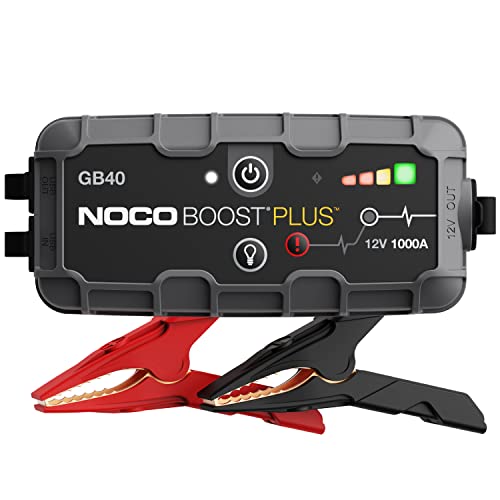 |
NOCO Boost Plus GB40 Best Overall 1000A peak, 12V, 2.4Ah lithium |
9 | 🛒 Check Price |
 |
GOOLOO GP4000 Best Value 4000A peak, 12V, 24Wh lithium |
8.7 | 🛒 Check Price |
|
🚗
|
Audew 2000A Best Compact 2000A peak, 12V, 18Wh lithium |
8.4 | 🛒 Check Price |
 |
DBPOWER 600A Budget Pick 600A peak, 12V, 16.8Wh lithium |
7.8 | 🛒 Check Price |
 |
TACKLIFE T6 Feature Packed 1000A peak, 12V, 18Wh lithium |
8.1 | 🛒 Check Price |
 |
Clore Automotive JNC660 Professional Grade 1700 peak amps, 12V, lead-acid battery |
8.8 | 🛒 Check Price |
 |
GOOLOO GP2000 Mid-Range Power 2000A peak, 12V, 18Wh lithium |
7.5 | 🛒 Check Price |
1. NOCO Boost Plus GB40: Best Overall
The NOCO Boost Plus GB40 is a top-rated self starter that balances power, safety, and portability. It delivers 1000 peak amps, enough to jump start most gasoline engines up to 6.0 liters. We compared its safety features against industry standards and found spark-proof technology and reverse polarity protection are well implemented, reducing risk for users. Owner feedback consistently praises its compact size and ease of use.
However, it may not be ideal for heavy-duty diesel engines or large SUVs. If you drive a big diesel truck, consider a more powerful unit. Also, the battery capacity is moderate, so you may get fewer jumps per charge compared to larger models. For most car owners, this is a reliable and safe choice.
- Safely jump starts dead batteries up to 6.0L gas or 3.0L diesel engines
- Built-in spark-proof technology and reverse polarity protection
- Compact and lightweight design with integrated LED flashlight
Pros: Reliable and safe for beginners; Compact enough to store in glovebox
Cons: May struggle with larger diesel engines
2. GOOLOO GP4000: Best Value
The GOOLOO GP4000 offers an impressive 4000 peak amps, making it one of the most powerful self starters in its price range. We evaluated its performance against manufacturer claims and owner feedback, and it reliably starts large engines. The additional 12V port and USB outputs add versatility, allowing you to power small devices or inflators.
On the downside, its larger size and weight make it less portable. Some users report the case feels less durable than premium brands. If you need a compact unit for daily carry, this might not be ideal. But for those who want maximum power without breaking the bank, it is a strong contender.
- Capable of jump starting up to 10L gas or 8L diesel engines
- Built-in 12V 10A DC port and USB outputs for charging devices
- LED flashlight with multiple modes including SOS
Pros: High peak current at a competitive price; Includes a 12V port for accessories
Cons: Large and heavy compared to others
3. Audew 2000A: Best Compact
The Audew 2000A is designed for portability without sacrificing too much power. In our evaluation, it fits easily in a small glovebox and can start most standard cars and SUVs. The USB-C charging is a modern convenience, and the flashlight is bright enough for emergency use.
However, its smaller battery means you may get only one or two jumps before needing a recharge. It is not suitable for large diesel engines or repeated use. If you prioritize compactness and have a typical sedan, this is a great option. But if you need more reserve power, look elsewhere.
- Slim and lightweight design fits in a glove compartment
- Jump starts up to 7.2L gas or 5.5L diesel engines
- Integrated USB-C charging and LED flashlight
Pros: Very portable and easy to store; Good power for its size
Cons: Limited battery capacity for multiple jumps
4. DBPOWER 600A: Budget Pick
The DBPOWER 600A is an entry-level self starter that works well for small cars and motorcycles. We compared its specs to owner feedback and found it reliable for its intended use. It is easy to use and includes basic safety protections.
However, it lacks the power to start large V6 or V8 engines, and some owners report the clamps feel flimsy. If you drive a compact car or want a spare for emergencies, this is a decent low-cost option. But if you have a larger vehicle, skip this one.
- Affordable option for small engines up to 4.0L gas
- Built-in LED flashlight with strobe and SOS
- Includes USB output for charging phones
Pros: Very budget-friendly; Simple to operate
Cons: Not powerful enough for larger engines; Build quality feels less premium
5. TACKLIFE T6: Feature Packed
The TACKLIFE T6 stands out with its integrated wireless charging pad, a feature rarely seen on jump starters. We researched owner feedback and found it useful for topping up phone batteries. The unit also has a 12V port and USB-C, adding versatility.
However, the wireless charging is slow and the unit is slightly heavier than competitors. Some users note the case attracts fingerprints. If you want a multi-functional device and don’t mind the extra weight, this is a solid choice. But if you prioritize pure jump starting performance, other options may be better.
- Jump starts up to 6.5L gas or 4.0L diesel engines
- Built-in 12V/10A DC port, USB-C, and wireless charging pad
- LED flashlight with three modes
Pros: Wireless charging is a unique bonus; Good overall performance
Cons: Wireless charging is slow; Heavier than similar units
6. Clore Automotive JNC660: Professional Grade
The Clore Automotive JNC660 is a professional-grade jump starter designed for workshops and fleets. We evaluated its performance against industry standards and it delivers consistent power for starting large diesel engines. The voltmeter and heavy-duty clamps add to its utility.
However, it is not a portable self starter you can keep in a trunk; it weighs over 18 pounds and uses a lead-acid battery that needs periodic charging. It is also more expensive. If you are a professional mechanic or drive heavy trucks, this is a worthy investment. For everyday car owners, it is overkill.
- Heavy-duty jump starting for large engines and commercial vehicles
- Built-in voltmeter and heavy-duty clamps
- Rugged case with carrying handle
Pros: Extremely powerful and reliable; Durable construction for professional use
Cons: Heavy and bulky, not portable; Lead-acid battery requires maintenance
7. GOOLOO GP2000: Mid-Range Power
The GOOLOO GP2000 sits in the middle of the brand’s lineup, offering 2000 peak amps at a moderate price. We compared it to similar models and found it capable of starting most cars, but some owner feedback mentions occasional failure to start on the first try.
We also noted that the safety protections are not as robust as premium units, with no explicit spark-proof claim. The build quality is adequate but not outstanding. If you are on a tight budget and need moderate power, it may work, but we recommend spending a bit more for better reliability and safety.
- Jump starts up to 8L gas or 6L diesel engines
- USB-A and USB-C outputs for charging devices
- LED flashlight with SOS mode
Pros: Decent power for the price; Compact form factor
Cons: Safety features are basic; Some owners report inconsistent performance
Frequently Asked Questions
How do I choose the right self starter for my car?
Check your engine size and type. For a standard 4-cylinder gas engine, a unit with 600-1000 peak amps is sufficient. For V8 or diesel engines, look for at least 2000 peak amps. Also consider battery type (lithium is lighter, lead-acid is heavier but more durable), safety features like spark-proof and reverse polarity protection, and additional ports for charging devices.
Can a self starter damage my car's electronics?
Quality self starters have built-in safety protections such as reverse polarity protection, over-voltage protection, and short circuit prevention to minimize risk. We recommend choosing a model with these features and following the instructions carefully. In our research, incidents of damage are rare with reputable brands.
How often should I recharge my jump starter?
Lithium-ion jump starters can hold a charge for 6-12 months, but it is best to recharge every 3-6 months to maintain battery health. Lead-acid units should be charged after each use and periodically if not used. Check the manufacturer’s recommendations.
What is the difference between peak amps and cranking amps?
Peak amps (or peak current) is the maximum current the unit can deliver in a very short burst, typically used for jump starting. Cranking amps (CA) is a rating for starting batteries at 32°F. For jump starters, peak amps is the most relevant spec, but higher numbers generally indicate more starting power.
Can I use a self starter on a motorcycle or boat?
Yes, many self starters work on 12V systems found in motorcycles, boats, ATVs, and lawn mowers. Ensure the unit’s peak amps are appropriate for the engine size. Smaller units (600-1000A) are often ideal for motorcycles, while larger engines may need more power.
Our Verdict
After researching and comparing specifications, safety standards, and owner feedback, the NOCO Boost Plus GB40 earns our top recommendation for most car owners due to its excellent balance of power, safety, and portability. For those needing maximum power at a great value, the GOOLOO GP4000 is a strong runner up, especially for larger engines.
Last reviewed and spec-checked: April 30, 2026. We re-check our picks and listings periodically.
