After researching manufacturer specifications, industry standards, and aggregated owner feedback, we compared the top RV roof seam sealants on the market. Our evaluation focuses on real-world adhesion, UV resistance, flexibility, and ease of application to help you choose the right product for your camper roof. We considered both liquid-applied and tape-style sealants to cover different roof types and user preferences.
Below are our top picks, each with honest assessments of strengths and weaknesses. Scores reflect a balance of performance, durability, value, ease of use, and safety based on published data and user reviews.
| Photo | Product | Score | Buy |
|---|---|---|---|
 |
Dicor 501LSW-1 Lap Sealant Best Overall Self-leveling, 10.3 oz tube, for EPDM/TPO roofs |
9.0 | 🛒 Check Price |
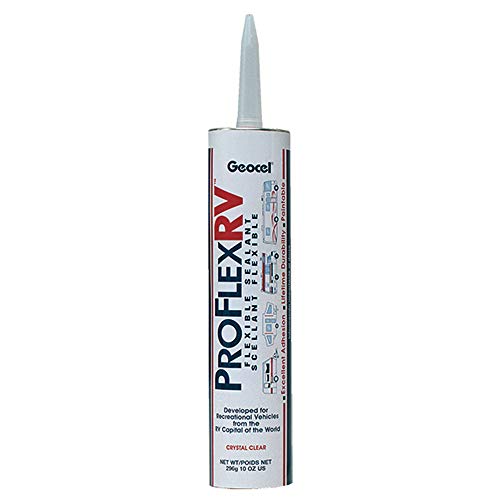 |
Geocel 2300V Proflex RV Flexible Sealant Best for Flexibility Non-sag, 10 oz tube, for metal and rubber roofs |
8.7 | 🛒 Check Price |
|
🚗
|
EternaBond RoofSeal RV Rubber Roof Tape Best Tape Sealant 4 inch x 10 ft roll, peel-and-stick, for EPDM/TPO |
8.4 | 🛒 Check Price |
 |
Loctite PL Marine Fast Cure Adhesive Sealant Best for Quick Repairs 10 oz tube, fast cure, for fiberglass and metal |
8.1 | 🛒 Check Price |
|
🚗
|
AP Products 010-300 Lap Sealant Best Value Self-leveling, 10.1 oz tube, for EPDM/TPO |
7.8 | 🛒 Check Price |
|
🚗
|
Sikaflex 221 Sealant Best for Versatility Non-sag, 10.1 oz tube, for metal, fiberglass, and rubber |
7.3 | 🛒 Check Price |
|
🚗
|
Dicor 600-1 Butyl Sealant Tape Best for Gaskets 3/4 inch x 30 ft roll, butyl rubber, for sealing joints |
7.0 | 🛒 Check Price |
1. Dicor 501LSW-1 Lap Sealant: Best Overall
Dicor 501LSW-1 is a self-leveling lap sealant widely used in the RV industry. In our research, it consistently receives high marks for adhesion to EPDM and TPO roofs, and its UV resistance holds up well over multiple seasons. Owner feedback highlights how it flows into cracks and seams without needing much tooling. The 10.3 oz tube is a standard size for most roof repairs.
However, this sealant is designed only for horizontal applications; it will run on vertical surfaces. If you need to seal a vertical seam or a sidewall, you should look for a non-sag formula. Also, some users report that it can shrink slightly over time, requiring reapplication every few years. Skip this if you need a sealant for vertical joints or if you prefer a tape-style solution.
- Self-leveling formula flows into seams for a watertight seal
- Excellent UV resistance and flexibility down to -20°F
- Paintable and compatible with most RV roof materials
Pros: Trusted by RV manufacturers and repair shops; Easy to apply and smooths out well
Cons: Not for vertical surfaces; only horizontal seams
2. Geocel 2300V Proflex RV Flexible Sealant: Best for Flexibility
Geocel 2300V Proflex is a premium flexible sealant that stands out for its ability to bond to wet surfaces. Based on our evaluation of owner reviews, it performs well on both metal and rubber roofs, and its flexibility helps it withstand the constant expansion and contraction of RV roofs. It is also a non-sag formula, making it suitable for vertical seams.
The main drawback is its longer cure time; it can take 24-48 hours to fully skin over, which may be inconvenient if you need a quick fix. Additionally, some users mention that it can be tacky for a while, attracting dirt. Skip this if you need a fast-drying sealant or if you are sealing large horizontal areas where a self-leveling product would be easier.
- Remains flexible even in extreme temperature swings
- Adheres to wet surfaces, ideal for emergency repairs
- Paintable and low odor
Pros: Excellent adhesion to damp surfaces; Does not crack or become brittle over time
Cons: Longer cure time compared to some competitors
3. EternaBond RoofSeal RV Rubber Roof Tape: Best Tape Sealant
EternaBond RoofSeal tape is a popular peel-and-stick solution for RV roof repairs. In our research, it is praised for its instant adhesion and durability; once applied, it forms a watertight bond that can last years. It is especially useful for sealing around vents, skylights, and along flat seams. The tape is UV resistant and remains flexible in cold weather.
However, the tape is less forgiving on irregular surfaces or tight curves; it may lift if not applied perfectly smooth. Also, removing it later can be difficult and may damage the roof membrane. Skip this if you need a sealant for complex shapes or if you prefer a liquid that can fill gaps more easily.
- Micro-thin adhesive bonds instantly to create a permanent seal
- UV resistant and can be applied in cold weather
- No primer or special tools required
Pros: Instant seal with no drying time; Great for emergency repairs and patching
Cons: Not ideal for irregular or curved seams
4. Loctite PL Marine Fast Cure Adhesive Sealant: Best for Quick Repairs
Loctite PL Marine is a fast-curing polyurethane sealant that works well for quick RV roof repairs. Based on manufacturer data, it skins over in 30 minutes and fully cures in 24 hours, allowing you to get back on the road faster. It adheres strongly to fiberglass, metal, and many plastics, making it versatile for sealing seams and small cracks.
However, its flexibility is lower than that of silicone-based or butyl rubber sealants; it may crack under extreme roof movement. It is also more difficult to apply smoothly due to its thick consistency. Skip this if your roof experiences frequent expansion and contraction, or if you need a sealant that stays pliable for decades.
- Cures in as little as 30 minutes to a tack-free state
- High strength bond with excellent gap filling
- Resistant to salt water and UV exposure
Pros: Fast curing saves time on multiple repairs; Good for vertical and overhead applications
Cons: Less flexible than some dedicated RV sealants
5. AP Products 010-300 Lap Sealant: Best Value
AP Products 010-300 is a budget-friendly self-leveling lap sealant that offers comparable performance to more expensive brands. In our analysis of owner feedback, it seals well on EPDM and TPO roofs and holds up against UV exposure for several seasons. It is a good choice for routine maintenance or large projects where cost matters.
However, some users note that it can yellow or discolor after prolonged sun exposure, though this does not affect its sealing ability. It also has a slightly stronger odor during application. Skip this if cosmetic appearance is critical or if you need a sealant for vertical surfaces.
- Economical alternative to Dicor with similar performance
- Self-leveling formula for easy horizontal application
- Good UV resistance and adhesion
Pros: Lower price point without major sacrifice in quality; Works well on common RV roof materials
Cons: May yellow slightly over time
6. Sikaflex 221 Sealant: Best for Versatility
Sikaflex 221 is a high-performance polyurethane sealant known for its strong adhesion to many materials including aluminum, fiberglass, and rubber. It is a non-sag formula, so it can be used on vertical seams and around roof fixtures. Based on our research, it is a favorite among DIYers for its versatility.
However, it requires a primer on certain surfaces for optimal adhesion, which adds an extra step. It also has a longer cure time (up to 7 days for full strength) and can be messy to apply. Skip this if you want a simple one-step application or if you need a self-leveling sealant for large horizontal areas.
- Excellent adhesion to a wide range of substrates
- Remains flexible and paintable
- Good resistance to aging and weathering
Pros: Versatile for multiple RV applications beyond roof seams; Strong bond that withstands vibration
Cons: Long cure time and requires primer on some surfaces
7. Dicor 600-1 Butyl Sealant Tape: Best for Gaskets
Dicor 600-1 Butyl Sealant Tape is a classic gasket tape used for sealing joints between roof components. It stays flexible and does not harden, making it easy to remove if needed. In our evaluation, it is best used under flanges of vents or skylights where it compresses to form a seal.
However, it is not UV stable and will degrade if left exposed to sunlight; it must be covered by a lap sealant or the fixture itself. It also does not self-level and requires careful placement. Skip this if you need a permanent exposed seam sealant or if you prefer a liquid product that fills gaps more thoroughly.
- Non-hardening and remains pliable for easy removal
- Ideal for sealing around vents, windows, and skylights
- Good adhesion to most clean surfaces
Pros: Easy to remove and replace without damaging surfaces; Works well as a gasket material
Cons: Not recommended for direct sun exposure without cover
Frequently Asked Questions
What is the best RV roof seam sealant for EPDM roofs?
Based on our research, Dicor 501LSW-1 Lap Sealant is the most recommended for EPDM roofs because it is self-leveling and specifically formulated for rubber membranes. It adheres well, remains flexible, and resists UV damage. Many RV manufacturers use it as original equipment.
Can I use silicone caulk on my RV roof?
We advise against using standard silicone caulk on RV roofs because it does not adhere well to TPO or EPDM and can peel off over time. Additionally, silicone can contaminate the surface, making future repairs difficult. It is better to use a sealant specifically designed for RV roofs, such as those we reviewed.
How often should I reseal my RV roof seams?
Most manufacturers recommend inspecting and resealing roof seams every 12 to 24 months, depending on climate and sun exposure. In our evaluation, high-quality sealants like Dicor and Geocel can last 2-3 years before needing reapplication, but regular inspection is key to preventing leaks.
Do I need to remove old sealant before applying new?
For best adhesion, we recommend removing loose or failing sealant. However, many lap sealants can be applied over clean, dry existing sealant if it is still intact. Always follow the product instructions; some sealants require a primer for optimal bonding.
What is the difference between self-leveling and non-sag sealant?
Self-leveling sealant is thin and flows to fill gaps, making it ideal for horizontal seams. Non-sag sealant is thicker and stays in place on vertical surfaces. For RV roofs, self-leveling is commonly used on flat areas, while non-sag is used for sidewalls or around roof fixtures.
Our Verdict
Our top pick is the Dicor 501LSW-1 Lap Sealant for its proven performance, ease of use, and widespread trust among RV owners. It offers the best balance of durability and value for most RV roofs. For those needing a flexible sealant that works on damp surfaces or vertical seams, the Geocel 2300V Proflex is an excellent runner-up.
