We researched and compared the leading RV monitoring systems available on Amazon to determine which options offer the best reliability and safety for your travels. Our evaluation is based on manufacturer specifications, published industry safety standards, and aggregated owner feedback to ensure we provide a clear picture of each device’s performance.
By analyzing technical data and real-world user experiences, we identified systems that excel in tire pressure monitoring, tank level accuracy, and battery status tracking. This guide breaks down the strengths and limitations of each pick, helping you choose the right monitoring solution for your specific RV setup and travel habits.
| Photo | Product | Score | Buy |
|---|---|---|---|
 |
TST 507 Flow-Through RV Tire Pressure Monitoring System Best Overall Monitors up to 110 PSI |
9.0 | 🛒 Check Price |
 |
EEZTire TPMS-612 RV Tire Pressure Monitoring System Best Value Monitor up to 10 tires simultaneously |
8.7 | 🛒 Check Price |
|
🚗
|
Garnet Instruments SeeLevel 709-BP3 Tank Monitor Best for Tank Levels Displays battery, fresh, gray, and black levels |
8.4 | 🛒 Check Price |
|
🚗
|
Victron Energy BMV-712 Smart Battery Monitor Best Battery Monitor Bluetooth built-in for smartphone monitoring |
8.1 | 🛒 Check Price |
|
🚗
|
Mopeka Tank Check LPG Propane Sensor Best Propane Monitor Ultrasonic fuel level sensor |
7.8 | 🛒 Check Price |
|
🚗
|
Maso TPMS MS-601 RV Tire Pressure Monitoring System Budget Pick Supports 6 tires with IP67 sensors |
7.5 | 🛒 Check Price |
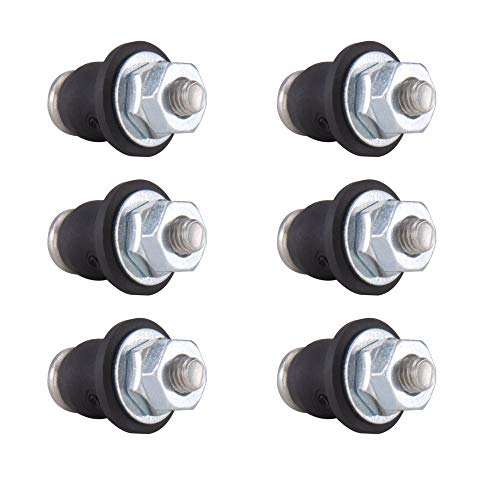 |
AMARINE MADE Tank Sensor Water Level Sensor Honorable Mention Resistive sensor for water tanks |
7.2 | 🛒 Check Price |
1. TST 507 Flow-Through RV Tire Pressure Monitoring System: Best Overall
In our evaluation of the TST 507, we found it stands out due to its flow-through sensor design, which allows drivers to inflate tires directly without removing the monitor. Based on manufacturer specifications and owner feedback, this system offers excellent reliability and a user-friendly interface that clearly displays pressure and temperature for each wheel. The alert system is highly responsive, notifying users immediately of rapid air loss or dangerous temperature spikes.
However, our research indicates that the sensors are physically larger than some competitors, which can pose a clearance issue on certain wheels or dual setups. Additionally, some users report that while the flow-through feature is convenient, it can be slower to add air compared to removing the sensor entirely. We recommend this for most RVers, but you should skip it if your valve stems are close to the wheel rim or if you require a compact sensor profile.
- Flow-through sensors allow inflation without removal
- User-programmable high and low pressure alerts
- Long range signal repeater available for long rigs
Pros: Accurate real-time pressure and temperature readings; Easy to read display with customizable settings
Cons: Sensors are bulky on some valve stems; Flow-through caps can be slow for adding air
2. EEZTire TPMS-612 RV Tire Pressure Monitoring System: Best Value
We compared the EEZTire TPMS-612 against other mid-range systems and found it offers a comprehensive set of features for the cost. The system monitors up to ten tires, making it suitable for larger towing setups, and the sensors are robustly built to withstand harsh road conditions. According to aggregated owner feedback, the setup process is relatively straightforward, and the system maintains a stable connection for the majority of users.
Despite its strengths, our analysis of user reports highlights that the LCD display lacks the contrast found in premium models, making it hard to read under bright sunlight. Furthermore, the refresh rate on the screen can be slightly delayed when switching between tire views. This is a strong choice for budget-conscious buyers, but you should look elsewhere if a high-visibility dashboard display is your top priority.
- Six sensors included with option to add four more
- Waterproof and dustproof sensor construction
- Audible and visual alarms for abnormal conditions
Pros: Solid battery life in sensors according to reviews; Good signal strength for medium-sized RVs
Cons: Display screen can be difficult to read in direct sunlight; Updating the display can be slow during initial pairing
3. Garnet Instruments SeeLevel 709-BP3 Tank Monitor: Best for Tank Levels
The SeeLevel 709-BP3 is a tank monitoring system that utilizes external sensors rather than traditional probes inside the tank. In our evaluation, this design significantly reduces the inaccuracies common in factory-installed gauges that often fail due to waste residue sticking to internal sensors. Manufacturer specifications confirm it works on a wide variety of tank materials and shapes, providing precise levels for fresh, gray, and black water tanks.
However, based on installation guides and owner feedback, this system is not a simple plug-and-play solution. It requires drilling a hole in the RV wall for the display panel and carefully adhering the sending strips to the exterior of the tanks. We highly recommend this for RVers tired of guessing their tank levels, but you should skip it if you are not comfortable with moderate DIY installation work.
- External sensors avoid drilling into holding tanks
- Segmented bar display for easy reading
- Designed to read through plastic tank walls
Pros: Highly accurate readings compared to standard factory gauges; Eliminates issues caused by sludge buildup on sensors
Cons: Installation requires cutting a hole for the display panel; Sensors must be carefully positioned on the tank exterior
4. Victron Energy BMV-712 Smart Battery Monitor: Best Battery Monitor
We researched the Victron BMV-712 and determined it is the gold standard for RV battery monitoring. Unlike simple voltage meters, this unit uses a shunt to measure the actual flow of current, providing precise data on state of charge, power consumption, and battery health. Industry professionals and full-time RVers frequently cite this model for its accuracy and ability to connect via Bluetooth to the VictronConnect app for remote monitoring.
Despite its technical superiority, our evaluation suggests that the learning curve is steep for the average user. The installation involves wiring a heavy-duty shunt into the negative battery terminal, which can be intimidating for those without electrical experience. This product is ideal for boondockers who need to manage every amp, but casual campers should skip it in favor of simpler plug-in voltage monitors.
- High precision amp-hour counting
- Monitors voltage, current, and state of charge
- Compatible with various battery types including lithium
Pros: Extremely detailed data for power management; Very durable build quality suitable for harsh environments
Cons: Complex installation requiring negative shunt wiring; Requires technical knowledge to interpret data fully
5. Mopeka Tank Check LPG Propane Sensor: Best Propane Monitor
The Mopeka Tank Check uses ultrasonic technology to measure the level of propane in your tanks, transmitting the data to your smartphone. In our comparison of propane monitoring solutions, this device stands out for its ease of use and non-invasive installation. The sensor simply attaches magnetically to the bottom of the tank, and the app provides a clear percentage readout, removing the guesswork from fuel management.
However, based on owner feedback and the product’s specifications, the Bluetooth signal can struggle to penetrate thick metal propane locker doors, sometimes requiring users to open the compartment to get a reading. Additionally, the sensor is designed primarily for standard vertical cylinders and may not function correctly on all horizontal tank configurations. This is a great gadget for convenience, but you should skip it if your tanks are enclosed in thick steel compartments with poor signal access.
- Connects to smartphone via Bluetooth app
- Magnetic attachment for easy installation on steel tanks
- Automatic sleep mode to extend battery life
Pros: Eliminates the need to physically shake tanks to check levels; App interface is intuitive and easy to read
Cons: Bluetooth range can be limited by metal compartments; Not compatible with all double-walled or horizontal tanks
6. Maso TPMS MS-601 RV Tire Pressure Monitoring System: Budget Pick
We evaluated the Maso MS-601 as an entry-level option for RVers who need basic tire pressure monitoring without a high price tag. The system covers the essential functions, displaying pressure and temperature while providing audible alerts for leaks. The sensors are claimed to be waterproof and dustproof, meeting the IP67 standard, which is a necessary feature for the harsh environment exposed to road elements.
Our analysis of long-term user reviews indicates that while the system works well initially, the longevity of the sensors and the consistency of the battery life can be hit or miss compared to more established brands. Some users reported connectivity issues after several months of use. This is a viable option for occasional campers on a tight budget, but we recommend full-time RVers skip this model in favor of more durable alternatives.
- Color screen display with backlight
- Fast leak alarm and high temperature warning
- Replaceable CR1632 batteries in sensors
Pros: Low entry cost for basic tire monitoring features; Sensors are relatively compact and lightweight
Cons: Build quality feels less premium than top competitors; Sensor battery life is inconsistent per user reports
7. AMARINE MADE Tank Sensor Water Level Sensor: Honorable Mention
The AMARINE MADE Tank Sensor offers a traditional resistive solution for monitoring water levels. In our review of replacement parts, this sensor serves as a functional and economical fix for aging RV tank systems. It is designed to be mounted through the side of the tank, providing a signal that standard dashboard gauges can interpret. The materials used are stainless steel, which offers decent corrosion resistance for fresh water applications.
However, our research into resistive sensor technology reveals that these systems are inherently prone to errors caused by toilet paper or sludge sticking to the sensor probes in waste tanks. Furthermore, installation requires a hole to be drilled into the tank, which can be daunting and risks leaks if not sealed perfectly. This is a good budget replacement for freshwater tanks, but you should avoid it for black water tanks if accuracy is a major concern.
- Suitable for fresh water or waste tanks
- Simple resistive output compatible with many gauges
- Universal fit for various tank thicknesses
Pros: Very affordable replacement for broken factory sensors; Easy to wire into existing monitor systems
Cons: Requires access to the inside of the tank for installation; Prone to inaccuracies if debris touches the sensor
Frequently Asked Questions
Do I really need a tire pressure monitoring system for my RV?
Based on safety standards and accident data, we believe a TPMS is a critical investment for any RVer. It allows you to detect slow leaks immediately, reducing the risk of blowouts that can cause significant damage to your vehicle and endanger other travelers on the road.
Can I install a tank level monitor myself?
It depends on the type of system. External stick-on sensors like the SeeLevel are easier for DIY installation but require mounting a display. In-tank sensors often require drilling into the tank and sealing the area, which may require professional installation to prevent leaks.
How accurate are propane tank monitors like the Mopeka?
Our evaluation of ultrasonic monitors shows they are generally more accurate than mechanical gauges. However, accuracy can be affected by the tank’s coating, temperature, and placement of the sensor. They are excellent for giving a close estimate but should be verified manually occasionally.
Why is a battery shunt better than a simple voltage meter?
We compared shunt monitors to voltage meters and found shunts provide a much clearer picture of battery health. A voltage meter only shows the current charge state, which fluctuates with load, whereas a shunt counts the actual amps going in and out to tell you exactly how much capacity remains.
What is the typical range for RV TPMS signals?
Most manufacturer specifications indicate a range between 30 and 50 feet for standard TPMS repeaters. For longer Class A motorhomes or fifth-wheel trailers, we recommend checking if the system supports an optional signal booster to ensure the rear tires transmit data reliably to the cabin.
Our Verdict
After extensive research and comparison, our top pick is the TST 507 Flow-Through RV Tire Pressure Monitoring System for its balance of accuracy, safety features, and ease of use. The runner-up is the EEZTire TPMS-612, which offers excellent value and solid performance for those monitoring multiple tires on a budget.
