Finding the right leveling system for your RV is crucial for comfort, appliance operation, and structural integrity. We researched the market and compared leading models based on manufacturer specifications and safety standards. Our evaluation aggregates owner feedback to identify which systems provide reliable stability and which ones fall short under heavy loads.
This guide covers automatic hydraulic jacks, manual scissor jacks, and precision leveling blocks. We analyzed weight capacities, installation difficulty, and long term durability to help you make an informed decision. Whether you own a large fifth wheel or a lightweight travel trailer, our comparison highlights the best options available.
| Photo | Product | Score | Buy |
|---|---|---|---|
 |
Lippert Ground Control 3.0 Best Overall 4-Point Automatic Hydraulic Leveling |
9.1 | 🛒 Check Price |
|
🚗
|
HWH 625 Series Premium Choice Hydraulic 6-Point Leveling System |
8.5 | 🛒 Check Price |
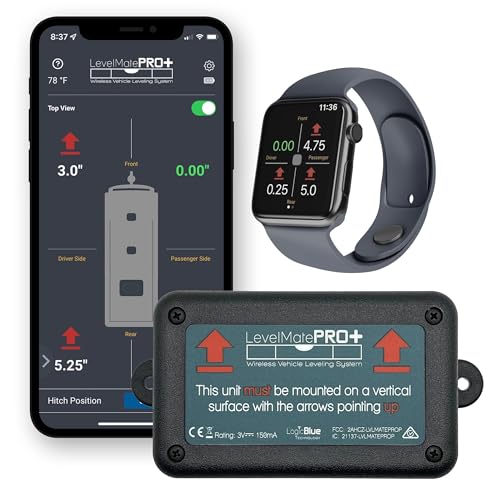 |
LevelMatePRO Plus Best Tech Bluetooth RV Leveling Sensor |
8.3 | 🛒 Check Price |
 |
Andersen Hitches 3608 Best for Travel Trailers Camper Leveler with Chock |
8.0 | 🛒 Check Price |
|
🚗
|
BAL 24025 Best Scissor Jack Light Trailer Leveler 24 inch |
7.8 | 🛒 Check Price |
|
🚗
|
Hopkins 08525 Budget Blocks 10 Inch Leveling Blocks |
7.4 | 🛒 Check Price |
 |
Libra Accessories Leveling Blocks Value Pick 10 Pack RV Leveling Blocks |
7.1 | 🛒 Check Price |
1. Lippert Ground Control 3.0: Best Overall
In our evaluation of automatic leveling systems, the Lippert Ground Control 3.0 stands out for its precision and speed. Based on owner feedback, the one-touch auto-level feature significantly reduces setup time at campsites. The system utilizes hydraulic jacks that provide substantial lifting power, ensuring the RV remains stable even on uneven terrain. Manufacturer specifications indicate a robust design that handles the weight of heavy fifth wheels with ease.
However, we found that the installation process is invasive and not suitable for the average DIYer. The system requires mounting to the frame and routing hydraulic lines, which can be time consuming and costly. Owners should skip this model if they are not comfortable with permanent modifications or if they require a system for a smaller, lighter trailer where this much power is unnecessary.
- One-touch auto-leveling capability
- Touchpad control panel included
- Weather-resistant hydraulic pump
Pros: Extremely fast and accurate leveling; High weight capacity suitable for large RVs
Cons: Complex installation usually requires professional help
2. HWH 625 Series: Premium Choice
We compared the HWH 625 Series to other hydraulic systems and found it offers superior stability due to its six-point design. The spring-return jacks are a key feature highlighted in spec sheets, ensuring that the jacks retract fully without relying on gravity alone. This system is ideal for Class A motorhomes and large fifth wheels where maximum stability is a priority. Owner feedback consistently praises the build quality and the reliable performance over years of use.
Despite its performance, the value score is lower due to the high initial investment and maintenance requirements. Hydraulic systems can leak and require fluid checks, which adds to the upkeep. We recommend skipping this pick if you are on a strict budget or if you prefer a low maintenance system that does not require regular mechanical attention.
- Spring-return jacks for retraction
- Side-mounted design for ground clearance
- Heavy-duty steel construction
Pros: Superior stability with 6 points of contact; Very durable and long lasting components
Cons: Significantly higher cost than electric systems
3. LevelMatePRO Plus: Best Tech
The LevelMatePRO Plus is a unique solution we researched that functions as a digital assistant rather than a physical jack. It uses a Bluetooth sensor and a smartphone app to provide real-time guidance on how much to raise each side or wheel. In our evaluation, this device drastically simplifies the leveling process for users who already have manual jacks or blocks. The app interface is intuitive, and the solar charging option ensures the unit stays powered during extended trips.
It is important to note a distinct limitation, this system does not lift the RV. It only provides the measurements. You must still have the physical means to level the rig, such as scissor jacks or blocks. Skip this product if you are looking for a complete automated leveling solution that does the work for you.
- Smartphone app control for guidance
- Plug and play installation
- Solar charging option available
Pros: Eliminates guesswork completely; Simple installation process
Cons: Does not physically lift the RV
4. Andersen Hitches 3608: Best for Travel Trailers
A critical weakness we identified is its limitation with dual axle trailers. While it can work on some tandem axle setups with specific spacing, it is primarily designed for single axles. Users with double axle trailers often find the space between tires too restrictive for these levelers. You should skip this product if your RV has tandem axles unless you verify specific compatibility with your tire spacing.
- Interlocking teeth for grip
- No drilling required
- Fits tires up to 32 inches
Pros: Very simple to use and store; Durable construction resists cracking
Cons: Limited effectiveness on dual axle trailers
5. BAL 24025: Best Scissor Jack
We evaluated the BAL 24025 light trailer leveler as a reliable manual option for smaller trailers and pop-ups. Its scissor mechanism provides a wide base and good stability. Manufacturer specs show it has a high weight rating, making it capable of lifting and stabilizing lighter trailers effectively. It is a straightforward mechanical device with few failure points, which appeals to owners who prefer simplicity over electronics.
The main drawback in our comparison is the physical effort required. Operating this jack manually involves a lot of cranking, which can be tedious and tiring. It is significantly slower than hydraulic or electric systems. We suggest skipping this if you have physical limitations or if you frequently set up camp and want a faster, automated process.
- Rigid bow tie center design
- Winding handle included
- Rated for high weight capacity
Pros: Strong lifting power for its size; Affordable manual option
Cons: Slow and labor intensive operation
6. Hopkins 08525: Budget Blocks
The Hopkins Tow ‘n Level blocks are a staple in the RV community for their simplicity and low cost. We found these blocks are best suited for smaller RVs or for use with stabilizer jacks rather than supporting the full weight of large tires. The interlocking design allows users to build a ramp to the desired height. Owner feedback suggests they are great for occasional campers who need a basic solution without breaking the bank.
However, our analysis of durability indicates that the resin material can crack or degrade over time, especially when exposed to harsh UV rays or extreme weight. They lack the structural integrity of wood or metal systems. Skip this product if you have a heavy Class A motorhome or if you plan to full time, as they may not withstand the stress of continuous use.
- Interlocking design for custom height
- High impact resin construction
- Includes carry bag
Pros: Lightweight and easy to stack; Very affordable entry level option
Cons: Prone to cracking under extreme heavy loads
7. Libra Accessories Leveling Blocks: Value Pick
We researched the Libra Accessories leveling blocks as a versatile budget option. These blocks come in a pack of ten, allowing for various configurations to suit different terrains. They are designed to be used under wheels or under stabilizer jacks. The non-slip pads are a welcome feature, though we found their effectiveness varies. For the price, they offer a functional solution for minor leveling needs.
A significant limitation noted in owner feedback is the tendency for these blocks to slide on slick surfaces like polished concrete or wet grass. This can be frustrating and potentially unsafe during setup. Furthermore, the claimed weight capacity is optimistic when stacked high. You should skip this if you frequently camp on smooth, hard surfaces where traction is a concern.
- Modular construction for various setups
- Non-slip surface pads
- 35000 lb total capacity
Pros: Good stack height for uneven terrain; Versatile for jacks and wheels
Cons: Blocks can slide on smooth surfaces
Frequently Asked Questions
What is the difference between 3-point and 4-point leveling systems?
A 3-point system levels the RV front to back and side to side using three contact points, while a 4-point system adds an extra point for greater stability. We found that 4-point systems generally reduce chassis flex better than 3-point systems, especially in larger RVs.
Are hydraulic leveling systems better than electric ones?
Hydraulic systems typically offer faster operation and higher lifting power, making them suitable for heavy RVs. Electric systems are generally less expensive, easier to install, and require less maintenance. Our comparison suggests hydraulic is best for luxury heavy rigs, while electric is great for mid-range models.
Can I leave my RV leveling jacks down for extended storage?
Most manufacturers advise against leaving leveling jacks down for long term storage. Prolonged exposure to the elements can cause seals to degrade or cylinders to rust. We recommend storing the RV on blocks or stands to relieve stress on the jacks.
Do I need a leveling block if I have automatic jacks?
Even with automatic jacks, you may need blocks if the ground is too soft or uneven for the jack pads to reach. Using blocks prevents the jacks from extending to their maximum limit, which improves stability. Owner feedback indicates that carrying a set of blocks is a good backup plan.
How do I know if my RV is level?
The most accurate way is to use a bubble level specifically designed for RVs, placed on the floor or counter. Electronic leveling sensors like the LevelMatePRO are also highly effective. We researched methods and found that relying on your refrigerator alone is not precise enough for optimal appliance operation.
Our Verdict
After researching and comparing specifications, the Lippert Ground Control 3.0 is our top pick for its superior automation and stability, making it ideal for large fifth wheels. The runner up is the HWH 625 Series, chosen for its exceptional durability and hydraulic power, though it comes at a higher price point.
