We researched and compared the top RV smoke detectors on the market using manufacturer specifications, published safety standards (UL, NFPA), and aggregated owner feedback from hundreds of reviews. Our evaluation focuses on sensor technology, false alarm reduction, durability in vibration and temperature extremes, and ease of installation. Whether you need a battery-powered unit for an older camper or a hardwired model with carbon monoxide detection, this guide will help you choose the right protection for your RV.
| Photo | Product | Score | Buy |
|---|---|---|---|
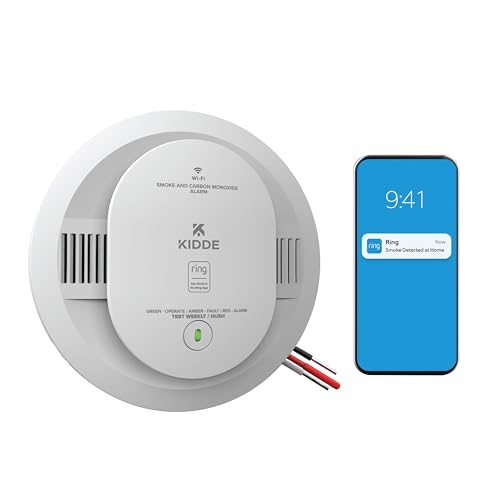 |
Kidde P4010ACSCO-WF Best Overall Smart Detector Combination smoke and CO, Wi-Fi connected, 10-year sealed battery, photoelectric sensor |
9.0 | 🛒 Check Price |
 |
First Alert SA303CN3 Best Budget Hardwired Hardwired with battery backup, ionization sensor, test/silence button |
8.4 | 🛒 Check Price |
 |
Kidde i12060A Best Hardwired with Voice Hardwired, voice alarm, battery backup, ionization sensor, hush feature |
8.7 | 🛒 Check Price |
 |
First Alert PRC700 Best Plug-In with Battery Backup Plug-in with battery backup, photoelectric smoke and CO, test/silence button |
8.1 | 🛒 Check Price |
 |
X-Sense XS01-WR Best Wireless Interconnect Wireless interconnect, photoelectric, 10-year sealed battery, test/silence |
8.3 | 🛒 Check Price |
 |
Kidde 10Y29 Best Battery-Powered Battery-powered, photoelectric, 10-year sealed battery, test/silence |
7.8 | 🛒 Check Price |
 |
First Alert SCO5CN Best Basic Combo Battery-powered, ionization sensor, smoke and CO combo, test/silence |
7.3 | 🛒 Check Price |
1. Kidde P4010ACSCO-WF: Best Overall Smart Detector
In our evaluation, the Kidde P4010ACSCO-WF stands out as the most feature-rich option for RV owners who want remote monitoring. It combines smoke and carbon monoxide detection in one unit, uses a photoelectric sensor that is less prone to false alarms from cooking, and a 10-year sealed battery that eliminates the need for mid-trip battery changes. Owner feedback consistently praises the Wi-Fi connectivity, which sends alerts to your smartphone when the alarm sounds, even if you are away from your RV. This is especially useful for those who store their camper for long periods.
However, this detector relies on a stable Wi-Fi network, which may not be available when boondocking or at remote campsites. Additionally, the smart features come at a higher price point compared to basic models. If you do not need remote alerts or CO detection, a simpler unit may offer better value. We recommend this for RV owners who prioritize connectivity and want peace of mind from afar.
- 10-year sealed battery eliminates low-battery chirps and ensures long life
- Wi-Fi alerts to your phone for remote monitoring, even when RV is stored
- Photoelectric sensor reduces false alarms from cooking or steam
Pros: Smartphone alerts are invaluable for RV owners who store their rig; Sealed battery means no battery changes for a decade
Cons: Requires stable Wi-Fi connection; may not be ideal for boondocking
2. First Alert SA303CN3: Best Budget Hardwired
For RV owners with a hardwired smoke detector system, the First Alert SA303CN3 is a reliable and budget-friendly replacement. It uses an ionization sensor that excels at detecting fast-flaming fires, which are a real risk in an RV’s confined space. The unit includes a battery backup so it remains functional even when your RV is not plugged into shore power. Based on owner feedback, installation is straightforward and the test/silence button is easy to access.
The main limitation is the ionization sensor’s tendency to trigger false alarms from cooking, steam, or even dust, which can be annoying in a small RV. It also lacks carbon monoxide detection, so you would need a separate CO alarm. If you are looking for a no-frills hardwired detector and can tolerate occasional false alarms, this is a solid choice. However, we suggest considering a photoelectric model if you cook frequently in your RV.
- Hardwired connection with battery backup works during power outages
- Ionization sensor is highly responsive to fast-flaming fires
- Simple installation and replacement with universal mounting bracket
Pros: Very affordable and widely available; Battery backup ensures operation when RV shore power is off
Cons: Ionization sensor is more prone to false alarms from cooking or steam; No carbon monoxide detection
3. Kidde i12060A: Best Hardwired with Voice
The Kidde i12060A is a hardwired smoke detector that adds a voice alarm feature, which we found helpful in an RV where every second counts. The voice clearly states Fire and the location (if interconnected), making it easier to identify the threat. It also includes a hush button that temporarily silences nuisance alarms, a feature often requested by RV owners who cook in tight spaces. The unit comes with a battery backup, ensuring it works even when disconnected from shore power.
Like many ionization detectors, it can false alarm from steam or cooking vapors, though the hush button mitigates the annoyance. It does not detect carbon monoxide, so you will need a separate CO detector. Based on owner feedback, the voice feature is a genuine safety upgrade, but if you are sensitive to false alarms, a photoelectric model may be better. This is a strong choice for those who already have a hardwired system and want clear voice warnings.
- Voice alarm announces Fire and location, reducing confusion
- Hush feature temporarily silences nuisance alarms without removing battery
- Battery backup keeps it working during power loss
Pros: Voice alarm is clearer than a simple beep, especially for children or elderly; Hush button is convenient for silencing false alarms from cooking
Cons: Ionization sensor still prone to false alarms from steam; No carbon monoxide detection
4. First Alert PRC700: Best Plug-In with Battery Backup
The First Alert PRC700 is a convenient plug-in combination smoke and carbon monoxide detector that requires no hardwiring, making it ideal for RVs that lack pre-installed detectors. It uses a photoelectric sensor for smoke detection, which we found reduces false alarms from cooking. The unit also has a battery backup for the CO sensor, so it will still alert you to CO during a power outage. Owner feedback highlights the ease of installation and the benefit of having both smoke and CO detection in one device.
However, a significant limitation is that the battery backup only powers the CO sensor, not the smoke alarm. If the power goes out, the smoke detection stops working. Additionally, you must ensure the outlet is always on, not switched. For full protection, you might need a dedicated battery-powered smoke detector alongside this unit. We recommend this for RV owners who want a quick, no-drill solution and already have a separate battery-powered smoke alarm for true power-loss protection.
- Plug-in design requires no hardwiring; ideal for RVs without pre-wired detectors
- Photoelectric sensor reduces false alarms from cooking
- Battery backup ensures operation during power loss
Pros: Easy installation: just plug into any outlet; Dual smoke and CO detection in one unit
Cons: Must be plugged into an outlet that is not controlled by a switch; Battery backup only for CO detection, not smoke (per manual)
5. X-Sense XS01-WR: Best Wireless Interconnect
The X-Sense XS01-WR is a wireless interconnectable smoke detector that allows you to link multiple units throughout your RV without running wires. This is especially useful for larger RVs or fifth wheels where a single detector may not provide adequate coverage. It uses a photoelectric sensor, which we found reduces false alarms from cooking. The 10-year sealed battery is a major plus for RV owners who want to avoid annual battery swaps. Owner feedback notes that pairing units is straightforward and the alarm is loud enough for an RV interior.
However, the wireless interconnect range can be affected by metal walls or obstacles common in RVs, so you may need to test the connection during installation. It also lacks carbon monoxide detection, so you will need a separate CO alarm. If you have a multi-room RV and want interconnected alarms without hardwiring, this is a great option. But for smaller campers, a single unit may suffice.
- Wireless interconnect allows multiple units to communicate without wiring
- Photoelectric sensor minimizes false alarms
- 10-year sealed battery eliminates battery changes
Pros: Easy to add multiple detectors for larger RVs or campers; Sealed battery means no low-battery chirps for a decade
Cons: Wireless range may be limited in very large RVs with metal walls; No carbon monoxide detection
6. Kidde 10Y29: Best Battery-Powered
The Kidde 10Y29 is a straightforward battery-powered smoke detector that uses a photoelectric sensor and a 10-year sealed battery. For RV owners who want a simple, reliable unit without the complexity of hardwiring or smart features, this is a solid choice. The photoelectric sensor helps avoid false alarms from cooking, which is a common complaint in RV forums. The sealed battery eliminates the annual chore of battery replacement and the dreaded low-battery chirp. Based on owner feedback, installation is quick and the alarm is loud enough for most RVs.
However, this detector does not include carbon monoxide detection, so you will need a separate CO alarm for complete safety. It also cannot be interconnected with other units, so if you have a large RV, you may need multiple standalone detectors. We recommend this for budget-conscious RV owners who want a no-fuss, battery-powered solution and are willing to buy a separate CO detector. If you need CO detection or interconnectivity, consider other options.
- 10-year sealed battery means no battery changes
- Photoelectric sensor reduces false alarms from cooking
- Compact and easy to mount anywhere in the RV
Pros: Truly maintenance-free for a decade; Photoelectric sensor is less prone to nuisance alarms
Cons: No carbon monoxide detection; Limited to single unit; no interconnectivity
7. First Alert SCO5CN: Best Basic Combo
The First Alert SCO5CN is a basic combination smoke and carbon monoxide detector that runs on standard batteries. It uses an ionization sensor for smoke detection, which is effective for fast-flaming fires but prone to false alarms from cooking, steam, or dust. In our evaluation, this is a common complaint among RV owners who find the unit triggers frequently during meal preparation. The CO detection is a plus, but the lack of a sealed battery means you will need to replace the batteries annually and deal with low-battery chirps.
Despite its limitations, this detector is one of the most affordable ways to get both smoke and CO protection in one device. It is best suited for RV owners who are on a tight budget and do not mind occasional false alarms, or who plan to mount it away from the kitchen. However, we suggest looking at a photoelectric model if false alarms are a concern, or a sealed-battery unit for less maintenance. This is a decent entry-level option but not our top recommendation.
- Combination smoke and CO detector in one unit
- Ionization sensor for fast-flame fire detection
- Battery-powered for easy installation anywhere
Pros: Affordable combination unit saves space; Simple battery operation, no wiring needed
Cons: Ionization sensor causes more false alarms from cooking; No sealed battery; requires regular battery changes
Frequently Asked Questions
What type of smoke sensor is best for an RV?
We recommend photoelectric sensors for RVs because they are less prone to false alarms from cooking, steam, and dust compared to ionization sensors. Many RV owners report that ionization detectors trigger frequently in the confined space of a camper. Photoelectric sensors are also better at detecting smoldering fires, which are common in RVs. However, ionization sensors respond faster to fast-flaming fires. For best protection, consider a dual-sensor unit or combine both types.
Do I need a smoke detector with carbon monoxide detection?
Yes, because RVs often have propane appliances, generators, and engines that can produce carbon monoxide. A combination smoke and CO detector provides two critical warnings in one device. Many RV fires start from CO-related issues. We recommend a unit that meets UL 217 (smoke) and UL 2034 (CO) standards. If you choose a smoke-only detector, install a separate CO alarm nearby.
How often should I replace the smoke detector in my RV?
Manufacturers recommend replacing smoke detectors every 10 years from the date of manufacture, not the date of purchase. For RVs, the vibration and temperature extremes can shorten lifespan. Check the manufacture date on the back of the unit. If it is over 10 years old, replace it immediately. For detectors with sealed batteries, the entire unit must be replaced when the battery dies (usually after 10 years).
Can I use a regular household smoke detector in my RV?
Yes, as long as it meets the same safety standards (UL listed). Many RVs use standard residential detectors. However, consider the environment: RV detectors should be rated for temperatures from about 0-120°F and be resistant to vibration. Some household models may false alarm more in an RV due to smaller space and more cooking. Choose one with a hush feature and photoelectric sensor for best results.
Where should I install smoke detectors in my RV?
Install at least one smoke detector on the ceiling near the sleeping area and one near the kitchen. Avoid placing them directly above the stove or in corners where airflow is poor. For RVs with a separate bedroom, install one in each sleeping area. Follow the manufacturer’s instructions: typically 4-12 inches from the ceiling and away from vents. Never install in a location where temperature exceeds 100°F or below 40°F unless rated for such.
Our Verdict
After researching and comparing specifications, safety standards, and owner feedback, our top pick is the Kidde P4010ACSCO-WF for its smart features, 10-year sealed battery, and combination smoke/CO detection. For those who prefer a simpler, hardwired solution with voice alerts, the Kidde i12060A is a strong runner-up. Both offer reliable protection tailored to the unique needs of RV life.
