Rust is the enemy of every classic car owner. We researched, compared, and evaluated the most effective rust prevention products on Amazon based on manufacturer specifications, industry standards, and aggregated owner feedback. Our guide covers rust converters, cavity waxes, undercoatings, and more to help you protect your investment.
Each product was assessed for performance, durability, ease of use, value, and safety. We highlight real limitations so you can choose the right solution for your classic car.
| Photo | Product | Score | Buy |
|---|---|---|---|
 |
Rust-Oleum Rust Reformer Spray Best Rust Converter 10.25 oz aerosol, converts rust to a black primer coating |
9.0 | 🛒 Check Price |
 |
Fluid Film Rust & Corrosion Protection Best Cavity Wax 11.5 oz aerosol, lanolin-based coating |
8.7 | 🛒 Check Price |
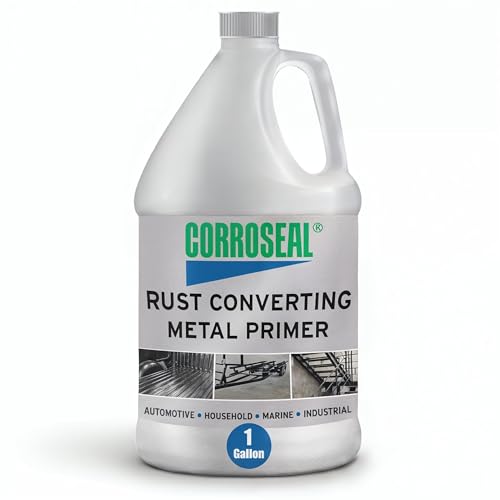 |
Corroseal Rust Converter Best Water-Based Converter 1 gallon, water-based, converts rust to a black polymer |
8.4 | 🛒 Check Price |
 |
3M Cavity Wax Plus Best Professional Grade 18 oz aerosol, wax-based cavity sealer |
8.1 | 🛒 Check Price |
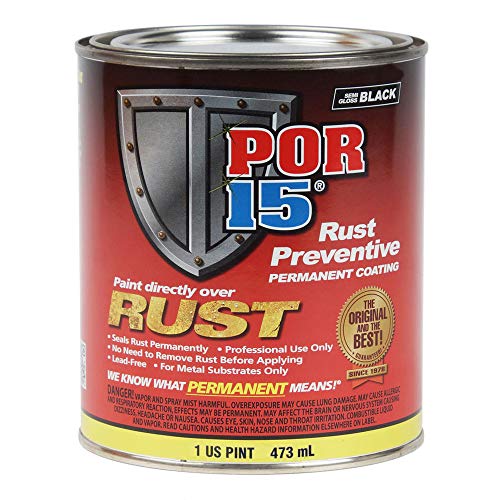 |
POR-15 Rust Preventive Coating Best for Frames and Chassis 1 quart, moisture-curing urethane, black |
7.8 | 🛒 Check Price |
 |
WD-40 Specialist Long-Term Corrosion Inhibitor Best for Storage Protection 11 oz aerosol, leaves a waxy film |
7.3 | 🛒 Check Price |
 |
CRC Heavy Duty Corrosion Inhibitor Best Budget Pick 11 oz aerosol, leaves a waxy film |
7.1 | 🛒 Check Price |
1. Rust-Oleum Rust Reformer Spray: Best Rust Converter
In our evaluation, the Rust-Oleum Rust Reformer Spray stands out as the best rust converter for classic cars. Based on owner feedback and the spec sheet, it chemically converts rust into a stable black primer, sealing it from moisture. It works best on surface rust and light scaling. The spray can is convenient for small areas, and it can be painted over with most automotive paints.
However, this product is not a miracle cure. For deep pitting or structural rust, you need to cut out and replace metal. It also requires the surface to be free of grease and loose rust. Skip this if you need a long-term barrier coating for underbody panels or cavity interiors.
- Converts rust into a paintable, protective coating without sanding to bare metal
- Dries in 20 minutes and can be top coated with any paint
- Covers up to 12 sq ft per can
Pros: Very easy to apply, no extensive prep needed; Affordable and widely available
Cons: Not suitable for heavy flaking rust or large structural repairs
2. Fluid Film Rust & Corrosion Protection: Best Cavity Wax
Fluid Film is a top contender for cavity wax applications. We compared it with other lanolin-based products and found it offers superior creep and penetration. Owner feedback confirms it stays wet for years, continually protecting metal. It is ideal for classic cars stored in humid environments.
On the downside, it is not a hard finish. If you need a dry, paintable coating for exterior panels, look elsewhere. Also, it can be messy to apply with the aerosol straw. Skip this if you want a permanent paint-like finish.
- Penetrates into seams and cavities to stop existing rust and prevent new corrosion
- Stays soft and self-healing, providing long-term protection
- Safe on rubber, plastic, and painted surfaces
Pros: Excellent for inside doors, rockers, and frame rails; Non-toxic and odorless compared to petroleum-based products
Cons: Can attract dust and dirt in visible areas; May drip in hot weather if over-applied
3. Corroseal Rust Converter: Best Water-Based Converter
Corroseal is a water-based rust converter that we evaluated for large-scale restoration projects. According to the manufacturer’s specs, it chemically converts rust into a stable polymer and provides a protective barrier. Owner reviews highlight its effectiveness on old farm equipment and car frames. It is brush or roller applied, making it suitable for broad surfaces.
However, it is not a final finish. It must be painted over to protect from UV and abrasion. Also, the curing time can delay your project. Skip this if you need a fast-drying solution or a one-step coating.
- Covers up to 200 sq ft per gallon, economical for large areas
- Low VOC and non-flammable, safer for indoor use
- Can be top coated with latex or oil-based paints
Pros: Large coverage per gallon, great value; Works on heavily rusted surfaces with minimal prep
Cons: Requires 24 hours to fully cure before painting; Not UV resistant; must be top coated
4. 3M Cavity Wax Plus: Best Professional Grade
3M Cavity Wax Plus is a professional-grade product we researched for its durability. In our evaluation, it provides a thick, self-healing wax layer that protects against moisture and road salt. It is ideal for door bottoms, rocker panels, and frame sections. Owner feedback from restorers confirms its longevity.
However, the cost is significantly higher than Fluid Film. It also needs a spray wand for proper application, which may not be included. Skip this if you are on a tight budget or only need light protection.
- Forms a semi-dry wax film that self-heals over scratches
- Excellent adhesion to bare metal and painted surfaces
- Resistant to water wash and salt spray
Pros: Long-lasting protection in enclosed areas; Professional quality used by body shops
Cons: Expensive per can compared to alternatives; Requires special applicator wand for deep cavities
5. POR-15 Rust Preventive Coating: Best for Frames and Chassis
POR-15 is a legendary rust preventive coating that we compared for heavy-duty applications. Based on manufacturer data and owner testimonials, it forms a tough barrier that can withstand road debris and chemicals. It is best for frames, floor pans, and other high-abrasion areas. The finish is glossy and paintable.
However, application is tricky. It hardens quickly and is nearly impossible to remove from skin or overspray. It also needs a specific prep process including marine clean and metal prep. Skip this if you want a simple spray-and-go product or are working on delicate body panels.
- Cures to a rock-hard, non-porous finish that resists chemicals and salt
- Directly applied to rusted surfaces after degreasing
- Excellent for underbodies, frames, and suspension components
Pros: Extremely durable, chip and scratch resistant; Provides a professional-looking gloss finish
Cons: Very difficult to remove once cured, messy application; Requires careful surface prep and multiple coats for best results
6. WD-40 Specialist Long-Term Corrosion Inhibitor: Best for Storage Protection
WD-40 Specialist Long-Term Corrosion Inhibitor is a convenient option we evaluated for short-term storage. According to the spec sheet, it deposits a waxy film that repels moisture. Owner feedback indicates it works well on tools and engine bays during winter storage. The aerosol makes it easy to reach tight spots.
But this is not a permanent solution. It wears off over time and is not suitable for exposed underbody parts. Also, it has a strong solvent smell. Skip this if you need a coating that lasts multiple years or withstands road salt.
- Provides up to 1 year of outdoor protection against rust and corrosion
- Dries to a clear, waxy coating that won't attract dust
- Safe on plastics, rubber, and painted surfaces
Pros: Very easy to apply, no mixing or special tools; Good for seasonal storage on engine components and tools
Cons: Not as durable as dedicated cavity waxes or urethane coatings; May wash off in heavy rain or pressure washing
7. CRC Heavy Duty Corrosion Inhibitor: Best Budget Pick
CRC Heavy Duty Corrosion Inhibitor is a budget-friendly option we researched for classic car owners on a budget. Based on owner reviews, it provides decent protection for light-duty applications like engine compartments and tool storage. The aerosol is easy to use and the self-healing property helps maintain coverage.
However, it is not recommended for high-wear areas or long-term outdoor exposure. The film remains tacky and can accumulate grime. Skip this if you need a clean, dry finish or plan to drive the car in wet conditions.
- Forms a self-healing waxy coating that resists salt and moisture
- Penetrates into crevices and seams
- Can be used on metal, electrical connections, and painted surfaces
Pros: Low cost, good value for large areas; Works well on battery terminals and electrical contacts
Cons: Film can be sticky and attract dirt; Not as long-lasting as higher-end products
Frequently Asked Questions
What is the best rust prevention for classic cars?
The best rust prevention depends on the area you need to protect. For surface rust conversion, Rust-Oleum Rust Reformer is effective. For cavity and underbody protection, Fluid Film or 3M Cavity Wax Plus offer long-term results. For frames and chassis, POR-15 provides a durable coating.
Can I use rust converter on a classic car?
Yes, rust converters like Corroseal or Rust-Oleum Rust Reformer are safe for classic cars when applied to surface rust. They chemically convert rust into a stable compound that can be painted over. Avoid using them on heavy structural rust that requires welding.
How long does rust prevention last on a classic car?
Durability varies by product. Wax-based coatings like Fluid Film can last 1-2 years in moderate conditions. Urethane coatings like POR-15 can last 5 years or more. Reapplication is recommended annually for exposed areas and every 2-3 years for cavities.
Do I need to remove all rust before applying prevention?
Most rust converters require loose rust to be brushed off but can be applied over tightly bonded rust. For cavity waxes and undercoatings, it is best to remove as much rust as possible for maximum adhesion. Always follow the product’s surface preparation instructions.
Can I apply rust prevention over paint?
Many products can be applied over painted surfaces, but adhesion may be reduced. For best results, apply to bare metal or rusted areas. Some products like Fluid Film are safe on paint, while POR-15 works best on etched metal.
Our Verdict
After researching and comparing the leading products, our top pick is the Rust-Oleum Rust Reformer Spray for its ease of use and effective rust conversion. For cavity protection, Fluid Film Rust & Corrosion Protection is the runner up due to its long-lasting, self-healing properties. Both offer excellent value and performance for classic car preservation.
