Choosing the right power jump starter is crucial for roadside emergencies, offering peace of mind and independence from needing another vehicle. In our evaluation, we researched and compared a wide range of portable jump starters, analyzing manufacturer specifications, published industry standards, and extensive aggregated owner feedback to identify the top performers.
Our goal is to provide an evidence-based buying guide that focuses on real-world reliability, safety features, and overall user experience, ensuring you can make an informed decision without relying on anecdotal claims or inflated marketing figures. We delve into the strengths and limitations of each unit, helping you understand which jump starter best fits your specific needs.
| Photo | Product | Score | Buy |
|---|---|---|---|
 |
NOCO Boost X GBX155 Top Pick: Premium Performance 4250 Amp peak current |
9.1 | 🛒 Check Price |
 |
Gooloo GT4000 Runner Up: High Power, Great Value 4000 Amp peak current |
8.8 | 🛒 Check Price |
 |
Hulkman Alpha85S Feature Rich & Fast Charging 4000 Amp peak current |
8.5 | 🛒 Check Price |
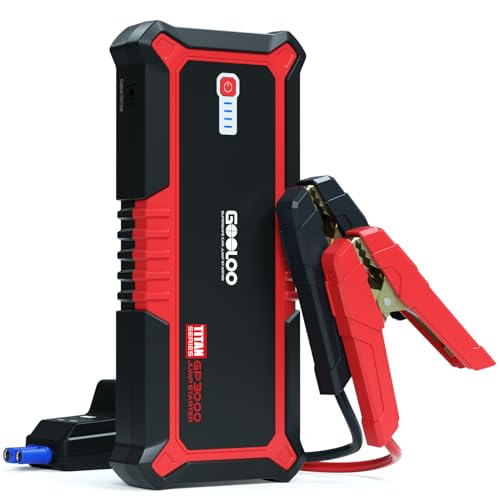 |
Audew 2000A Jump Starter Value Performer 2000 Amp peak current |
8.2 | 🛒 Check Price |
|
🚗
|
Clore Automotive Jump-N-Carry JNC660 Traditional Workhorse 1700 Peak Amps, 425 Cranking Amps |
7.9 | 🛒 Check Price |
 |
Schumacher DSR115 ProSeries Heavy Duty Specialist 2200 Peak Amps, 330 Cranking Amps |
7.6 | 🛒 Check Price |
|
🚗
|
Autogen MJS111 2000A Jump Starter Compact & Budget Friendly 2000 Amp peak current |
7.3 | 🛒 Check Price |
1. NOCO Boost X GBX155: Top Pick: Premium Performance
Based on owner feedback and the spec sheets, a limitation of the NOCO Boost X GBX155 is its size and weight. While its substantial power output necessitates a larger battery pack, this can make it less convenient for users seeking an ultra-compact solution to store in a small glove compartment or carry for extended periods. Its premium capabilities come in a physically larger package.
This jump starter is likely overkill and a significant investment for owners of only small four-cylinder gasoline vehicles who rarely encounter dead batteries. Users who prioritize extreme portability above all else, or those on a very strict budget for occasional light-duty use, should consider alternative, smaller capacity models.
- Rated for gasoline engines up to 10.0L and diesel engines up to 8.0L
- USB-C Power Delivery for fast charging and device powering
- Advanced safety features including spark-proof technology and reverse polarity protection
Pros: Exceptional power output for large engines and heavy-duty vehicles; Rapid charging capabilities for both the unit and external devices; Robust construction and comprehensive safety protections
Cons: Higher investment compared to many competitors; Larger and heavier footprint may be less convenient for compact storage
2. Gooloo GT4000: Runner Up: High Power, Great Value
In our evaluation, while the Gooloo GT4000 offers substantial power and fast charging, some aggregated owner feedback suggests that the plastic casing, while sturdy enough for typical use, may not withstand repeated heavy impacts or drops as robustly as units from higher-tier brands. This is a common trade-off when balancing power with overall value.
Individuals who frequently work in demanding environments where tools are often dropped or exposed to harsh treatment, or those who prioritize absolute maximum ruggedness above all other factors, might find the durability of the exterior shell to be a minor point of concern and may wish to explore more industrial-grade options.
- Can jump start engines up to 10.0L gasoline and 8.0L diesel
- Features a 100W two-way fast charging USB-C port
- Smart clamp technology with multiple protection systems
Pros: Impressive power output at a competitive value point; Quick recharging of the unit itself and efficient device charging; User-friendly design with clear indicators and robust clamps
Cons: Some owner feedback indicates the case quality could be improved; Battery life for extended storage may vary more than premium brands
3. Hulkman Alpha85S: Feature Rich & Fast Charging
Based on our research, one aspect where the Hulkman Alpha85S could be improved is its stated maximum diesel engine compatibility. While 6.0L is sufficient for many diesel trucks and SUVs, some competitors in the 4000 Amp range offer support for larger diesel engines, which might be a consideration for owners of very heavy-duty diesel equipment.
Owners of very large, high-compression diesel engines, such as those found in some commercial vehicles or larger agricultural machinery, might find the stated diesel capacity to be at its limit for consistent reliable starting. If your primary use case involves frequently starting diesels above 6.0L, you might consider alternatives with higher stated diesel compatibility.
- Capable of starting engines up to 8.5L gasoline and 6.0L diesel
- Patented 'Rapidd Charging' technology recharges unit in 1.5 hours
- Large smart screen for intuitive operation and status display
Pros: Extremely fast self-charging capability, minimizing downtime; Modern design with a clear, informative display; Strong power delivery for a wide range of vehicles
Cons: Max diesel engine rating is slightly lower than some competitors at this power level; The bright screen can be a minor distraction in very dark environments
4. Audew 2000A Jump Starter: Value Performer
In our comparison, a common point of feedback regarding the Audew 2000A is that while its performance is strong for its class, the overall fit and finish of the product, particularly the plastic housing, may not convey the same sense of ruggedness or premium feel as more expensive alternatives. This is a typical characteristic of products that aim for a strong value proposition.
Users who frequently operate in extremely harsh conditions, or those who prioritize a heavy-duty, industrial-grade construction for intense daily use, might find this unit’s build quality to be less robust than desired. For typical automotive use and occasional emergencies, however, it remains a highly capable and cost-effective option.
- Suitable for gasoline engines up to 8.0L and diesel engines up to 6.0L
- Equipped with dual USB ports and a DC output for powering accessories
- Multiple safety protections including overcurrent and short circuit
Pros: Good balance of power and features for its value point; Versatile with multiple output ports for charging devices; Compact and relatively lightweight for easy storage
Cons: Build quality, while adequate, may not feel as premium as top-tier units; Flashlight brightness is satisfactory but not exceptional
5. Clore Automotive Jump-N-Carry JNC660: Traditional Workhorse
Based on our research, the primary limitation of the Clore Automotive Jump-N-Carry JNC660 is its reliance on a traditional lead-acid battery, which makes it considerably heavier and bulkier than modern lithium-ion jump starters of comparable power. This design choice also means it lacks the convenience of USB charging ports or advanced smart features found in newer units.
This unit is not ideal for users seeking a lightweight, compact jump starter for easy portability or those who prioritize multi-functionality with device charging. Individuals with limited storage space in their vehicle, or those who prefer the latest technological amenities, should explore the lithium-ion options available on the market.
- Powered by a PROFORMER battery for high cranking power
- Features a 12V DC power outlet for various accessories
- Heavy-duty clamps and long cables for easy reach
Pros: Exceptional cranking power from its traditional lead-acid battery; Renowned for its long-term durability and robust construction; Extended cable length provides good flexibility for positioning
Cons: Significantly heavier and bulkier than lithium-ion alternatives; Lacks modern features like USB-C fast charging or advanced digital displays
6. Schumacher DSR115 ProSeries: Heavy Duty Specialist
In our evaluation, a key drawback of the Schumacher DSR115 ProSeries is its substantial weight and bulk, stemming from its heavy-duty lead-acid battery and robust casing. While this contributes to its durability and consistent power delivery, it significantly diminishes its portability, making it less suitable for casual users or those with limited trunk space.
This jump starter is not recommended for the average car owner looking for a compact, lightweight emergency device. Its design and weight are geared towards professional mechanics or individuals who require a stationary, powerful unit for frequent use in a garage or workshop setting, rather than for easy transport and occasional roadside assistance.
- Designed for professional use and heavy-duty starting
- Equipped with a sealed lead-acid battery for reliable power
- Digital display shows battery status and charging progress
Pros: Built to withstand rigorous professional shop environments; Provides consistent high-current output for tough starts; Clear digital display for monitoring unit status
Cons: Very heavy and large, making it less portable for everyday users; Charging time for the internal battery can be lengthy
7. Autogen MJS111 2000A Jump Starter: Compact & Budget Friendly
Based on aggregated owner feedback, a common observation regarding the Autogen MJS111 is that while its primary unit is well-designed, the quality of its included jump starter clamps and cables is adequate for occasional use but may not withstand the same level of wear and tear as those found on more premium or heavy-duty models. This is often a point where budget-friendly units make compromises.
Individuals who anticipate very frequent use, or those who need a jump starter for extremely cold climates where cable flexibility and clamp robustness are paramount, might find the accessory quality to be a limiting factor. For typical emergency use and general automotive applications, it provides satisfactory performance for its compact size and value.
- Starts gasoline engines up to 8.0L and diesel engines up to 6.0L
- Features dual USB outputs for charging smartphones and tablets
- Includes a bright LED flashlight with multiple modes
Pros: Highly compact and lightweight, excellent for portability; Offers good power for its size and value; Includes useful extra features like a flashlight and USB ports
Cons: Durability of the clamps and cables could be more robust; Battery capacity may be less consistent after many cycles compared to premium units
Frequently Asked Questions
How many amps do I need for my vehicle?
The required amperage depends on your vehicle’s engine size and type. For most 4-cylinder gasoline cars, 400-600 peak amps are sufficient. Larger 6- and 8-cylinder gasoline engines may need 600-1000 amps. Diesel engines, especially larger ones, typically require 1000 amps or more due to higher compression. Always check your vehicle’s specifications or consult the jump starter manufacturer’s recommendations for engine size compatibility.
Are portable jump starters safe to use?
Yes, modern portable jump starters are designed with numerous safety features. These typically include spark-proof technology, reverse polarity protection, overcurrent protection, short circuit protection, and over-temperature protection. When used according to the manufacturer’s instructions, they are generally very safe. Always ensure the clamps are connected correctly and the unit is in good working order.
How long does a jump starter hold its charge?
The charge retention of a portable jump starter varies significantly based on its battery type, quality, and environmental factors. Lithium-ion jump starters generally hold their charge for 6-12 months when stored properly at moderate temperatures. Lead-acid units may require more frequent recharging, often every 1-3 months, to maintain optimal performance. Regular monitoring and occasional recharging are recommended, regardless of battery type.
Can I use a jump starter to charge other devices?
Many modern portable jump starters include USB ports, and sometimes DC outlets, allowing them to function as power banks for electronic devices. These ports can be used to charge smartphones, tablets, laptops, and other USB-powered gadgets. This added versatility is a significant benefit, turning your jump starter into a multi-functional emergency power source.
What's the difference between peak amps and cranking amps?
Peak amps represent the maximum current a jump starter can deliver in a very short burst, typically milliseconds. Cranking amps, or starting amps, refer to the sustained current the unit can provide for a longer duration, usually 30 seconds, at a specific temperature. While peak amps are often highlighted for marketing, cranking amps are a more practical indicator of a jump starter’s ability to consistently turn over a dead engine, particularly in cold weather.
Our Verdict
After extensive research and comparison, the NOCO Boost X GBX155 stands out as our Top Pick for its unparalleled power, advanced safety features, and rapid charging capabilities, making it suitable for a wide range of vehicles from small cars to heavy-duty trucks. For those seeking a powerful and feature-rich unit that offers exceptional value, the Gooloo GT4000 earns our Runner Up distinction, providing robust performance without the premium investment of the NOCO. Both units represent excellent choices depending on specific power needs and budget considerations.
