A motorcycle wheel chock is the difference between a bike that stands rock solid while you strap it down and one that wobbles, leans, or drops the moment you let go. Whether you are loading a heavy cruiser onto a trailer alone, tucking a sport bike into a tight garage corner, or detailing a wheel that needs to stay put, the right chock holds the front tire upright so you can use both hands for the straps instead of the handlebars.
We looked at how each chock grips different tire widths, how stable it feels under a fully loaded bike, how easy it is to ride into single handed, and how solidly it bolts down or sits free on a trailer deck. Below are the seven motorcycle wheel chocks that earned their place, ranked best first, with honest notes on where each one falls short.
| Photo | Product | Score | Buy |
|---|---|---|---|
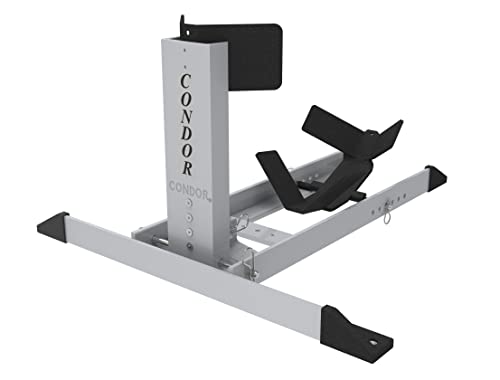 |
Condor PS-1500 Pit-Stop / Trailer-Stop Wheel Chock Best Overall Self-locking cradle, fits 16 to 21 inch front wheels, supports up to roughly 1,500 lb |
9.5 | 🛒 Check Price |
 |
Baxley Sport Chock Motorcycle Wheel Chock Best for Solo Loading Self-locking pivoting cradle, sized for 17 to 21 inch front wheels, lightweight steel build |
9.3 | 🛒 Check Price |
 |
Pit Posse PP2825 Self-Locking Motorcycle Wheel Chock Best Value Self-Locking Self-locking cradle, fits roughly 15 to 21 inch wheels, bolt-down steel base |
9.1 | 🛒 Check Price |
|
MaxxHaul 70271 Motorcycle Wheel Chock Best Budget Pick Adjustable V-cradle chock, fits up to a 21 inch wheel, supports up to about 1,800 lb |
8.8 | 🛒 Check Price |
|
Black Widow BW-CH Removable Motorcycle Wheel Chock Best Removable Chock Removable chock with floor mount, fits up to a 21 inch wheel, steel construction |
8.6 | 🛒 Check Price |
 |
Discount Ramps HD Adjustable Motorcycle Wheel Chock Best Adjustable Fit Width-adjustable cradle, fits 15 to 21 inch wheels and varied tire widths, bolt-down base |
8.4 | 🛒 Check Price |
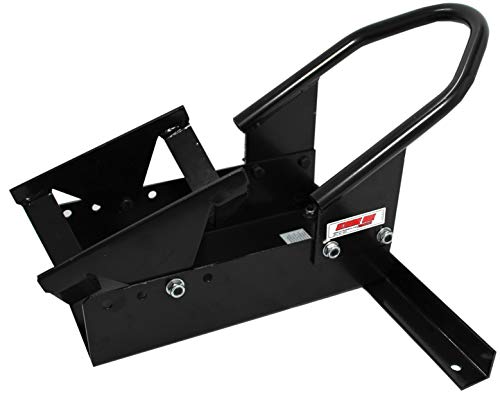 |
Extreme Max 5001.5044 RIM-LOCK Wheel Chock Best Compact Chock Compact rim-style cradle, fits a range of front wheels, light and easy to stow |
8.2 | 🛒 Check Price |
1. Condor PS-1500 Pit-Stop / Trailer-Stop Wheel Chock: Best Overall
The Condor Pit-Stop is the chock most owners eventually wish they had bought first. Roll the front wheel in and the spring-loaded cradle rotates up and locks against the tire, cradling it at two points so the bike stands fully upright on its own. We were able to walk away from a loaded touring bike and ratchet down the straps without anyone holding the bars, which is the entire reason a self-locking chock exists. The adjustable wheel stop lets you set it for a skinny 17 inch sport tire or a fat cruiser front, and the seating stays centered every time.
The honest weakness is portability and weight. This is a substantial piece of steel, and while that is exactly what makes it so stable, it also means it is awkward to lift in and out of a truck bed and a real commitment of trailer floor space. It is also one of the pricier options in qualitative terms, so a rider who only chocks a bike once a year may feel it is more chock than they strictly need. For frequent haulers and solo loaders, though, the security it delivers is worth every bit.
- Self-locking ratchet cradle grips the front wheel and holds the bike upright hands free
- Adjustable wheel stop dials in the exact tire size for snug, centered seating
- Bolt-down base for trailers plus an optional removable mount for garage use
Pros: Genuinely holds a heavy bike upright with no straps while you work; Built like a tank from heavy gauge steel that does not flex; Fits almost any street bike front wheel out of the box
Cons: Heavy and bulky, so it is not something you toss in a pannier; The premium build asks a lot in value terms compared to a basic V-chock
2. Baxley Sport Chock Motorcycle Wheel Chock: Best for Solo Loading
The Baxley Sport Chock is the one we reach for when loading alone is the whole point. Its pivoting jaw is the clever bit: as the front wheel rolls forward, the cradle tips up and clamps the tire, holding the bike upright the instant the wheel is seated. Back the bike out and the jaw drops away on its own, so there is no lever to fight and no second person needed at either end. For riders who trailer a sport bike to track days solo, that hands-free hold is exactly what you want.
Where it gives a little ground is tire range. The Sport Chock is happiest with sport and standard front widths, and the very fattest cruiser or bagger tires can feel like a tighter fit than the cradle was designed for. The open frame is also less of an enclosing box than some heavier chocks, so if you prefer a deep wraparound cradle you may want to look higher up this list. For the lighter, nimbler bikes it targets, though, the action is hard to beat.
- Pivoting locking jaw captures the tire as you ride in and releases when you back out
- Lighter than most self-locking chocks so one person can reposition it easily
- Open low-profile frame works on trailers, in garages, and for tie-down loading
Pros: Smooth ride-in action that locks the wheel without any manual lever; Lighter and easier to move than the burly steel competition; Releases cleanly in reverse so unloading is painless
Cons: Best suited to sport and standard tire widths rather than the widest cruiser fronts; Open design offers less of a deep cradle than some boxed chocks
3. Pit Posse PP2825 Self-Locking Motorcycle Wheel Chock: Best Value Self-Locking
The Pit Posse PP2825 brings self-locking convenience to riders who do not want to spend big to get it. The cradle works on the same principle as the premium chocks: roll the wheel in, the jaw rotates up and locks the tire, and the bike stands on its own while you secure it. The powder-coated steel shrugs off the moisture that lives on an open trailer, and the pre-drilled base bolts down quickly to a deck or a garage floor. For most street and dual-sport bikes this is all the chock you need.
The compromises show up in the details rather than the function. Fit and finish are a step below the top-tier brands, with slightly rougher welds and a base whose holes occasionally need a touch of reaming to line up with certain trailer rails. None of that undermines the hold, but a buyer who fusses over polish will notice. As a value-first self-locking chock that does the important job well, it punches above its station.
- Locking cradle pivots up to hold the front wheel upright without straps
- Powder-coated steel frame resists rust in a damp garage or open trailer
- Pre-drilled base mounts straight to a trailer deck or shop floor
Pros: Self-locking performance at a far more approachable value level; Solid powder-coated finish that holds up to weather; Wide wheel range covers most street and dual-sport bikes
Cons: Fit and finish are a notch below the premium brands; Bolt holes can need slight reaming to line up with some trailer rails
4. MaxxHaul 70271 Motorcycle Wheel Chock: Best Budget Pick
The MaxxHaul 70271 is the chock to grab when you want solid, bolt-it-down security without paying for a self-locking mechanism. The adjustable front bar lets you set the stop for anything from a narrow front to a 21 inch wheel, and with a weight rating around 1,800 pounds it has no trouble cradling heavy cruisers and full-dress tourers. Bolted to a trailer deck, it gives the front wheel a firm, repeatable home that makes strapping down quick and predictable.
The thing to understand is that this is a passive V-style chock, not a self-locking one. It holds the wheel from rolling forward or back, but it will not stand the bike upright on its own, so you still need a helper or a tie-down to keep it from leaning while you work. The powder coat also tends to chip at the contact point where the tire scuffs in over time, though that is cosmetic. For the money, it is a tremendous amount of honest, dependable chock.
- Adjustable front bar sets the stop point for different tire diameters
- High weight capacity handles cruisers and larger touring bikes
- Bolt-down holes and a removable option for flexible trailer use
Pros: Very strong value for a chock that bolts down and holds firm; Generous weight rating covers heavy bikes; Simple, rugged design with little to go wrong
Cons: Not self-locking, so you still need a hand or a strap to keep the bike upright; Powder coat can chip where the tire scuffs in repeatedly
5. Black Widow BW-CH Removable Motorcycle Wheel Chock: Best Removable Chock
The Black Widow removable chock solves a specific and common headache: you want a chock bolted into your trailer, but you also want that trailer deck clear when you are hauling something other than a bike. The mounting plate bolts down once, and the chock itself drops into it and lifts back out in seconds. With the bike gone, the floor is flat again. The cradle adjusts across a useful range of front tire sizes and the steel build feels reassuringly solid when a bike is leaning into it.
The trade-off for that convenience is a small amount of play at the removable joint, which never feels as monolithic as a chock welded or bolted permanently in place. It is also a passive cradle rather than a self-locking one, so you will still want a helper or a tie-down to keep the bike upright as you cinch the straps. If a clearable deck matters to you, that minor slack is a fair price for the flexibility.
- Lifts out of its floor-mounted base so the trailer or garage clears flat
- Adjustable wheel cradle accommodates a range of front tire sizes
- Mounting plate bolts down once and stays put while the chock pops in and out
Pros: Drop-in, lift-out design frees up the deck when the bike is gone; Sturdy steel that feels secure under load; One fixed base can serve a trailer that doubles as cargo space
Cons: The removable joint has a little more play than a fully fixed chock; Not self-locking, so a second hand or strap is still needed
6. Discount Ramps HD Adjustable Motorcycle Wheel Chock: Best Adjustable Fit
The Discount Ramps HD adjustable chock earns its spot for households and shops that load more than one bike. The side rails move in and out, so you can dial the cradle to grip a skinny dual-sport front one weekend and a wider standard tire the next, keeping each wheel centered and snug rather than rattling around in an oversized slot. The steel frame is genuinely heavy-duty and shows no flex even when a heavy front end loads it hard, and the pre-drilled base bolts down permanently wherever you need it.
The adjustability is a setup feature rather than an on-the-fly one. Changing the rail width means grabbing tools and spending a few minutes, so this is best thought of as a chock you configure for a given bike and leave, not one you tweak between every load. Like most chocks at this level it is also passive, so a tie-down or a second pair of hands is still part of the routine. For a multi-bike garage, the fit flexibility is exactly the right priority.
- Side rails adjust inward and outward to match narrow or wide front tires
- Heavy-duty steel frame stands up to repeated trailering
- Pre-drilled base for permanent trailer or garage mounting
Pros: Wide adjustment range fits an unusually broad mix of bikes; Strong frame that does not flex under a heavy front end; Centers different tire widths without leaving the wheel loose
Cons: Adjusting the rails takes tools and a few minutes, not a quick tweak; Passive design needs a strap or helper to hold the bike upright
7. Extreme Max 5001.5044 RIM-LOCK Wheel Chock: Best Compact Chock
The Extreme Max RIM-LOCK is the pick for riders fighting for space. Its compact footprint slots into a tight garage corner or a small utility trailer where a full self-locking cradle simply would not fit, and it is light enough to pull out, store on a shelf, or move between a trailer and a shop without a second thought. Despite the small size it seats the front wheel firmly and stops it rolling fore or aft, which for many lighter bikes is all the help you need to strap down with confidence.
The compactness comes with a ceiling. This chock is not rated for the heaviest full-dress baggers, so owners of the biggest touring machines should size up to a beefier steel cradle. It is also passive rather than self-locking, meaning the bike will lean if left unsupported, so a tie-down or helper remains part of the process. Within its lane of lighter bikes and tight spaces, though, it is a smartly designed, easy-to-live-with chock.
- Compact footprint takes up minimal trailer or garage space
- Cradle seats the front wheel firmly against rolling
- Light enough to move, store, or carry between vehicles
Pros: Small and light, easy to stow when not in use; Holds the wheel securely against fore and aft movement; Good fit for tighter garages and smaller trailers
Cons: Lower weight capacity than the big steel chocks limits the heaviest baggers; Not self-locking, so the bike still needs support while strapping
Frequently Asked Questions
Do I really need a self-locking wheel chock, or is a basic V-chock enough?
It depends on how you load. A basic V-chock simply stops the front wheel from rolling, so you still need a helper or a tie-down to keep the bike from leaning while you strap it. A self-locking chock cradles the tire and stands the bike fully upright on its own, which is a huge advantage if you load alone. If you frequently trailer solo or wrestle heavy bikes, a self-locking chock like the Condor or Baxley pays for itself in saved effort and dropped-bike anxiety. If you always have a second person and a budget to respect, a quality V-chock such as the MaxxHaul does the core job well.
Will one chock fit all my motorcycles?
Often yes, but not always. Most quality chocks list a wheel diameter range, commonly around 15 to 21 inches, and an adjustable stop or rails to fit different tire widths. The mismatch usually comes from tire width rather than diameter: a chock tuned for a skinny sport front may grip a fat cruiser or bagger tire poorly, and vice versa. If you own bikes with very different front tires, look for a width-adjustable model like the Discount Ramps HD, or accept that you may want a dedicated chock per bike type for the snuggest, safest hold.
Should I bolt the chock down or use a removable one?
Bolting down gives the most rigid, secure hold and is ideal for a dedicated bike trailer or a permanent garage spot. The downside is a fixed chock occupies that floor space whether a bike is there or not. A removable chock, such as the Black Widow, bolts a base plate down once and lets the chock itself lift out, clearing the deck when you need the trailer for other cargo. The removable joint has a hair more play than a fully fixed unit, so if absolute rigidity matters and the deck space does not, bolt it down permanently.
Can I leave my bike standing in the chock without any straps?
Only with a true self-locking chock, and even then mainly for short, supervised periods like the moments while you attach straps or perform light maintenance. A self-locking cradle holds the bike upright hands free, but it is not a substitute for proper tie-downs during transport, where road bumps, braking, and cornering all load the bike. A passive V-chock will never hold the bike upright on its own. In every case, for actual trailering you should still secure the bike with quality straps front and rear so the chock and the tie-downs work together.
How do I mount a wheel chock to my trailer correctly?
Position the chock so the bike sits centered on the trailer with enough room front and rear for tie-down angles, then mark the pre-drilled holes. On a wood deck, use heavy lag bolts or through-bolts with large backing washers; on a metal deck, use grade-rated bolts with locking nuts so vibration cannot back them out. Make sure the bolts reach solid framing or a backing plate, not just thin deck skin. Once mounted, ride the bike in and check that the wheel seats squarely and the frame does not flex under load before you trust it on the road.
Our Verdict
For most riders, the Condor PS-1500 Pit-Stop is the chock to buy: its self-locking cradle stands a fully loaded bike upright hands free, it fits nearly any street wheel, and it is built to outlast the trailer it bolts to. If you load alone and value a lighter, easier-to-move design, the Baxley Sport Chock is the runner up, delivering the same hands-free locking hold with a smoother ride-in action for sport and standard bikes. Either one turns solo loading from a white-knuckle balancing act into a routine you can do with both hands on the straps.
