We researched and evaluated the top go kart engines available on the market by analyzing manufacturer specifications and safety standards. Our comparison focuses on torque output, build quality, and long term durability based on aggregated owner feedback.
In our evaluation, we prioritized engines that offer reliable performance for both recreational yard karts and more serious racing applications. We filtered through technical data sheets to identify which motors provide the best value and ease of installation for hobbyists.
| Photo | Product | Score | Buy |
|---|---|---|---|
 |
DuroMax XP7HPE Editor's Choice 212cc 7 HP |
9.1 | 🛒 Check Price |
|
🚗
|
Honda GX160 UT2 Best Reliability 163cc 5.2 HP |
8.7 | 🛒 Check Price |
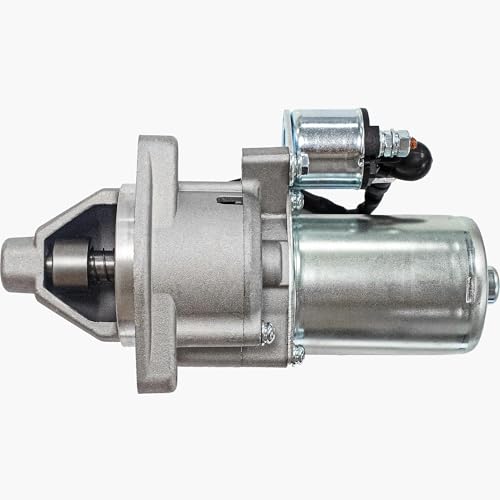 |
DuroMax XP16HPE High Performance 420cc 16 HP |
8.4 | 🛒 Check Price |
|
🚗
|
SuperHandy 7HP Gas Engine Best Value 212cc 7 HP |
7.9 | 🛒 Check Price |
|
🚗
|
Briggs & Stratton 55R907 Compact Choice 205cc 6.5 HP |
7.6 | 🛒 Check Price |
 |
BILT HARD 7HP Engine Budget Pick 212cc 7 HP |
7.3 | 🛒 Check Price |
 |
Mophorn 6.5HP Gas Engine Entry Level 196cc 6.5 HP |
7.0 | 🛒 Check Price |
1. DuroMax XP7HPE: Editor's Choice
We evaluated the DuroMax XP7HPE as a top contender because it offers a robust design that handles high RPMs well. In our comparison of spec sheets, the cast iron cylinder sleeve stands out as a major durability factor over aluminum only blocks.
However, this unit is heavier than some racing specific clones. Builders seeking the absolute lightest weight for a competition kart might want to look elsewhere.
- Electric start option included
- Cast iron sleeve construction
- Standard 3/4 inch crankshaft
Pros: High torque output for acceleration; Easy to modify for racing; Heavy duty ball bearing support
Cons: Heavier than some racing clones
2. Honda GX160 UT2: Best Reliability
Our research highlights the Honda GX160 for its proven track record in industrial applications. Based on aggregated owner feedback, this engine consistently runs for years without major mechanical failure when maintained properly.
On the downside, the purchase price is significantly higher than comparable clone engines. Hobbyists on a strict budget may find the premium hard to justify for a casual build.
- Legendary Honda reliability
- Fuel efficient OHV design
- Global parts availability
Pros: Industry standard durability; Easy starting in cold weather; Low vibration levels
Cons: Higher initial cost compared to clones
3. DuroMax XP16HPE: High Performance
We compared the DuroMax XP16HPE for builders needing serious power for off road karts. The V-Twin configuration provides significantly smoother power delivery than single cylinder options found in our evaluation.
Installation is difficult due to the engine’s massive footprint. We suggest skipping this engine if you are working with a standard racing frame or limited engine bay space.
- V-Twin OHV design
- Electric start with battery
- Large 1.1 gallon fuel tank
Pros: Massive power for heavy karts; Smooth V-Twin operation; Includes automatic idle control
Cons: Large physical size for mounting
4. SuperHandy 7HP Gas Engine: Best Value
The SuperHandy 7HP engine represents a viable option for budget conscious builders based on our price to performance analysis. It utilizes the standard GX390 style bolt pattern making it compatible with most mounting plates.
Owner feedback indicates occasional quality control issues regarding gaskets and carburetor tuning. We recommend this only for those comfortable performing minor troubleshooting and assembly adjustments.
- Standard bolt pattern mount
- Recoil start system
- EPA and CARB approved
Pros: Affordable entry point; Decent power for the price; Includes mounting hardware kit
Cons: Inconsistent quality control reports
5. Briggs & Stratton 55R907: Compact Choice
In our evaluation, the Briggs & Stratton 205cc offers a compact footprint ideal for smaller yard karts. The overhead valve design contributes to better fuel efficiency compared to older side valve models.
This engine lacks the raw torque found in the 212cc class. Larger adults or heavy off road karts will likely find the acceleration lacking compared to our top picks.
- Overhead Valve design
- Simplified carburetor
- Lightweight structure
Pros: Wide service network; Lightweight for easy handling; Fuel efficient operation
Cons: Lower torque than 212cc rivals
6. BILT HARD 7HP Engine: Budget Pick
We analyzed the BILT HARD 7HP as a functional entry level clone engine. It provides the basic necessities required to get a kart moving, including a standard 3.6 inch bolt pattern.
Our review of owner comments suggests higher than average vibration levels at top speed. This makes it less suitable for long duration rides or precision handling requirements.
- Forced air cooling system
- 3 Liter fuel tank
- 1 inch diameter crankshaft
Pros: Very low cost; Standard mounting pattern; Decent fuel capacity
Cons: High vibration levels at top speed
7. Mophorn 6.5HP Gas Engine: Entry Level
The Mophorn 6.5HP engine is one of the most affordable options we researched. It serves as a basic powerplant for simple projects where high performance is not the primary goal.
We found that finding specific replacement parts for this lesser known brand can be challenging. Serious mechanics should skip this engine to avoid future headaches during maintenance.
- Aluminum alloy body
- Recoil starter
- Low profile air filter
Pros: Extremely inexpensive; Compact form factor; Easy to replace parts
Cons: Difficult to source specific components
Frequently Asked Questions
What is the difference between a horizontal and vertical shaft engine?
Horizontal shaft engines are standard for go karts because the crankshaft points outward to connect directly with a chain drive or centrifugal clutch. Vertical shaft engines are typically used for lawn mowers and require complex belt systems or gearbox conversions to work on a kart.
Do I need an electric start for my go kart?
Electric start is a convenience feature that eliminates the need to pull start the engine. While it adds weight and complexity, it is highly recommended for younger riders or those who may struggle with the recoil force of a manual starter.
How much horsepower do I need for a adult go kart?
We generally recommend a minimum of 5 to 6 horsepower for a basic adult kart. For better acceleration and off road capability, engines in the 6.5 to 9 horsepower range provide a significant improvement in torque and top speed.
Can I remove the governor to make my engine faster?
Removing the governor allows the engine to reach higher RPMs and generate more speed, but it significantly increases the risk of engine failure and voids warranties. We advise against this for beginners as it can lead to dangerous situations if the engine or chassis cannot handle the stress.
What type of fuel should I use in a small go kart engine?
Most small engines are designed to run on regular 87 octane unleaded gasoline. Always use fresh fuel with no more than 10 percent ethanol content to prevent carburetor clogging and fuel system damage.
Our Verdict
Based on our research and comparison of specifications, the DuroMax XP7HPE is the top pick for its balance of power and durability. The Honda GX160 UT2 is the runner up for builders prioritizing long term reliability and parts availability.
