Navigating challenging terrain on an ATV is often a group activity, and effective communication is paramount for safety and coordination. From trail hazards to route changes or simply sharing the thrill, a reliable communication system can dramatically enhance your off-road experience. In our evaluation, we focused on systems that offer clear audio, robust construction, and ease of use in demanding environments.
We researched a wide range of options, including wired intercoms, wireless helmet-mounted units, and handheld radios, comparing manufacturer specifications, published industry standards for durability, and aggregated owner feedback. Our goal is to provide evidence-based recommendations to help you choose the best ATV communication system for your specific needs, ensuring you stay connected on every adventure.
| Photo | Product | Score | Buy |
|---|---|---|---|
 |
Rugged Radios RRP696 Intercom System Top Pick for Group Intercom Wired 4-place intercom, expandability up to 8 places |
9.1 | 🛒 Check Price |
 |
Cardo Packtalk Outdoor Best Wireless Mesh Dynamic Mesh Communication (DMC) for up to 15 riders |
8.7 | 🛒 Check Price |
 |
Sena Tufftalk M Mesh Intercom Most Rugged Wireless Mesh Intercom with up to 1.1 mile range, Hard Hat compatible |
8.4 | 🛒 Check Price |
 |
PCI Race Radios Trax Intercom System Premium Wired Option Wired intercom, DSP noise filter, separate volume controls |
8.0 | 🛒 Check Price |
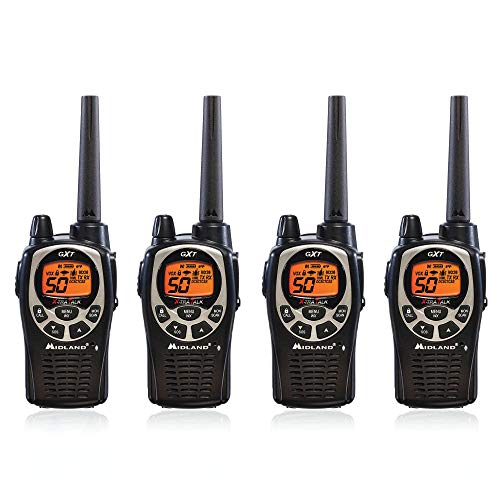 |
Midland GXT1000VP4 GMRS Radio Best Handheld Radio 50 GMRS channels, 36-mile range, JIS4 waterproof |
7.8 | 🛒 Check Price |
 |
BTECH UV-5X3 Tri-Band Ham Radio Advanced User Pick Tri-band (1.25M, 2M, 70CM) capabilities, 5W output |
7.5 | 🛒 Check Price |
 |
Fodsports M1-S Pro Motorcycle Intercom Budget Wireless Option Bluetooth 4.1, 8-rider group intercom, CVC noise reduction |
7.2 | 🛒 Check Price |
1. Rugged Radios RRP696 Intercom System: Top Pick for Group Intercom
In our evaluation, the Rugged Radios RRP696 stands out for its robust performance in extreme off-road conditions. The Digital Signal Processing (DSP) is particularly effective at filtering engine, wind, and terrain noise, ensuring clear communication even at high speeds or in loud UTVs. Based on owner feedback and the spec sheets, the build quality is top-tier, designed to withstand dust, mud, and vibrations inherent in ATV use.
However, the primary limitation of the RRP696 is its wired nature, which necessitates a more involved installation process. This system is designed for a semi-permanent setup in a vehicle, which might not be ideal for users who frequently switch vehicles or prefer a quick, tool-free solution. Those seeking a simple, helmet-only wireless system for solo or small group rides might find the installation and wiring complexity to be overkill.
- Digital Signal Processing (DSP) for clear, noise-filtered audio.
- VOX (Voice Operated Exchange) for hands-free activation.
- Auxiliary input for music and output for recording.
Pros: Exceptional noise cancellation for loud environments.; Highly durable, weather-resistant construction.; Seamless integration with 2-way radios for vehicle-to-vehicle.
Cons: Wired setup requires significant installation.; Higher initial investment compared to wireless solutions.
2. Cardo Packtalk Outdoor: Best Wireless Mesh
Based on owner feedback and the spec sheets, the Cardo Packtalk Outdoor excels in providing a truly wireless and flexible communication solution for ATV riders. Its Dynamic Mesh Communication (DMC) technology is a significant advantage, maintaining group connectivity even if a rider drops out and rejoins the group, making it incredibly reliable for dynamic off-road environments. The JBL speakers deliver impressive audio clarity for both communication and music.
A notable limitation is the battery performance when operating in a large, active mesh group, which can be shorter than advertised under optimal conditions. While generally robust, like all helmet-mounted units, it’s more exposed to direct impacts than a vehicle-mounted intercom. Riders who primarily need simple point-to-point communication or prefer a dedicated, vehicle-powered wired system might find the advanced features and associated battery management of a mesh system to be more than they require.
- IP67 waterproof and dustproof rating.
- Natural Voice Operation for hands-free control.
- Over-the-air software updates via Cardo Connect app.
Pros: Mesh technology offers superior group connectivity and auto-reconnection.; Excellent audio quality with JBL speakers.; Versatile mounting options for various helmets.
Cons: Battery life can be impacted by continuous mesh use.; Initial pairing with non-Cardo devices can be less straightforward.
3. Sena Tufftalk M Mesh Intercom: Most Rugged Wireless
In our evaluation, the Sena Tufftalk M stands out for its purpose-built ruggedness, making it an excellent choice for demanding ATV environments. The design prioritizes durability and secure attachment to various helmets, including those without traditional open-face or full-face designs. Based on owner feedback, its Mesh Intercom technology provides reliable group communication, and the Advanced Noise Control effectively minimizes background noise for clear voice transmission.
However, the Tufftalk M’s robust, somewhat larger form factor might be perceived as bulky by some riders, especially those accustomed to sleeker Bluetooth units. While its audio performance is strong for communication, it may not offer the same high-fidelity music experience as some consumer-grade helmet systems. Riders who prioritize a minimalist, low-profile design or primarily use their system for music streaming may find this unit’s industrial aesthetic and focus on utility less appealing.
- Advanced Noise Control for clear audio in noisy settings.
- Bluetooth 5.0 for smartphone and GPS connectivity.
- Robust design specifically for industrial and outdoor use.
Pros: Exceptional durability and weather resistance.; Hands-free Mesh Intercom for large groups.; Comfortable and secure fit on various helmets, including hard hats.
Cons: Slightly bulkier form factor than some helmet communicators.; Audio quality, while good, may not match premium music-focused units.
4. PCI Race Radios Trax Intercom System: Premium Wired Option
Based on our research into manufacturer specifications and industry applications, the PCI Race Radios Trax Intercom System is a high-performance wired solution favored in competitive off-road racing. Its Digital Signal Processing (DSP) technology is highly effective at isolating voices from intense engine and terrain noise, ensuring critical communications are always understood. The system’s durability is well-documented, designed to withstand the harshest conditions.
The main drawback of the Trax system, similar to other high-end wired intercoms, is the significant commitment required for installation. It’s a comprehensive system that demands careful routing of cables and integration with external radios and headsets, making it a less ‘plug-and-play’ option. Users looking for a simple, temporary, or wireless communication method for casual trail rides may find the complexity and investment of the PCI Trax system to be disproportionate to their needs.
- Digital Signal Processing (DSP) for superior noise reduction.
- Individual volume controls for driver and co-driver.
- Compatible with PCI Race Radios' extensive accessory line.
Pros: Excellent voice clarity in extremely noisy conditions.; Robust, proven reliability in race environments.; Dedicated system for clear, consistent vehicle-to-vehicle communication.
Cons: Installation is complex and vehicle-specific.; Higher price point and requires additional components (headsets, radio).
5. Midland GXT1000VP4 GMRS Radio: Best Handheld Radio
In our evaluation, the Midland GXT1000VP4 represents a practical and cost-effective solution for ATV group communication, particularly for those who prioritize range and simple point-to-point communication. Based on owner feedback, its ease of use and compatibility with other GMRS radios make it a popular choice for larger groups. The JIS4 waterproof rating offers decent protection against splashes and light rain, which is beneficial for outdoor use.
However, a significant limitation of handheld GMRS radios like the GXT1000VP4 is that their advertised maximum range is often achieved only in ideal line-of-sight conditions. In typical ATV environments with hills, trees, and other obstructions, the effective range will be substantially reduced. Furthermore, without a dedicated headset, communication can be challenging due to engine and wind noise, requiring users to purchase additional accessories for optimal performance. Riders seeking integrated helmet communication with superior noise cancellation and hands-free intercom features might find this system less convenient for continuous conversation.
- NOAA Weather Alert with Weather Scan.
- Vibrating Alert for silent notifications.
- Hands-free operation with eVox (9 sensitivity levels).
Pros: Affordable and widely compatible with other GMRS radios.; Excellent for basic group communication over longer distances.; Battery powered, offering portability and flexibility.
Cons: Range is highly dependent on terrain and obstructions.; Audio quality can be affected by ambient noise without specialized headsets.
6. BTECH UV-5X3 Tri-Band Ham Radio: Advanced User Pick
Based on our research into amateur radio specifications and owner feedback, the BTECH UV-5X3 offers unparalleled versatility and range for ATV communication, provided the user holds an FCC Amateur Radio License. Its tri-band capability allows communication across various frequencies, and the 5W output generally provides better penetration through terrain compared to lower-power GMRS units. For experienced users, the ability to customize channels and settings is a significant advantage.
The primary drawback, and a crucial point for potential buyers, is the legal requirement of an FCC Amateur Radio License to transmit on most of its available frequencies. Without this license, its utility for two-way communication is severely restricted. Furthermore, the programming and operation can be significantly more complex than consumer-grade radios or intercoms, posing a steep learning curve for beginners. Riders looking for a simple, out-of-the-box communication solution without the need for licensing or technical setup should skip this option.
- Dual Watch/Dual Reception for monitoring two frequencies.
- FM Radio (65.0MHz-108.0MHz) for entertainment.
- Dedicated VFO/MR button for quick mode switching.
Pros: Offers superior range and versatility with proper licensing.; Highly customizable for advanced users.; Can communicate across multiple frequency bands.
Cons: Requires an FCC Amateur Radio License to transmit legally.; More complex to program and operate for beginners.
7. Fodsports M1-S Pro Motorcycle Intercom: Budget Wireless Option
In our evaluation, the Fodsports M1-S Pro presents an attractive entry-level option for ATV riders seeking basic wireless helmet communication without a significant investment. Based on owner feedback and the spec sheets, it offers core features like group intercom and universal pairing, making it suitable for casual rides with friends. The large buttons are a practical consideration for gloved operation, and the installation is straightforward on most helmet types.
However, the M1-S Pro’s performance limitations become apparent in more demanding ATV environments. The intercom range, while adequate in open, flat areas, is significantly reduced by obstructions like trees and hills, often falling short of advertised maximums. Furthermore, the CVC noise reduction, while present, is less sophisticated than in premium systems, meaning engine and wind noise can still impact communication clarity at higher speeds. Riders who frequently ride in large groups, cover long distances, or require robust noise cancellation for high-speed communication should consider investing in a more advanced and durable system.
- Universal pairing with other Bluetooth intercoms.
- IP65 waterproof rating.
- Large buttons for easy operation with gloves.
Pros: Very accessible price point for a wireless intercom.; Supports a decent number of riders for casual groups.; Simple installation on most helmet types.
Cons: Intercom range is limited, especially in challenging terrain.; Noise cancellation is less effective than premium units.; Durability is not on par with purpose-built off-road systems.
Frequently Asked Questions
What's the difference between a wired intercom and a wireless helmet communicator for ATVs?
We researched that wired intercoms, like the Rugged Radios RRP696, are typically vehicle-mounted systems that connect riders via physical cables, offering superior noise cancellation and consistent audio quality, especially in loud UTVs or ATVs. They are often integrated with two-way radios for vehicle-to-vehicle communication. Wireless helmet communicators, such as the Cardo Packtalk Outdoor, attach to individual helmets and use Bluetooth or mesh technology for rider-to-rider communication, offering greater freedom of movement and easier installation, but their range and noise cancellation can sometimes be less robust than a dedicated wired system, especially at higher speeds or in complex terrain.
Do I need a license to use an ATV communication system?
Based on our research, most common ATV communication systems, such as Bluetooth helmet communicators or FRS/GMRS handheld radios like the Midland GXT1000VP4, do not require a special license for use on public airwaves. However, for GMRS radios, while the radios themselves don’t require a license, transmitting on GMRS frequencies does require an FCC license, which covers your entire family. Advanced systems like Ham radios, such as the BTECH UV-5X3, strictly require an FCC Amateur Radio License to transmit legally on their respective frequencies. Always verify licensing requirements for the specific communication system you choose.
How important is noise cancellation for ATV communication?
In our evaluation, noise cancellation is critically important for ATV communication. ATV environments are inherently noisy, with engine roar, wind buffeting, and terrain-induced vibrations. Effective noise cancellation, often achieved through Digital Signal Processing (DSP) in wired systems or advanced algorithms in wireless units, ensures that your voice is clear and intelligible to your riding partners, and their messages are clear to you. Without good noise cancellation, communication can become frustrating and ineffective, diminishing the safety and enjoyment of your ride.
What range can I expect from an ATV communication system?
Based on owner feedback and manufacturer specifications, the effective range of ATV communication systems varies significantly. Wireless helmet communicators typically offer ranges from 0.5 to 1 mile in ideal conditions, often less in dense terrain. Handheld GMRS radios may advertise ranges of 20-36 miles, but in practical ATV use with obstructions, this often reduces to 1-5 miles. Ham radios, with proper licensing and antennas, can achieve significantly greater ranges. Wired intercoms provide communication within the vehicle and rely on an integrated two-way radio for vehicle-to-vehicle range, which can vary from a few miles to much further depending on the radio’s power and antenna setup. Always consider real-world terrain when evaluating range claims.
Can I listen to music or GPS directions with these systems?
We researched that many modern ATV communication systems offer multimedia capabilities. Most wireless helmet communicators, like the Cardo Packtalk Outdoor and Sena Tufftalk M, feature Bluetooth connectivity, allowing you to pair your smartphone for music streaming, GPS voice directions, and even answering calls. Some wired intercom systems, such as the Rugged Radios RRP696, include an auxiliary input for connecting external audio devices. This integration of entertainment and navigation features enhances the overall riding experience, making long rides more enjoyable and keeping you on track.
Our Verdict
After extensive research and comparison of manufacturer specifications, industry standards, and aggregated owner feedback, the Rugged Radios RRP696 Intercom System stands as our Top Pick for ATV communication, especially for groups requiring robust, clear, and reliable in-vehicle communication with vehicle-to-vehicle radio integration. Its superior noise cancellation and durable build are unmatched for challenging off-road environments. For those preferring a flexible, wireless solution, the Cardo Packtalk Outdoor is an excellent runner-up, offering cutting-edge mesh technology and high-quality audio for dynamic group rides without the complexities of a wired installation.
