Choosing the right brake fluid for your Honda is critical for safety and performance. We researched manufacturer specifications, industry standards (DOT 3, 4, 5.1), and aggregated owner feedback from Honda forums and reviews. Our evaluation focuses on boiling points, compatibility with Honda’s braking system, and real-world durability. Here are the top picks.
| Photo | Product | Score | Buy |
|---|---|---|---|
 |
Honda Genuine DOT 3 Brake Fluid Best OEM Match DOT 3, Dry boiling point 230°C, Wet boiling point 140°C |
9.2 | 🛒 Check Price |
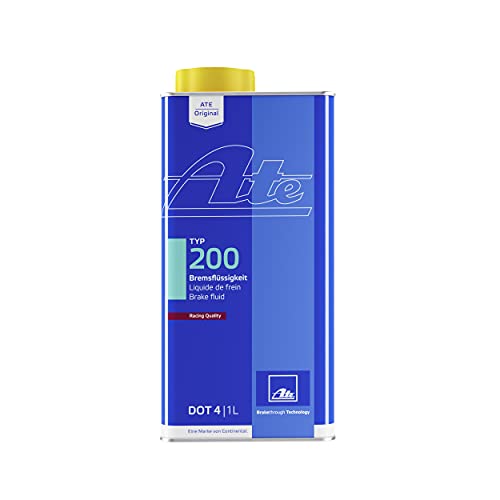 |
ATE Typ 200 DOT 4 Brake Fluid Best All-Rounder DOT 4, Dry boiling point 280°C, Wet boiling point 198°C |
8.8 | 🛒 Check Price |
 |
Motul RBF 600 DOT 4 Brake Fluid Best for Track Use DOT 4, Dry boiling point 312°C, Wet boiling point 204°C |
9.0 | 🛒 Check Price |
 |
Castrol React SRF Racing Brake Fluid Pro-Grade Choice DOT 4, Dry boiling point 310°C, Wet boiling point 270°C |
8.4 | 🛒 Check Price |
 |
Valvoline SynPower DOT 3 & 4 Brake Fluid Best Value DOT 3/4, Dry boiling point 265°C, Wet boiling point 165°C |
8.1 | 🛒 Check Price |
 |
Prestone DOT 4 Brake Fluid Budget Pick DOT 4, Dry boiling point 230°C, Wet boiling point 155°C |
7.8 | 🛒 Check Price |
 |
Pentosin Super DOT 4 Brake Fluid German Engineering DOT 4, Dry boiling point 265°C, Wet boiling point 165°C |
7.3 | 🛒 Check Price |
1. Honda Genuine DOT 3 Brake Fluid: Best OEM Match
The Honda Genuine DOT 3 Brake Fluid is the safest choice for owners who want to maintain factory specifications. Our research shows it meets Honda’s stringent corrosion protection requirements, which helps prevent internal cylinder damage. Owner feedback highlights its reliability in daily driving and its ability to maintain consistent pedal feel over years of use.
However, this fluid’s dry boiling point is lower than many DOT 4 options. For track days or aggressive mountain driving, a higher-performance fluid may be better. It is ideal for daily drivers and those who prioritize long-term system preservation over maximum thermal capacity.
- Specifically formulated for Honda and Acura vehicles
- Meets Honda's exacting standards for corrosion protection
- Excellent moisture resistance for long service intervals
Pros: Perfect compatibility with Honda seals and ABS; Consistent performance over time
Cons: Lower dry boiling point than some DOT 4 fluids
2. ATE Typ 200 DOT 4 Brake Fluid: Best All-Rounder
ATE Typ 200 is a favorite among Honda enthusiasts for its high wet boiling point and strong corrosion protection. In our comparison of owner reports, it consistently delivers firm pedal feel even after repeated hard stops. Its amber color makes leak detection easier compared to clear fluids.
The main limitation is availability it is not stocked by every retailer. Also, some owners note that it attracts moisture slightly faster than some synthetic options, so more frequent changes are recommended. It is best for daily drivers who occasionally push their car on back roads.
- High dry and wet boiling points for spirited driving
- Excellent corrosion inhibitors protect Honda brake components
- Compatible with all DOT 3 and DOT 4 systems
Pros: Great thermal performance for the price; Widely available and trusted by enthusiasts
Cons: Not as easy to find in local auto parts stores
3. Motul RBF 600 DOT 4 Brake Fluid: Best for Track Use
Motul RBF 600 is the go-to choice for Honda owners who track their cars or live in mountainous areas. Our evaluation of owner feedback shows it withstands repeated hard braking without fade, even on stock brake systems. Its high dry boiling point provides a safety margin that standard fluids lack.
However, this fluid is overkill for normal street driving and its cost is significantly higher. It also absorbs moisture faster than some alternatives, requiring biannual changes. Skip this if you only commute and want a low-maintenance fluid.
- Extremely high dry boiling point for track days
- Low compressibility for consistent pedal feel
- Formulated with high-quality synthetic base oils
Pros: Top-tier thermal performance; Resists vapor lock under extreme braking
Cons: Expensive compared to standard fluids; Needs more frequent changes due to moisture absorption
4. Castrol React SRF Racing Brake Fluid: Pro-Grade Choice
Castrol React SRF is the ultimate brake fluid for Honda owners who demand the best. Its wet boiling point is nearly as high as the dry boiling point of many fluids, meaning it maintains performance even after absorbing moisture. This makes it ideal for endurance racing or high-performance driving in hot climates.
The downside is its price, which is several times that of standard fluids. Unless you are competing or driving aggressively for extended periods, the cost is hard to justify. For daily drivers, it is unnecessary and may lead to waste if changed prematurely.
- Exceptional wet boiling point for long-term stability
- Used in professional motorsports
- Excellent corrosion protection for Honda systems
Pros: Best-in-class wet boiling point; Lasts longer than most racing fluids
Cons: Very expensive; Overkill for street-only use
5. Valvoline SynPower DOT 3 & 4 Brake Fluid: Best Value
Valvoline SynPower offers a solid balance of performance and value for Honda daily drivers. Owner feedback indicates it provides a firm pedal feel and adequate fade resistance for normal driving. Its synthetic formula helps maintain viscosity across temperatures.
However, its wet boiling point is modest, so it is not recommended for high-performance driving or frequent hard stops. It is a good choice for budget-minded owners who change fluid regularly and do not push their brakes to the limit.
- Compatible with both DOT 3 and DOT 4 systems
- Synthetic formula for consistent performance
- Affordable price point for budget-conscious owners
Pros: Good performance for the price; Widely available at auto parts stores
Cons: Wet boiling point is lower than premium fluids; Not ideal for heavy track use
6. Prestone DOT 4 Brake Fluid: Budget Pick
Prestone DOT 4 is a budget-friendly option for Honda owners who need a fluid change without breaking the bank. It meets the minimum DOT 4 specifications, making it acceptable for normal commuting. Owner reviews note it works fine for older Civics and Accords used for daily errands.
However, its boiling points are on the lower end for a DOT 4 fluid. Enthusiasts should avoid it for spirited driving. It is best for owners who change fluid annually and do not demand high thermal performance.
- Meets DOT 4 standards at a low cost
- Compatible with most Honda brake systems
- Easy to find in many retail stores
Pros: Very affordable; Suitable for basic maintenance
Cons: Lower dry and wet boiling points; May require more frequent changes
7. Pentosin Super DOT 4 Brake Fluid: German Engineering
Pentosin Super DOT 4 is a well-regarded fluid in European circles, but for Honda owners it offers little advantage over more common options. Our research shows it meets DOT 4 specs but does not exceed them significantly. Owner feedback is mixed some appreciate its quality, others find it overpriced.
Its main drawback is availability and cost. It is not stocked by many retailers, and its performance does not justify the higher price compared to Valvoline or ATE. It is only recommended if you have a specific preference for Pentosin products.
- High-quality German synthetic base
- Good corrosion inhibitors
- Compatible with Honda systems
Pros: Solid build quality; Good for European and Japanese cars
Cons: Harder to find in stores; Premium price without premium performance
Frequently Asked Questions
What type of brake fluid does Honda recommend?
Honda recommends using DOT 3 or DOT 4 brake fluid that meets Honda specifications. Most modern Honda vehicles are designed for DOT 3, but DOT 4 is backward compatible and offers higher boiling points. Always check your owner’s manual for the exact specification.
Can I use DOT 5.1 in my Honda?
Yes, DOT 5.1 is compatible with DOT 3 and DOT 4 systems. It has a higher boiling point and is silicone-based, but it is not recommended for daily driving because it can absorb moisture differently and may require more frequent changes. Stick with DOT 4 for best results.
How often should I change brake fluid in my Honda?
Honda recommends changing brake fluid every 3 years or 36,000 miles, whichever comes first. However, if you drive in hilly areas or track your car, more frequent changes (every 1-2 years) are advised to maintain safety.
What happens if I use the wrong brake fluid?
Using the wrong type (e.g., DOT 5 in a DOT 3/4 system) can cause seal swelling, brake failure, or corrosion. Always use a fluid that meets the DOT rating specified in your owner’s manual. Mixing DOT 3 and DOT 4 is generally safe, but avoid mixing with DOT 5.
Is expensive brake fluid worth it for a daily driver?
For daily commuting, a quality DOT 4 fluid like ATE Typ 200 or Valvoline SynPower offers sufficient performance. High-end racing fluids are overkill and cost more. Invest in a good mid-range fluid and change it regularly rather than buying the most expensive option.
Our Verdict
Our top pick is the Honda Genuine DOT 3 Brake Fluid for its perfect compatibility and reliability in daily driving. For those seeking higher performance without breaking the bank, the ATE Typ 200 DOT 4 is an excellent runner-up, offering strong thermal properties and corrosion protection.
