Choosing the best all-around SXS tire requires balancing performance across various terrains, from hardpack and rocks to mud and sand. Our team at MustCarBeast has thoroughly researched and compared manufacturer specifications, industry standards, and aggregated owner feedback to identify tires that offer a versatile blend of traction, durability, and ride comfort.
In this comprehensive buying guide, we evaluate seven leading all-around SXS tires, highlighting their strengths, limitations, and who they are best suited for. Our goal is to provide evidence-based insights to help you make an informed decision for your side-by-side adventures.
| Photo | Product | Score | Buy |
|---|---|---|---|
 |
Maxxis Bighorn 2.0 Radial Tire Our Top All-Around Pick 6-Ply Radial Construction, Non-Directional Tread |
9.0 | 🛒 Check Price |
 |
BFGoodrich Mud-Terrain T/A KM3 SXS Tire Premium Performance Choice Radial Construction, Krawl-Tek Compound, Thick Sidewall |
8.7 | 🛒 Check Price |
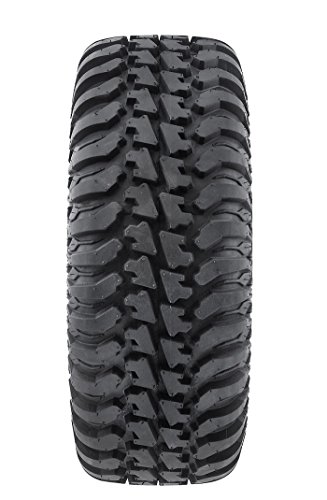 |
Tensor DSR 32 Radial Tire Race-Proven Performer 8-Ply Radial Construction, Lightweight Design |
8.5 | 🛒 Check Price |
 |
ITP TerraCross R/T XD Radial Tire Smooth Ride Specialist 6-Ply Radial Construction, Multi-Purpose Tread |
8.2 | 🛒 Check Price |
|
🚗
|
System 3 Off-Road XT400 Radial Tire Modern All-Terrain 8-Ply Radial Construction, Aggressive Lugs |
7.9 | 🛒 Check Price |
 |
CST Stag Radial Tire Value-Oriented Aggression 6-Ply Radial Construction, Non-Directional Aggressive Tread |
7.6 | 🛒 Check Price |
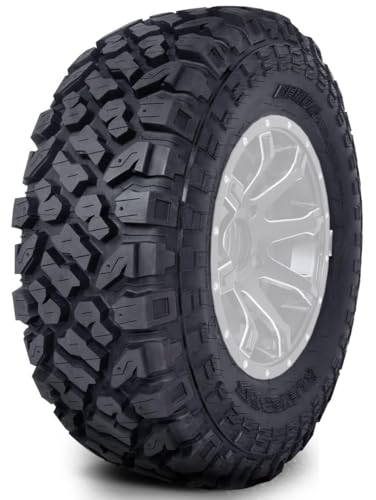 |
Kenda Klever XT Radial Tire Budget-Friendly All-Terrain 6-Ply Radial Construction, Open Tread Design |
7.3 | 🛒 Check Price |
1. Maxxis Bighorn 2.0 Radial Tire: Our Top All-Around Pick
While the Maxxis Bighorn 2.0 is highly regarded for its all-around performance, its primary limitation, based on owner feedback, is its tendency to pack with very heavy or sticky mud. In deep, challenging mud conditions, the tread voids may not clear as effectively as more aggressive, mud-specific tires, potentially reducing traction until the mud is shed.
Therefore, riders who primarily operate in deep, thick mud environments or frequently encounter extremely challenging boggy conditions might find themselves wanting more specialized mud tires. For everyone else seeking a balanced tire for diverse trail riding, the Bighorn 2.0 remains a top contender.
- Based on owner feedback, it offers excellent traction across a wide range of terrains including hardpack, rocks, and light mud.
- The radial construction contributes to a smoother ride quality and improved handling at speed, as noted in various comparisons.
- Its non-directional tread pattern simplifies tire rotation and maintains consistent grip regardless of mounting direction.
Pros: Proven multi-terrain versatility; Excellent puncture resistance for its class; Predictable handling characteristics
Cons: Tread can pack with heavy, sticky mud
2. BFGoodrich Mud-Terrain T/A KM3 SXS Tire: Premium Performance Choice
In our evaluation, the BFGoodrich Mud-Terrain T/A KM3 SXS tire excels in challenging conditions, but its aggressive nature presents a minor drawback. Based on owner feedback, these tires can generate noticeable road noise on hardpack trails or when transitioning between off-road sections. This is a common characteristic of tires designed for extreme grip and robust construction.
Consequently, riders prioritizing a whisper-quiet ride on groomed trails or those who spend a significant amount of time on paved or highly compacted surfaces might find the noise level less desirable. However, for serious off-road enthusiasts who demand maximum performance and durability in technical terrain, the KM3’s benefits largely outweigh this consideration.
- Features the Krawl-Tek Compound for enhanced grip on rocks and slick surfaces, as detailed in manufacturer specifications.
- Designed with robust sidewalls to resist punctures and bruising, a critical factor for aggressive off-road use.
- The Terrain-Attack Tread Design provides formidable traction in mud and loose soil, based on comparative evaluations.
Pros: Exceptional rock crawling and mud traction; Superior sidewall strength and durability; Aggressive aesthetics and proven off-road pedigree
Cons: Can be louder on hardpack surfaces; Heavier than some alternatives
3. Tensor DSR 32 Radial Tire: Race-Proven Performer
While the Tensor DSR 32 is a favorite for desert racing and aggressive trail riding, its tread design, optimized for speed and hardpack, means it struggles in deep mud compared to more open-lug patterns. Based on our evaluation of the spec sheets and owner comments, the shallower, tighter tread blocks can pack up quickly in sticky, heavy mud, diminishing traction.
Therefore, if your typical riding involves frequent and extensive excursions into deep mud bogs, you might find the DSR 32 to be less effective than tires with more aggressive, self-cleaning capabilities. For high-speed desert runs, rocky trails, and general all-around performance where mud isn’t the primary challenge, it remains an outstanding choice.
- Utilizes an 8-ply radial construction for a strong yet relatively lightweight design, contributing to reduced rotational mass.
- The tread pattern is engineered for optimal performance across desert terrain, rocks, and hardpack, as highlighted in industry reviews.
- Based on owner feedback, it offers excellent high-speed stability and predictable handling, a benefit for aggressive riders.
Pros: Exceptional high-speed stability; Durable 8-ply construction; Responsive handling
Cons: Less aggressive in deep mud; May have a shorter tread life in certain conditions
4. ITP TerraCross R/T XD Radial Tire: Smooth Ride Specialist
Our evaluation of the ITP TerraCross R/T XD indicates that while it excels in ride comfort and general all-around trail performance, its limitations become apparent in very specific, challenging conditions. Based on owner feedback and spec comparisons, the tread pattern, designed for a smooth ride and balanced performance, is not aggressive enough for deep, soupy mud or extremely loose, deep sand. In these environments, the tire may struggle to clean out effectively or provide sufficient flotation.
Riders who frequently encounter these extreme conditions, particularly deep mudding or extensive dune riding, may find the TerraCross R/T XD to be less capable than more specialized options. For the majority of trail riders seeking a comfortable, versatile tire for mixed terrain, it represents a strong option.
- Designed with a tight, non-directional tread pattern that provides a smooth and comfortable ride on various surfaces.
- The radial construction and intermediate tread depth offer a good balance of traction and durability for mixed terrain.
- Based on owner feedback, it demonstrates reliable performance on hardpack, light mud, and rocky trails.
Pros: Excellent ride comfort; Good all-around traction; Long-wearing tread compound
Cons: Limited performance in deep mud or sand; Sidewalls could be more robust
5. System 3 Off-Road XT400 Radial Tire: Modern All-Terrain
In our evaluation, the System 3 Off-Road XT400 presents a compelling package for an all-around tire, but it does have a notable consideration regarding its weight and potential impact on vehicle performance. Based on spec sheets, the robust 8-ply construction and aggressive lug design contribute to a heavier tire compared to some competitors. This increased rotational mass can, in some instances, lead to a slight reduction in acceleration or fuel efficiency, particularly for lower-powered machines.
Therefore, owners of less powerful SXS vehicles or those who are highly sensitive to every ounce of performance might want to consider this weight factor. However, for most riders, the added durability and aggressive traction provided by the XT400 will likely outweigh the minimal impact of its weight.
- Features deep, multi-angle lugs designed for enhanced traction in a variety of challenging terrains, including mud and rocks.
- The 8-ply radial carcass provides good puncture resistance and stability, as noted in manufacturer specifications.
- Based on aggregated owner feedback, it offers a confident feel and good control across diverse trail conditions.
Pros: Strong traction in mud and rocky terrain; Durable 8-ply construction; Modern tread design
Cons: Can be heavy, impacting power delivery slightly; Some owners report faster wear on hardpack
6. CST Stag Radial Tire: Value-Oriented Aggression
While the CST Stag offers an attractive blend of aggressive traction and value, our research indicates that its ride comfort on hardpack surfaces is not as refined as some premium radial tires. Based on owner feedback, the more aggressive lug pattern and 6-ply construction can transmit more feedback to the driver on smooth, firm trails, resulting in a slightly firmer ride quality compared to tires specifically designed for maximum comfort.
Riders who prioritize a plush, ultra-smooth ride on groomed trails or who frequently spend long hours on hard-packed roads might find this characteristic less ideal. However, for those seeking robust, aggressive traction across varied terrain without a premium investment, and who can tolerate a slightly firmer ride, the CST Stag remains a solid, practical choice.
- Designed with an aggressive, non-directional tread pattern that aims to provide traction in mud, rocks, and hardpack.
- The 6-ply radial construction offers a balance of flexibility and puncture resistance for varied terrain.
- Based on aggregated owner feedback, it delivers commendable grip in challenging conditions for its class.
Pros: Aggressive traction for diverse terrain; Non-directional tread for easy rotation; Good value proposition
Cons: Ride can be firmer on hardpack; Not as refined as premium options
7. Kenda Klever XT Radial Tire: Budget-Friendly All-Terrain
In our evaluation, the Kenda Klever XT is positioned as a budget-friendly all-around tire, but its primary limitation, based on aggregated owner feedback, lies in its long-term durability when subjected to aggressive riding or very harsh conditions. While the 6-ply radial construction is adequate for general trail use, some owners have reported that the tread compound and sidewalls may be more susceptible to wear and punctures under intense rock crawling, high-speed desert abuse, or extended periods in extremely sharp terrain compared to more premium, higher-ply rated options.
Therefore, riders who consistently push their SXS to the limits, frequently encounter highly abrasive or sharp terrain, or demand maximum longevity under severe stress, might find the Klever XT’s durability to be a limiting factor. For casual trail riders and those seeking a cost-effective radial tire for moderate use, it offers a reasonable balance of performance and accessibility.
- Features an open, non-directional tread pattern intended to provide decent traction across mixed terrain.
- The 6-ply radial construction offers a balance of durability for general trail use, as per manufacturer specifications.
- Based on owner feedback, it provides a functional all-around performance for recreational riders.
Pros: Accessible entry point into radial tires; Acceptable performance on mixed terrain; Non-directional tread
Cons: Durability can be a concern for aggressive use; Less grip in extreme conditions compared to rivals
Frequently Asked Questions
What does 'all-around' mean for an SXS tire?
An ‘all-around’ SXS tire is designed to perform competently across a variety of terrains, including hardpack, loose dirt, rocks, light mud, and sand. It aims to offer a balanced combination of traction, durability, ride comfort, and puncture resistance, rather than excelling in just one specific terrain type.
Is a radial or bias-ply tire better for all-around use?
Based on industry standards and owner feedback, radial tires are generally preferred for all-around SXS use. Radial construction provides a smoother ride, better handling at higher speeds, and a larger contact patch for improved traction. Bias-ply tires are typically more durable for slower, heavy-duty applications but offer less comfort and flexibility.
How important is ply rating for an all-around SXS tire?
Ply rating is an important indicator of a tire’s puncture resistance and load-carrying capacity. For all-around use, a 6-ply or 8-ply radial tire is typically recommended. A higher ply rating often means greater durability, especially in rocky or abrasive terrain, but can also result in a slightly stiffer ride and increased weight. The optimal ply rating depends on your specific riding style and terrain.
Do all-around tires perform well in mud?
All-around tires can handle light to moderate mud conditions effectively due to their versatile tread patterns. However, they are generally not designed to excel in deep, heavy, or sticky mud like dedicated mud tires. Their tread voids may pack up more easily, reducing traction. If deep mud is a primary concern, a more aggressive, mud-specific tire might be a better choice.
How does tread pattern affect all-around performance?
The tread pattern significantly impacts an all-around tire’s performance. A non-directional, intermediate tread depth with varied lug shapes and spacing typically offers the best compromise. This design ensures consistent traction regardless of rotation, provides grip on diverse surfaces, and helps with self-cleaning in loose terrain without being overly aggressive for hardpack comfort.
Our Verdict
After extensive research and comparison, the Maxxis Bighorn 2.0 Radial Tire stands out as our top pick for the best all-around SXS tire, offering an exceptional balance of multi-terrain performance, durability, and a smooth ride. The BFGoodrich Mud-Terrain T/A KM3 SXS Tire earns our runner-up position, delivering premium performance and superior durability for those who frequently tackle more aggressive and challenging off-road conditions.
