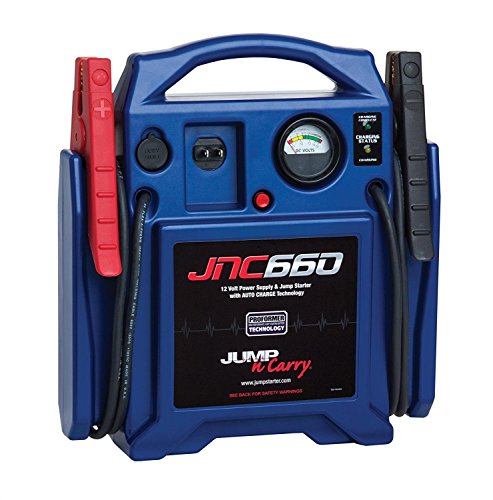
You hook up your portable jump starter, press the button, and nothing happens. No crank, no spark of life from the engine, just a dead silence that leaves you stuck. It is one of the most frustrating moments a driver can face, especially when you bought the unit specifically to avoid being stranded. The good news is that a jump starter that refuses to work almost always has a clear, fixable reason behind it.
In most cases the problem comes down to a small handful of issues: the unit itself is flat, the clamps are not making clean contact, a safety lockout has engaged, or the unit is simply not powerful enough for the engine you are trying to start. This guide walks through each likely cause, shows you how to confirm it, and explains the boost-override feature that some models include for the toughest situations.
The Unit Itself Is Discharged
The single most common reason a jump starter does nothing is that the jump starter is dead. Lithium packs slowly self-discharge while sitting in a glovebox or trunk, and after a few months of neglect the internal battery can fall too low to deliver a crank. Many units will not even power their own indicator lights when fully drained, which can make them seem broken when they are just empty.
To diagnose this, check the unit’s charge level display before you do anything else. Most modern jump starters show remaining capacity through a row of LEDs or a small screen. If you see one bar or no bars, the pack needs charging. Plug it in for the full recommended time, often several hours, then try again. Going forward, top the unit off every two to three months so it is always ready when you need it. A jump starter is only useful if it holds a charge.
Loose Or Dirty Clamp Connections
Even a fully charged jump starter cannot pass current through a bad connection. Corrosion, grease, paint, or simple wobble at the battery terminals will interrupt the circuit, and the unit may show no response at all because it never sees a complete loop. This is one of the easiest faults to overlook because the clamps look like they are attached.
Start by inspecting the battery posts. If you see white or greenish powder, clean it off with a wire brush and a rag before reconnecting. Clamp the red lead firmly onto the positive post and the black lead onto a solid metal ground or the negative post, wiggling each clamp slightly to bite through any surface film until you feel a snug grip. Many smart units have a status light that turns green only when a good connection is detected, so watch for that confirmation before pressing the boost button. A firm, clean bite on bare metal solves a surprising number of no-start situations.
Reverse-Polarity Safety Lockout Engaged
Modern lithium jump starters are built with safety circuits that refuse to send power if the clamps are connected backward. If the red clamp lands on the negative post or the black on the positive, the unit detects reverse polarity and locks itself out to protect you and the vehicle from sparks or damage. When this happens, the boost button does nothing and you usually hear a warning beep or see a red alarm light.
The fix is straightforward once you know to look for it. Disconnect both clamps, double-check that red goes to positive and black goes to negative or ground, and reconnect. The lockout will clear automatically once correct polarity is restored, and the status light should switch to green or ready. Never try to force or bypass this protection, because the lockout is doing exactly what it should. If the unit keeps reporting reverse polarity even with correct hookup, the clamps or sensing leads may be faulty and worth inspecting.
Wrong Size Or A Battery Below The Cutoff
Not every jump starter can crank every engine. A compact unit sized for small four-cylinder cars will struggle or refuse to turn over a large diesel or a big V8, because those engines demand far more peak amperage. If your unit is too small for the engine, it may try, dim, and quit without ever spinning the starter motor. Match the unit’s peak amp rating and engine size guidance to your vehicle before assuming the device is broken.
A related issue is a vehicle battery that has fallen below the safety cutoff. Many smart jump starters will not connect to a battery reading under a certain voltage, often around two to five volts, because the unit cannot tell whether a healthy battery is present. A deeply dead or internally shorted battery sitting near zero volts can trip this protection, leaving you with no boost. This is where the boost-override feature comes in, which the next section covers in detail.
Cold Weather, Faulty Cables, And The Boost Override
Cold temperatures hurt jump starters in two ways. The lithium cells inside lose available output as the mercury drops, and the dead vehicle battery becomes harder to turn at the same time, so a unit that works fine in summer can fall short on a freezing morning. If you suspect cold is the culprit, warm the jump starter indoors or in a heated cabin for fifteen to twenty minutes before use, and try cranking in short bursts rather than one long pull. Faulty cables are another quiet failure point, so flex the leads and check for cracked insulation, loose strain relief, or melted clamp bases that signal internal wire damage.
For the case of a battery sitting below the normal cutoff, many higher-end units include a manual boost-override or force-start mode. This feature lets you bypass the low-voltage lockout for a single attempt so the unit will push power into a battery it would otherwise refuse to recognize. Read your manual for the exact button sequence, usually a press and hold on the power or boost control until an override light appears. Use it sparingly and only when you are certain the hookup is correct, because the override disables a protective check. If your unit lacks this mode and the battery is truly flat, a slow charge or a fresh battery may be the only path forward.
Frequently Asked Questions
Why does my jump starter beep but not start the car?
A beep almost always means a safety circuit has triggered, most often reverse polarity or a poor connection. Disconnect the clamps, confirm red is on positive and black is on negative or ground, clean any corrosion, and reconnect firmly. The beep should stop and the status light should turn green once the unit detects a correct, solid hookup.
How do I know if my jump starter is charged or dead?
Check the charge indicator, which is usually a row of LEDs or a small screen on the unit. One bar or no bars means it needs charging before use. If the unit will not power on at all, it may be fully discharged from sitting unused, so plug it in for the full recommended time and try again once it shows a healthy charge level.
Can a jump starter be too small to start my engine?
Yes. Compact units are sized for smaller gasoline engines and may not deliver enough peak amperage to crank a large V8 or a diesel. If the unit tries and quits without spinning the starter, compare its peak amp rating and engine guidance against your vehicle. A unit matched to your engine size will crank reliably where an undersized one stalls.
The Bottom Line
A jump starter that will not work is rarely a lost cause. Run through the checklist in order: confirm the unit is charged, clean and firmly seat the clamps, clear any polarity lockout, make sure the unit is big enough for your engine, warm it up in cold weather, and inspect the cables for damage. If your vehicle battery has dropped below the cutoff, a boost-override mode on capable units can push through a final attempt. Working methodically through these causes will get most drivers back on the road quickly.
If your current unit keeps falling short, it may simply be undersized or worn out, and a more capable model could save you future headaches. See our guide to the best jump starters to find one with the power, safety features, and override mode that fit your vehicle.
Related Guides
- 7 Best Jump Starter Boxes (Researched and Compared)
- 7 Best Jump Starters for Diesel Engines (Researched and Compared)
- 7 Best Portable Motorcycle Jump Starters (Researched and Compared)
- Portable Jump Starter vs Jumper Cables
- 7 Best 12/24 Volt Jump Start Systems (Researched and Compared)
- 7 Best Portable Jump Starters for Hybrid Cars (Researched and Compared)
