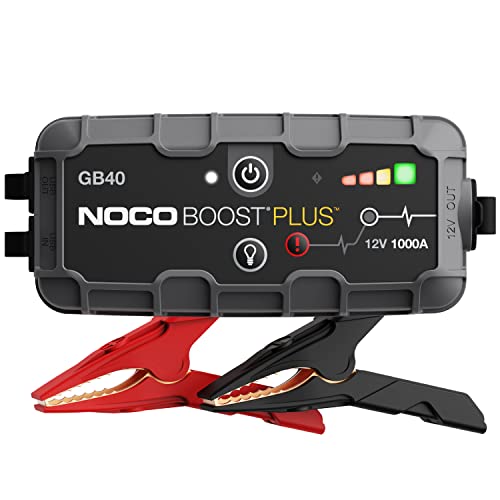
A portable jump starter is one of those tools you hope never to need, but when your car battery dies in a parking lot at midnight, it has to work. The frustrating reality is that many drivers grab their jump starter in that moment only to find it dead, blinking an error light, or unable to deliver enough power to crank the engine. If your jump starter will not charge at all, or charges fully but drains within days of sitting on a shelf, the unit is not broken beyond understanding. There are specific, diagnosable reasons this happens.
This guide walks through every major cause of jump starter charging failure, from the most common (a degraded lithium battery) to the less obvious (a faulty charge port or storage temperature damage). You will also find guidance on when a unit can be recovered and when it is time to replace it for safety reasons.
How Jump Starter Batteries Work and Why They Degrade
Most modern portable jump starters use one of two battery technologies: lithium-ion (Li-ion) or lithium iron phosphate (LiFePO4). Older and budget units sometimes still use sealed lead-acid (SLA) cells. Each technology degrades differently, and understanding the difference matters when diagnosing a charging problem.
Lithium-ion cells are the most common in compact jump starters sold today. They hold a high energy density in a small package, but they are sensitive to deep discharge (dropping below about 2.5 volts per cell), heat above 113 degrees Fahrenheit, and charging in freezing temperatures. When a Li-ion cell is deeply discharged, the internal chemistry changes in a way that permanently reduces capacity. The cell may still accept a surface charge and show 100 percent on the indicator, but it can no longer deliver the burst current needed to start an engine.
LiFePO4 cells are more stable and tolerate more charge cycles, typically 1,500 to 3,000 versus 300 to 500 for standard Li-ion. They are common in higher-end units. SLA batteries are the most forgiving in cold weather but are heavier, have lower energy density, and sulfate permanently if left discharged for extended periods.
Key degradation triggers across all types:
- Storing the unit fully discharged for weeks or months
- Leaving it in a hot car (glove box or trunk temperatures can exceed 150 degrees Fahrenheit in summer)
- Repeatedly draining it to zero before recharging
- Using a charger that does not match the battery chemistry or voltage
The Jump Starter Will Not Charge At All
When you plug in the jump starter and nothing happens, no charging indicator, no LED, no change in battery level, work through these causes in order.
Faulty charging cable or wall adapter. This is the most common cause and the easiest to rule out. Try a different USB-C cable or the specific barrel-jack cable that came with the unit. Many jump starters use proprietary voltage or current ratings. A generic phone charger may not supply enough wattage to trigger the charging circuit, especially on units that require 12V DC input rather than USB.
Damaged charge port. Jump starters live in bags, toolboxes, and car trunks. The micro-USB, USB-C, or DC barrel port takes mechanical stress. Use a flashlight to inspect the port for bent pins, debris, or corrosion. Compressed air can clear dust. Do not use metal tools inside a charging port on a lithium battery device.
Over-discharge protection lockout. Lithium batteries include a battery management system (BMS). If the cells drop below the safe minimum voltage, the BMS cuts off all output and sometimes all input to prevent thermal runaway. The unit appears completely dead. Some manufacturers include a recovery or boost mode. Check the manual for a button sequence (often holding the power button for 8 to 10 seconds) that attempts a slow trickle charge to bring the cells back above the minimum threshold. This does not always work, but it is worth trying before discarding the unit.
Blown internal fuse. Some units include a replaceable fuse on the jumper cable output port. A short during a jump attempt can blow this fuse. Replacing it (if the fuse is accessible and the correct replacement is used) can restore function. Check the manufacturer documentation before opening any sealed unit.
Failed BMS or charge controller board. If none of the above applies, the internal electronics may have failed. This is not a user-serviceable issue in most consumer jump starters. The unit should be replaced.
The Jump Starter Charges But Will Not Hold a Charge
This is the most common complaint and the one that catches drivers off guard: the unit charged to 100 percent last month, sat in the trunk, and is now dead or at 20 percent. There are several distinct causes.
Self-discharge rate exceeded storage duration. All batteries self-discharge over time. Lithium cells self-discharge at roughly 1 to 3 percent per month under ideal conditions. However, the internal electronics of a jump starter, including the BMS, LED indicators, and any Bluetooth or LCD circuitry, draw a small parasitic current even when the unit is off. On some units this parasitic drain is 5 to 10 milliamps, which can flatten a unit in 3 to 6 months. Manufacturers typically recommend recharging every 3 months during storage.
Battery cell capacity has degraded. A cell that shows 100 percent on the indicator but holds almost no real energy is exhibiting voltage depression, sometimes called memory effect in older terminology, though it is more accurately described as capacity fade in lithium chemistry. The indicator reads voltage, not actual stored energy. A degraded cell can sit at a nominally correct resting voltage while having very little usable capacity. This is why a unit can read full and still fail to start an engine.
Temperature damage during storage. Storing a jump starter in a vehicle trunk in summer heat is one of the fastest ways to permanently reduce its capacity. The electrochemical reaction inside the cell accelerates at high temperatures, degrading the electrolyte and the anode coating. A unit stored through one hot summer may retain only 60 to 70 percent of its original capacity. Cold storage (below freezing) does less permanent damage but will cause a unit to read low and perform poorly until it warms up.
Age past rated cycle life. If the unit is more than 3 to 5 years old and has been used regularly, it may simply have reached the end of its useful life. Lithium-ion jump starters are consumable items. Even with perfect care, capacity fades over time.
How to Test Whether Your Jump Starter Is Actually Holding a Charge
The LED or LCD indicator on most jump starters is a coarse measurement. It reads resting voltage and maps it to a percentage. This can be misleading. Here is how to get a more accurate picture of what your unit is actually doing.
Timed discharge test. Charge the unit to 100 percent, then power a known USB load (a phone or tablet actively downloading something draws a predictable 5 to 10 watts). Measure how long the jump starter powers the load before shutting off. Compare that runtime to what you measured when the unit was new, or to the manufacturer specification. A significant drop in runtime confirms capacity loss, not just a faulty indicator.
Check voltage with a multimeter. If your unit has accessible output terminals, measure the DC voltage after a full charge. A 12V lithium unit should read approximately 12.6 to 13.2 volts at rest when fully charged. Readings below 12.0 volts after a full charge cycle indicate cell degradation or a charger that is not completing the charge cycle properly.
Charge it, then leave it for 30 days. Recharge to 100 percent, store it in a cool indoor location (between 50 and 77 degrees Fahrenheit), and check the level after 30 days. A healthy unit should retain 95 percent or more. A unit dropping to 60 percent or lower in 30 days has either a high parasitic drain or degraded cells.
Note: Do not attempt to open sealed lithium battery units to test individual cells unless you have specific training. Damaged lithium cells can release flammable gas or cause fires.
When It Is a Charger Problem, Not a Battery Problem
Before concluding the jump starter itself is bad, verify that the charging source is working correctly. This step is frequently skipped and leads to unnecessary replacements.
Wall adapter output. Many jump starters ship with a specific wall adapter rated at 12V, 16V, or 19V DC. Using a lower-voltage USB adapter that outputs only 5V may appear to charge the unit (the indicator may even turn on) but may not supply enough power to push current into a lithium pack rated for higher voltage. Always use the included adapter or one that exactly matches the voltage and polarity specification on the unit.
In-car charging. Some jump starters can be charged via the 12V cigarette lighter port in the vehicle. This is a slow method and only works when the engine is running and the alternator is charging. A vehicle with a weak alternator outputting low voltage may not supply enough to charge the jump starter. Do not rely on in-car charging as the primary method for maintaining a jump starter.
USB-C Power Delivery compatibility. Newer jump starters charge via USB-C PD. Not all USB-C chargers support PD. A charger that does not negotiate PD may output only 5V at 0.9A (4.5W), which may charge the unit very slowly or not at all if the BMS requires a minimum input wattage to open the charge path. Use a charger that explicitly states USB-C PD support and can output at the wattage the jump starter requires (usually listed in the manual as minimum 18W or 45W).
Charging cable quality. USB cables vary widely in internal wire gauge. A thin cable rated for charging small devices may drop significant voltage over its length when a jump starter demands higher current. If you lost the original cable, replace it with a quality USB-C cable rated for the required wattage, not a free cable from an unrelated product box.
Storage Practices That Prevent Charging Problems
Most jump starter charging failures are preventable. The following storage habits will extend the life of any portable jump starter significantly.
- Store at 40 to 80 percent charge, not 100 percent. Lithium cells stored at full charge experience more stress than cells stored at a partial state of charge. If you are putting the unit away for more than a few weeks, charge it to around half and store it. Recharge fully before use.
- Store indoors at room temperature. The target storage temperature for most lithium jump starters is 59 to 77 degrees Fahrenheit (15 to 25 degrees Celsius). Avoid leaving the unit in a vehicle, garage, or shed where temperatures fluctuate widely. A climate-controlled indoor location is ideal.
- Recharge every 3 months. Even in storage, the unit discharges slowly. Set a calendar reminder to top it off quarterly. Do not wait until it is completely dead before recharging.
- Keep it away from metal objects. The output clamps on a jump starter can short against metal tools in a bag or toolbox, causing a partial discharge or worse. Store the unit with the clamp covers on and the cables secured.
- Do not charge immediately after use in the cold. If the unit was stored in below-freezing temperatures, bring it indoors and let it warm to room temperature for at least 30 minutes before charging. Charging cold lithium cells can cause lithium plating, a form of internal damage that permanently reduces capacity.
Safety Considerations and When to Stop Using a Jump Starter
A damaged lithium battery in a jump starter is not just a performance issue. It is a potential safety hazard. The Consumer Product Safety Commission (CPSC) has issued recalls on portable power products with lithium batteries that posed fire or burn risks. Here are the signs that a jump starter should be removed from service immediately.
- Physical swelling or bulging of the case. A swollen battery indicates internal gas buildup from a failing cell. This is called thermal runaway in early stages. Do not charge, store in an enclosed space, or use a swollen unit. Discharge it carefully (do not short it), place it in a metal container away from flammable materials, and follow your local hazardous waste disposal guidelines for lithium batteries.
- Burning smell during charging. Any smell of burning plastic or chemical odor during charging means the unit should be unplugged and not used again. This is a sign of internal short or overheating.
- Extremely hot to the touch during normal charging. Some warmth during charging is normal. Heat that is uncomfortable to hold is not. Lithium cells that overheat during charging are degraded or have an internal fault.
- Sparking at the clamps during jump attempts. A small spark when connecting to a battery is normal and expected. Sustained arcing or sparking that does not stop is a sign of an internal fault in the jump starter or an issue with the vehicle battery. Disconnect immediately.
For disposal of lithium batteries, the EPA and Call2Recycle (a CPSC-recognized battery stewardship organization) maintain drop-off locator tools at call2recycle.org. Do not dispose of lithium jump starters in household trash or standard recycling bins.
Frequently Asked Questions
Why does my jump starter show fully charged but die immediately when I try to use it?
The charge indicator on most jump starters reads resting voltage, not actual stored energy. A degraded lithium cell can sit at a voltage that maps to 100 percent on the indicator while holding very little usable capacity. This is called capacity fade and it is a normal result of aging, heat damage, or repeated deep discharge cycles. The cell passes the voltage test but fails under the high-current load of a cranking engine. If your unit consistently fails to start a vehicle despite showing a full charge, the battery has degraded and the unit should be replaced.
How often should I charge my jump starter when I am not using it?
Most manufacturers recommend recharging a portable jump starter every 3 months during storage. This counteracts the natural self-discharge of the battery and keeps the cells within their healthy voltage range. Storing the unit fully depleted for extended periods can trigger the over-discharge protection lockout in the battery management system, which may permanently damage the cells. A simple calendar reminder set to repeat quarterly is enough to maintain the unit in working condition between uses.
Can I leave my jump starter plugged in all the time to keep it topped off?
It depends on the unit. Some higher-end jump starters include a maintenance or float charge mode that is safe for long-term connection, similar to a battery tender for a car battery. Most basic models do not include this feature, and leaving them plugged in continuously can overcharge the cells, generate heat, and accelerate degradation. Check the manual for guidance specific to your model. If the manual does not mention continuous charging as safe, follow the quarterly recharge schedule instead and unplug the unit once it reaches full charge.
My jump starter gets very warm when charging. Is that normal?
Some warmth during charging is expected and normal. The charging process involves electrochemical reactions that generate heat as a byproduct. A unit that is slightly warm to the touch during a charge cycle is within normal parameters. However, if the jump starter becomes hot enough to be uncomfortable to hold, or if you notice a chemical or burning smell, unplug it immediately. Excessive heat during charging is a sign of a degraded cell, a mismatched charger supplying incorrect voltage, or an internal fault. Continued use of a unit that overheats during charging is a fire risk.
Is it safe to jump start a car with a jump starter that has low battery?
It depends on how much charge remains and what vehicle you are attempting to start. A compact 4-cylinder engine may crank successfully from a jump starter at 30 to 40 percent charge. A large V8 or diesel engine requires significantly more peak amperage and is unlikely to start from a partially charged unit. More importantly, attempting a jump start from a unit with very low charge can pull the battery below the safe minimum voltage threshold during the current surge, potentially triggering the over-discharge lockout and leaving you with a dead jump starter and a dead car. For best results, always check that the unit is at or above 75 percent charge before attempting a jump start.
The Bottom Line
A jump starter that will not charge or hold a charge is almost always traceable to one of a handful of causes: degraded battery cells from age or heat exposure, a charging cable or adapter mismatch, an over-discharge protection lockout, or simple neglect of the quarterly recharge schedule. Running through these causes in order, starting with the cheapest and easiest to rule out, will save you from replacing a unit that only needed a compatible charger, and will also help you recognize when a genuinely degraded unit needs to be retired safely before it becomes a hazard.
Related Guides
- 7 Best Portable Jump Starters for Cars in 2026 (Real-World Tested)
- 7 Best Jump Starters for Trucks in 2026 (Diesel and Gas Tested)
- 7 Best Affordable Jump Starters for Cars in 2026 (Real-World Tested)
- Can You Jump Start a Completely Dead Battery
- How to Store a Lithium Jump Starter So It Holds a Charge
- How Many Amps Do You Need for a Jump Starter
