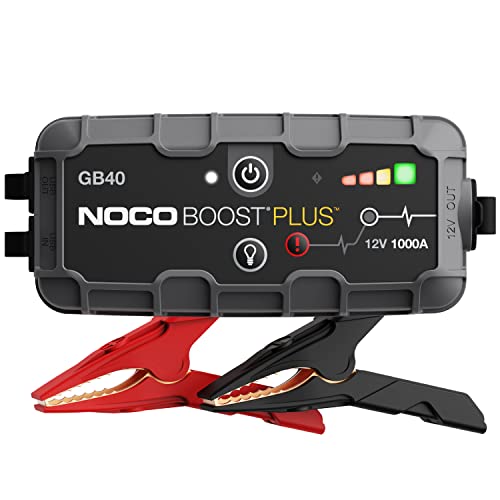
A beeping jump starter is rarely a sign that the unit is broken. In almost every case the beep is a built-in safety alarm trying to tell you something useful before you connect to your battery. The trick is knowing which beep means what, because the same small speaker is used for reverse polarity, low internal charge, poor clamp contact, fault codes, and even the friendly tone that says the unit is ready to crank.
This guide walks through the most common reasons a portable jump starter beeps, how the alarm patterns usually differ, and the simple steps to clear each one. Patterns vary by brand, so always treat your model manual as the final word, but the logic below applies to nearly every modern lithium and lead-acid jump pack on the market.
Reverse Polarity Alarm: Clamps on the Wrong Terminals
The most common beep, by far, is the reverse polarity warning. When you clip the red clamp to the negative post or the black clamp to the positive post, the unit detects the wrong voltage direction and sounds a loud, continuous or rapid beep to stop you before any current flows. This is a protective feature, not a fault, and it is the single most important alarm to respect because a reversed connection is what causes sparks and damage.
To clear it, disconnect both clamps and check the terminals carefully. The positive post is usually marked with a plus sign and a red cover, and the negative post with a minus sign. Reattach red to positive and black to negative, making sure the metal jaws bite onto bare metal and not paint or grease. The alarm should stop the instant the clamps are seated correctly. If the unit also has a green light or a different tone for a correct connection, wait for that confirmation before pressing the boost button.
Low Internal Charge Warning
If your jump starter beeps on its own, even before you touch a vehicle, it may be warning you that its own battery is running low. A jump pack with a depleted internal cell cannot safely deliver a high cranking burst, so many models chirp periodically or flash a low battery indicator to tell you to recharge before use. This is common after the unit has sat in a cold garage or glovebox for weeks, since cold and time both drain the internal charge.
The fix is simple but takes time. Plug the unit into its charger and let it reach a full state, which the display or LED bar will confirm. Avoid attempting a jump on a unit showing one bar or a flashing low symbol, because a half empty pack can fail mid crank and even shut down. Keeping the unit topped up every few months is the best way to prevent this beep from appearing when you actually need a quick start.
Clamps Not Making Good Contact
A jump starter that beeps intermittently, or refuses to give you the steady ready tone, is often complaining about a weak connection. If the clamp jaws are sitting on corrosion, paint, a dirty terminal, or are only half clipped on, the unit cannot sense a solid circuit and will warn you rather than send power into a poor joint. You may hear a stuttering beep or see a connection indicator that will not turn green.
Pop the clamps off and inspect the battery posts. A light film of white or green corrosion can block contact, so brush it away and wipe the metal clean. Re-clamp firmly so the teeth dig into bright metal, and give each clamp a gentle wiggle to confirm it is locked on. On vehicles where the negative post is hard to reach, a clean unpainted chassis ground bolt is an acceptable place for the black clamp and often gives a more reliable contact than the post itself.
Fault Codes and Over-Temperature Alarms
Some beeps signal an internal protection event rather than a connection issue. A jump starter can trip an over-temperature alarm if it has been left in direct sun, used for several crank attempts in quick succession, or charged in a hot environment. Other fault tones flag over-current, a short across the clamps touching each other, a cell imbalance, or a low voltage cutoff. These usually come as a distinct repeating pattern, sometimes paired with a flashing error symbol or a coloured fault light.
The right response is to stop and let the unit rest. Separate the clamps so they are not touching, move the pack out of the heat, and give it ten to fifteen minutes to cool before trying again. If a fault code persists after cooling and a recharge, note the exact beep pattern and look it up, because a repeating code that will not clear can point to a genuine internal fault that needs the maker’s support rather than another crank attempt.
Ready, Boost, and Confirmation Tones
Not every beep is a problem. Many jump starters use a short, pleasant tone to tell you good news, such as a correct polarity connection, a successful link to the battery, or that boost or force mode has been activated for a deeply drained battery. A single chirp when you power the unit on, or a quick double beep when you press the manual override, is usually the device confirming an action rather than complaining about one.
The way to tell a confirmation tone from an alarm is rhythm and pairing. Alarms tend to be loud, fast, and continuous, and they come with a red or flashing warning light. Confirmation tones are short, often single or paired, and they line up with a green light or a normal status display. When you hear a brief tone right after a correct connection, that is your cue that the unit is armed and you can crank the engine within the recommended window.
Frequently Asked Questions
Is a beeping jump starter dangerous to use?
A beep itself is not dangerous, but you should never override a continuous alarm by forcing a jump. The alarm exists to stop a reversed or unsafe connection. Identify the beep first, fix the cause such as swapped clamps or low charge, and only proceed once the unit gives a ready tone or a green indicator.
Why does my jump starter beep when nothing is connected?
A beep with no vehicle attached almost always means the internal battery is low or a protection circuit has tripped. Recharge the unit fully and let it cool if it has been in heat. If it still beeps on its own after a full charge, note the pattern and check it against the manual, as it may indicate an internal fault.
How do I stop the reverse polarity alarm?
Disconnect both clamps immediately and re-check the terminals. Attach the red clamp to the positive post marked with a plus sign and the black clamp to the negative post or a clean chassis ground. The alarm stops the moment the connection is correct, and most units then switch to a steady ready tone or green light.
The Bottom Line
A beeping jump starter is almost always doing its job by flagging a wrong connection, a low charge, a weak contact, or a protection event, and only occasionally is it simply confirming that everything is ready. Learn the difference between a loud continuous alarm and a short confirmation tone, keep the unit charged, and clip red to positive and black to negative on clean metal, and most beeps will resolve in seconds. When a fault code refuses to clear after cooling and recharging, treat that as your signal to consult the maker rather than force another crank. To compare reliable, well-reviewed models with clear alarm systems, see our guide to the best jump starters.
Related Guides
- 7 Best Pocket Jump Starters (Researched and Compared)
- Best Marine and Boat Jump Starters (Researched and Compared)
- 7 Best Jump Starter Power Packs (Researched and Compared)
- 7 Best Compact Car Jump Starters (Researched and Compared)
- 7 Best Ion Car Jump Starters (Researched and Compared)
- 7 Best Jump Starters with Air Compressors (Researched and Compared)
