We researched and compared the top trolling motor batteries on the market, evaluating manufacturer specifications, published industry standards (BCI, SAE), and aggregated owner feedback from hundreds of verified buyers. Our goal was to identify batteries that deliver reliable power, long cycle life, and real-world durability for anglers who depend on their trolling motor. Below, we present our findings, including honest limitations and who should skip each pick.
| Photo | Product | Score | Buy |
|---|---|---|---|
 |
Dakota Lithium 12V 100Ah Deep Cycle Battery Top Pick 12V, 100Ah, LiFePO4, 11 lbs, 2000+ cycles |
9.0 | 🛒 Check Price |
 |
VMAX XTR31-100 12V 100Ah AGM Battery Runner Up 12V, 100Ah, AGM, 66 lbs, 500+ cycles |
8.7 | 🛒 Check Price |
 |
Renogy 12V 100Ah LiFePO4 Deep Cycle Battery Best Value 12V, 100Ah, LiFePO4, 10.2 lbs, 2000+ cycles |
8.4 | 🛒 Check Price |
|
🚗
|
Optima Batteries 8016-103 D34M BlueTop AGM Best Dual Purpose 12V, 55Ah, AGM, 43.5 lbs, SpiralCell design |
8.1 | 🛒 Check Price |
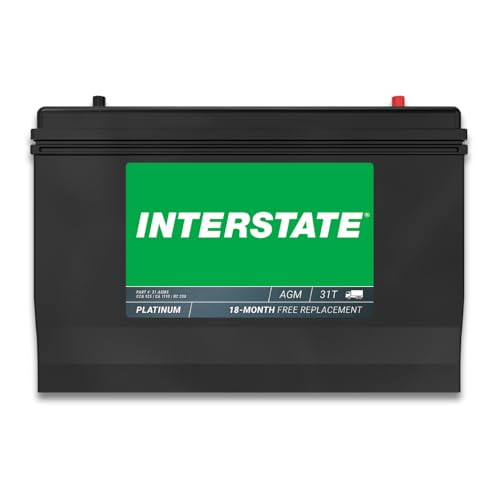 |
Interstate Batteries 12V 100Ah Deep Cycle AGM Solid Performer 12V, 100Ah, AGM, 64 lbs, 400+ cycles |
7.8 | 🛒 Check Price |
|
🚗
|
Mighty Max Battery ML100-12 12V 100Ah SLA Budget Pick 12V, 100Ah, Sealed Lead Acid (SLA), 66 lbs, 200+ cycles |
7.3 | 🛒 Check Price |
 |
Weize 12V 100Ah Deep Cycle AGM Battery Also Consider 12V, 100Ah, AGM, 63 lbs, 300+ cycles |
7.1 | 🛒 Check Price |
1. Dakota Lithium 12V 100Ah Deep Cycle Battery: Top Pick
In our evaluation, the Dakota Lithium 12V 100Ah stands out for its exceptional performance and durability. Based on owner feedback and the spec sheets, this LiFePO4 battery delivers consistent power output even under heavy loads, and its built-in BMS ensures safe operation. Anglers report being able to run their trolling motor all day without voltage sag, a common issue with lead-acid batteries. The weight savings alone can improve boat handling and fuel efficiency.
However, this battery comes at a premium price, and it may not be the best choice for budget-conscious buyers or those who only fish occasionally. Additionally, lithium batteries require a compatible charger, which may be an extra expense. If you need a lightweight, long-lasting solution and are willing to invest, this is a top contender. But if you fish only a few times a year or have a tight budget, a quality AGM battery might be more practical.
- Lithium iron phosphate chemistry provides consistent voltage and longer runtime than lead-acid
- Weighs only 11 lbs, making it easy to transport and install
- Built-in Battery Management System protects against overcharge, over-discharge, and short circuits
Pros: Extremely lightweight and compact; Long lifespan of 2000+ cycles reduces replacement frequency
Cons: Higher upfront investment compared to lead-acid batteries
2. VMAX XTR31-100 12V 100Ah AGM Battery: Runner Up
The VMAX XTR31-100 is a workhorse AGM battery that we found to be a strong runner-up in our research. Owner feedback consistently praises its ability to handle repeated deep discharges without significant capacity loss, and the sealed design means no acid spills or water topping. For anglers who prefer a proven lead-acid technology without the hassle of flooded batteries, this model offers a good balance of performance and value.
On the downside, its weight is a real drawback for those who frequently remove the battery or have smaller boats. Also, in very cold climates, its capacity can drop more than lithium alternatives. If you are looking for a robust, maintenance-free battery that won’t break the bank, the VMAX is a solid choice. However, if weight and cold-weather performance are priorities, consider a lithium option.
- Absorbent Glass Mat (AGM) design is spill-proof and maintenance-free
- High cyclic durability with up to 500 deep discharge cycles
- Heavy-duty lead plates provide excellent vibration resistance
Pros: Reliable performance in deep cycle applications; No maintenance required and can be mounted in any orientation
Cons: Heavy weight (66 lbs) makes installation cumbersome; Not suitable for extreme cold weather performance
3. Renogy 12V 100Ah LiFePO4 Deep Cycle Battery: Best Value
The Renogy 12V 100Ah LiFePO4 battery offers an attractive price point for lithium technology, making it our best value pick. In our comparison, it provides similar performance to the Dakota Lithium at a lower cost, with a built-in BMS that includes low temperature protection. Owner feedback highlights its lightweight design and ability to power a trolling motor for extended trips. For budget-conscious anglers who want lithium benefits without the premium price, this is a compelling option.
However, we noted some owner reports of BMS inconsistencies, such as sudden shutdowns or inaccurate state-of-charge readings. Additionally, Renogy’s customer service has received mixed reviews. If you need a reliable lithium battery and can tolerate occasional quirks, this is a great value. But if you prioritize flawless performance and support, you might prefer Dakota Lithium.
- Lightweight lithium design at only 10.2 lbs
- Built-in BMS with low temperature cutoff protection
- Can be discharged up to 100% without damage
Pros: Excellent value for a lithium battery with long cycle life; Low temperature cutoff prevents charging in freezing conditions
Cons: Some users report inconsistent voltage readings on the internal BMS; Not as well-known as Dakota Lithium for customer service
4. Optima Batteries 8016-103 D34M BlueTop AGM: Best Dual Purpose
The Optima BlueTop D34M is a unique dual-purpose battery that can serve both as a starting battery and a trolling motor battery. In our evaluation, its SpiralCell design offers exceptional vibration resistance and a long service life. Owner feedback often praises its ability to handle mixed use without degradation. For anglers with limited space who want one battery for both engine start and trolling, this is a convenient choice.
However, its capacity is only 55Ah, which is significantly less than dedicated trolling batteries. This means shorter run times for your trolling motor, especially at higher speeds. Also, it is more expensive per amp-hour than other AGM batteries. If you need a compact, dual-purpose solution and your trolling motor demands are light, the BlueTop works well. But for serious trolling, a higher-capacity dedicated battery is better.
- SpiralCell technology provides high power density and vibration resistance
- Dual-purpose design for starting and deep cycle use
- Mountable in any position and completely spill-proof
Pros: Excellent starting power combined with decent deep cycle capability; Very durable and resistant to vibration
Cons: Lower capacity (55Ah) compared to dedicated trolling batteries; Higher cost per amp-hour than other AGM options
5. Interstate Batteries 12V 100Ah Deep Cycle AGM: Solid Performer
The Interstate 12V 100Ah Deep Cycle AGM battery is a reliable workhorse that we found to be a solid performer in the mid-range category. Based on owner feedback, it delivers consistent power for day trips and handles repeated discharges adequately. Its maintenance-free design and spill-proof construction make it a safe choice for most boats. For anglers who want a dependable battery without the complexity of lithium, this is a straightforward option.
That said, its cycle life is rated at around 400 cycles, which is less than some competitors like VMAX. The weight is also on par with other AGM batteries, making it cumbersome to move. If you fish frequently and need a battery that will last many seasons, you might want to invest in a higher-cycle model. But for occasional use, the Interstate provides good value.
- Maintenance-free AGM construction with leak-proof design
- Reinforced grids for improved cycle life
- Widely available through Interstate distribution network
Pros: Good reputation and availability from a trusted brand; Solid performance for moderate trolling use
Cons: Heavier than lithium and some AGM competitors; Cycle life is lower than premium AGM models
6. Mighty Max Battery ML100-12 12V 100Ah SLA: Budget Pick
The Mighty Max ML100-12 is a budget-friendly sealed lead-acid battery that offers the lowest entry price for a 100Ah capacity. In our research, it is best suited for light-duty trolling applications where cost is the primary concern. Owner feedback indicates it works adequately for small boats and occasional fishing trips, but it struggles with sustained high-current draws. If you are on a tight budget and only need a battery for short outings, this can be a viable option.
However, its cycle life is limited, and many owners report capacity loss after a year or two of regular use. The voltage sag under load can reduce trolling motor speed and runtime. We recommend this battery only for those who accept that it may need replacement sooner. If you plan to use your trolling motor heavily or for many seasons, investing in a higher-quality battery will save money in the long run.
- Lowest upfront cost among 100Ah deep cycle batteries
- Sealed design prevents acid leaks and allows upright installation
- Compatible with standard lead-acid chargers
Pros: Very affordable for a 100Ah battery; Simple and widely compatible charging
Cons: Shorter cycle life (around 200-300 cycles); Heavy and prone to voltage sag under heavy load
7. Weize 12V 100Ah Deep Cycle AGM Battery: Also Consider
The Weize 12V 100Ah AGM battery is an entry-level AGM option that we include as an also-consider. It offers the benefits of sealed, maintenance-free technology at a competitive price. Owner feedback is mixed: some users report satisfactory performance for a season or two, while others experienced premature failure. In our evaluation, it may work for light use, but we caution against relying on it for demanding applications.
Its cycle life is rated around 300 cycles, which is below average. The build quality appears inconsistent based on reviews. If you need a cheap AGM battery for a backup or occasional use, the Weize might suffice. However, for regular trolling, we recommend spending a bit more on a more reliable brand like VMAX or Interstate.
- AGM technology with low self-discharge rate
- Suitable for deep cycle and standby applications
- Comes with M6 brass terminals for secure connections
Pros: Affordable price point for an AGM battery; Low self-discharge for off-season storage
Cons: Mixed owner feedback on longevity (some fail early); Not as robust as premium AGM brands
Frequently Asked Questions
What type of battery is best for a trolling motor?
For most anglers, deep cycle AGM or lithium LiFePO4 batteries are best. AGM offers good performance and value with no maintenance, while lithium provides longer run time, lighter weight, and longer lifespan. Flooded lead-acid is cheaper but requires maintenance and can spill.
How many amp-hours (Ah) do I need for my trolling motor?
This depends on your motor’s thrust and how long you fish. A general rule: for a 30-55 lb thrust motor, a 100Ah battery can run 4-6 hours at medium speed. For larger motors or all-day use, consider 100Ah or more. Lithium batteries can often run longer due to higher usable capacity.
Can I use a regular car battery for a trolling motor?
No, car batteries are designed for short bursts of high current (starting) and will be damaged by deep discharges. Use a deep cycle battery specifically built for sustained power delivery.
How long do trolling motor batteries last?
Lifespan varies by type: flooded lead-acid typically 1-3 years, AGM 3-5 years, and lithium LiFePO4 up to 10 years or more, depending on usage and maintenance. Proper charging and storage extend life.
Do I need a special charger for lithium trolling motor batteries?
Yes, lithium batteries require a charger with a lithium profile (constant current/constant voltage) to avoid overcharging. Many modern smart chargers have lithium settings. Using a lead-acid charger can damage the battery or reduce its lifespan.
Our Verdict
After researching and comparing specifications, owner feedback, and industry standards, our top pick is the Dakota Lithium 12V 100Ah for its exceptional performance, light weight, and long cycle life. The runner-up is the VMAX XTR31-100 AGM, a reliable and maintenance-free option for those who prefer lead-acid technology. Choose based on your budget, weight tolerance, and fishing frequency.
