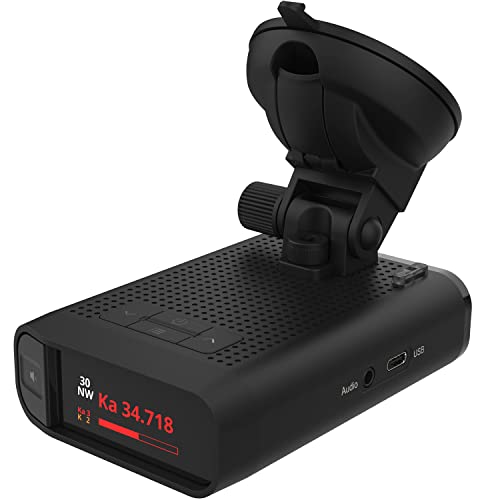
A radar detector and a police scanner are two completely different tools, even though drivers often confuse them. A radar detector senses the radar guns that officers use to clock your speed, while a police scanner listens to the radio chatter that public safety teams broadcast over the airwaves. One device watches for an active signal pointed at the road, and the other tunes into conversations that may never mention you.
That single distinction shapes everything about how you use each one. If you mostly want a heads-up that a speed trap is nearby, a radar detector is the device built for that job. If you are curious about broader emergency activity in your area, a scanner gives you a window into dispatch traffic. Below we break down what each does, which one suits your goals, and the mistakes that trip up first-time buyers.
What a radar detector does
A radar detector is a small receiver mounted near your windshield that scans for the specific radio frequencies police speed guns emit. When an officer aims a radar gun at traffic, the device emits a beam on bands such as X, K, and Ka. Your detector picks up that beam and alerts you with a tone and a band readout, giving you a moment to check your speed and drive sensibly.
Modern units also flag laser signals, though laser is far harder to catch because it is tightly focused. Better models add GPS so they can remember and mute false alarms from automatic doors and other harmless sources. The whole point of a radar detector is awareness of an active measurement happening right now, not snooping on anyone. It reacts only when a real signal reaches your car, and that keeps its purpose narrow and its alerts meaningful.
What a police scanner does
A police scanner is a radio receiver that monitors the channels used by police, fire, and emergency medical services. Instead of sensing a beam aimed at your vehicle, it sweeps a range of frequencies and locks onto active transmissions so you can hear dispatchers and responders talking in real time. People use scanners to follow local incidents or track weather events.
The catch is that many agencies now encrypt or digitize their radio traffic, so a basic analog scanner may pick up far less than it once did. Digital trunking scanners can follow these newer systems, but they cost more and take effort to program. A scanner tells you what is happening across a region. It does not warn you that a speed gun is pointed at your own car, which is the job a detector handles.
Which you want, and detectors to consider
For the everyday driver who wants a calm, informed commute, the radar detector is almost always the better fit. It speaks directly to the situation in front of you and asks nothing except mounting it and turning it on. A scanner appeals more to hobbyists, weather watchers, and people who enjoy following emergency activity, but it will not help you spot a speed trap on the highway ahead.
If you decide a detector is right for you, look for clean band detection, GPS lockout to silence false alerts, and a clear display. Long range on the Ka band matters most for open roads, while strong filtering matters most in crowded towns. Our roundup of the best radar detectors walks through several options that balance range, accuracy, and ease of use so you can match a unit to the way you actually drive.
Mistakes to avoid
- Assuming a scanner warns you about speed guns. It only carries voice traffic, so it cannot replace a detector for road awareness.
- Ignoring local rules. Using a scanner while driving is restricted or outlawed in some areas, so confirm your local regulations before keeping one in the car.
- Buying a cheap analog scanner once local agencies have gone digital or encrypted, leaving you with silence on most channels.
- Skipping GPS lockout on a detector, which leaves you flinching at false alarms from supermarket doors.
- Mounting a detector too low or behind tinted strips, which blocks the signal and weakens its range.
- Treating either device as permission to speed. Both are awareness tools, not a license to drive carelessly.
When to use both
Some drivers genuinely benefit from owning both devices, because each answers a different question. The detector handles the immediate concern of an active radar or laser signal near your car, while the scanner feeds you broader context about incidents, road closures, and weather warnings across your region. Long-distance travelers often appreciate that combination.
If you go this route, treat them as a team rather than rivals. Let the detector manage real-time alerts about speed enforcement, and let the scanner stay tuned to local channels for situational awareness, if the law allows it. Keep both mounted cleanly so neither blocks your view, and remember that the detector is the one telling you a measurement is happening right now.
Frequently Asked Questions
Is a radar detector the same as a police scanner?
No. A radar detector senses the radar and laser signals that speed guns emit toward your car, while a police scanner listens to the voice radio traffic of police, fire, and emergency services. They serve completely different purposes.
Can a police scanner tell me when an officer is checking my speed?
No. A scanner only receives spoken radio transmissions on emergency channels. It cannot detect a radar or laser beam aimed at your vehicle, which is the specific job a radar detector handles.
Is it legal to use a police scanner in my car?
It depends on your location. Some areas restrict or prohibit using a scanner while driving, even though radar detectors are commonly allowed. Always check your local regulations before keeping a scanner in the vehicle.
The Bottom Line
Radar detectors and police scanners look similar in spirit but solve very different problems. The detector watches for an active speed-measuring signal aimed at your car and alerts you in the moment, while the scanner opens a window into the radio traffic of emergency services around you. For most drivers focused on safer driving, the detector is the practical choice. If you want both situational context and speed-trap awareness, the two can work side by side. Either way, choosing the right detector starts with knowing exactly what each tool is built to do.
Related Guides
- 7 Best Affordable Radar Detectors for Cars in 2026 (Researched and Compared)
- Do Radar Detectors Detect Lidar?
- 7 Best World Best Radar Detectors (Researched and Compared)
- Best Radar Detectors
- 7 Best Radar Detectors for Car (Researched and Compared)
- 7 Best Hidden Radar Detectors for Car (Researched and Compared)
Last reviewed: August 27, 2025.
