Factory car audio is built to a budget, so even a brand new vehicle often sounds flat, muddy, or thin. The good news is that improving car sound quality is one of the most rewarding upgrades you can do yourself, and it does not require ripping the whole dashboard apart. The key is to spend in the right order. Some upgrades give a huge jump in clarity for very little effort, while others only matter once the basics are sorted. This guide walks through the highest impact changes first, explains why sound deadening and tuning matter just as much as the gear, and gives you a sensible order so every step builds on the last.
Start With Better Speakers and Door Sound Deadening
The single biggest improvement most cars can get is replacing the thin factory speakers. Stock paper cones distort early and lose detail, so swapping them for quality coaxial or component speakers instantly sharpens vocals, cymbals, and midrange. Coaxial speakers are the simplest drop in option, while component sets separate the tweeter and woofer for a more spacious, accurate stage if you are willing to do a little extra mounting.
Before you bolt those new speakers in, treat the doors with sound deadening material. A bare metal door panel rattles and lets road noise leak in, which masks fine detail. Adding deadening mats turns the door into a sealed, solid enclosure, so the speaker can move air properly instead of fighting itself. Many people are shocked at how much cleaner and louder their existing system sounds after deadening alone, which is why it belongs right next to the speaker upgrade rather than as an afterthought.
Add an Amplifier for Clean, Controlled Power
Factory head units only push a small amount of power, and that power is usually dirty and clips at higher volumes. Clipping is the harsh, fuzzy sound you hear when you crank a weak system, and it is the fastest way to damage speakers. A dedicated amplifier gives your speakers clean, stable power so they stay composed even when you turn things up.
An external amp also improves quality at normal listening levels, not just loud ones. With proper headroom, the system handles sudden peaks in a track without strain, so drums hit harder and the music feels effortless. A four channel amp is a common choice to drive your front and rear speakers, and a separate channel or mono amp can be added later if you bring in a subwoofer. Clean power is the foundation that lets good speakers actually perform.
Bring in a Subwoofer for Real Bass
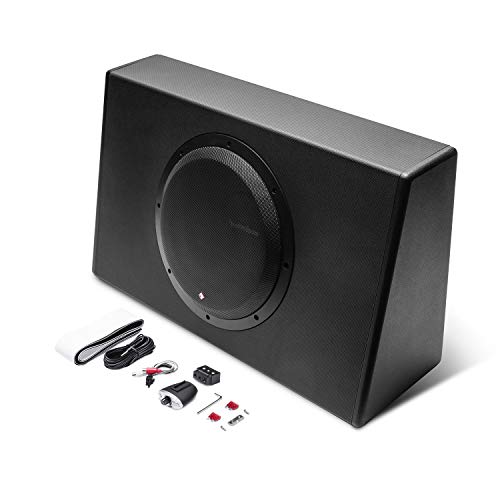
Even excellent door speakers struggle to reproduce deep bass, because small drivers simply cannot move enough air. A subwoofer fills in that bottom end and gives music the weight and fullness that factory systems completely lack. Once you add one, you will notice that the rest of the range opens up too, since the door speakers no longer have to strain trying to produce low notes they were never built for.
You do not need an overwhelming, window rattling setup to benefit. A single modest subwoofer in a sealed enclosure delivers tight, accurate bass that blends naturally with the rest of the system. The goal is balance, not just volume. A well integrated sub should feel like part of the music rather than a separate thumping box, and that comes down to choosing the right size and tuning it to match your speakers.
Upgrade the Head Unit and Source Quality
Once speakers, deadening, an amp, and a sub are in place, the head unit becomes the next worthwhile step. A modern aftermarket unit gives you better preamp outputs for cleaner signal to your amps, more tuning control, and features like high resolution Bluetooth, wired connections, and Apple CarPlay or Android Auto. Better preamp voltage means a stronger, lower noise signal travelling to the amplifier, which keeps the whole chain clean.
Just as important is what you feed the system. Heavily compressed, low bitrate streams and old low quality files throw away detail that no amount of hardware can recover. Use high quality audio files or lossless and high bitrate streaming whenever possible. A great system reveals everything, including the flaws in a bad recording, so giving it a clean source is one of the easiest free upgrades you can make.
Tune the System and Set Gains Correctly
Hardware only gets you part of the way. Tuning is what turns a collection of good components into a system that sounds genuinely impressive. Start by setting the amplifier gains correctly. The gain is a sensitivity control, not a volume knob, and setting it too high introduces noise and clipping. Set it so the amp delivers full clean power right before distortion, and your system gets louder and cleaner at the same time.
Next, use the equalizer to balance the frequency response. Car interiors create peaks and dips because of reflective glass and absorbent seats, so a flat factory tone rarely sounds right. Gentle cuts to harsh frequencies and small boosts where the car sounds thin make a dramatic difference. If your head unit offers time alignment, use it to center the sound stage. Tuning costs nothing but patience, and it often improves a system more than the next expensive part would.
Frequently Asked Questions
What is the single best upgrade for car sound quality?
Replacing the factory speakers with quality coaxial or component speakers gives the biggest jump for most people. Pair that swap with door sound deadening and you will hear a dramatic improvement in clarity before spending anything on amps or subs.
Do I really need sound deadening?
It is one of the most underrated upgrades. Deadening stops door panels from rattling and blocks road noise that masks detail, so your speakers sound cleaner and louder. Many people find it improves their system as much as a hardware upgrade does.
Can I improve sound quality without replacing every component?
Yes. Setting your amplifier gains properly, using the equalizer to balance the response, and playing high quality audio files can transform how a system sounds without buying new gear. Tuning the parts you already have is often the smartest first move.
The Bottom Line
Improving car sound quality is about spending in the right order rather than spending the most. Begin with quality speakers and door deadening for the biggest gain, add a clean amplifier and a subwoofer for power and depth, then upgrade the head unit and your source files. Finally, set your gains and equalizer carefully, because good tuning often matters as much as the gear itself. Work through these steps one at a time and your car will sound clearer, fuller, and more enjoyable on every drive. For component picks, see our guide to the best car speakers and the best car amplifiers to power them.
Related Guides
- 7 Best Bluetooth Radios for Car Touchscreen (Researched and Compared)
- 7 Best Tacoma Speaker Upgrades (Researched and Compared)
- 7 Best CD Radios for Car (Researched and Compared)
- 7 Best Rated Double Din Car Stereos (Researched and Compared)
- 7 Best Car Speakers for Sound Quality (Researched and Compared)
- 7 Best 10 Inch Car Subwoofers (Researched and Compared)
