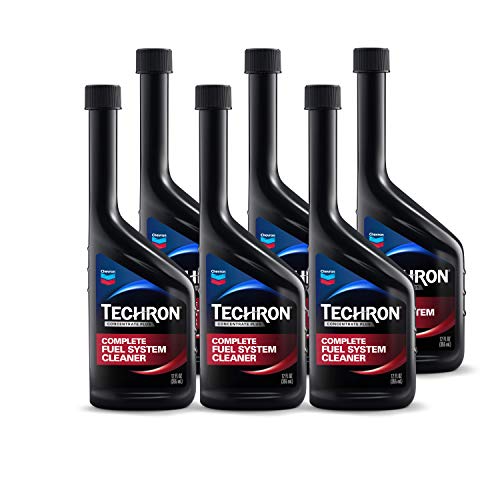
The short answer: a fuel injector cleaner focuses on the injectors alone, scrubbing the tiny nozzles that spray fuel into the engine, while a fuel system cleaner casts a wider net and treats the injectors plus the intake valves and combustion chamber. If your only complaint is a rough idle or a slight hesitation, an injector cleaner is usually enough. If you want a broader cleanup of deposits across more of the fuel and air path, the system product makes more sense.
Both pour into the tank and ride along with your fuel, so using them is simple. The real question is matching the product to the problem so you do not overspend on a heavier treatment you do not need, or underspend on a light one that cannot reach the deposits causing your symptoms. Below we break down what each one cleans, when to reach for it, and the easy mistakes that waste a bottle.
Fuel injector cleaner: what it targets
A fuel injector cleaner is built to do one job well: clear deposits from the fuel injectors. Over thousands of miles, gum and varnish build up on the injector tips, narrowing the spray openings and disrupting the fine mist the engine needs for clean combustion. When that mist turns into a sloppier spray, you can feel it as a rough idle, slower throttle response, or a small dip in fuel economy.
These products use detergents that dissolve and carry away those deposits as fuel flows through. Because the focus is narrow, injector cleaners tend to be lighter formulas aimed at maintenance and mild restoration. They work best as a regular habit rather than a one time rescue. If your car runs mostly fine but you want to keep the injectors flowing freely, a dedicated injector cleaner is a low effort way to stay ahead of trouble. For drivers who only notice minor symptoms, an injector cleaner often resolves the issue without touching anything else in the engine.
Fuel system cleaner: broader reach
A fuel system cleaner is the wider treatment. Instead of stopping at the injectors, it is formulated to clean a longer stretch of the fuel and air path, including the injectors, the intake valves, and the combustion chamber. That broader reach matters because deposits do not only form on injector tips. Carbon also collects on intake valves and inside the combustion chamber, and there it can cause hard starts, knocking, hesitation, and a general loss of smoothness.
Because it tackles more surfaces, a fuel system cleaner usually carries a stronger, more concentrated detergent package. Many drivers use it as a periodic deep clean, for example once or twice a year or before a long road trip, rather than every fill up. It is also a sensible first move on a used car with an unknown service history, since deposits may have accumulated in several places at once. If your symptoms point beyond the injectors, or you simply want a more complete cleanup, the system product covers ground an injector only formula cannot reach.
Which to use, and products to consider
Start by matching the product to the symptom. If the car idles roughly, hesitates slightly, or your economy has crept down a little, a focused injector cleaner is the practical pick. If you are dealing with knocking, hard starts, or you want a thorough cleanup across the injectors, intake valves, and combustion chamber, step up to a full fuel system cleaner. When in doubt, the broader product rarely hurts, since most quality formulas are safe for regular use when you follow the label.
Quality varies between bottles, so it pays to compare detergent strength and the surfaces a formula claims to reach before you buy. To shortlist options that work hard on injector deposits, our roundup of the best fuel injector cleaners is a useful starting point. From there, read the directions on dosing per tank, since a treatment that is too diluted will underperform no matter how good the chemistry is.
Mistakes to avoid
- Pouring the bottle into a nearly full tank, which dilutes the treatment below the strength it needs to work. Add it before you fill up so it mixes at the right concentration.
- Expecting one bottle to fix years of neglect. Heavy deposits often need a couple of treatments across several tanks before the engine smooths out.
- Using an injector only cleaner when the real problem is carbon on the intake valves or in the combustion chamber, which it cannot reach.
- Treating too often with a heavy system cleaner. For routine upkeep, a lighter injector product on a regular schedule is usually enough.
- Ignoring the label dosing and guessing the amount, which leads to a treatment that is either too weak or wasteful.
- Assuming any additive will repair a mechanical fault. A cleaner clears deposits, but it cannot fix a failing pump, a bad sensor, or a leaking injector.
Bottom line
Choose based on how far the cleanup needs to reach. A fuel injector cleaner is the right call for keeping the injectors clear and for mild symptoms like a slightly rough idle or a small economy dip, and it shines as a regular maintenance habit. A fuel system cleaner is the stronger, wider treatment that also addresses the intake valves and combustion chamber, making it the better choice for deeper carbon problems or an occasional thorough clean.
For most drivers, a sensible plan is a light injector cleaner on a routine basis with an occasional full system treatment for a deeper reset. Match the product to the symptom, follow the dosing on the label, and give it a tank or two to show results. Done that way, either type earns its place in your routine without wasted money.
Frequently Asked Questions
Can I use a fuel injector cleaner and a fuel system cleaner together?
It is best not to mix two treatments in the same tank, since the combined detergent load can be heavier than your engine needs at once. Use one product per tank, follow the label dosing, and if you want both effects, run them on separate fill ups rather than stacking them together.
How often should I use a fuel injector cleaner?
A common approach is to add a light injector cleaner every few thousand miles as routine upkeep, which keeps deposits from building up in the first place. A heavier fuel system cleaner is better reserved for occasional deep cleans, such as once or twice a year or before a long trip. Always defer to the directions on the bottle.
Will a fuel cleaner fix a check engine light?
Sometimes, but only if the cause is deposit related, such as a dirty injector affecting how the engine runs. A cleaner cannot repair a mechanical or electrical fault like a failing sensor, a bad pump, or a leaking injector. If the light stays on after a treatment or two, have the underlying code read and diagnosed.
The Bottom Line
Fuel injector cleaner and fuel system cleaner are not rivals so much as tools for different jobs: one keeps the injectors flowing for light, routine care, and the other reaches deeper to clean the intake valves and combustion chamber when carbon has spread. Decide by the symptom in front of you, lean on regular light treatments to avoid bigger problems, and step up to a system cleaner when you need a thorough reset. Picking the right product and following the label is what turns a cheap bottle into a smoother running engine.
Related Guides
- 7 Best Fuel Tanks for Diesel (Researched and Compared)
- 7 Best Diesel Fuel Stabilizers (Researched and Compared)
- 7 Best Fuel Management Systems for Harley Davidson (Researched and Compared)
- 7 Best Fuel Additives for Outboard Motors in 2026 (Researched and Compared)
- 7 Best 12 Valve Injectors for Cummins and Dodge (Researched and Compared)
- 7 Best In Tank Fuel Pumps for LS Swap (Researched and Compared)
