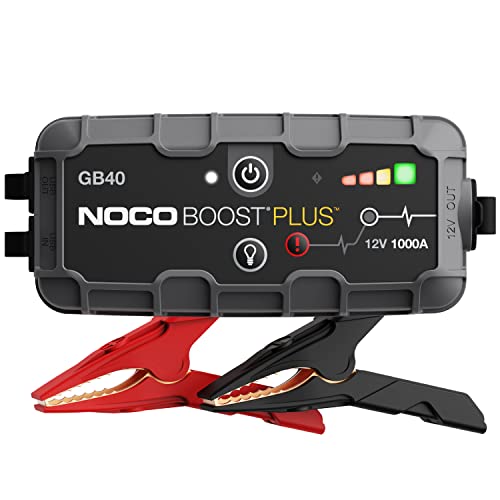
Portable jump starters have become a glovebox staple, but plenty of drivers hesitate before clamping one to their battery. The worry is understandable: you are connecting a powerful lithium pack directly to your car’s electrical system, and a mistake could in theory send a surge through sensitive electronics. The reassuring reality is that a quality jump starter is engineered to be safe, and the rare cases of damage almost always trace back to user error or a low-grade unit rather than the technology itself. This guide explains exactly how a jump starter could harm a car, the built-in safety features that prevent it, and the simple habits that keep every jump clean.
How a Jump Starter Could Theoretically Damage a Car
There are three main ways any external power source can stress a vehicle’s electrical system. The first is reverse polarity, where the positive and negative clamps are connected to the wrong terminals, pushing current the wrong direction through the system. The second is a spark at the connection point, which in the worst case can ignite hydrogen gas vented by a conventional battery. The third is a voltage spike, a brief surge that can travel into the wiring and reach delicate control modules.
Each of these is a genuine risk in principle, which is why they get talked about so much. The important context is that these failure modes apply mostly to old-style methods like car-to-car jumping with bare cables, or to cheap units that skip protective circuitry. A well-designed jump starter is built specifically to neutralize all three before they can do anything.
The Safety Features That Prevent Damage
Modern jump starters carry layered protection that directly targets the risks above. Reverse-polarity protection is the headline feature: if the clamps are attached to the wrong terminals, the unit refuses to deliver power and usually flashes a warning light or sounds an alarm instead of frying anything. Spark-proof technology keeps the output dormant until the device confirms a correct, complete connection, so there is no live arc when the clamps touch metal.
On top of those, most quality units include over-current, over-voltage, short-circuit, and over-temperature protection. Together these form a barrier between the lithium cells and your car: the device only releases its charge when conditions are exactly right, and it shuts down the moment something looks wrong. If you want to see units that carry this full safety stack, our roundup of the best jump starters highlights models with reliable reverse-polarity and spark protection.
Common User Mistakes That Cause Problems
When a jump goes wrong, the cause is usually how the device was used rather than the device itself. The most frequent mistakes are clamping the leads to the wrong terminals, letting the positive and negative clamps touch each other while the unit is armed, and connecting in the wrong order so a spark forms near the battery. Leaving clamps loosely attached so they slip during cranking can also create intermittent arcing.
Other avoidable errors include trying to jump a battery that is physically damaged or frozen, using a unit that is too small for the engine and forcing repeated high-draw attempts, and ignoring the warning light that signals a reverse connection. None of these are exotic; they are simply the result of rushing. Slowing down and following the device instructions eliminates nearly all of them.
Protecting Sensitive Electronics
Today’s cars are full of computers: the engine control unit, body control module, infotainment system, and dozens of sensors that dislike voltage irregularities. The good news is that a regulated jump starter delivers a clean, controlled output close to the battery’s normal voltage, which is far gentler than the uncontrolled surges that bare-cable jumps can produce. Because the device manages current flow, your modules see a stable supply rather than a shock.
To add an extra margin of safety, keep accessories like headlights, climate fans, and the stereo switched off during the jump so there is less load swinging around when the engine catches. Connect to a solid ground point on the chassis rather than directly to the battery’s negative post when possible, which moves any small spark away from the battery and any gas it may vent. These small steps protect the electronics that matter most.
The Safe Connection Order Every Time
Following a consistent sequence is the single best way to guarantee a safe jump. Start with the jump starter powered off. Attach the red positive clamp to the positive terminal of the dead battery, then attach the black negative clamp to an unpainted metal ground point on the engine block or chassis, away from the battery itself. Only once both clamps are secure should you turn the device on.
Start the car, let it run for a moment, then power the jump starter off before removing the clamps in reverse order: negative ground first, then positive. This order minimizes any chance of a spark near the battery and keeps the clamps from arcing against each other. When you build this routine into muscle memory, the entire process becomes predictable and worry-free.
Frequently Asked Questions
Can a jump starter ruin my car's computer or electronics?
A quality jump starter with reverse-polarity and over-voltage protection delivers a regulated output that is very unlikely to harm your car’s computer. Damage to electronics almost always comes from reversed connections or cheap unregulated units, both of which proper safety features and a correct connection order prevent.
What happens if I connect the clamps backward?
On a unit with reverse-polarity protection, nothing happens: the device simply refuses to deliver power and warns you with a light or alarm. On an unprotected device, a reversed connection can blow fuses or stress electronics, which is exactly why buying a model with this safeguard matters.
Is a jump starter safer than jumping from another car?
In most cases yes. A portable jump starter provides a controlled, regulated output with spark and polarity protection, while car-to-car jumping relies on bare cables with no such safeguards and a higher chance of sparks, surges, and human error at the terminals.
The Bottom Line
A jump starter can damage a car only in narrow circumstances, almost all of which come down to a low-quality unit or a careless connection. Choose a device with reverse-polarity and spark protection, keep your accessories off during the jump, connect in the correct order, and you remove practically every avenue for harm. Used the way it is meant to be used, a good jump starter is one of the safest and most reassuring tools you can keep in the car. For options that carry the full safety stack described here, see our guide to the best jump starters and pick one that fits your engine size.
Related Guides
- 7 Best Heavy Duty Jump Starters for Semi Trucks (Researched and Compared)
- 7 Best Auto Jump Starters (Researched and Compared)
- 7 Best Jump Starters for Cars (Researched and Compared)
- 7 Best Affordable Jump Starters for Cars in 2026 (Researched and Compared)
- 7 Best Portable Air Compressor and Jump Starter Combos for Cars in 2026 (Researched and Compared)
- 7 Best Jump Starters Portable (Researched and Compared)
