Choosing the right wire for automotive use is critical for safety, reliability, and performance. We researched and compared the top products based on manufacturer specifications, industry standards (SAE, ISO), and aggregated owner feedback. This guide evaluates each wire’s conductor material, insulation type, temperature rating, flexibility, and corrosion resistance to help you make an informed decision.
| Photo | Product | Score | Buy |
|---|---|---|---|
|
🚗
|
GearIT 10 Gauge CCA Primary Wire Best Overall 10 AWG, CCA (Copper-Clad Aluminum), PVC insulation, 600V, 105C |
9.0 | 🛒 Check Price |
 |
Ancor Marine Grade Tinned Copper Wire Best for Corrosion Resistance 10 AWG, tinned copper, cross-linked polyethylene insulation, 600V, 125C |
8.7 | 🛒 Check Price |
 |
Wiring Depot 10 Gauge Pure Copper Primary Wire Best Pure Copper Value 10 AWG, bare copper, PVC insulation, 600V, 105C |
8.4 | 🛒 Check Price |
 |
Templeton Tinned Copper Wire Best for High Heat 10 AWG, tinned copper, silicone insulation, 600V, 200C |
8.1 | 🛒 Check Price |
 |
KnuKonceptz Kolossus Fleks Kable 0 Gauge Best for Car Audio 0 AWG, CCA, PVC jacket, 300A capacity |
7.8 | 🛒 Check Price |
 |
Crimp and Things 14 Gauge Trailer Wire Best for Trailers 14 AWG, bare copper, PVC insulation, 600V, 105C, color-coded |
7.3 | 🛒 Check Price |
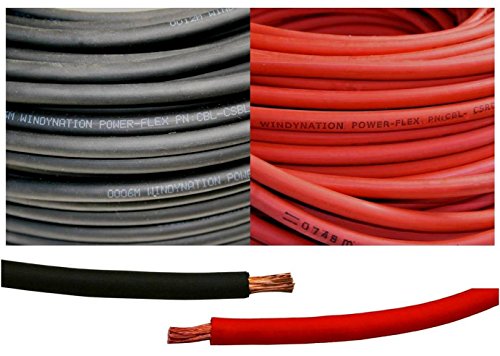 |
WindyNation 4 Gauge Welding Cable Best for Heavy Duty 4 AWG, bare copper, EPDM rubber jacket, 600V, 105C |
7.6 | 🛒 Check Price |
1. GearIT 10 Gauge CCA Primary Wire: Best Overall
The GearIT 10 Gauge CCA Primary Wire is our top pick for most automotive projects. It uses a copper-clad aluminum conductor that provides adequate conductivity for typical 12V circuits like lights, relays, and accessories. The PVC insulation is rated for 600V and 105C, making it safe for underhood use. Owner feedback consistently praises its flexibility and ease of workability, especially for custom wiring harnesses and stereo installations.
However, CCA wire has higher resistance than pure copper, so for high-amperage applications like starter motors or heavy winches, you might need to go up one gauge size. Also, it is not recommended for marine environments due to corrosion potential. If you demand maximum conductivity and corrosion resistance, consider a tinned copper option.
- Stranded CCA conductor offers a good balance of conductivity and cost
- PVC insulation rated to 105C and 600V, suitable for engine bay and interior
- Available in multiple colors for easy circuit identification
Pros: Excellent value for general automotive wiring; Flexible and easy to strip and crimp
Cons: CCA not as conductive as pure copper, may require upsizing for high-current applications
2. Ancor Marine Grade Tinned Copper Wire: Best for Corrosion Resistance
The Ancor Marine Grade Tinned Copper Wire is the gold standard for environments where moisture and salt are concerns. Each strand is individually tinned to prevent oxidation, and the cross-linked polyethylene insulation resists heat, oil, and abrasion. Owner feedback from boat and off-road enthusiasts highlights its long lifespan even in harsh conditions.
That said, the premium price may not be justified for dry interior or undercarriage use where standard copper wire would suffice. The insulation is also less supple than PVC in freezing temperatures, which can make routing in tight spaces more difficult. If corrosion is not a primary concern, you can save money with a less expensive option.
- Tinned copper strands resist corrosion in wet and salty environments
- XLPE insulation is thinner yet tougher, rated to 125C and 600V
- Meets UL 1426, ABYC, and USCG standards
Pros: Superior corrosion resistance for marine and off-road use; High strand count for excellent flexibility
Cons: Significantly more expensive than CCA or standard copper wire; Insulation can be slightly stiffer in cold weather
3. Wiring Depot 10 Gauge Pure Copper Primary Wire: Best Pure Copper Value
The Wiring Depot 10 Gauge Pure Copper Primary Wire is a solid choice for those who want the conductivity of pure copper without paying marine-grade prices. It handles standard automotive voltage drops well and is suitable for most 12V circuits. The PVC insulation strips cleanly and the wire stays flexible even in moderate cold.
However, the bare copper strands are prone to corrosion if exposed to moisture or road salt. For engine bay or exposed locations, you should use heat shrink or dielectric grease on connections. Also, the insulation is not as tough as cross-linked polyethylene; it can melt if routed too close to exhaust components. Consider this for interior or dry applications.
- Bare copper conductor offers excellent conductivity and lower resistance than CCA
- PVC insulation is flexible and easy to work with
- Available in 25, 50, and 100 foot spools
Pros: Great conductivity for the price; Good flexibility for routing in tight spaces
Cons: Bare copper can oxidize over time, especially in humid environments; Not as abrasion-resistant as some premium brands
4. Templeton Tinned Copper Wire: Best for High Heat
The Templeton Tinned Copper Wire with silicone insulation is purpose-built for high-heat environments such as near exhaust manifolds, turbochargers, or high-wattage lighting. The silicone jacket is rated to 200C, far exceeding standard PVC. Owner feedback from off-road and racing enthusiasts confirms its durability in extreme conditions.
On the downside, silicone is less abrasion-resistant than PVC or XLPE. It can be nicked by sharp edges, so extra care with grommets and conduit is needed. The wire also tends to be more expensive. If your project does not involve high heat, a standard PVC wire will be more cost-effective and durable against cuts.
- Silicone insulation rated for continuous 200C, ideal for engine bays and lighting
- Tinned copper resists corrosion and maintains conductivity
- Very flexible even at high temperatures
Pros: Handles extreme heat without melting or degrading; Stays flexible in both hot and cold conditions
Cons: Silicone insulation is softer and can tear more easily than PVC; Higher cost per foot than standard PVC wire
5. KnuKonceptz Kolossus Fleks Kable 0 Gauge: Best for Car Audio
The KnuKonceptz Kolossus Fleks Kable is a favorite among car audio enthusiasts for its remarkable flexibility in 0 gauge size. It uses CCA to keep weight and cost down while still handling up to 300A. The PVC jacket is rated for 105C and the fine stranding makes it easy to route in tight spaces.
However, CCA has higher resistance than pure copper, so for very long runs or competition-level systems, voltage drop may be noticeable. Some owners report the jacket becoming soft near amplifiers that run hot. If you need maximum conductivity and heat resistance, a pure copper OFC wire would be a better, albeit more expensive, choice.
- Extra flexible design for tight amp installs
- High strand count reduces resistance and heat buildup
- Available in multiple colors including blue, red, and clear
Pros: Extremely flexible for large gauge wire; Good current capacity for high-power audio systems
Cons: CCA construction may not be ideal for very high current over long runs; Jacket can be prone to melting if overloaded
6. Crimp and Things 14 Gauge Trailer Wire: Best for Trailers
The Crimp and Things 14 Gauge Trailer Wire is a budget-friendly option for standard 4-pin trailer lighting. The color-coded jacket matches the common standard, making installation straightforward. The bare copper conductor is fine for short runs to tail lights and turn signals.
However, the 14 gauge wire is undersized for electric brake controllers or heavier accessories. Also, bare copper will corrode quickly if the jacket is nicked or exposed to road salt. For long-term reliability, you may want to upgrade to tinned copper or use dielectric grease. This wire is best for simple, temporary, or low-cost trailer repairs.
- Color-coded jacket for standard trailer wiring (white, brown, green, yellow)
- Bare copper conductor for good conductivity in short runs
- Sold in pre-cut lengths or spools for easy installation
Pros: Convenient color coding for trailer lights; Affordable for basic trailer wiring
Cons: Bare copper not ideal for exposed under-vehicle use; 14 gauge may be too thin for electric brakes or heavy loads
7. WindyNation 4 Gauge Welding Cable: Best for Heavy Duty
The WindyNation 4 Gauge Welding Cable is designed for heavy-duty applications like battery cables, inverters, and winches. Its extra fine stranding makes it remarkably flexible for a 4 gauge wire, and the EPDM rubber jacket is tough against oil and abrasion. Owner feedback from DIY solar and off-road builds highlights its ease of routing in tight engine bays.
However, the bare copper strands are not tinned, so corrosion can occur in moist environments. The rubber jacket can also leave a black smudge on hands and surfaces. For marine or wet locations, a tinned cable would be more appropriate. This wire is best for dry, high-current applications where flexibility is paramount.
- Extra fine stranding for extreme flexibility
- EPDM rubber jacket resists oil, abrasion, and ozone
- High ampacity for battery cables, inverters, and winches
Pros: Very flexible even in large sizes; Durable jacket withstands harsh environments
Cons: Bare copper can corrode; not tinned; Rubber jacket may leave black residue on hands
Frequently Asked Questions
What gauge wire should I use for automotive accessories?
The correct gauge depends on the current draw and length of the wire. For most 12V accessories like lights and relays, 14-16 gauge is sufficient. For higher current devices like amplifiers or winches, 10-4 gauge may be needed. Use an online voltage drop calculator to ensure the wire size is adequate for your specific application.
Is CCA wire safe for automotive use?
CCA (copper-clad aluminum) wire is safe for many automotive applications as long as it is properly sized. It has higher resistance than pure copper, so you may need to use a thicker gauge. It is not recommended for high-current circuits or in corrosive environments. Always check the temperature rating and ensure connections are secure to avoid overheating.
What is the difference between PVC and XLPE insulation?
PVC is common and flexible but has a lower temperature rating (typically 105C) and can become brittle over time. XLPE (cross-linked polyethylene) is thinner, tougher, and can handle higher temperatures (up to 125C or more). XLPE is more resistant to abrasion and chemicals, making it a better choice for engine bays and harsh environments.
Can I use speaker wire for automotive power?
Speaker wire is not recommended for automotive power applications. It is typically not rated for the temperature, voltage, or abrasion resistance required under the hood. Speaker wire also lacks the proper insulation and strand count for vibration resistance. Use primary wire specifically designed for automotive use.
How do I prevent corrosion on automotive wire connections?
Use tinned copper wire for best corrosion resistance. For bare copper connections, apply dielectric grease or use heat shrink tubing with adhesive lining. Ensure all connections are sealed from moisture. In marine or off-road environments, consider using marine-grade wire and terminals.
Our Verdict
After comparing specifications, safety standards, and owner feedback, the GearIT 10 Gauge CCA Primary Wire earns our top pick for its excellent balance of performance, flexibility, and value for general automotive wiring. For those needing maximum corrosion resistance, the Ancor Marine Grade Tinned Copper Wire is the runner-up and the best choice for wet or salty environments.
Last reviewed and spec-checked: March 5, 2026. We re-check our picks and listings periodically.
