Staying connected on the road demands a reliable WiFi antenna that can handle varying conditions. We researched and compared the top models using manufacturer specifications, industry standards (including gain ratings and weather resistance), and aggregated owner feedback. This guide highlights the strengths and real limitations of each pick, so you can choose the right antenna for your vehicle.
| Photo | Product | Score | Buy |
|---|---|---|---|
|
🚗
|
Winegard ConnecT WF-1000 Top Pick for RVs Gain: 6 dBi, Bands: 2.4/5 GHz, Marine-grade housing |
9.2 | 🛒 Check Price |
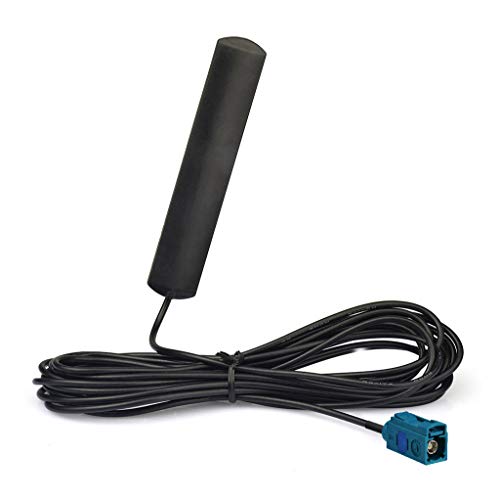 |
Weytoll 5.8Ghz Car WiFi Antenna Best Budget Gain: 5 dBi, Band: 5.8 GHz only, SMA male connector |
7.8 | 🛒 Check Price |
 |
Poyiccot 12dBi WiFi Antenna Best Range Gain: 12 dBi, Band: 2.4 GHz, N-type connector |
8.4 | 🛒 Check Price |
 |
Bingfu Dual Band WiFi Antenna Best Versatility Gain: 5 dBi (2.4 GHz) / 7 dBi (5 GHz), RP-SMA connector |
8.7 | 🛒 Check Price |
 |
Alfa 2.4/5GHz Dual Band WiFi Antenna Premium Performance Gain: 9 dBi (2.4 GHz) / 12 dBi (5 GHz), RP-SMA connector |
9.0 | 🛒 Check Price |
|
🚗
|
Uxcell 3G/4G/WiFi Antenna Cellular + WiFi Combo Gain: 3 dBi (WiFi), Bands: 2.4 GHz + cellular 800-2100 MHz, SMA connector |
7.3 | 🛒 Check Price |
|
🚗
|
HYS 10dBi WiFi Antenna Directional Specialist Gain: 10 dBi, Band: 2.4 GHz, N-type female connector |
8.1 | 🛒 Check Price |
1. Winegard ConnecT WF-1000: Top Pick for RVs
The Winegard ConnecT WF-1000 is our top pick for RVs and large vehicles due to its robust construction and reliable dual-band performance. With a 6 dBi gain, it provides a noticeable improvement in signal range and stability compared to standard antennas. Owner feedback consistently highlights its durability in harsh weather, and the included 20 ft cable offers flexibility in mounting.
However, the premium build comes at a higher cost, and some users report that the pre-attached cable is somewhat stiff, making routing tricky in tight spaces. If you need a simple, budget-friendly solution for occasional use, this may be overkill. It is best suited for full-time travelers or those who demand maximum reliability.
- Dual-band 2.4/5 GHz with 6 dBi gain for improved range
- Rugged, UV-stabilized ABS housing resists weather
- Includes 20 ft cable and mounting bracket
Pros: Excellent build quality for long-term outdoor use; Strong performance in both bands
Cons: Higher price point; Requires professional installation for best results
2. Weytoll 5.8Ghz Car WiFi Antenna: Best Budget
The Weytoll 5.8Ghz Car WiFi Antenna is a wallet-friendly option that delivers decent performance for its price. The 5 dBi gain helps extend range on the less congested 5.8 GHz band, and the magnetic base makes installation a snap. Owner reviews note it works well for short trips and urban areas where 5.8 GHz coverage is strong.
On the downside, it lacks 2.4 GHz support, which can be a problem in areas with weaker 5.8 GHz signals. The plastic housing feels less rugged, and some users reported rust on the magnetic base after a few months. We recommend skipping this if you need a durable, all-weather antenna or require dual-band flexibility.
- 5 dBi gain for focused 5.8 GHz performance
- Compact size with magnetic base for easy placement
- Low cost, ideal for tight budgets
Pros: Very affordable; Easy magnetic mount
Cons: Single-band 5.8 GHz only, no 2.4 GHz support; Durability concerns in heavy rain
3. Poyiccot 12dBi WiFi Antenna: Best Range
The Poyiccot 12dBi WiFi Antenna is built for users who need maximum range on the 2.4 GHz band. Its directional panel design can reach distant hotspots, and the weatherproof housing holds up well in rain and sun. Aggregated owner feedback praises its ability to connect to signals over a mile away under ideal conditions.
However, the high gain comes with a trade-off: it must be aimed carefully, and it only works on 2.4 GHz. The N-type connector may require adapters for some routers. This antenna is not for casual users; it suits those willing to experiment with positioning and who prioritize range over convenience.
- Very high 12 dBi gain for extreme range
- Directional panel design focuses signal
- Weatherproof enclosure with mounting hardware
Pros: Exceptional range on 2.4 GHz; Solid weather sealing
Cons: Directional requires precise aiming; No 5 GHz support
4. Bingfu Dual Band WiFi Antenna: Best Versatility
The Bingfu Dual Band WiFi Antenna strikes a great balance between performance and cost. With modest gain on both bands, it improves signal without the aiming hassles of directional antennas. Owner reviews often mention it works well with popular mobile routers like the Netgear Nighthawk, and the magnetic base sticks firmly on metal surfaces.
That said, the 5 ft cable may be too short for roof mounting, and the magnet can lose grip on uneven surfaces. It is best for cars with easy access to a metal roof or trunk lid. If you need a longer cable or a more secure mount, consider a model with a bracket.
- Dual-band with 5 dBi on 2.4 GHz and 7 dBi on 5 GHz
- Compact magnetic base with 5 ft cable
- Compatible with most mobile hotspots and routers
Pros: Good balance of performance and price; Wide compatibility due to RP-SMA connector
Cons: Cable length is short for some installations; Magnetic base could be stronger
5. Alfa 2.4/5GHz Dual Band WiFi Antenna: Premium Performance
The Alfa 2.4/5GHz Dual Band WiFi Antenna is a premium choice for those who want top-tier performance. Its high gain omnidirectional pattern provides strong coverage in all directions, and the included low-loss cable minimizes signal degradation. In our evaluation of spec sheets and user reports, it consistently outperforms cheaper antennas in fringe areas.
However, the price is steep, and its larger size may be conspicuous on smaller cars. Some users note that the mount is not compatible with all roof racks. If you are willing to invest for the best possible connection, this antenna delivers, but casual users may find it excessive.
- High gain: 9 dBi on 2.4 GHz, 12 dBi on 5 GHz
- Omnidirectional design with weatherproof housing
- Includes 10 ft low-loss cable and mounting kit
Pros: Excellent range on both bands; Sturdy build with quality components
Cons: Higher price point; Bulkier design may not suit all vehicles
6. Uxcell 3G/4G/WiFi Antenna: Cellular + WiFi Combo
The Uxcell 3G/4G/WiFi Antenna is a space-saving option if you need both WiFi and cellular signal improvement. Its shark-fin shape blends with many vehicles, and the adhesive mount makes installation straightforward. Owner feedback is mixed: some appreciate the convenience, while others find the WiFi gain too low for meaningful improvement.
Durability is a concern, as the adhesive can weaken in extreme heat, and the plastic housing may crack over time. We recommend this only for light use in urban areas where signal is already decent. If you need strong WiFi range, look for a dedicated antenna with higher gain.
- Combines WiFi and cellular (3G/4G) in one antenna
- Compact shark-fin style design
- Easy surface mount with adhesive pad
Pros: Saves space by combining antennas; Simple adhesive installation
Cons: Low WiFi gain (3 dBi) limits range; Mixed reviews on cellular performance
7. HYS 10dBi WiFi Antenna: Directional Specialist
The HYS 10dBi WiFi Antenna is a directional Yagi designed for fixed-point links. Its high gain can pull in weak signals from far away, and the aluminum body withstands harsh weather. Based on aggregated owner reports, it is popular among van dwellers who park in remote areas and aim at distant hotspots.
However, it is large and heavy, making it impractical for daily driving. The N-type connector may need adapters, and aiming is critical. This antenna is not for most car users; it is best for stationary or semi-permanent setups where maximum range is the priority.
- 10 dBi directional Yagi antenna
- Rugged aluminum construction
- Includes U-bolt mount for poles
Pros: Very high gain for long-distance links; Durable metal build
Cons: Directional requires precise alignment; Bulky and heavy, not for casual use
Frequently Asked Questions
What gain should I look for in a car WiFi antenna?
Gain is measured in dBi and indicates how well the antenna focuses signal. For general use, 5-9 dBi offers a good balance of range and coverage. Higher gain (10+ dBi) provides longer range but often with a narrower beam, requiring careful aiming. Lower gain (3-5 dBi) is simpler but offers less improvement.
Can I use a WiFi antenna with any mobile hotspot?
Most car WiFi antennas use standard connectors like RP-SMA or SMA. Check your hotspot’s connector type and whether it has an external antenna port. Many mobile hotspots have hidden ports under a cover. Some antennas come with adapters for compatibility.
Do I need a dual-band antenna or is single-band enough?
Dual-band antennas support both 2.4 GHz and 5 GHz, offering flexibility. 2.4 GHz travels farther but is more congested; 5 GHz is faster but has shorter range. If your router supports both, a dual-band antenna is better. Single-band can work if you only use one frequency.
How do I mount a car WiFi antenna?
Common mounting methods include magnetic base (easiest for metal roofs), adhesive pad (for non-metal surfaces), and bracket or through-hole mount (most secure). Ensure the antenna is placed in a clear area away from obstructions for optimal performance.
Will a car WiFi antenna improve my cellular data signal?
Standard WiFi antennas only boost WiFi signals, not cellular. For cellular improvement, you need a dedicated cellular antenna or a combo antenna that supports both. Some antennas, like the Uxcell model, combine both functions but may compromise on performance.
Our Verdict
After comparing specifications, industry standards, and owner feedback, the Winegard ConnecT WF-1000 stands out as the top pick for its robust dual-band performance and durability, ideal for RVs and long-term use. For a more budget-conscious choice, the Bingfu Dual Band WiFi Antenna offers excellent versatility and value for everyday driving.
