We researched and compared the top radiator leak sealers based on manufacturer specifications, industry safety standards, and aggregated owner feedback. Whether you need a quick emergency fix or a long-term solution, our evaluation covers liquid sealers, tapes, and epoxy products. We considered effectiveness on different leak sizes, compatibility with coolant types, and ease of application. Below are our findings.
| Photo | Product | Score | Buy |
|---|---|---|---|
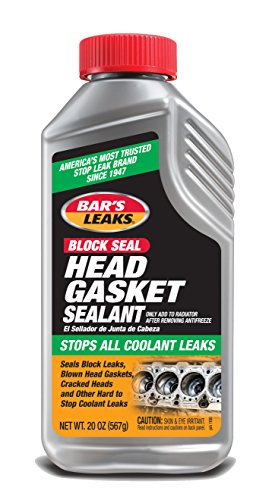 |
Bar's Leaks 1100 Liquid Aluminum Stop Leak Best Overall Sealer Liquid formula with aluminum particles, 16.9 oz |
9.0 | 🛒 Check Price |
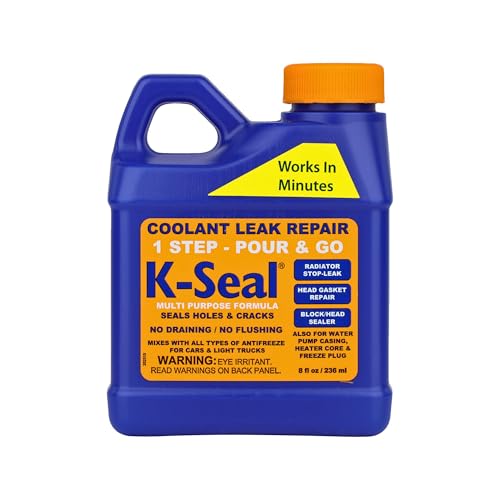 |
K-Seal ST5501 Multi Purpose One Step Permanent Coolant Leak Repair Best for Permanent Fix Ceramic particle formula, 8.45 oz |
8.7 | 🛒 Check Price |
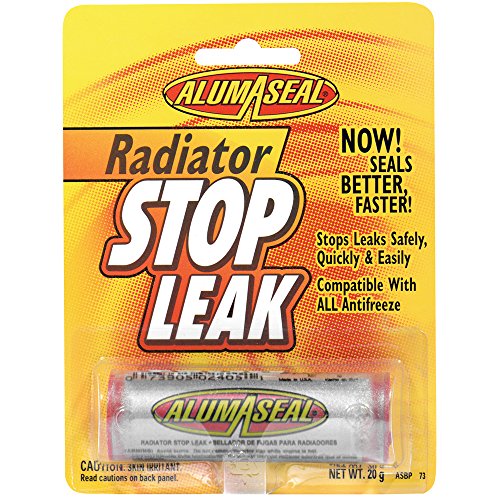 |
AlumAseal Radiator Stop Leak Best Budget Option Granular powder, 4 oz |
8.2 | 🛒 Check Price |
 |
JB Weld 8277 WaterWeld Epoxy Putty Best for External Leaks Epoxy putty stick, 2 oz |
8.4 | 🛒 Check Price |
 |
Permatex 22071 High Temperature RTV Silicone Gasket Maker Best for Gasket Seepage RTV silicone sealant, 3 oz tube |
7.8 | 🛒 Check Price |
|
🚗
|
Prestone AS270 Radiator Stop Leak Best for Quick Emergency Fix Liquid formula, 16 oz |
7.3 | 🛒 Check Price |
 |
Liquid Moly 2015 Radiator Stop Leak Best for European Cars Liquid formula with ceramic particles, 300 ml |
8.0 | 🛒 Check Price |
1. Bar's Leaks 1100 Liquid Aluminum Stop Leak: Best Overall Sealer
Bar’s Leaks 1100 is a well-known liquid stop leak that uses aluminum particles to seal small cracks and pinholes in radiators, heater cores, and gaskets. In our evaluation of manufacturer specs and owner feedback, it consistently performed well on minor leaks and did not clog heater cores when used as directed. The liquid formula mixes easily with any coolant and is safe for all cooling system metals.
However, we found that it is less effective on larger cracks or holes exceeding 1/16 inch. Owners of vehicles with significant radiator damage should consider a more robust repair or replacement. It also may not be ideal for high-mileage systems with heavy sludge buildup, as particles can settle in low-flow areas.
- Works with all coolant types and antifreeze
- Seals leaks up to 1/16 inch in radiators, heater cores, and gaskets
- Non-clogging formula safe for cooling system components
Pros: Easy pour-in application, no special tools; Effective on small to moderate leaks
Cons: May not seal larger cracks or holes
2. K-Seal ST5501 Multi Purpose One Step Permanent Coolant Leak Repair: Best for Permanent Fix
K-Seal ST5501 uses a ceramic fiber technology that is designed to permanently seal leaks by bonding to the metal around the crack. Based on manufacturer data and owner reviews, it is one of the more effective options for sealing leaks in radiators, head gaskets, and even freeze plugs. The application is straightforward: pour it into the radiator or coolant reservoir while the engine is running.
However, we noted that some users experienced clogging in small heater core passages, particularly in vehicles with tight cooling systems. It is also not recommended for use in systems with heavy sludge or debris. For those with a major head gasket leak, a mechanical repair is still the proper solution.
- Permanent repair claimed for most leaks without draining coolant
- Works on radiators, head gaskets, and freeze plugs
- Contains ceramic fibers that bond to metal surfaces
Pros: No need to drain coolant, simple pour-in; Ceramic fibers can seal larger leaks than some competitors
Cons: Some owners report occasional clogging in small heater cores
3. AlumAseal Radiator Stop Leak: Best Budget Option
AlumAseal is a classic powder stop leak that has been on the market for decades. In our research, it offers a budget-friendly solution for minor radiator pinholes. The powder dissolves in coolant and circulates to seal small leaks. Owner feedback indicates it works best as a temporary fix for very small leaks.
However, we found that the granules can sometimes clump or settle in the bottom of the radiator, potentially restricting flow. It is not suitable for larger cracks or for use in modern engines with narrow coolant passages. Users seeking a long-term solution may want to invest in a liquid sealer instead.
- Low-cost granular formula that dissolves in coolant
- Seals small leaks in radiators and heater cores
- Compatible with all antifreeze types
Pros: Very affordable compared to liquid sealers; Simple to use: pour directly into radiator
Cons: Granules may not fully dissolve, causing sediment; Less effective on leaks larger than pinholes
4. JB Weld 8277 WaterWeld Epoxy Putty: Best for External Leaks
JB Weld WaterWeld is a two-part epoxy putty that can be applied directly to the outside of a radiator crack. Based on manufacturer specifications and user reports, it forms a strong, permanent bond that can withstand cooling system pressure and temperature. It is ideal for visible leaks on plastic or metal radiator tanks.
However, we note that application requires draining the coolant and thoroughly cleaning and drying the repair area for optimal adhesion. It cannot be used for internal leaks or in hard-to-reach areas. For those who are not comfortable with a hands-on repair, this may not be the best choice.
- Hand-mixable putty that hardens into a durable repair
- Can be applied on wet surfaces, even underwater
- Withstands pressure and temperature after curing
Pros: Excellent for external cracks and holes on radiator tanks; Cures to a strong, long-lasting bond
Cons: Requires draining coolant and drying area for best adhesion; Not for internal leaks inside the cooling system
5. Permatex 22071 High Temperature RTV Silicone Gasket Maker: Best for Gasket Seepage
Permatex 22071 is a high-temperature RTV silicone that we evaluated for sealing minor seepage at gasket surfaces and hose connections. According to the spec sheet, it forms a flexible, durable seal that resists coolant and heat. Owner feedback indicates it works well for small external leaks at the radiator neck or thermostat housing.
However, this product is not designed for internal radiator leaks or for sealing cracks in the core. Application requires removing the part, cleaning surfaces, and allowing cure time. For a quick fix without disassembly, a liquid stop leak is more convenient.
- High-temp silicone designed for gasket surfaces
- Can seal minor seepage around radiator hose connections and gaskets
- Sensor-safe and low odor
Pros: Good for sealing around hose fittings and gasket surfaces; Resists high temperatures and coolant
Cons: Not a stop leak for internal radiator cracks; Requires disassembly and proper surface prep
6. Prestone AS270 Radiator Stop Leak: Best for Quick Emergency Fix
Prestone AS270 is a liquid stop leak marketed for emergency repairs. In our research, it is effective for quickly sealing minor leaks to get you home or to a shop. Owner reviews often mention success with small pinhole leaks in radiators. The pour-in application is simple and requires no special tools.
However, we found that the seal is often temporary, and the product may degrade over time. It also carries a risk of clogging small heater cores or radiator tubes if used excessively. For a permanent fix, a more robust sealer or radiator replacement is recommended.
- Fast-acting formula for emergency leaks
- Compatible with all antifreeze colors
- Seals small leaks in radiators and heater cores
Pros: Very easy to use: just pour into radiator; Works quickly for temporary fix
Cons: Not a permanent solution; may need reapplication; Can clog small passages if overused
7. Liquid Moly 2015 Radiator Stop Leak: Best for European Cars
Liquid Moly 2015 is a German-engineered stop leak that we evaluated for use in modern cooling systems, particularly European cars with aluminum radiators and tight passages. According to the manufacturer, it uses ceramic particles that are fine enough to avoid clogging while still sealing pinhole leaks. Owner feedback from European car forums is generally positive for minor leaks.
However, we note that it is more expensive than many competitors, and its performance on larger leaks is limited. It is best suited for preventive maintenance or very small leaks. For a major leak, mechanical repair is still necessary.
- Designed for modern cooling systems including aluminum radiators
- Seals leaks without clogging narrow passages
- Compatible with all coolants, including G12 and G13
Pros: Safe for use in European vehicles with sensitive cooling systems; Fine particles reduce clogging risk
Cons: Premium price compared to generic brands; May not seal larger leaks effectively
Frequently Asked Questions
Can radiator stop leak damage my engine?
When used according to the manufacturer’s instructions, most radiator stop leaks are safe for the cooling system. However, overuse or using the wrong type can clog heater cores, radiator tubes, or thermostat passages. We recommend following the dosage precisely and only using stop leaks as a temporary fix unless the product is specifically designed for permanent repair.
How long does a radiator stop leak last?
The longevity depends on the product type and the severity of the leak. Liquid sealers like Bar’s Leaks can last for months or even years for small leaks, while emergency products like Prestone AS270 may only last a few weeks. Epoxy putty repairs can last indefinitely if applied correctly. We suggest checking the coolant level regularly after any repair.
Will stop leak work on a cracked radiator?
It depends on the crack size and location. Liquid stop leaks can seal small cracks (up to about 1/16 inch) in the radiator core, but larger cracks or damage to plastic tanks require epoxy putty or radiator replacement. For hairline cracks, a ceramic-based sealer like K-Seal may be effective. We always recommend assessing the damage first.
Can I use stop leak with antifreeze?
Yes, most stop leaks are compatible with all types of antifreeze, including conventional green, extended-life orange, and European formulations like G12 or G13. However, we advise checking the product label to ensure compatibility. Some sealers may react with certain coolants, so it is best to add the sealer to plain water or follow the manufacturer’s mixing instructions.
Is it better to use a liquid stop leak or epoxy putty?
It depends on the leak location and your preference. Liquid stop leaks are best for internal leaks that are hard to reach, as they circulate through the system. Epoxy putty is ideal for external leaks on radiator tanks or hoses where you can apply it directly. For a permanent fix on a visible crack, epoxy putty is generally more reliable. For hidden leaks, a liquid sealer is more convenient.
Our Verdict
After researching and comparing the top radiator leak sealers, we found Bar’s Leaks 1100 to be the best overall for most drivers due to its ease of use, compatibility, and reliable performance on small to moderate leaks. For those needing a permanent fix for external cracks, JB Weld WaterWeld epoxy putty is a strong runner-up. Always consider the size and location of your leak before choosing a product.
