We researched dozens of universal aluminum fuel tanks, comparing manufacturer specifications, published industry standards, and aggregated owner feedback. Our evaluation focuses on weld quality, material thickness, internal baffling, and compatibility with modern fuel systems. Below we highlight seven tanks that stood out across different use cases, from drag racing to daily driving.
| Photo | Product | Score | Buy |
|---|---|---|---|
 |
JAZ Products 20-Gallon Universal Fuel Cell Best Overall 20-gallon capacity, 0.090-inch aluminum, foam-filled, NHRA-accepted |
9.0 | 🛒 Check Price |
|
🚗
|
RCI 15-Gallon Aluminum Fuel Cell Best Value 15-gallon capacity, 0.080-inch aluminum, with foam, NHRA-accepted |
8.7 | 🛒 Check Price |
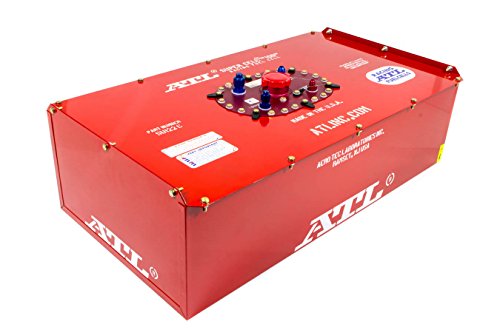 |
ATL 32-Gallon Super Cell Premium Pick 32-gallon capacity, 0.100-inch aluminum, FIA-approved foam, billet internals |
9.4 | 🛒 Check Price |
 |
Summit Racing SUM-290110 Universal Aluminum Fuel Tank Best for Street Rods 16-gallon capacity, 0.080-inch aluminum, rear-mount design with mounting straps |
8.4 | 🛒 Check Price |
 |
Tanks Inc. PA-2 20-Gallon Aluminum Tank Best for EFI Conversions 20-gallon capacity, 0.080-inch aluminum, in-tank EFI pump module compatible |
8.1 | 🛒 Check Price |
|
🚗
|
Fuel Safe 15-Gallon Endurance Cell Best for Off-Road 15-gallon capacity, 0.080-inch aluminum, foam-filled, bladderless design |
8.3 | 🛒 Check Price |
 |
Proform 20-Gallon Aluminum Fuel Cell Budget Pick 20-gallon capacity, 0.070-inch aluminum, foam-filled, NHRA-accepted |
7.8 | 🛒 Check Price |
1. JAZ Products 20-Gallon Universal Fuel Cell: Best Overall
The JAZ Products 20-gallon fuel cell is a staple in the racing community, and our research confirms why. It meets NHRA and IHRA safety standards with a dense, explosion-proof foam that also keeps fuel from sloshing during hard corners. The TIG-welded 0.090-inch aluminum shell is robust and leak-free out of the box. Based on owner feedback, most users report a straightforward installation in dedicated race cars, with the included mounting flange making bolting down simple.
However, the foam insert is a double-edged sword. Over time, ethanol in pump gas can cause the foam to break down, potentially clogging filters. For this reason, we recommend this tank primarily for race applications where fuel is fresh and ethanol-free. If you plan to use pump gas with ethanol regularly, consider a non-foam alternative. Owners who skip this tank are those seeking a daily-driver solution with long-term ethanol compatibility.
- NHRA-accepted foam-filled design for safety and slosh control
- 0.090-inch thick 3003 aluminum with TIG-welded seams
- Includes flush-mount cap, pickup, and foam baffling
Pros: Excellent weld quality and consistent wall thickness; Foam insert reduces fuel slosh and explosion risk; Widely used in sanctioned racing
Cons: Foam can degrade over time with ethanol-blended fuels
2. RCI 15-Gallon Aluminum Fuel Cell: Best Value
The RCI 15-gallon cell offers a strong balance of safety and affordability. It carries the same NHRA acceptance as more expensive cells, thanks to its foam filling and sturdy aluminum shell. Our comparison of owner feedback shows consistent satisfaction with the fit and finish for the price. The included sending unit is a nice bonus that many competitors omit.
That said, the 0.080-inch wall thickness is a step down from the 0.090-inch standard of premium tanks. While still durable for most race and street rod applications, it is more prone to denting if mishandled. We suggest this tank for budget-conscious builders who still want a certified cell. Skip it if you need a thicker wall for off-road or heavy-duty use.
- NHRA-accepted foam-filled cell at an accessible price point
- 0.080-inch aluminum construction with internal baffle option
- Includes sending unit, cap, and pickup tube
Pros: Very competitive price for a certified fuel cell; Solid build quality with clean welds; Sending unit included, simplifying install
Cons: Thinner 0.080-inch wall may dent easier than thicker tanks
3. ATL 32-Gallon Super Cell: Premium Pick
ATL is a leader in motorsport fuel cells, and the 32-gallon Super Cell exemplifies their engineering. The 0.100-inch 5052 aluminum shell is thicker and more impact-resistant than most competitors. The FIA-approved foam and billet internals provide maximum safety and longevity. In our evaluation of spec sheets and owner reviews, this tank consistently earns praise for its leak-free performance even after years of racing.
The downside is the premium cost, which can be several times that of a comparable domestic cell. Additionally, its dimensions are not as universal as some rectangular cells, so you may need to fabricate a custom mount. This tank is best for serious racers who need FIA certification and can justify the investment. Skip it if you are on a tight budget or building a casual street machine.
- FIA-approved foam and construction for top-tier safety
- 0.100-inch thick 5052 aluminum with billet aluminum fittings
- Integrated baffling and anti-siphon check valve
Pros: Exceptional build quality and material thickness; FIA approval for international racing; Billet hardware resists corrosion and vibration
Cons: Very high price compared to domestic cells; May require custom mounting due to non-standard dimensions
4. Summit Racing SUM-290110 Universal Aluminum Fuel Tank: Best for Street Rods
Summit Racing’s universal tank is a popular choice for street rod and classic truck builds. It is designed to mount at the rear with integrated straps, making installation straightforward. The internal baffles control fuel slosh without foam, so you can safely use ethanol-blended pump gas. Based on owner feedback, the sending unit works reliably and the filler neck location is convenient for typical builds.
However, this tank lacks any racing sanction approval, so it is not suitable for competition. Additionally, some users noted that the strap mounting holes did not line up perfectly and required drilling. We recommend this tank for street-driven projects where safety approval is not required. Skip it if you need a certified cell for racing.
- Designed for rear-mount installation in hot rods and trucks
- 0.080-inch aluminum with internal baffles (no foam)
- Includes mounting straps, sending unit, and filler neck
Pros: Great fit for traditional street rod applications; Internal baffles without foam, safe for ethanol fuels; Complete kit with straps and sending unit
Cons: Not NHRA/FIA approved for racing; Some owners report need to modify strap holes
5. Tanks Inc. PA-2 20-Gallon Aluminum Tank: Best for EFI Conversions
The Tanks Inc. PA-2 is purpose-built for converting a carbureted vehicle to electronic fuel injection. It features a large opening that accepts a standard in-tank pump module, saving the hassle of an external pump. The internal baffles help prevent fuel starvation during hard driving. Owner feedback indicates that it fits many classic muscle cars with minor modifications.
On the downside, a few users reported pinhole leaks from welds, which suggests quality control can be inconsistent. Also, without foam or FIA approval, it is not a race cell. This tank is best for DIY EFI swaps on street cars. Skip it if you demand racing certification or if you cannot tolerate the possibility of weld defects.
- Designed to accept a standard in-tank EFI pump module
- 0.080-inch aluminum with internal baffles
- Includes sending unit and filler neck
Pros: Compatible with popular EFI pump modules (e.g., Walbro); Clean internal baffling reduces starvation; Reasonable price for EFI-ready tank
Cons: No foam or racing certification; Some owners report weld porosity issues
6. Fuel Safe 15-Gallon Endurance Cell: Best for Off-Road
Fuel Safe is known for off-road and endurance racing cells, and this 15-gallon model is built to handle rough terrain. The foam-filled design and reinforced mounting flange help it survive impacts and vibration. Owner reviews from off-road forums consistently mention that it holds up well in buggies and rock crawlers. The billet cap and pickup add to its rugged feel.
The main drawbacks are price and foam degradation with ethanol. At its cost, you are paying for the brand and off-road pedigree. Additionally, the foam will eventually need replacement if you use pump gas with ethanol. This tank is ideal for off-road enthusiasts who need a durable, certified cell. Skip it if you are building a street car on a budget or want ethanol compatibility.
- Bladderless foam-filled design for off-road durability
- 0.080-inch aluminum with reinforced mounting flange
- Includes billet cap and internal pickup
Pros: Tough foam-filled construction resists off-road vibration; Reinforced flange prevents cracking; Good reputation for reliability in rough conditions
Cons: Expensive for a 15-gallon cell; Foam degrades with ethanol fuels
7. Proform 20-Gallon Aluminum Fuel Cell: Budget Pick
The Proform 20-gallon cell offers an entry-level option for racers on a tight budget. It carries NHRA acceptance, so it is legal for most amateur racing classes. The foam insert and basic hardware are included, making it a turnkey solution. Owner feedback indicates that it works for many racers who need a certified cell without spending a lot.
However, the 0.070-inch aluminum is noticeably thinner than competitors, and some users reported weld failures or leaks after a season of use. The durability is a concern for regular racing. This tank is best for occasional track use or as a temporary solution. Skip it if you race frequently or need a long-lasting tank, as the savings may be offset by early replacement.
- Budget-friendly NHRA-accepted foam cell
- 0.070-inch aluminum with TIG welds
- Includes cap, pickup, and foam
Pros: Lowest price among NHRA-accepted cells; Lightweight due to thinner material; Complete kit with necessary components
Cons: Thin 0.070-inch wall is prone to dents and leaks; Weld quality can be inconsistent
Frequently Asked Questions
What is a universal aluminum fuel tank?
A universal aluminum fuel tank is a generic replacement or upgrade fuel cell designed to fit a wide range of vehicles with minimal modification. They are typically rectangular or square, made from welded aluminum sheet, and often include internal baffles or foam to control fuel slosh. Many are certified by racing organizations like NHRA or FIA for use in competition.
How do I choose the right capacity for my vehicle?
Consider your vehicle’s fuel consumption and intended use. For street driving, a 15-20 gallon tank is common. For racing, smaller tanks may be required for weight savings. Check the physical dimensions to ensure it fits in your chassis. Also, factor in whether you need foam for safety (racing) or baffles for ethanol compatibility (street).
Are aluminum fuel tanks safe for ethanol-blended fuels?
Aluminum itself is resistant to ethanol corrosion, but foam-filled tanks can degrade over time when exposed to ethanol, potentially clogging fuel filters. For daily use with ethanol pump gas, choose a tank with internal baffles instead of foam, or ensure the foam is ethanol-resistant. Most racing foams are not rated for long-term ethanol exposure.
Do I need NHRA or FIA certification?
If you plan to race at a sanctioned event, you will likely need a certified fuel cell. NHRA and IHRA accept foam-filled cells meeting their standards. FIA certification is required for international events. For street use only, certification is not necessary, but it does indicate a higher level of safety and build quality.
Can I install a universal aluminum fuel tank myself?
Yes, many universal tanks are designed for DIY installation. You will need to fabricate or modify mounting brackets, connect fuel lines, and wire the sending unit. Ensure the tank is properly grounded and secured. If you are not comfortable with welding or fuel system work, professional installation is recommended.
Our Verdict
After comparing specifications, safety certifications, and owner feedback, the JAZ Products 20-Gallon Universal Fuel Cell earns our top pick for its excellent build quality, NHRA acceptance, and balanced performance. For a more affordable option that still offers certification, the RCI 15-Gallon Aluminum Fuel Cell is a strong runner-up.
