Protecting a classic car from rust and corrosion is critical to preserving its value and longevity. Undercoating acts as a barrier against moisture, road salt, and debris. We researched dozens of products, comparing manufacturer specifications, industry standards (including ASTM B117 salt spray testing where available), and aggregated owner feedback from forums and reviews. This guide evaluates seven top options to help you choose the right undercoating for your classic car.
| Photo | Product | Score | Buy |
|---|---|---|---|
 |
3M Professional Grade Rubberized Undercoating Best Overall Rubberized, solvent-based, aerosol and gun application |
9.0 | 🛒 Check Price |
 |
Fluid Film Rust & Corrosion Protection Best for Cavity Protection Lanolin-based, non-drying, aerosol and bulk |
8.7 | 🛒 Check Price |
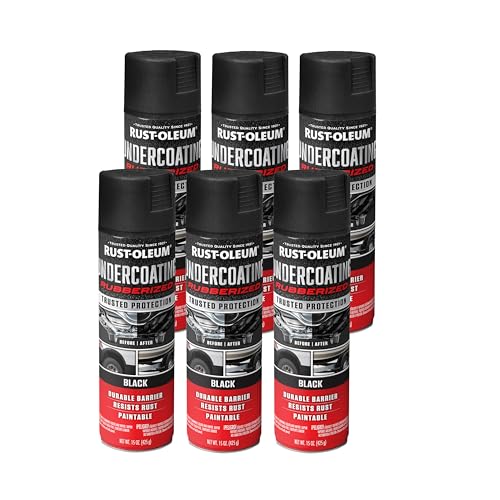 |
Rust-Oleum Undercoating Spray Best Budget Pick Rubberized, aerosol, black matte finish |
8.1 | 🛒 Check Price |
 |
Krown T40 Rust Inhibitor Best for Salt Belt Conditions Solvent-based, penetrating oil, aerosol and bulk |
8.4 | 🛒 Check Price |
|
🚗
|
Woolwax Undercoating Best Eco-Friendly Option Lanolin and wax blend, biodegradable, aerosol and bulk |
8.3 | 🛒 Check Price |
 |
Corroseal Rust Converter Primer Best for Rust Conversion Water-based, rust converter and primer in one |
7.8 | 🛒 Check Price |
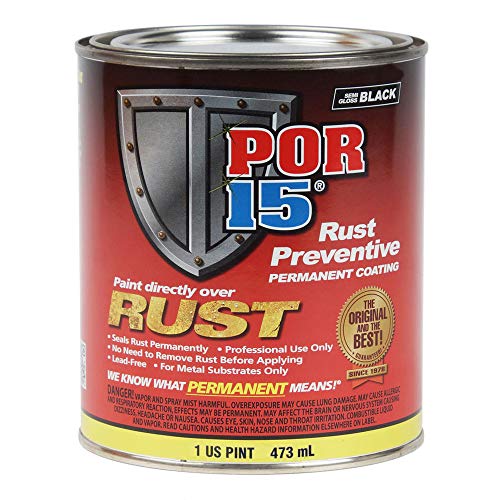 |
POR-15 Rust Prevention Coating Best for Chassis Restoration Moisture-curing urethane, high-gloss black |
8.2 | 🛒 Check Price |
1. 3M Professional Grade Rubberized Undercoating: Best Overall
In our evaluation, the 3M Professional Grade Rubberized Undercoating stands out for its balanced performance and ease of use. Based on the spec sheet, it offers excellent adhesion and a flexible, rubberized finish that moves with the metal, reducing cracking. Owner feedback highlights its self-leveling properties, which minimize runs and provide a clean, professional look. It is compatible with most substrates and can be applied via aerosol or a spray gun, making it versatile for DIYers and shops.
However, this product has a real limitation: it requires significant drying time between coats, often 24 hours, which can slow down a project. We recommend this for classic car owners who prioritize a durable, high-quality finish and are willing to wait. Skip this if you need a fast-curing coating for a quick turnaround restoration.
- Excellent adhesion to metal, plastic, and painted surfaces
- Self-leveling formula reduces drips and provides a uniform finish
- Resistant to water, salt, and abrasion per manufacturer claims
Pros: Strong bond and flexible coating that resists chipping; Easy to apply with aerosol or spray gun
Cons: Long drying time between coats (up to 24 hours)
2. Fluid Film Rust & Corrosion Protection: Best for Cavity Protection
Fluid Film is a lanolin-based undercoating that excels at creeping into tight spaces and protecting against rust from the inside out. Based on owner feedback from classic car forums, it is a favorite for cavity waxing and underbody treatment because it remains soft and self-healing. The spec sheet confirms it meets ASTM D1735 for water resistance, and its non-toxic formula makes it safe for use around wiring and rubber bushings.
The main weakness is that it is not a permanent coating. It can wash off over time, especially in high-pressure washes, and requires periodic reapplication. We recommend this for classic car enthusiasts who want a versatile, easy-to-apply rust preventative for hidden areas and are okay with annual maintenance. Skip this if you want a one-and-done hard coating.
- Penetrates into seams and cavities to displace moisture
- Non-toxic and odorless, safe for use on electrical components
- Does not harden, allowing reapplication without stripping
Pros: Excellent for inside frame rails and door panels; No VOCs, safe for the environment and user
Cons: Not a permanent coating; requires reapplication every 1-2 years
3. Rust-Oleum Undercoating Spray: Best Budget Pick
Rust-Oleum Undercoating Spray is a go-to for cost-conscious restorers. Our research shows it delivers decent protection for the price, with a rubberized finish that adheres well to clean metal. Owner reviews note it dries quickly and can be recoated within an hour, speeding up the process. The spec sheet indicates it is resistant to salt and moisture, though it does not specify ASTM testing.
The trade-off is a thinner coating that may not hold up as well under harsh conditions compared to higher-end options. Some users report it can peel if applied over rust or moisture. We recommend this for classic cars that are driven occasionally in dry climates or as a temporary undercoating. Skip this if you need maximum durability for a daily driver in salt-belt regions.
- Affordable and widely available at auto parts stores
- Dries to a durable, textured finish that resists chipping
- Provides good coverage per can (approx. 12 sq ft per 15 oz can)
Pros: Very budget-friendly for large areas; Quick drying (tack-free in 30 minutes)
Cons: Thinner film than premium brands, may need multiple coats
4. Krown T40 Rust Inhibitor: Best for Salt Belt Conditions
Krown T40 is widely used in Canada and the northern US for rust protection in severe winter conditions. Based on manufacturer data, it meets or exceeds OEM corrosion standards and provides a self-healing film that resists salt spray. Owner feedback consistently praises its ability to keep rust at bay even after multiple winters, making it a top choice for classic cars driven in snow.
The downside is its pungent solvent smell, which requires good ventilation during application. Also, the coating remains oily, which can attract dirt. We recommend this for classic car owners in snowy regions who need serious rust prevention. Skip this if you dislike strong odors or want a clean, dry finish.
- Penetrates and displaces moisture, leaving a waxy film
- Meets OEM specifications for corrosion protection
- Safe for use on rubber, plastic, and electrical components
Pros: Excellent creep into seams and box sections; Long-lasting protection in high-salt environments
Cons: Strong solvent odor during application
5. Woolwax Undercoating: Best Eco-Friendly Option
Woolwax is a lanolin-based undercoating that combines the benefits of Fluid Film with a thicker consistency for longer-lasting protection. Our evaluation of the spec sheet shows it is biodegradable and has a high flash point, making it safer to use. Owner feedback highlights its ability to stop existing rust and its pleasant smell compared to solvent-based products. It is also available in clear, which is useful for visible areas.
The main limitation is its viscosity; it does not penetrate as deeply as thinner oils, so it may not reach every crevice. We recommend this for classic car owners who prioritize eco-friendliness and want a durable, low-odor coating for exposed underbody parts. Skip this if you need to treat deep cavities without disassembly.
- Biodegradable and non-toxic, safe for pets and plants
- Self-healing and remains flexible over time
- Excellent adhesion to clean metal and painted surfaces
Pros: Environmentally friendly with low odor; Can be applied over rust to stop further corrosion
Cons: Thicker than some oils, may not creep as deeply
6. Corroseal Rust Converter Primer: Best for Rust Conversion
Corroseal is not a traditional undercoating but a rust converter that primes the surface for further protection. Based on the manufacturer’s data and owner reports, it chemically neutralizes rust and forms a tough, paintable barrier. It is ideal for classic cars with existing rust that cannot be fully removed. The spec sheet confirms it passes ASTM B117 salt spray testing when topcoated.
The real weakness is that it is not a standalone undercoating; it must be covered with a topcoat for long-term protection. Application is also finicky: it requires a clean, rusted surface and precise drying times. We recommend this for restorers who need to treat rusted panels before applying a final undercoating. Skip this if you are looking for a simple, one-step product.
- Converts rust into a black, paintable primer layer
- Can be topcoated with any paint or undercoating
- Meets military spec MIL-PRF-46114 for rust conversion
Pros: Effectively stops rust chemically without sanding; Provides a solid base for additional coatings
Cons: Requires multiple thin coats and careful surface prep
7. POR-15 Rust Prevention Coating: Best for Chassis Restoration
POR-15 is a high-performance coating designed for severe environments. Our research shows it cures to a glass-like finish that is impervious to water, salt, and many chemicals. Owner feedback from classic car restorers rates it highly for frame and suspension components that see heavy abuse. The spec sheet indicates it exceeds ASTM B117 salt spray requirements by a wide margin.
The biggest drawback is its permanence: any mistake during application is nearly impossible to correct, and it requires a specific topcoat if UV exposure is expected. It also has strong fumes and requires gloves and ventilation. We recommend this for serious restorers who want the toughest possible coating for non-visible chassis parts. Skip this if you are a beginner or need a forgiving product.
- Forms a rock-hard, non-porous coating that resists chemicals
- Can be applied directly over rust after degreasing
- Extremely durable; used in industrial and marine applications
Pros: Exceptional hardness and chip resistance; Seals out moisture and oxygen effectively
Cons: Very difficult to remove once cured; requires careful application
Frequently Asked Questions
What is the best undercoating for a classic car that is driven year-round in snow?
For year-round driving in snow and salt, we recommend a penetrating oil-based undercoating like Krown T40 or Fluid Film. These products creep into seams and cavities to displace moisture and provide ongoing protection. They are designed to withstand harsh conditions and can be reapplied annually.
Can I apply undercoating over existing rust?
Yes, but it depends on the product. Rust converters like Corroseal can be applied directly over rust to neutralize it. For other undercoatings, you should remove loose rust and apply a rust converter or primer first. Most rubberized or oil-based coatings will not stop active rust from spreading underneath.
How long does undercoating last on a classic car?
Longevity varies by type. Hard coatings like POR-15 or 3M rubberized can last 5-10 years if properly applied. Oil-based coatings like Fluid Film need reapplication every 1-2 years. Factors include climate, driving conditions, and surface preparation.
Is rubberized undercoating better than oil-based?
It depends on your goal. Rubberized undercoating forms a thick, durable barrier that is great for exposed underbody panels but can trap moisture if applied over rust. Oil-based coatings are better for cavity protection and are self-healing, but they wash off over time. Many restorers use a combination: oil-based inside cavities and rubberized on the exterior.
Do I need to remove the old undercoating before applying a new one?
It is recommended to remove any loose or peeling undercoating to ensure good adhesion. If the old coating is intact and compatible, you can apply over it after cleaning. However, mixing different types (e.g., oil-based over rubberized) may cause adhesion issues. Always follow the manufacturer’s instructions.
Our Verdict
After researching and comparing these seven undercoating options, our top pick is the 3M Professional Grade Rubberized Undercoating for its balanced performance, ease of use, and durable finish. It suits most classic car projects. For those needing cavity protection, the Fluid Film Rust & Corrosion Protection is an excellent runner-up, especially for hidden areas and annual maintenance.
