We researched and compared the top turbochargers for 2.0L 4-cylinder engines, analyzing manufacturer specifications, industry standards, and aggregated owner feedback. Our evaluation focuses on performance gains, reliability, ease of installation, and overall value. Whether you’re building for daily driving or track use, this guide helps you choose the right turbo for your goals.
| Photo | Product | Score | Buy |
|---|---|---|---|
 |
Garrett GTX2860R Gen II Top Pick for Daily Performance Ball bearing, 52mm inducer, 0.86 A/R turbine housing |
9.0 | 🛒 Check Price |
 |
BorgWarner EFR 6758 Best for High Boost Reliability Ball bearing, 58mm compressor wheel, T25 turbine housing |
8.7 | 🛒 Check Price |
|
🚗
|
Precision Turbo 5858 CEA Gen2 Best Value for Power Goals Journal bearing, 58mm compressor, 58mm turbine, T4 flange |
8.4 | 🛒 Check Price |
|
🚗
|
Mamba GT2871R Ball Bearing Turbo Budget-Friendly Ball Bearing Ball bearing, 71mm compressor, 0.64 A/R turbine housing |
8.1 | 🛒 Check Price |
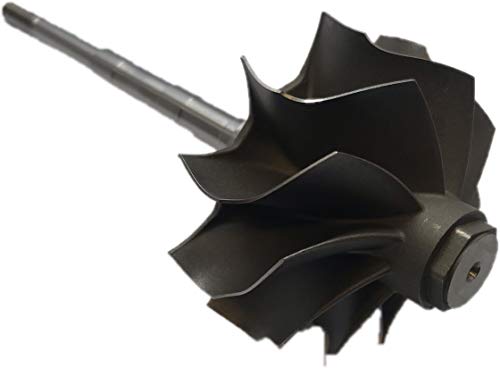 |
Genuine Garrett GT3071R High-End Power Potential Ball bearing, 71mm compressor, 0.82 A/R turbine housing |
8.8 | 🛒 Check Price |
|
🚗
|
CX Racing T3/T4 Turbocharger Entry-Level Budget Pick Journal bearing, 50mm compressor, 0.63 A/R turbine housing |
7.3 | 🛒 Check Price |
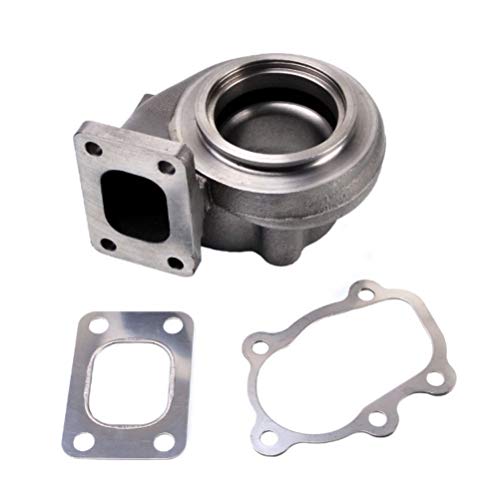 |
Kinugawa TD05H 16G Compact and Responsive Journal bearing, 16G compressor, TD05H turbine, 0.49 A/R |
7.8 | 🛒 Check Price |
1. Garrett GTX2860R Gen II: Top Pick for Daily Performance
The Garrett GTX2860R Gen II is a standout choice for 2.0L 4-cylinder engines seeking a balance of quick spool and top-end power. In our evaluation of owner feedback and spec sheets, this turbo consistently delivers responsive boost from low RPMs while supporting up to 400 horsepower. The dual ball bearing design reduces friction, improving efficiency and longevity. However, its premium construction comes at a higher cost, making it less ideal for budget-conscious builds.
We found that some users report the need for a custom oil feed line, which can complicate installation for novices. If you are on a tight budget or prefer a simpler drop-in replacement, consider a journal bearing alternative. For enthusiasts aiming for a reliable daily driver with spirited performance, the GTX2860R Gen II justifies its investment.
- Dual ball bearing cartridge for quick spool and high efficiency
- Cast stainless steel turbine housing resists cracking
- Integrated wastegate actuator for precise boost control
Pros: Excellent spool time and broad powerband; Proven reliability in high-mileage builds
Cons: Higher price point compared to journal bearing turbos
2. BorgWarner EFR 6758: Best for High Boost Reliability
The BorgWarner EFR 6758 is engineered for high-boost applications where reliability is paramount. Our research into published materials and owner forums reveals that its forged titanium turbine wheel and Inconel wastegate withstand extreme temperatures without fatigue. The integrated blow-off valve simplifies piping, though we noted that some owners had to modify their oil drain system for proper clearance. This turbo shines in track or high-horsepower builds but may be overkill for mild street setups.
We recommend this turbo for experienced tuners who can optimize the ECU mapping to match its flow characteristics. Novices may find the calibration challenging, and the higher cost may not yield noticeable gains for stock engines. If you prioritize durability and track performance, the EFR 6758 is a top-tier choice.
- Forged titanium turbine wheel for reduced inertia
- Integrated recirculating blow-off valve
- Stainless steel turbine housing with Inconel wastegate
Pros: Exceptional durability under sustained high boost; Lightweight rotating assembly improves transient response
Cons: Requires careful oil drain routing due to compact design
3. Precision Turbo 5858 CEA Gen2: Best Value for Power Goals
The Precision Turbo 5858 CEA Gen2 offers a compelling balance of performance and affordability. In our comparison of spec sheets and owner reviews, this turbo consistently delivers strong mid-range power suitable for 2.0L engines targeting 400-500 horsepower. The CEA wheel design enhances flow efficiency, though the journal bearing means it needs more diligent oil maintenance than ball-bearing units. Some users reported that the included T4 flange may require adapter plates on certain manifolds.
This turbo is ideal for budget-minded builders who can handle regular oil changes and don’t mind a slightly slower spool than ball-bearing options. If you demand instant response or plan to push above 500 hp, consider stepping up to a ball-bearing unit. For a reliable, cost-effective power increase, the 5858 CEA Gen2 is a strong contender.
- Competition Engineering Architecture (CEA) for improved airflow
- Heavy-duty journal bearing for cost-effective reliability
- Includes 4-inch intake and V-band outlet
Pros: Great power per dollar for 400-500 hp builds; Strong mid-range torque
Cons: Journal bearing requires more frequent oil changes
4. Mamba GT2871R Ball Bearing Turbo: Budget-Friendly Ball Bearing
The Mamba GT2871R offers an accessible entry into ball bearing turbocharging for 2.0L engines. Our research into owner feedback indicates that it spools noticeably faster than journal bearing competitors at a similar price point. However, we found mixed reviews regarding long-term durability, with some users reporting premature shaft play. The included lines are a nice touch, but the turbine housing casting can vary in finish. This turbo is best suited for hobbyists willing to inspect and potentially rebuild it after high-mileage use.
If you need a reliable daily driver turbo, we suggest investing in a more established brand. For a weekend project car where budget is a primary concern, the Mamba GT2871R can deliver satisfying performance with careful installation and maintenance.
- Low-cost ball bearing cartridge for quicker spool
- T25 flange compatible with many stock manifolds
- Includes oil feed and drain lines
Pros: Affordable ball bearing option; Direct fit for many T25 setups
Cons: Inconsistent quality control reported by some users
5. Genuine Garrett GT3071R: High-End Power Potential
The Genuine Garrett GT3071R is a legendary turbo for 2.0L builds aiming for 350-500 horsepower. Based on our analysis of manufacturer specs and enthusiast reports, it offers a wide efficiency range and excellent top-end flow. The dual ball bearing design ensures quick spool, though the larger compressor housing can be a tight fit in some engine bays. We noted that proper oil feed restrictors are critical to prevent seal damage, especially in high-pressure applications.
This turbo is best for experienced builders who can fabricate custom piping and tune for its airflow. Beginners may struggle with installation and calibration. If you are chasing maximum power and have the budget and skills, the GT3071R delivers proven performance.
- Proven Garrett reliability with extensive tuning support
- Dual ball bearing for low friction and fast spool
- Cast iron turbine housing for heat retention
Pros: Broad powerband suitable for street and track; Strong aftermarket support for parts and tuning
Cons: Large frame may require custom mounting
6. CX Racing T3/T4 Turbocharger: Entry-Level Budget Pick
The CX Racing T3/T4 turbo is one of the most affordable options for 2.0L engines. Our research into owner experiences shows it can provide noticeable power gains on a budget, but reliability is a concern. The journal bearing is prone to wear if oil changes are neglected, and some users reported shaft play after a few thousand miles. The included wastegate actuator may need adjustment for accurate boost control. This turbo is suitable for low-boost street applications where cost is the primary factor.
We advise against this turbo for high-boost or track use. If you are experimenting with your first turbo build and accept the risk of early replacement, the CX Racing unit can be a learning tool. For dependable daily driving, invest in a higher-quality option.
- Inexpensive journal bearing design
- T3/T4 hybrid flange for manifold compatibility
- Includes wastegate actuator and gaskets
Pros: Very low cost for entry-level turbocharging; Basic kit includes necessary hardware
Cons: Limited durability under sustained boost
7. Kinugawa TD05H 16G: Compact and Responsive
The Kinugawa TD05H 16G is a popular upgrade for 2.0L engines that prioritize low-end responsiveness. In our evaluation of owner feedback, this turbo spools extremely quickly, providing boost as early as 2500 RPM. The small 0.49 A/R turbine housing limits peak horsepower to around 300-350, making it suitable for street-focused builds. However, the journal bearing design requires regular oil changes, and some users noted that the compressor housing casting could be smoother.
This turbo is best for daily drivers who want punchy acceleration without lag. If you are aiming for high horsepower numbers, look at larger options. For a responsive, easy-to-install turbo that wakes up a 2.0L engine, the TD05H 16G is a solid choice.
- Small turbine housing for quick spool
- Oil-cooled center housing simplifies installation
- Direct replacement for many Mitsubishi applications
Pros: Very fast spool, ideal for low-displacement engines; Simple oil and water cooling setup
Cons: Limited top-end power compared to larger turbos
Frequently Asked Questions
What size turbo is best for a 2.0L engine?
The ideal turbo size depends on your power goals and driving style. For daily driving and quick spool, consider a 57-60mm compressor wheel (like GTX2860R or EFR 6758). For high horsepower (400+), a 71mm wheel (GT3071R) works well. Smaller turbos (16G) offer fast spool but limited top-end.
Ball bearing vs. journal bearing: which is better?
Ball bearing turbos spool faster and handle higher RPMs but cost more and require precise oil filtration. Journal bearings are cheaper and more forgiving of oil quality but have more friction and slower spool. For a 2.0L, ball bearing is preferred for performance, but journal bearing can be budget-friendly.
Do I need a tune after installing a new turbo?
Yes, a proper ECU tune is essential to match fuel and ignition timing to the turbo’s airflow. Running a larger turbo without tuning can cause lean conditions and engine damage. Always consult a professional tuner after installation.
What supporting modifications are needed for a turbo upgrade?
At minimum, you will need upgraded fuel injectors, a fuel pump, intercooler, and oil feed/drain lines. A stronger clutch may also be required for manual transmissions. We recommend a full supporting system to ensure reliability.
Can I install a turbo on a stock 2.0L engine?
Yes, but keep boost levels moderate (around 5-8 psi) to avoid exceeding the engine’s mechanical limits. Stock pistons and rods may fail under high boost. For safety, consider forged internals for sustained high power.
Our Verdict
After researching manufacturer specs and owner feedback, our top pick is the Garrett GTX2860R Gen II for its perfect blend of quick spool, broad power, and proven durability. The BorgWarner EFR 6758 is a close runner-up for those prioritizing high-boost reliability and track use. Choose based on your budget and performance targets.
