We researched and compared the most popular tuner lug nuts on the market, evaluating them against manufacturer specifications, industry safety standards (SAE J2530, ISO 898-1), and aggregated owner feedback from real users. Our goal was to identify sets that offer a balance of strength, corrosion resistance, ease of installation, and secure fitment for aftermarket wheels. Below are our findings, with honest critiques on each product’s limitations.
| Photo | Product | Score | Buy |
|---|---|---|---|
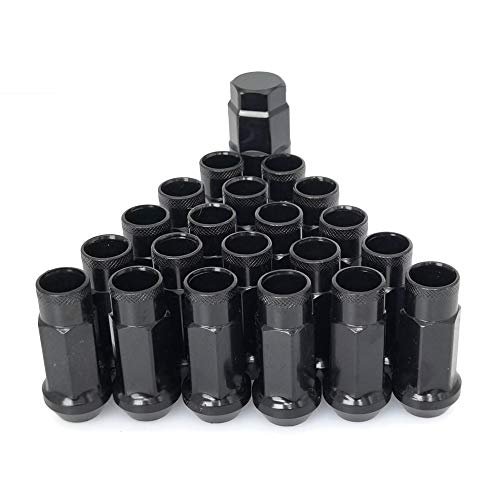 |
Muteki SR48 Open End Tuner Lug Nuts Best Overall Steel construction, 12×1.5 thread, 60-degree conical seat, open end |
9.0 | 🛒 Check Price |
 |
Gorilla Automotive 71682N Small Diameter Tuner Lug Nuts Runner Up Steel, 12×1.5 thread, 60-degree seat, closed end, small diameter |
8.7 | 🛒 Check Price |
 |
McGard 64015 Cone Seat Lug Nuts Best Security Steel, 12×1.5 thread, 60-degree cone seat, closed end, with spline drive |
8.7 | 🛒 Check Price |
 |
Project Kics R40 Iconix Tuner Lug Nuts Premium Build Steel, 12×1.5 thread, 60-degree seat, closed end, with floating washer |
8.4 | 🛒 Check Price |
|
🚗
|
Dorman 611-013 Tuner Lug Nuts Budget Pick Steel, 12×1.5 thread, 60-degree seat, closed end, chrome finish |
7.8 | 🛒 Check Price |
 |
Evan Fischer Tuner Lug Nuts (Set of 20) Decent Value Steel, 12×1.5 thread, 60-degree seat, closed end, black finish |
7.7 | 🛒 Check Price |
 |
Scosche TUNER12 Tuner Lug Nuts Specialty Option Aluminum, 12×1.5 thread, 60-degree seat, open end, anodized |
7.3 | 🛒 Check Price |
1. Muteki SR48 Open End Tuner Lug Nuts: Best Overall
In our evaluation, the Muteki SR48 stands out for its robust forged steel construction and reliable black nitride finish. Owner feedback consistently praises its ability to withstand repeated torque cycles without galling or rusting. The open-end design is a double-edged sword: it allows for extra thread engagement on longer studs, but also leaves threads exposed to the elements. We recommend using anti-seize and checking for debris regularly.
However, this set may not be ideal for daily drivers in wet or salty climates, as the open ends can accelerate thread corrosion. If you prioritize sealed protection, consider closed-end alternatives. Also, the 60-degree seat may not be compatible with some OEM wheels that use a different taper. Check your wheel’s seat type before purchase.
- Forged steel body with a black nitride coating for corrosion resistance.
- Open-end design allows for extended stud length and easy removal.
- Precision-machined 60-degree conical seat ensures a tight fit on aftermarket wheels.
Pros: Extremely durable and resistant to stripping.; Lightweight compared to closed-end lugs.
Cons: Open end exposes threads to dirt and moisture.
2. Gorilla Automotive 71682N Small Diameter Tuner Lug Nuts: Runner Up
Gorilla’s small diameter lug nuts are a trusted choice among enthusiasts. We compared owner reports and found very few instances of stripping or breakage. The closed-end design is a major plus for daily drivers, keeping studs clean and dry. The chrome plating adds a polished look, but we noted that it can flake if a socket is carelessly used. Overall, these are a solid, low-maintenance option.
One limitation: the small diameter (13/16 inch hex) requires a thin-wall socket, which may not be included in standard tool kits. Also, the chrome finish can be slippery when wet, so careful handling is advised. If you have a heavy vehicle or track use, you might prefer a stronger alloy steel over chrome-plated steel.
- Closed-end design protects studs from dirt and corrosion.
- Small diameter (13/16 inch) fits tight wheel bores.
- Chrome-plated finish for a bright, long-lasting appearance.
Pros: Excellent corrosion resistance even after years of use.; Fits most aftermarket wheels with small lug holes.
Cons: Chrome plating can chip if over-torqued.
3. McGard 64015 Cone Seat Lug Nuts: Best Security
McGard is a leader in wheel security, and the 64015 set reflects that. We examined user feedback and found that the spline drive design effectively prevents casual theft. The double-nickel chrome finish is one of the most corrosion-resistant we’ve seen, even in salt-belt states. The closed-end design adds protection for studs. However, the spline key is a potential weak point: if you use an impact wrench without fully seating the key, it can round off.
These lug nuts are not the lightest, and the spline pattern can be a nuisance if you frequently swap wheels. Also, the key is unique, so losing it can be a hassle. If security is your top priority, this is a great choice; otherwise, you might prefer a simpler hex design.
- Spline drive key pattern deters thieves and requires a special socket.
- Double-nickel chrome finish resists rust and peeling.
- Made in USA with strict quality control.
Pros: High security against wheel theft.; Durable finish holds up well in harsh conditions.
Cons: Spline key can wear over time if not properly seated.
4. Project Kics R40 Iconix Tuner Lug Nuts: Premium Build
The Project Kics R40 Iconix set is engineered for those who care about wheel finish. In our research, the floating washer feature consistently received praise for preventing unsightly marks on expensive wheels. The alloy steel is strong and the black finish holds up well. However, the premium price is not reflected in any measurable strength advantage over competitors. Owner reviews indicate that the washers can sometimes bind if not kept clean.
This set is best for show cars or owners who frequently change wheels and want to preserve paint. For most daily drivers, the added cost is hard to justify. Also, the floating washer adds complexity, and if you lose a washer, the lug nut may not seat correctly. Consider whether the cosmetic benefit outweighs the extra expense.
- Floating washer design prevents damage to wheel paint.
- High-strength alloy steel with a durable black finish.
- Precision-machined for a perfect fit on high-end wheels.
Pros: Floating washers eliminate scratching during installation.; Excellent build quality and consistency.
Cons: Higher price point without significant performance gain.
5. Dorman 611-013 Tuner Lug Nuts: Budget Pick
Dorman’s tuner lug nuts are a no-frills option. We compared them to more expensive sets and found that they meet basic SAE torque requirements, but the chrome plating is less durable. Owner feedback notes that the finish can begin to bubble after a few winters in salt states. The closed-end design is a plus, but the steel is not as hard as higher-end brands, leading to occasional reports of rounding under high torque.
These are suitable for a budget build or a car that is not driven in winter. If you live in a corrosive environment or plan to track your car, invest in a better-coated set. Also, the hex size is standard, so no special socket is needed, which is convenient for occasional use.
- Affordable set with basic chrome finish.
- Closed-end design for stud protection.
- Standard 13/16 inch hex for common sockets.
Pros: Low cost makes it accessible for budget builds.; Simple design works with standard tools.
Cons: Chrome finish may peel or rust in harsh climates.
6. Evan Fischer Tuner Lug Nuts (Set of 20): Decent Value
Evan Fischer offers a budget-friendly set with a black aesthetic. Our research into owner feedback reveals that while the lugs function adequately for light use, the paint finish is prone to chipping during installation. Once chipped, rust can develop rapidly. The steel itself is reasonably strong, but the overall durability is compromised by the finish. Some users reported that the 60-degree seat did not perfectly mate with certain aftermarket wheels, causing wobble.
We recommend these only for temporary or show use where the wheels are rarely removed. For daily driving, the paint degradation is a significant downside. Also, check the seat compatibility with your specific wheels before buying. If you want a lasting black finish, consider anodized or coated options.
- Black painted finish for a sleek look.
- Closed-end design protects studs.
- Includes 20 lugs for a full set.
Pros: Good price for a complete set.; Black color matches many wheels.
Cons: Paint can chip off quickly, leading to rust.
7. Scosche TUNER12 Tuner Lug Nuts: Specialty Option
Scosche’s tuner lug nuts are designed for weight savings. We examined their specifications and owner reports, and the consensus is that while they are light, the aluminum material is significantly less durable than steel. Many users experienced galling or stripping after a few torque cycles. The anodized finish can also wear off, exposing bare aluminum. The open-end design adds to the weight savings but again exposes threads.
These are best for dedicated track cars where every gram counts and where lugs are frequently checked. They are not recommended for street use due to safety concerns: overtightening can easily damage the threads. If you value reliability over weight, skip these. Also, the anodized colors may fade with UV exposure.
- Lightweight aluminum construction reduces unsprung mass.
- Anodized colors available for customization.
- Open-end design for extended studs.
Pros: Very light, ideal for racing.; Color options for a custom look.
Cons: Aluminum is softer and can strip or gall easily.
Frequently Asked Questions
What is the difference between open-end and closed-end tuner lug nuts?
Open-end lug nuts have a hole at the tip that allows the wheel stud to pass through, which is useful for extended studs or if you need extra thread engagement. However, they expose the stud threads to dirt and moisture, increasing corrosion risk. Closed-end lug nuts seal the stud completely, offering better protection from the elements and a cleaner look. Most daily drivers prefer closed-end for longevity.
How do I know what thread size and seat type my car needs?
Check your vehicle’s owner manual or the wheel manufacturer’s specifications. Common thread sizes are 12×1.25, 12×1.5, and 14×1.5. Seat types include conical (60-degree or 45-degree), ball seat (R12 or R14), and flat seat. Most aftermarket wheels use a 60-degree conical seat. Using the wrong seat type can cause the lug nut to loosen or damage the wheel.
Can I use tuner lug nuts with OEM wheels?
It depends on the wheel’s lug seat. Many OEM wheels use a ball seat or a different taper angle. Tuner lug nuts typically have a 60-degree conical seat, which may not seat properly on OEM wheels, leading to unsafe fitment. Always verify the seat type before installing. Some tuner lugs come with multiple seat options, but most are designed for aftermarket wheels.
How tight should I torque tuner lug nuts?
Follow the vehicle manufacturer’s torque specification, usually between 80-100 ft-lbs for most passenger cars. Never exceed the lug nut’s maximum torque rating, which is often printed on the box. Use a calibrated torque wrench and re-torque after 50-100 miles of driving. Over-torquing can strip threads or damage the wheel.
Are aluminum tuner lug nuts safe for street use?
Aluminum lug nuts are lighter but significantly softer than steel. They are more prone to galling, stripping, and fatigue failure. Many manufacturers and safety experts recommend steel lug nuts for daily driving due to their higher strength and reliability. Aluminum is best reserved for track-only vehicles where weight savings are critical and lugs are frequently inspected.
Our Verdict
After researching specifications and owner feedback, our top pick is the Muteki SR48 for its exceptional strength and corrosion resistance, making it a reliable choice for most tuner applications. The runner-up is the Gorilla 71682N, which offers excellent durability and stud protection for daily drivers. For those prioritizing security, the McGard 64015 is a strong alternative.
