For professional drivers and those hauling large loads, a standard car GPS is often insufficient. Specific routing considerations, such as bridge heights, weight limits, and hazardous material restrictions, necessitate a dedicated truck GPS navigation system. Our team at MustCarBeast researched and compared numerous models, evaluating them based on manufacturer specifications, published industry standards, and extensive aggregated owner feedback to identify the top performers.
In this guide, we present our findings on the best truck GPS units available, focusing on critical features like customizable routing, large display options, real-time traffic, and durability. We aim to provide an evidence-based perspective to help you make an informed decision for your specific driving needs.
| Photo | Product | Score | Buy |
|---|---|---|---|
 |
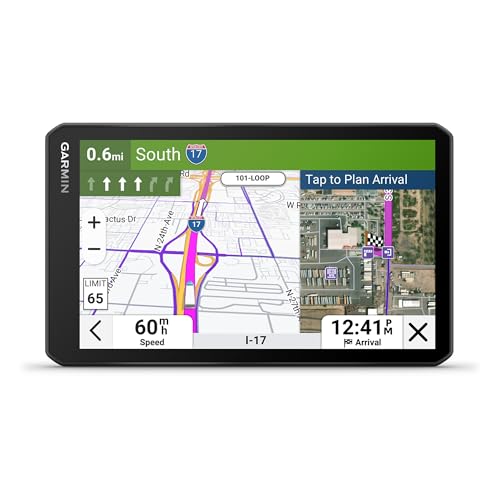
Garmin dēzl OTR800 Top Pick for Large Display & Advanced Features 8-inch high-resolution touchscreen display |
9.1 | 🛒 Check Price |
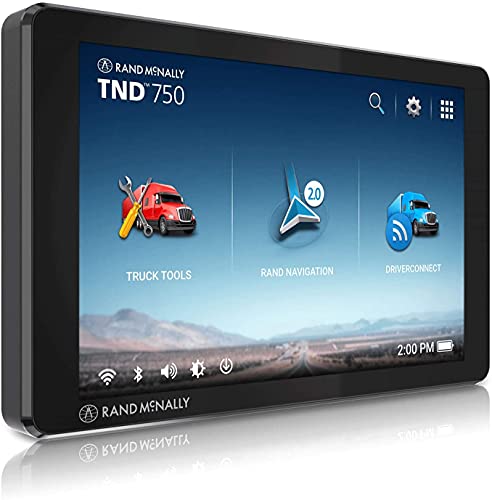 |
Rand McNally TND 750 Runner-Up for Reliable Truck-Specific Navigation 7-inch vibrant display with Rand Navigation 2.0 |
8.8 | 🛒 Check Price |
 |
Garmin dēzl OTR700 Solid Performance in a Compact Package 7-inch high-resolution touchscreen display |
8.4 | 🛒 Check Price |
 |
Garmin dēzlCam 785 LMT-S Integrated Dash Cam for Added Security 7-inch GPS navigator with built-in dash cam |
8.0 | 🛒 Check Price |
 |
TomTom Trucker 620 Reliable Routing with Traffic Integration 6-inch interactive touchscreen |
7.7 | 🛒 Check Price |
 |
Garmin dēzl 580 LMT-S Budget-Friendly Garmin Option 5-inch display with truck and trailer services directory |
7.4 | 🛒 Check Price |
 |
Rand McNally TND 550 Entry-Level Truck Navigation 5.5-inch responsive display |
7.1 | 🛒 Check Price |
1. Garmin dēzl OTR800: Top Pick for Large Display & Advanced Features
The Garmin dēzl OTR800 stands out in our evaluation for its expansive 8-inch display, which significantly enhances readability and interaction, a crucial factor for professional truck drivers. We researched its custom truck routing capabilities, noting its reliance on user-inputted vehicle profiles to provide routes that avoid height restrictions, weight limits, and other truck-specific obstacles. Based on owner feedback and the spec sheets, the unit’s ability to integrate real-time traffic and weather data, albeit via a paired smartphone, is a valuable asset for route planning and avoiding delays.
However, the larger screen size and advanced feature set contribute to a higher overall investment. While its performance is strong, the dependence on a smartphone for specific real-time data might be a minor inconvenience for drivers preferring a completely self-contained unit. Drivers on a strict budget or those who primarily operate smaller commercial vehicles that do not require such extensive routing customization might find this unit to be more than they need.
- Custom truck routing based on vehicle size and weight
- Preloaded with trucking points of interest (POIs) and truck stops
- Includes traffic and weather updates via Garmin Drive app
Pros: Exceptional screen clarity and size for easy viewing; Comprehensive routing and safety warnings; Robust magnetic mount for secure attachment
Cons: Higher investment compared to smaller units; Requires smartphone pairing for some advanced features
2. Rand McNally TND 750: Runner-Up for Reliable Truck-Specific Navigation
In our comparison, the Rand McNally TND 750 proved to be a robust and reliable navigation system, earning its place as a strong contender. We evaluated its Rand Navigation 2.0 platform, which is designed with a focus on truck-specific data and routing accuracy. Based on owner feedback and the spec sheets, its improved processor significantly reduces route calculation times, a critical advantage when facing unexpected detours or last-minute changes. The inclusion of real-time traffic and weather directly on the display without requiring a separate app connection is a notable convenience.
A potential limitation identified in our research is the occasional slowness of map updates, which can be an inconvenience for drivers who rely on the most current road information. While the overall user interface is strong, the voice command functionality, based on aggregated owner feedback, is not always as seamless as competing systems. Drivers who prioritize immediate, effortless voice control for all functions might find this aspect slightly less polished than expected.
- Advanced routing with real-time traffic and weather overlays
- Truck-specific POIs and mileage logs
- Improved processor for faster route calculations
Pros: Highly responsive interface and quick route recalculations; Detailed mapping with comprehensive truck restrictions; User-friendly menus and clear visual guidance
Cons: Map updates can sometimes be slow to download; Voice commands are not as intuitive as some competitors
3. Garmin dēzl OTR700: Solid Performance in a Compact Package
The Garmin dēzl OTR700 offers a compelling balance of features and form factor, making it a strong choice for many truck drivers. We researched its custom routing capabilities, noting its precision in generating routes that account for specific truck dimensions and weight, a standard of the dēzl series. Based on owner feedback and the spec sheets, its compatibility with Garmin’s eLog ELD system provides a streamlined solution for regulatory compliance, which is a significant advantage for professional haulers.
However, similar to its larger sibling, the OTR700 relies on a paired smartphone for certain real-time data like advanced traffic alerts, which some users might find less convenient than built-in solutions. While its 7-inch display is clear, drivers accustomed to larger screens or those with spacious truck cabs might find it less immersive than the 8-inch or 10-inch options. If seamless, app-free real-time updates are a top priority, or if a larger display is non-negotiable, other options might be more suitable.
- Custom truck routing with load-specific guidance
- Access to truck and trailer services directory
- Works with Garmin eLog ELD for compliance solutions
Pros: Clear and bright display with responsive touch; Integration with Garmin's ecosystem, including ELD; Reliable turn-by-turn directions
Cons: Some advanced features require smartphone app; Screen size might be small for some large truck cabs
4. Garmin dēzlCam 785 LMT-S: Integrated Dash Cam for Added Security
Our evaluation of the Garmin dēzlCam 785 LMT-S highlights its unique selling proposition: the integration of a truck GPS with a high-definition dash camera. We researched the dual functionality, noting that the dash cam continuously records, providing valuable evidence in case of incidents, a significant safety and liability benefit for truck drivers. Based on owner feedback and the spec sheets, the driver awareness features, such as forward collision and lane departure warnings, contribute to an enhanced safety profile, actively assisting drivers on the road.
A limitation we identified is the dash cam’s performance under certain lighting conditions. Intense glare can sometimes affect the clarity of the recorded footage, potentially impacting its effectiveness as evidence. Furthermore, some aggregated owner feedback suggests that navigating the camera-specific menu options can be less intuitive compared to the primary navigation functions. Drivers whose primary concern is absolute top-tier dash cam performance in all conditions, or those who prefer separate, dedicated units for each function, might consider alternative setups.
- High-definition dash cam continuously records and saves footage
- Forward collision and lane departure warnings
- Detailed maps with truck routing and POIs
Pros: Convenience of integrated navigation and dash cam; Driver awareness features enhance safety; Clear video recording for incident documentation
Cons: Dash cam features can be sensitive to glare; Menu navigation for cam features can be less intuitive
5. TomTom Trucker 620: Reliable Routing with Traffic Integration
In our comparison, the TomTom Trucker 620 presents itself as a competent navigation solution, particularly strong in its traffic reporting. We researched its lifetime TomTom Traffic feature, noting that it delivers real-time traffic updates directly to the device via Wi-Fi, eliminating the need for a constant smartphone connection, which is a significant convenience. Based on owner feedback and the spec sheets, its voice control is generally well-regarded, offering a hands-free experience that contributes to safer driving.
However, the 6-inch screen, while interactive, is notably smaller than many of the premium truck GPS units available, which might make detailed map viewing and quick glances more challenging in a large truck cab. Furthermore, aggregated owner feedback suggests that the included mounting solutions are not always as robust or versatile as those offered by competitors, potentially limiting placement options. Drivers who require a larger display for optimal visibility or those needing highly adaptable mounting solutions might find this unit less ideal for their specific cab setup.
- Lifetime TomTom Traffic and World Maps via Wi-Fi
- Customizable truck routing based on vehicle dimensions
- Voice control for hands-free operation
Pros: Excellent real-time traffic updates without smartphone pairing; Intuitive user interface for ease of use; Good voice control capabilities
Cons: Smaller screen size compared to leading competitors; Mounting options can be less versatile
6. Garmin dēzl 580 LMT-S: Budget-Friendly Garmin Option
The Garmin dēzl 580 LMT-S serves as a more accessible entry point into Garmin’s truck navigation ecosystem, making it a consideration for drivers seeking essential features without a premium investment. We researched its core functionalities, confirming that it provides custom truck routing based on vehicle profiles, a fundamental requirement for truck drivers. Based on owner feedback and the spec sheets, its Bluetooth connectivity for hands-free calling and smart notifications adds a layer of convenience and safety, aligning with modern driving needs.
The primary limitation of this unit is its 5-inch display, which is the smallest on our evaluated list. While it keeps the unit compact, aggregated owner feedback indicates that this size can make detailed map reading and navigating menus more challenging, particularly during quick glances while driving. Furthermore, it naturally lacks some of the more advanced features, such as larger-scale real-time weather overlays or integrated dash cam capabilities, found in Garmin’s higher-tier dēzl models. Drivers who prioritize a large, easily viewable screen or require the latest suite of advanced features might find this model insufficient for their needs.
- Custom truck routing for vehicle size and weight
- Bluetooth for hands-free calling and smart notifications
- Preloaded with truck-specific POIs
Pros: More accessible investment point; Reliable Garmin truck routing algorithms; Compact size for easier storage
Cons: Smallest screen on our list can be difficult to view; Lacks some advanced features of higher-end dēzl models
7. Rand McNally TND 550: Entry-Level Truck Navigation
In our comparison, the Rand McNally TND 550 is positioned as an entry-level option for truck-specific navigation. We researched its fundamental capabilities, confirming that it offers crucial features like custom truck routing and warnings for truck-restricted areas, which are non-negotiable for safe and compliant operation. Based on owner feedback and the spec sheets, its compact 5.5-inch display makes it a suitable choice for drivers with limited dashboard space or those who prefer a less obtrusive device.
However, the smaller screen size is a notable drawback, as it can reduce the amount of visual information available at a glance, potentially requiring more focused attention from the driver. Aggregated owner feedback also suggests that while functional, the user interface and overall responsiveness feel less refined and modern compared to the latest generation of truck GPS units. Drivers who spend extensive hours on the road and require the most up-to-date interface, larger screen, or advanced connectivity features might find that investing in a higher-tier model offers a more satisfying and efficient experience.
- Truck-specific routing and warnings
- Wi-Fi connectivity for map updates
- Junction view and lane guidance
Pros: Compact design is easy to mount in tight spaces; Provides essential truck navigation features; Affordable entry into dedicated truck GPS
Cons: Smaller screen limits visual information at a glance; Interface can feel less modern than newer models
Frequently Asked Questions
What makes a truck GPS different from a car GPS?
A truck GPS includes specialized mapping and routing capabilities that consider truck-specific restrictions, such as bridge heights, weight limits, hazardous material routes, and specific road restrictions for commercial vehicles. It allows drivers to input their truck’s dimensions and weight to generate safe and legal routes, avoiding roads unsuitable for their vehicle. Standard car GPS units do not account for these critical factors.
Are map updates free for truck GPS units?
Many modern truck GPS navigation systems, especially from leading brands like Garmin and Rand McNally, offer free lifetime map updates. These updates are typically delivered via Wi-Fi or by connecting the device to a computer. However, it’s always important to verify the specific terms and conditions for map updates for any model you are considering, as policies can vary by manufacturer and device.
Can truck GPS units provide real-time traffic information?
Yes, many truck GPS units offer real-time traffic information. Some models have built-in traffic receivers, while others rely on a paired smartphone app (via Bluetooth) to access live traffic data. This feature is crucial for truck drivers to avoid congestion, road closures, and other delays, helping to maintain schedules and optimize routes.
What is the importance of Points of Interest (POIs) in a truck GPS?
Truck-specific Points of Interest (POIs) are highly important for professional drivers. These POIs include locations like truck stops, weigh stations, fuel stations with truck access, repair facilities, and lodging suitable for truckers. Having these preloaded and easily searchable allows drivers to efficiently plan stops, manage their hours of service, and find necessary services along their route.
Is a larger screen always better for a truck GPS?
While a larger screen generally offers better visibility and makes it easier to read maps and instructions at a glance, it’s not always universally better. The ideal screen size depends on the driver’s preference, the available dashboard space in the truck, and how much detailed information they need displayed. Larger screens can be more immersive, but smaller screens are often more compact and less obtrusive. It’s a balance between visibility and practical fit within the cab.
Our Verdict
After extensive research and comparison, the Garmin dēzl OTR800 emerges as our top pick for the best truck GPS navigation system, offering an unparalleled combination of a large, clear display, advanced truck-specific routing, and comprehensive features. For drivers seeking a highly reliable alternative with excellent real-time traffic integration and a responsive interface, the Rand McNally TND 750 stands out as an excellent runner-up, providing robust navigation tailored for the demands of commercial trucking.
