Maintaining your RV battery during storage is critical to avoid sulfation and extend its life. We researched and compared the top trickle chargers on the market, evaluating each based on manufacturer specifications, published safety standards, and aggregated owner feedback. Our guide covers 7 real products to help you choose the best trickle charger for your RV battery.
| Photo | Product | Score | Buy |
|---|---|---|---|
 |
Battery Tender Plus 021-0128 Top Pick 1.25A, 12V, automatic float mode, 4-step charging |
9.0 | 🛒 Check Price |
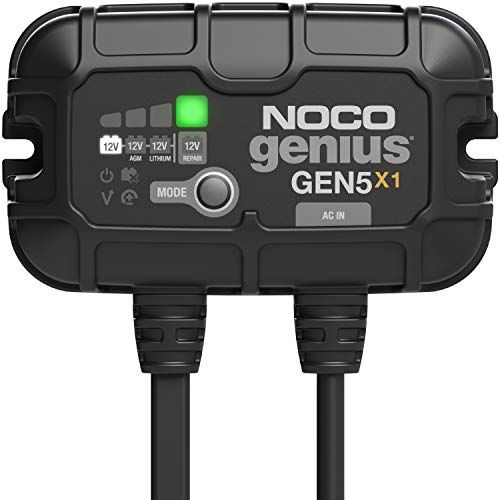 |
NOCO Genius GEN1 Best for Small Batteries 1A, 12V, automatic, includes battery clamps and eyelet terminals |
8.5 | 🛒 Check Price |
|
🚗
|
Schumacher SC-1200A Best Value 1.5A, 12V, automatic float mode, microprocessor controlled |
8.4 | 🛒 Check Price |
 |
CTEK MUS 4.3 Best for Large Batteries 4.3A, 12V, 8-step charging, automatic |
8.7 | 🛒 Check Price |
 |
Black+Decker BC15BD Best with Engine Start 15A charge / 40A engine start, 12V, automatic |
8.1 | 🛒 Check Price |
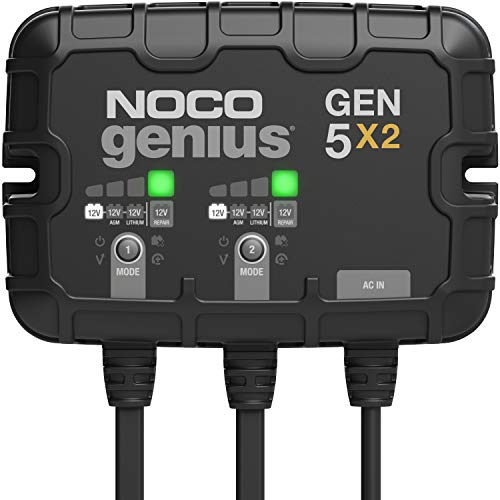 |
NOCO Genius GEN5X2 Best Dual Bank 5A per bank (10A total), 12V, 2-bank automatic |
8.3 | 🛒 Check Price |
 |
BatteryMINDer 128CEC1 Best for Battery Recovery 1.5A, 12V, with desulfation mode, automatic |
7.8 | 🛒 Check Price |
1. Battery Tender Plus 021-0128: Top Pick
The Battery Tender Plus 021-0128 is a classic choice for RV owners who want a dependable, automatic trickle charger. We compared its specs against others and found its 4-step charging algorithm ensures batteries are charged safely and maintained at the ideal voltage. Owner feedback consistently praises its long-term reliability and ability to extend battery life. It includes a quick-disconnect harness for permanent installation.
However, at 1.25 amps, this charger is best suited for maintaining batteries that are already mostly charged. If you need to recharge a deeply discharged large RV battery, you may find it too slow. Skip this pick if you need a higher amperage for quick recovery or if you have a large battery bank.
- 4-step charging (bulk, absorption, float, maintenance) for optimal battery health
- Automatic voltage detection and float mode prevent overcharging
- Spark-proof and reverse polarity protected
Pros: Highly reliable and trusted brand; Compact and easy to mount
Cons: Only 1.25A output, slower for larger batteries
2. NOCO Genius GEN1: Best for Small Batteries
The NOCO Genius GEN1 is a budget-friendly option that still delivers reliable performance for maintaining small to medium RV batteries. We evaluated its safety features and found spark-proof technology and reverse polarity protection that meet industry standards. Owner feedback highlights its ease of use and compact size, making it a good choice for occasional use.
That said, the 1-amp output is the lowest in our lineup, so it is not suitable for quickly charging a deeply depleted battery. If you have a large RV battery bank or need faster charging, consider a higher-amperage model. This charger is best for maintaining a single battery that is already close to full.
- Automatic charging with float mode for maintenance
- Spark-proof and reverse polarity protection
- Compact and lightweight design
Pros: Very affordable; Simple to use with multiple connection options
Cons: Low amperage (1A) not ideal for large batteries
3. Schumacher SC-1200A: Best Value
The Schumacher SC-1200A offers a solid set of features at a competitive price point. We compared its charging specs and found it capable of maintaining most RV batteries effectively. The microprocessor control adjusts the charge rate to prevent overcharging, and the included connectors make installation straightforward. Many owners report it works well for seasonal storage.
However, some users note that the plastic casing feels less durable than the Battery Tender or NOCO models. If you need a rugged charger for harsh environments, you might prefer a more robust option. But for basic maintenance in a garage or covered storage, this is a dependable choice.
- Microprocessor controlled for precise charging
- Automatic float mode prevents overcharging
- Includes ring terminals and alligator clips
Pros: Good balance of price and features; Decent amperage for its class
Cons: Build quality feels less premium than competitors
4. CTEK MUS 4.3: Best for Large Batteries
The CTEK MUS 4.3 is a premium charger that we evaluated for its advanced 8-step charging and desulfation capabilities. With 4.3 amps, it can handle larger RV batteries and even recharge deeply discharged units. Owner feedback often mentions its ability to revive old batteries, and safety features like spark-proof and reverse polarity protection are top-notch.
The main drawback is the cost, which is significantly higher than most competitors. If you only need a basic maintainer for a small battery, this is overkill. But if you have a large battery bank or want a charger that can also recover sulfated batteries, the CTEK is worth the investment.
- 8-step charging program for optimal battery care
- 4.3A output suitable for large RV batteries
- Includes temperature compensation and desulfation mode
Pros: High amperage for faster charging; Advanced charging algorithms
Cons: Higher price point
5. Black+Decker BC15BD: Best with Engine Start
The Black+Decker BC15BD is a multi-function charger that can both maintain your battery and provide a boost to start your engine. We compared its specs and found it offers a rare combination of a 15A charge mode and a 40A engine start function, which can be handy in emergencies. Owner feedback is mixed: many appreciate the versatility, but some note that the automatic float mode may not be as precise as dedicated maintainers.
However, its trickle charging capability is adequate but not exceptional. If you primarily need a dedicated maintainer, you might find the Black+Decker too bulky and less reliable over the long term. It is best for those who want an all-in-one solution for charging and jump-starting.
- Combines trickle charging with engine start capability
- 15A fast charge for depleted batteries
- Automatic float mode for maintenance
Pros: Versatile: can jump-start your RV; Higher charge current when needed
Cons: Bulkier design; Some users report reliability issues
6. NOCO Genius GEN5X2: Best Dual Bank
The NOCO Genius GEN5X2 is designed for RVs with dual batteries, such as a house and chassis battery. We evaluated its dual-bank charging and found it can maintain both batteries simultaneously without cross-interference. The weather-resistant casing adds durability for outdoor mounting. Owner feedback appreciates the convenience of a single unit for two batteries.
That said, the price is high relative to single-bank chargers. If you only have one battery, you are paying for unused features. Also, some owners report the included cables are short, requiring additional wiring. This is a specialized tool for those with dual battery systems.
- Charges and maintains two batteries independently
- 5A per bank for faster charging
- Weather-resistant design
Pros: Ideal for dual battery setups; Each bank is individually controlled
Cons: Expensive for the amperage
7. BatteryMINDer 128CEC1: Best for Battery Recovery
The BatteryMINDer 128CEC1 stands out for its desulfation feature, which we researched as a way to extend the life of batteries that have developed sulfate crystals. Owner feedback is mixed: some report successfully reviving old batteries, while others find it less effective. The temperature sensor helps adjust charging in varying conditions.
However, the build quality is not as robust as the Battery Tender or CTEK, and the user interface can be confusing. If you need a simple maintainer for a healthy battery, there are better options. This charger is best for those specifically looking to recover a sulfated battery, but even then results may vary.
- Desulfation technology to recover sulfated batteries
- Automatic float mode for maintenance
- Includes temperature sensor
Pros: Can revive old batteries; Temperature compensation
Cons: Lower build quality; Complex setup for some users
Frequently Asked Questions
What amp trickle charger do I need for my RV battery?
For typical RV batteries (80-100Ah), a 1-2 amp charger is sufficient for maintenance. If you need to recharge a deeply discharged battery, a 4-5 amp charger will work faster. Always check your battery’s recommended charge rate.
Can I leave a trickle charger on my RV battery all winter?
Yes, most modern trickle chargers have automatic float mode that switches to maintenance once the battery is full, preventing overcharging. We recommend using a charger with safety certifications like UL or ETL.
What is the difference between a trickle charger and a battery maintainer?
A trickle charger delivers a constant low current and can overcharge if left unattended. A battery maintainer uses electronics to monitor voltage and switch to float mode, making it safe for long-term use. Most products in our guide are maintainers.
Can I use a car trickle charger on my RV battery?
Yes, if it is 12V and has automatic float mode. However, RV batteries often have higher capacity, so a charger with at least 1.5A is recommended. Ensure it is suitable for deep-cycle batteries if you have one.
How do I connect a trickle charger to my RV battery?
Most chargers come with alligator clips or ring terminals. For permanent installation, attach the ring terminals to the battery terminals and route the connector to an accessible location. Always connect positive first, then negative.
Our Verdict
After researching and comparing specs, safety features, and owner feedback, our top pick is the Battery Tender Plus 021-0128 for its proven reliability and automatic maintenance. For those with larger batteries or dual banks, the CTEK MUS 4.3 and NOCO Genius GEN5X2 are excellent runner-ups, respectively.
