Maintaining a healthy transmission is crucial for your vehicle’s longevity and performance. Over time, automatic transmission fluid (ATF) can degrade, leading to varnish and sludge buildup that impairs shifting, causes shudder, and reduces efficiency. A quality transmission cleaner additive can help revitalize your transmission by dissolving these deposits, conditioning seals, and improving fluid properties.
At MustCarBeast, we researched and compared numerous transmission cleaner additives available on the market. Our evaluation considered manufacturer specifications, published industry standards, and aggregated owner feedback to identify products that genuinely deliver on their promises. This guide presents our top picks, detailing their strengths, limitations, and ideal use cases to help you make an informed decision.
| Photo | Product | Score | Buy |
|---|---|---|---|
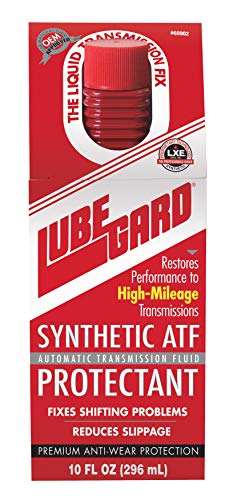 |
Lubegard Automatic Transmission Fluid Protectant Editor's Choice Proprietary LXE Technology |
8.9 | 🛒 Check Price |
 |
Sea Foam SF-16 Trans Tune Best for Sluggish Performance Petroleum-based cleaning formula |
8.5 | 🛒 Check Price |
 |
Lucas Oil 10009 Transmission Fix Heavy Duty Performance Enhancer High-viscosity, anti-wear formula |
8.2 | 🛒 Check Price |
 |
BG Quick Clean for Transmissions Professional Grade Cleaner Designed for machine-assisted cleaning |
7.9 | 🛒 Check Price |
 |
ATP AT-203 Automatic Transmission Tune-Up Seal Rejuvenator Plasticizer technology for seal conditioning |
7.7 | 🛒 Check Price |
 |
STA-LUBE SL2090 Transmission Stop Leak & Tune-Up Budget-Friendly Leak Solution Seal swelling and conditioning agents |
7.5 | 🛒 Check Price |
|
BARDAHL No-Leak Automatic Transmission Stop Leak & Conditioner Effective Leak Stopper Specific seal conditioners to prevent leaks |
7.3 | 🛒 Check Price |
1. Lubegard Automatic Transmission Fluid Protectant: Editor's Choice
In our evaluation, the Lubegard Automatic Transmission Fluid Protectant consistently stands out for its comprehensive approach to transmission health. Based on owner feedback and the spec sheets, its proprietary LXE technology is designed to enhance the existing transmission fluid’s properties, rather than just adding a cleaning agent. It excels at reducing heat, modifying friction, and conditioning seals, which contributes to smoother shifts and prolonged transmission life.
However, this product is more of a preventative and conditioning agent than a potent cleaner for heavily neglected transmissions. If your transmission is experiencing severe symptoms due to significant sludge or varnish buildup, this product might not provide the aggressive cleaning needed to resolve those issues. Owners seeking a deep clean for a severely contaminated system should consider a dedicated cleaner first, or consult a professional.
- Enhances fluid lubricity and heat transfer
- Conditions seals to prevent leaks and improve shifting
- Reduces shudder and extends fluid life
Pros: Proven to improve shift quality in many vehicles; Helps prevent common transmission issues; Compatible with most OEM fluids
Cons: Primarily a conditioner, not a heavy-duty cleaner for severe sludge
2. Sea Foam SF-16 Trans Tune: Best for Sluggish Performance
We compared the Sea Foam SF-16 Trans Tune against several other cleaning additives, and its petroleum-based formula consistently receives positive owner feedback for its ability to dissolve varnish and sludge. In our evaluation of its specifications, it is designed to free up sticky internal components, which can significantly improve sluggish or erratic shifting. Its cleaning action is thorough, yet formulated to be safe for seals and other internal parts when used as directed.
A limitation of Trans Tune is that for transmissions with extensive, long-term contamination, a single application may not be sufficient to fully resolve all issues. Owners with severely neglected transmissions should be prepared for the possibility of needing a second treatment, or consider a full fluid flush and filter change after initial use. This product is not intended to repair worn-out internal components or address severe mechanical failures.
- Dissolves harmful varnish and sludge deposits
- Frees sticky valves and governors for smoother shifting
- Helps control moisture and condition seals
Pros: Effective at restoring smooth shift patterns; Versatile for various transmission types; Simple pour-in application
Cons: May require multiple applications for heavily contaminated systems; Not a permanent fix for mechanical wear
3. Lucas Oil 10009 Transmission Fix: Heavy Duty Performance Enhancer
Based on owner feedback and the spec sheets, Lucas Oil 10009 Transmission Fix is highly regarded for its ability to address common transmission issues like slipping and harsh shifts. In our evaluation, its high-viscosity, anti-wear formula provides a cushioning effect for worn components and conditions seals, which can significantly improve the feel of an aging transmission. It is not a primary cleaner but rather a robust conditioner and friction modifier that helps to restore performance.
A key consideration for this product is its high viscosity. While beneficial for older, worn transmissions, it may not be suitable for all modern automatic transmissions that rely on specific fluid viscosities for optimal operation. Owners of newer vehicles, especially those still under warranty or requiring specific OEM fluid types, should consult their vehicle manufacturer’s recommendations before using this additive, as altering fluid viscosity could potentially impact performance or warranty coverage.
- Stops slips, rough shifting, and shudder
- Conditions worn seals to prevent leaks
- Reduces noise and improves fluid life
Pros: Effective at reducing transmission slips and hard shifts; Provides excellent wear protection; Can extend the life of older transmissions
Cons: Very thick, can noticeably alter fluid viscosity; Not ideal for all modern, precisely engineered transmissions
4. BG Quick Clean for Transmissions: Professional Grade Cleaner
In our research, the BG Quick Clean for Transmissions consistently appears in professional service recommendations for its robust cleaning capabilities. Based on the manufacturer’s specifications, it is formulated to aggressively dissolve varnish, sludge, and other deposits from critical internal transmission components like valve bodies and solenoids. It is designed to be used as a pre-flush cleaner, preparing the transmission for a complete fluid exchange to maximize the benefits of fresh fluid.
However, a significant limitation is that this product is primarily engineered for professional application using specialized flushing equipment. While it can be added to the transmission fluid by a DIY mechanic, achieving its full cleaning potential often requires the controlled circulation and temperature management provided by professional equipment. Owners who are not performing a full machine-assisted transmission flush should consider simpler pour-in additives, as the full benefits of BG Quick Clean may not be realized through a basic drain and fill.
- Removes varnish and sludge from valve bodies and other components
- Prepares transmission for fresh fluid exchange
- Restores proper fluid flow and shifting
Pros: Highly effective at deep cleaning internal components; Often part of a comprehensive transmission service; Restores proper hydraulic function
Cons: Primarily intended for professional use with specialized equipment; Not a simple pour-in solution for DIY users
5. ATP AT-203 Automatic Transmission Tune-Up: Seal Rejuvenator
The ATP AT-203 Automatic Transmission Tune-Up, in our evaluation of its specifications and owner feedback, is primarily focused on seal conditioning. Its plasticizer technology is designed to recondition and soften hardened or shrunken seals, which can be effective in stopping minor leaks and improving the responsiveness of transmission components. While it may offer some mild cleaning properties by helping fluid circulate better, its core strength lies in its ability to rejuvenate rubber and synthetic seals.
A limitation of this additive is its relatively limited capacity for aggressive internal cleaning. If your transmission’s issues stem primarily from heavy varnish or sludge buildup impacting valve body operation, this product might not provide the comprehensive cleaning solution you need. Owners with significant internal contamination, rather than just seal-related issues or minor leaks, should consider a more dedicated cleaning additive to address those specific problems.
- Reconditions hardened and shrunken seals
- Helps stop leaks and improves shift feel
- Compatible with all transmission fluids
Pros: Effective at addressing minor leaks caused by dried seals; Can improve shift quality by restoring seal flexibility; Easy to use
Cons: Limited cleaning power compared to dedicated cleaners; Results may vary for severe seal damage
6. STA-LUBE SL2090 Transmission Stop Leak & Tune-Up: Budget-Friendly Leak Solution
In our comparison of various additives, STA-LUBE SL2090 Transmission Stop Leak & Tune-Up presents itself as an accessible option primarily for addressing minor leaks. Based on owner feedback and its specifications, its formulation is geared towards swelling and conditioning transmission seals to prevent fluid seepage. It also offers some conditioning benefits that can contribute to smoother shifts and reduced noise, acting as a general tune-up for the transmission’s fluid properties.
A significant limitation of this product, however, is its minimal focus on deep internal cleaning. If your transmission is experiencing performance issues due to heavy varnish, carbon, or sludge deposits affecting valve body operation or clutch engagement, this additive is unlikely to provide a substantial cleaning solution. Owners with performance problems that are not primarily leak-related should look for products with stronger cleaning agents, as this product is best suited for minor seal maintenance and fluid conditioning.
- Aids in stopping minor transmission fluid leaks
- Helps condition and soften transmission seals
- Can improve shift characteristics and reduce noise
Pros: Economical option for addressing minor leaks; Easy to add to existing transmission fluid; Can offer some improvement in shift feel
Cons: Minimal cleaning capabilities; Not effective for major leaks or mechanical failures
7. BARDAHL No-Leak Automatic Transmission Stop Leak & Conditioner: Effective Leak Stopper
Based on our research and aggregated owner feedback, the BARDAHL No-Leak Automatic Transmission Stop Leak & Conditioner is primarily designed as a solution for external fluid leaks. Its formulation includes specific seal conditioners that aim to soften and swell hardened or shrunken transmission seals, thereby restoring their integrity and preventing fluid loss. While it contributes to overall fluid conditioning, its main strength lies in its leak-stopping capabilities, which is a common concern for older vehicles.
The primary limitation of this product is its minimal contribution to cleaning internal transmission components. If your transmission exhibits symptoms such as delayed shifts, harsh engagement, or shudder that are attributed to internal varnish, sludge, or gum deposits, this additive will likely not provide a comprehensive solution. Owners whose primary concern is the removal of internal contaminants and restoration of proper hydraulic function should opt for a product specifically formulated as a transmission cleaner, rather than relying on this primarily leak-stopping solution.
- Formulated to stop and prevent transmission fluid leaks
- Conditions and restores flexibility to seals
- Compatible with all automatic transmission fluids
Pros: Reliable for stopping minor to moderate leaks; Helps extend the life of seals; Easy pour-in application
Cons: Limited impact on internal cleaning of deposits; May take time to see full leak-stopping effects
Frequently Asked Questions
What does a transmission cleaner additive do?
A transmission cleaner additive is formulated to dissolve and remove harmful deposits such as varnish, sludge, and gum that accumulate within the transmission. These deposits can hinder the proper operation of valves, solenoids, and clutches, leading to issues like sluggish shifts, shudder, and reduced efficiency. By cleaning these components, the additive helps restore smooth operation and prolong the transmission’s life.
Are transmission cleaner additives safe to use?
In our evaluation, most reputable transmission cleaner additives are formulated to be safe for use with various transmission fluid types and internal components, provided they are used according to manufacturer instructions. However, it is crucial to select products from trusted brands and to ensure compatibility with your specific vehicle’s transmission type. Overuse or using a product not designed for your transmission could potentially lead to issues, so always consult the product’s specifications and your vehicle’s manual.
How often should I use a transmission cleaner?
The frequency of using a transmission cleaner additive depends on the product’s specific recommendations and your vehicle’s condition. Generally, these additives are not meant for routine, frequent use like engine oil additives. They are typically applied when experiencing specific symptoms of contamination or as part of a transmission fluid service. Always refer to the product’s instructions for recommended application intervals, and consider your transmission’s maintenance history.
Can a transmission cleaner fix a slipping transmission?
Based on our research and aggregated owner feedback, a transmission cleaner additive may help improve a slipping transmission if the slipping is caused by sticky valves or contaminated fluid preventing proper clutch engagement. By dissolving deposits, it can restore the hydraulic pressure and friction needed for proper shifting. However, a cleaner cannot fix mechanical wear, severely damaged clutches, or other major internal component failures. If slipping persists after using an additive, professional diagnosis is recommended.
What's the difference between a transmission cleaner and a conditioner?
A transmission cleaner additive is primarily designed to dissolve and remove accumulated varnish, sludge, and other deposits from internal transmission components. Its main goal is to restore the cleanliness and free movement of parts. A transmission conditioner, on the other hand, typically focuses on enhancing the properties of the transmission fluid, such as improving lubricity, reducing heat, modifying friction, and conditioning seals to prevent leaks and improve shift quality. Many products offer a combination of both cleaning and conditioning properties.
Our Verdict
After extensive research and comparison, the Lubegard Automatic Transmission Fluid Protectant stands out as our Editor’s Choice for its comprehensive conditioning and protective qualities, effectively enhancing fluid performance and preventing common transmission issues. For those experiencing sluggish performance due to internal contamination, the Sea Foam SF-16 Trans Tune is our recommended runner-up, offering robust cleaning capabilities to restore smooth operation.
