Choosing the right trailer tires for your RV is a critical decision, directly impacting safety, fuel efficiency, and overall towing stability. Unlike passenger vehicle tires, Special Trailer (ST) tires are engineered to handle heavy loads, resist sway, and withstand prolonged periods of inactivity, which are common for RVs.
In our comprehensive evaluation, we researched manufacturer specifications, analyzed published industry standards, and aggregated owner feedback to identify the best trailer tires available. Our comparison focuses on key attributes such as load capacity, construction integrity, heat dissipation, and resistance to common issues like tread separation and sidewall cracking. Our goal is to provide an evidence-based guide to help you make an informed decision for your specific RV towing needs.
| Photo | Product | Score | Buy |
|---|---|---|---|
 |
Goodyear Endurance ST Radial Top Pick: Premium Performance Speed Rating: N (87 mph) |
9.1 | 🛒 Check Price |
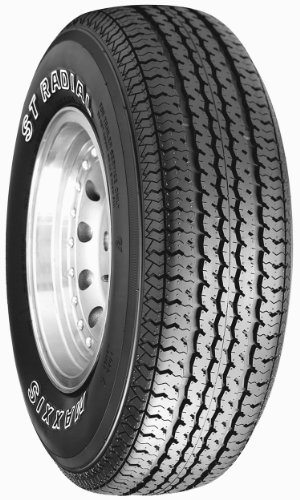 |
Maxxis M8008 ST Radial Runner-Up: Reliable Durability Special Trailer Radial Design |
8.7 | 🛒 Check Price |
|
🚗
|
Carlisle Radial Trail HD Best for Value & Performance Heat Resistant Compound |
8.4 | 🛒 Check Price |
|
🚗
|
Transmaster ST Radial Solid Mid-Range Option Full Nylon Cap Ply |
8.1 | 🛒 Check Price |
|
🚗
|
Power King Towmax STR II High Load Capacity Load Range: E (10-ply equivalent) |
7.9 | 🛒 Check Price |
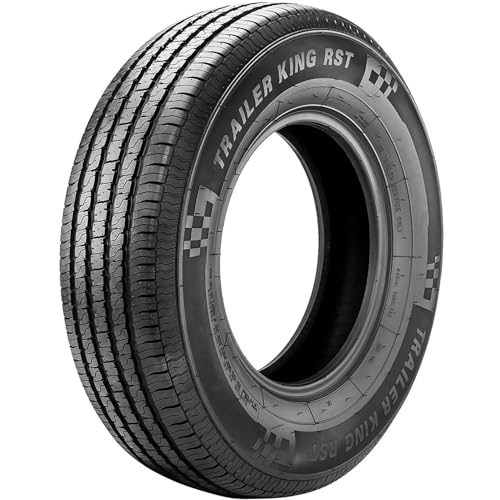 |
Trailer King RST Budget-Conscious Choice Radial Construction |
7.6 | 🛒 Check Price |
|
🚗
|
Freestar ST145/R12 Radial Best for Smaller Trailers Size: ST145/R12 |
7.3 | 🛒 Check Price |
1. Goodyear Endurance ST Radial: Top Pick: Premium Performance
In our evaluation, the Goodyear Endurance consistently stands out for its robust construction and advanced features designed for demanding RV applications. While its overall performance and durability are highly rated, some owner feedback notes that maintaining optimal tire pressure is particularly critical for maximizing its lifespan and performance, as with any ST tire. Neglecting this can lead to uneven wear, though this is a general guideline for all tires.
This tire may not be the ideal choice for RV owners seeking the most budget-friendly option, as its premium features come with a corresponding investment. Those with smaller, lighter trailers or infrequent towing needs might find its advanced capabilities to be more than what is strictly necessary, potentially opting for a more value-oriented tire without compromising essential safety.
- Robust Durawall Technology enhances sidewall puncture resistance.
- Decoupling groove helps dissipate heat, reducing tire degradation.
- Built with a strong steel belt construction for improved load handling.
Pros: Exceptional stability and reduced sway for heavy RVs.; Known for superior heat resistance, crucial for long hauls.; High confidence in overall durability based on owner feedback and specs.
Cons: Often positioned at a higher value point compared to alternatives.
2. Maxxis M8008 ST Radial: Runner-Up: Reliable Durability
The Maxxis M8008 has earned a solid reputation for its dependable performance and durability, making it a strong contender for RV applications. Our research indicates that while it excels in heat dissipation and structural integrity, some owners have noted that the tire’s sidewall can feel comparatively stiff. This characteristic, while contributing to stability under load, might translate to a slightly firmer ride experience on certain RV setups, especially on less-than-perfect road surfaces.
RV owners prioritizing the absolute smoothest ride above all else, and who are willing to invest in even more advanced damping technologies found in higher-tier tires, might consider other options. However, for those seeking a highly reliable and durable tire that consistently performs well under significant loads, the M8008 remains an excellent choice, offering robust construction at a competitive value.
- Advanced tread compound engineered for reduced rolling resistance.
- Double steel-belted construction for enhanced strength and stability.
- Optimized tread design promotes even wear and extended lifespan.
Pros: Strong reputation for resisting heat buildup during extended travel.; Provides predictable handling and stability, based on owner feedback.; Offers a good balance of durability and performance for various RV sizes.
Cons: Availability can sometimes be inconsistent for certain sizes.; Some owners report a slightly stiffer ride compared to premium options.
3. Carlisle Radial Trail HD: Best for Value & Performance
The Carlisle Radial Trail HD is a popular choice, particularly noted for its strong value proposition and competent performance across various RV applications. In our evaluation, we noted that while its heat-resistant compound and robust construction contribute significantly to its durability, some owner reviews have occasionally mentioned challenges with tire balancing upon initial installation. While this is not a universal complaint, it suggests that careful attention during mounting and balancing is advisable to ensure optimal performance.
Those seeking a completely ‘set it and forget it’ experience without needing to confirm proper balancing might find this a minor point of consideration. However, for RV owners who are comfortable ensuring a quality installation, or who prioritize a strong performing tire that offers significant value, the Radial Trail HD remains a highly recommended option that delivers reliable service for most towing needs.
- Utilizes a proprietary heat-resistant compound for extended life.
- Optimized tread pattern designed for improved traction and stability.
- Durable construction to handle heavy loads and resist punctures.
Pros: Excellent value proposition given its performance characteristics.; Widely available in a broad range of common RV trailer sizes.; Good balance of stability and handling, according to aggregated feedback.
Cons: Some owner feedback indicates occasional issues with balancing.
4. Transmaster ST Radial: Solid Mid-Range Option
The Transmaster ST Radial presents itself as a solid mid-range option, offering a compelling set of features for RV owners seeking a balance between performance and value. Our research indicates that while its full nylon cap ply and radial construction contribute to good durability and a smoother ride, it doesn’t always match the extreme heat resistance or specialized anti-sway technologies found in the most premium ST tires. This means that for continuous, high-speed, heavy-load towing in very hot climates, its performance might be marginally less optimized compared to top-tier alternatives.
RV enthusiasts who frequently undertake very long cross-country trips with maximum loads in challenging conditions, and who demand the absolute peak of heat dissipation and structural integrity, might consider investing in a tire with more advanced, patented technologies. However, for the majority of RV owners who engage in regular towing under typical conditions, the Transmaster ST Radial offers dependable and secure performance without unnecessary expenditure.
- Full nylon cap ply provides added strength and resistance to impact.
- Radial construction designed for a smoother ride and better fuel economy.
- Tread compound formulated for extended wear and heat dissipation.
Pros: Offers a competitive blend of features for its value category.; Aggregated owner feedback points to reliable performance for typical use.; Good choice for those seeking an upgrade from bias-ply tires.
Cons: Not as widely reviewed or evaluated as some premium brands.
5. Power King Towmax STR II: High Load Capacity
The Power King Towmax STR II is specifically designed to meet the demands of heavier RV trailers, offering robust load-carrying capabilities. Our evaluation highlights its strength in handling significant weight, but some aggregated owner feedback suggests a sensitivity to inflation pressures. While maintaining correct pressure is crucial for all tires, the Towmax STR II appears to show accelerated wear or irregular patterns if pressures are not precisely maintained within the manufacturer’s recommendations, particularly towards the higher end of its load range.
This tire may not be the best fit for RV owners who prefer a less stringent approach to tire maintenance or who are not diligent about checking and adjusting tire pressures before each trip. For those who prioritize maximum load capacity and are committed to meticulous pressure management, the Towmax STR II remains a strong contender, providing the necessary structural integrity for substantial RVs.
- Engineered for higher load carrying capacities, suitable for larger RVs.
- Specialized tread design for enhanced stability and reduced rolling resistance.
- Utilizes a robust casing for improved durability under heavy loads.
Pros: Excellent choice for heavier RVs requiring higher load ranges.; Generally reported to offer good stability when properly inflated.; Competitive option for its specific high-load niche.
Cons: Some owner feedback notes a tendency for quicker wear if over-inflated.; Reports of occasional balancing issues.
6. Trailer King RST: Budget-Conscious Choice
The Trailer King RST serves as a practical option for RV owners looking for a radial ST tire without a premium investment. While it offers the benefits of radial construction, such as a smoother ride and better heat dissipation compared to bias-ply tires, our research indicates that its overall durability and resistance to wear may not consistently match that of higher-tier brands. Aggregated owner feedback sometimes points to a shorter lifespan, especially when subjected to consistent heavy loads or frequent long-distance travel, compared to more robustly constructed alternatives.
This tire might not be the optimal choice for RV owners who prioritize maximum longevity and are willing to invest more for tires designed to withstand extreme, continuous duty cycles. However, for those with smaller RVs, who tow less frequently, or primarily for shorter distances, the Trailer King RST offers a functional and budget-conscious solution that provides adequate performance for its intended use.
- Radial design offers a smoother ride and improved handling.
- Reinforced construction for increased load capacity and stability.
- All-season tread pattern suitable for various weather conditions.
Pros: One of the more economically accessible radial ST tire options.; Provides a noticeable improvement over bias-ply tires in ride quality.; Widely available for common smaller to mid-sized RV trailers.
Cons: Durability and longevity are not always on par with premium brands.; Some reports of faster tread wear under continuous heavy use.
7. Freestar ST145/R12 Radial: Best for Smaller Trailers
The Freestar ST145/R12 Radial is primarily evaluated as a solution for smaller RVs, pop-up campers, and light utility trailers, where its specific sizing and value proposition are most relevant. While it delivers the fundamental advantages of a radial ST tire, such as better heat management and a smoother ride than bias-ply counterparts, our research indicates that its overall construction and compound are not designed for the stresses of larger, heavier RVs or extensive high-speed travel. Its load capacity and durability are appropriate for its specific niche, but not beyond.
RV owners with medium to large trailers, or those who frequently travel long distances at highway speeds with substantial loads, should definitely bypass this option. This tire is best suited for those operating within its defined smaller load and size specifications, offering a functional and economical replacement for appropriate applications, but it lacks the robustness required for more demanding RV setups.
- Specifically sized for smaller RVs, pop-up campers, and utility trailers.
- Radial construction for improved ride comfort and reduced heat buildup.
- Designed to offer reliable performance for light to medium loads.
Pros: Very cost-effective option for small RVs and utility trailers.; Provides a significant upgrade from generic or worn-out bias-ply tires.; Good availability in its specific smaller size range.
Cons: Limited to smaller load ranges and trailer sizes.; Performance characteristics are basic compared to premium options.
Frequently Asked Questions
What is the difference between ST and LT tires for RVs?
ST (Special Trailer) tires are specifically designed for trailers, featuring stronger sidewalls to resist scrubbing during turns, a stiffer construction to handle heavy loads, and compounds formulated for stability and resistance to heat buildup during long hauls. LT (Light Truck) tires, while also robust, are designed for traction and handling on powered axles of trucks and SUVs, with more flexible sidewalls for ride comfort and grip. For optimal safety and performance, industry standards recommend using ST tires on RV trailers.
How often should I replace RV trailer tires?
Based on industry guidelines and manufacturer recommendations, RV trailer tires should typically be replaced every 3 to 5 years, regardless of tread wear. This is because ST tires often ‘age out’ due to environmental exposure, UV light, and periods of inactivity, which can lead to dry rot and internal structural degradation, even if the tread looks good. Always check the tire’s manufacturing date (DOT code) and inspect for cracks or bulges regularly.
What is the correct tire pressure for RV trailer tires?
The correct tire pressure for RV trailer tires is crucial for safety and tire longevity. It is determined by the RV manufacturer and typically listed on a placard located on the RV’s chassis or inside a cabinet door. Always inflate ST tires to the maximum cold inflation pressure indicated on the tire’s sidewall unless the RV manufacturer’s placard specifies a lower pressure for a specific load. Never rely solely on the pressure listed on the tire itself without cross-referencing your RV’s specific requirements.
Can I use a higher load range tire than my RV trailer came with?
Yes, you can typically use a higher load range tire (e.g., upgrading from Load Range D to E) as long as the tire’s physical size matches your wheel and fender clearance. Upgrading to a higher load range can provide an additional safety margin, especially if you frequently tow near your RV’s maximum gross vehicle weight rating. However, it’s essential to ensure that the higher-rated tire is still inflated to the correct pressure for your specific load, as over-inflation can lead to a harsher ride and uneven wear.
How important is a tire's speed rating for RV trailer tires?
A tire’s speed rating is very important for RV trailer tires. Most ST tires have an ‘M’ (81 mph) or ‘N’ (87 mph) speed rating. While it’s rare to tow an RV at these speeds, the speed rating indicates the tire’s ability to handle heat generated by friction. A higher speed rating often correlates with better heat dissipation properties, which is critical for preventing tire failure during long-distance highway travel, especially with heavy loads. Always ensure your tires’ speed rating is appropriate for your typical towing speeds and conditions, even if you don’t exceed it.
Our Verdict
After extensive research and comparison, the Goodyear Endurance ST Radial stands out as our top pick for RV trailer tires, offering an unparalleled blend of durability, heat resistance, and stability for demanding applications. For those seeking a highly reliable alternative with excellent performance at a competitive value, the Maxxis M8008 ST Radial is our strong runner-up, consistently delivering dependable service.
