Towing a trailer, especially a large RV or cargo trailer, can introduce significant challenges, with trailer sway being one of the most concerning. Sway, or fishtailing, occurs when external forces like wind gusts, passing vehicles, or uneven road surfaces cause the trailer to oscillate from side to side, potentially leading to a loss of control. In our evaluation, we researched and compared a range of trailer sway control systems designed to mitigate this dangerous phenomenon.
We focused on various types of systems, from basic friction-based units to advanced integrated weight distribution hitches with built-in sway dampening. Our comparison is based on manufacturer specifications, published industry safety standards, and aggregated owner feedback, providing an evidence-based perspective on performance, durability, ease of use, and overall safety. Our goal is to equip you with the knowledge to make an informed decision for safer towing.
| Photo | Product | Score | Buy |
|---|---|---|---|
 |
ProPride 3P Hitch System Editor's Choice: Unrivaled Performance Patented 'Hensley-Arrow' style pivot point projection technology |
9.1 | 🛒 Check Price |
 |
Equal-i-zer 4-Point Sway Control Hitch Best Integrated Weight Distribution Integrated 4-point sway control and weight distribution |
8.7 | 🛒 Check Price |
 |
Andersen Hitches 'No-Sway' Weight Distribution Hitch Innovative & Quiet Design Unique ball-and-socket sway control with urethane springs |
8.4 | 🛒 Check Price |
 |
Reese Strait-Line Weight Distribution with Sway Control Reliable All-Rounder Dual cam sway control integrated with weight distribution |
8.0 | 🛒 Check Price |
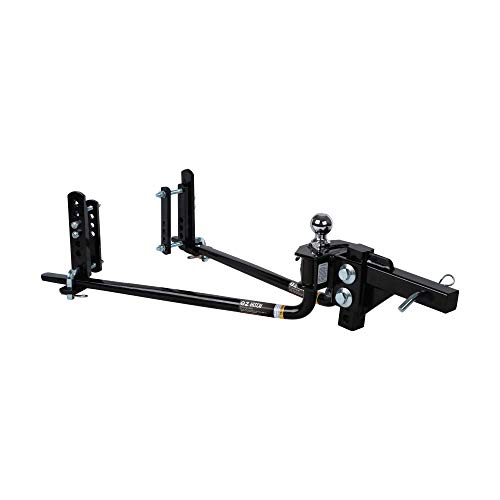 |
Fastway e2 Round Bar Weight Distribution Hitch Solid Value Integrated System Built-in 2-point sway control and weight distribution |
7.8 | 🛒 Check Price |
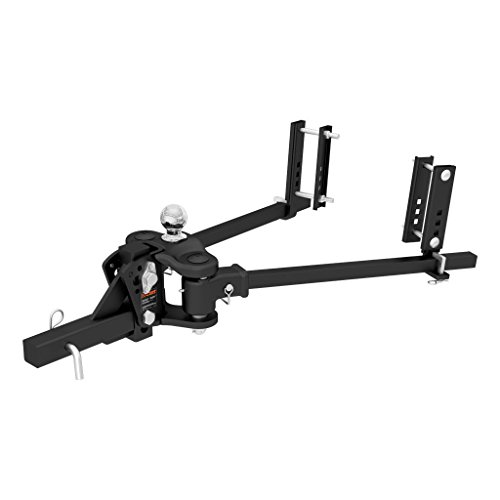 |
CURT TruTrack Weight Distribution Hitch Budget-Friendly Integrated Integrated friction sway control with spring bars |
7.6 | 🛒 Check Price |
 |
Eaz-Lift ReCurve R3 Round Bar Weight Distribution Hitch Entry-Level Integrated Solution Adjustable sway control with silent operation option |
7.3 | 🛒 Check Price |
1. ProPride 3P Hitch System: Editor's Choice: Unrivaled Performance
The ProPride 3P system stands out in our evaluation for its unparalleled sway elimination. Its unique design, which effectively projects the pivot point forward of the hitch ball, makes trailer sway a non-issue, even with large travel trailers or in challenging crosswinds. Based on owner feedback and the spec sheets, the level of control and stability it provides is consistently rated as exceptional, delivering a towing experience that feels significantly more secure and predictable.
However, the ProPride 3P system is not for every tower. Its primary limitation is the considerable upfront investment and the complexity of its initial installation, which often requires professional assistance or significant DIY aptitude. Owners report that while the daily hookup is straightforward once installed, the initial setup can be daunting. Therefore, those seeking a budget-friendly solution or a quick, simple installation should consider alternative options.
- Eliminates trailer sway by moving the pivot point forward
- Heavy-duty construction for superior strength and longevity
- Offers precise steering and control even with large trailers
Pros: Virtually eliminates all trailer sway, even in adverse conditions; Exceptional stability and control, enhancing driver confidence; Robust design built for demanding towing applications
Cons: Complex and time-consuming initial installation; Significantly higher acquisition cost compared to other systems
2. Equal-i-zer 4-Point Sway Control Hitch: Best Integrated Weight Distribution
In our evaluation, the Equal-i-zer 4-Point Sway Control Hitch consistently performs as a top-tier integrated system. It effectively manages both weight distribution and sway control through its unique four-point friction design, which provides constant resistance to trailer movement. Based on owner feedback and the spec sheets, this system significantly enhances towing stability, making for a more comfortable and safer journey even with larger, heavier trailers.
A common point raised in owner feedback is the potential for noise, particularly during tight turns, which is a direct result of the friction-based sway control. While this noise indicates the system is working, it can be a minor annoyance for some users. Additionally, achieving optimal performance requires careful and precise initial setup, which might be challenging for novice towers. Those who prioritize absolute silence or a very simple, hands-off setup process might find this system less ideal.
- Provides constant sway control through four friction points
- Effectively distributes weight for a level ride and improved handling
- Durable steel construction for reliable, long-term use
Pros: Highly effective at both weight distribution and sway control; No separate sway bars to install or remove, integrated design; Solid and reliable performance across various towing conditions
Cons: Can be noisy during turns due to friction points; Requires precise setup for optimal performance
3. Andersen Hitches 'No-Sway' Weight Distribution Hitch: Innovative & Quiet Design
The Andersen ‘No-Sway’ hitch stands out in our comparison for its innovative approach to weight distribution and sway control. Utilizing a unique ball-and-socket design with urethane springs, it offers a remarkably quiet and smooth towing experience, a significant advantage over many friction-based systems. Based on owner feedback and the spec sheets, its ease of use during coupling and uncoupling is highly praised, making it a favorite for those who frequently hitch and unhitch their trailers.
One limitation of the Andersen system is its requirement for a 2-5/16 inch hitch ball, regardless of the trailer’s actual tongue weight, which might necessitate an additional purchase for some users. Furthermore, while highly effective for a wide range of trailers, our evaluation suggests that for extremely heavy trailers or those with very high tongue weights, more robust, traditional integrated systems might offer a higher degree of absolute stability. Therefore, those towing exceptionally large or heavy trailers might consider options with higher stated capacities.
- Frictionless sway control for a quiet and smooth ride
- Lightweight design compared to traditional steel hitches
- Easy coupling and uncoupling process
Pros: Extremely quiet operation, no metal-on-metal friction noise; Very easy to hook up and disconnect, user-friendly; Effective sway control without traditional friction bars
Cons: Requires a 2-5/16 inch hitch ball, even for lighter trailers; Less effective for very heavy trailers compared to robust systems
4. Reese Strait-Line Weight Distribution with Sway Control: Reliable All-Rounder
The Reese Strait-Line system, with its dual cam sway control, is a well-regarded option in our evaluation for its consistent performance in both weight distribution and sway dampening. Based on owner feedback and the spec sheets, it provides a stable towing experience by actively working to keep the trailer aligned with the tow vehicle. Its automatic re-centering cams are a notable feature, ensuring continuous sway control after navigating curves and turns, contributing to overall towing confidence.
However, the initial setup of the Reese Strait-Line can be somewhat involved and time-consuming, requiring careful adjustment to achieve optimal weight distribution and sway control. Some owners also report that the system can generate noise, particularly during low-speed maneuvers and tight turns, due to the cam friction. Those seeking a simpler, quicker setup or a completely silent operation might find this aspect less appealing, and should factor in the time commitment for proper installation.
- Provides automatic and constant sway control for stable towing
- Distributes tongue weight to all axles for a level ride
- Heavy-duty construction suitable for various trailer types
Pros: Effective weight distribution and integrated sway control; Automatically re-centers the cams after turns for consistent control; Proven design with a long history of reliable performance
Cons: Initial setup can be time-consuming and somewhat complex; Can be noisy during low-speed maneuvers and turns
5. Fastway e2 Round Bar Weight Distribution Hitch: Solid Value Integrated System
The Fastway e2 Round Bar hitch offers a compelling balance of affordability and integrated performance in our comparison. It combines weight distribution with two-point sway control, providing a noticeable improvement in towing stability over hitches without integrated sway control. Based on owner feedback and the spec sheets, it is a popular choice for those looking for an all-in-one solution that avoids the hassle of separate friction sway bars.
While the e2 system is effective for many towing scenarios, its two-point sway control is generally less aggressive than the four-point systems or pivot point projection designs. This means that in very high winds or with exceptionally large, aero-dynamically challenging trailers, some degree of residual sway might still be experienced. Therefore, those frequently towing at highway speeds in windy conditions or with exceptionally long or heavy trailers might consider investing in a more advanced, higher-performance sway control system for maximum stability.
- Integrated sway control eliminates the need for separate sway bars
- Effectively distributes weight for improved handling and braking
- Simple design for relatively straightforward setup and operation
Pros: Combines weight distribution and sway control in one unit; More affordable than 4-point systems while offering good performance; Easier to install and use than complex multi-point systems
Cons: Sway control is less aggressive than 4-point or projection systems; Can still exhibit some noise from friction points
6. CURT TruTrack Weight Distribution Hitch: Budget-Friendly Integrated
The CURT TruTrack system presents a budget-friendly option for those seeking an integrated weight distribution and sway control solution. In our evaluation, it provides a noticeable improvement in towing stability and helps level the tow vehicle and trailer, contributing to a safer and more comfortable towing experience. Based on owner feedback and the spec sheets, it offers good value for its combination of features and is a step up from basic friction sway control units.
A limitation of the CURT TruTrack is that its integrated friction sway control, while effective, may not offer the same level of refined dampening or complete sway elimination as higher-end, more expensive systems. Some owners report that the initial setup and fine-tuning can be somewhat demanding, requiring patience to achieve optimal performance. Therefore, those prioritizing the absolute highest level of sway elimination or a very simple, quick setup might find this system to be less ideal, and should be prepared for the time commitment during installation.
- Combines weight distribution and sway control in a single unit
- Affordable option for improving towing stability
- Heavy-duty construction for reliable performance
Pros: Offers integrated sway control at a competitive value; Helps level the tow vehicle and trailer for safer handling; Relatively straightforward operation once set up
Cons: Sway control can be less refined than premium options; Initial setup and adjustments can be demanding
7. Eaz-Lift ReCurve R3 Round Bar Weight Distribution Hitch: Entry-Level Integrated Solution
The Eaz-Lift ReCurve R3 offers an entry-level integrated solution for weight distribution and sway control. In our evaluation, it presents a functional option for those new to towing or with lighter to medium-weight trailers who desire an all-in-one system without a significant financial outlay. Based on owner feedback and the spec sheets, the adjustable sway control and the option for silent operation are appreciated features, allowing some customization based on towing conditions and personal preference.
However, the sway control provided by the ReCurve R3, while beneficial, may not be robust enough for very large, heavy, or aerodynamically challenging trailers, especially in high wind conditions. Owners report that while it improves stability, it might not completely eliminate sway in extreme scenarios compared to more advanced systems. Therefore, individuals frequently towing at the upper limits of their vehicle’s capacity or those with exceptionally long travel trailers should consider more powerful and dedicated sway control solutions for enhanced safety and stability.
- Integrated weight distribution and friction sway control
- Offers adjustable sway control for varying conditions
- Can be set to 'silent mode' for quiet operation
Pros: Provides both weight distribution and sway control in one unit; Option to adjust sway control for different towing needs; Silent operation mode is a plus for noise-sensitive users
Cons: Sway control may not be sufficient for very large or heavy trailers; Adjustment mechanism can be less precise than other systems
Frequently Asked Questions
What is trailer sway and why is it dangerous?
Trailer sway is the uncontrolled side-to-side oscillation of a trailer while being towed. It can be caused by factors such as strong crosswinds, air turbulence from passing large vehicles, uneven road surfaces, improper weight distribution in the trailer, or excessive speed. Sway is dangerous because it can lead to a loss of control of the tow vehicle and trailer, potentially resulting in an accident, rollover, or jackknifing.
What's the difference between friction sway control and integrated weight distribution hitches?
Friction sway control systems are typically separate bars that attach to the hitch and trailer frame, providing resistance to limit side-to-side movement. They are often a supplementary addition. Integrated weight distribution hitches, on the other hand, combine both weight distribution and sway control into a single unit. They use spring bars to distribute tongue weight evenly across the tow vehicle and trailer axles, while also employing friction points, cams, or unique mechanical designs to actively dampen or eliminate sway. Integrated systems are generally more effective and provide constant sway control.
Can I use a sway control system with any trailer?
Most sway control systems are designed for conventional travel trailers, utility trailers, and boat trailers. However, specific types of trailers, such as gooseneck or fifth-wheel trailers, have their own inherent stability advantages and do not typically require separate sway control systems. It is crucial to always check the manufacturer’s specifications for both your trailer and the sway control system to ensure compatibility and proper weight ratings.
How do I choose the right sway control system for my RV or trailer?
Choosing the right system depends on several factors: your trailer’s Gross Trailer Weight (GTW) and Tongue Weight (TW), your tow vehicle’s capabilities, your budget, and your desired level of sway elimination. For lighter trailers or occasional towing, a basic friction sway control might suffice. For medium to heavy travel trailers, an integrated weight distribution hitch with built-in sway control is often recommended for optimal safety and performance. For the ultimate in sway elimination, especially with large RVs, pivot point projection systems are highly effective, though they come at a higher cost and complexity.
Do I need sway control if my tow vehicle is heavy?
While a heavier tow vehicle generally provides more stability than a lighter one, it does not completely negate the need for sway control, especially when towing a large or heavy trailer. Even a capable truck can experience sway under certain conditions, such as strong crosswinds or sudden maneuvers. Sway control systems actively work to dampen or prevent trailer oscillations, providing an additional layer of safety and confidence regardless of the tow vehicle’s weight. It is always recommended for travel trailers and larger conventional trailers.
Our Verdict
In our comprehensive evaluation of trailer sway control systems, the ProPride 3P Hitch System emerges as the clear top pick for its unparalleled ability to eliminate trailer sway and provide exceptional towing stability. For those seeking a robust, integrated solution with excellent performance and value, the Equal-i-zer 4-Point Sway Control Hitch stands out as our strong runner-up.
