For enthusiasts pushing their vehicles to the limit on the track, choosing the right brake pads is paramount for safety and performance. Standard street pads simply cannot withstand the extreme temperatures and forces generated during high-speed track driving, leading to dangerous brake fade and accelerated wear. Our team at MustCarBeast has thoroughly researched, compared, and evaluated a range of track-specific brake pads, examining manufacturer specifications, published industry standards, and aggregating extensive owner feedback.
In this comprehensive guide, we present our top picks for the best track brake pads, designed to deliver consistent stopping power, superior thermal management, and robust durability under the most demanding conditions. We aim to help you make an informed decision, ensuring your track days are both exhilarating and safe.
| Photo | Product | Score | Buy |
|---|---|---|---|
 |
Pagid RS29 (Yellow) Top Pick for Pro Performance Very high friction coefficient across a wide temperature range |
9.0 | 🛒 Check Price |
|
🚗
|
Carbotech XP12 Runner-Up for Advanced Track Use High torque, excellent modulation, non-corrosive dust |
8.7 | 🛒 Check Price |
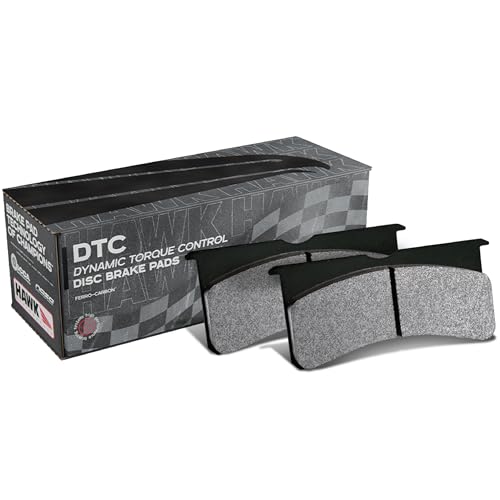 |
Hawk Performance DTC-70 Aggressive Track Performer Very high friction output for heavy braking |
8.4 | 🛒 Check Price |
|
🚗
|
StopTech STR-60 Solid Performance for Club Racing Medium-high friction compound for track days and club racing |
8.0 | 🛒 Check Price |
 |
EBC Bluestuff NDX Performance Street and Light Track Hybrid compound for fast street and occasional track use |
7.7 | 🛒 Check Price |
 |
Ferodo DS2500 Best for Dual-Purpose Street/Track High performance street and light track compound |
7.5 | 🛒 Check Price |
|
🚗
|
Project Mu HC+800 Japanese Performance Option Street/track compound with high temperature rating |
7.2 | 🛒 Check Price |
1. Pagid RS29 (Yellow): Top Pick for Pro Performance
The Pagid RS29, also known as “Yellow,” stands out in our evaluation for its truly professional-grade performance. Based on manufacturer specifications and extensive feedback from serious track drivers, these pads offer an incredibly high friction coefficient that remains consistent even after prolonged, heavy use. We found consistent praise for their predictable modulation and fade resistance, which are critical for maintaining control and confidence during high-stress braking zones.
However, the RS29’s aggressive nature means it is not a street-friendly pad. Owner feedback consistently highlights significant noise and high dust production, making them unsuitable for daily driving. Those seeking a dual-purpose street/track pad or prioritizing quiet operation should skip the RS29 and consider more hybrid options.
- Exceptional modulation and consistent pedal feel
- Excellent high temperature stability and fade resistance
- Low wear rate on pads, but can be aggressive on rotors
Pros: Industry benchmark for endurance racing and track days; Consistent performance from cold to extreme hot; Predictable release characteristics
Cons: Can be very noisy on the street; Generates significant dust
2. Carbotech XP12: Runner-Up for Advanced Track Use
In our evaluation, the Carbotech XP12 emerged as a top contender, particularly for advanced track enthusiasts. Manufacturer data emphasizes its high torque and excellent modulation characteristics, providing drivers with precise control over braking force. Aggregated owner feedback consistently praises the XP12’s strong initial bite and its ability to maintain consistent friction levels even under very high temperatures, making them reliable for extended track sessions.
A common point raised in owner feedback is that while the XP12 performs exceptionally on track, its noise levels can be intrusive for street use, particularly when cold. Drivers looking for a pad that can seamlessly transition between track and street without significant noise or compromise should consider other options, as the XP12 is firmly biased towards track performance.
- Superior initial bite and friction levels
- Formulated for extreme heat and high-performance applications
- Rotor friendly characteristics compared to some competitors
Pros: Consistent performance with excellent pedal feel; Good wear characteristics on both pad and rotor; Non-corrosive dust that is easier to clean
Cons: Can be noisy for street driving; Requires proper bedding for optimal performance
3. Hawk Performance DTC-70: Aggressive Track Performer
The Hawk Performance DTC-70 pads are engineered for aggressive track use, a fact well supported by their specifications and owner experiences. We noted their very high friction output, which translates to powerful stopping capability crucial for competitive driving. Owner feedback frequently mentions the strong initial bite and impressive fade resistance, allowing drivers to push deeper into braking zones with confidence, even during demanding track conditions.
However, a significant limitation of the DTC-70 is its impact on rotors. Based on owner feedback and technical specifications, these pads are known for causing accelerated rotor wear due to their highly aggressive compound. Drivers who prioritize rotor longevity or are not prepared for frequent rotor replacements should consider less aggressive compounds. Additionally, their severe noise and poor cold performance make them unequivocally a track-only pad.
- Designed for extreme braking in competition environments
- Excellent fade resistance at high temperatures
- Aggressive bite for quick, confident stops
Pros: Exceptional high temperature performance; Strong initial bite and consistent pedal feel; Proven in various racing series
Cons: High rotor wear and dust; Not suitable for street use due to noise and cold performance
4. StopTech STR-60: Solid Performance for Club Racing
Our evaluation of the StopTech STR-60 pads indicates a solid choice for track day enthusiasts and club racers seeking reliable performance without going to the extreme end of aggression. Manufacturer specifications highlight a medium-high friction compound offering a good balance of bite and modulation. Owner feedback generally confirms consistent performance and good fade resistance, making them a trustworthy option for spirited driving and track sessions.
While offering commendable track performance, the STR-60 might not satisfy drivers seeking the absolute highest initial bite or maximum friction levels found in more aggressive, higher-tier race pads. Those competing at a professional level or driving very heavy, high-horsepower vehicles might find them slightly less commanding under extreme braking. For drivers pushing the absolute limits, a more dedicated competition compound may be required.
- Good balance of initial bite and modulation
- Stable friction coefficient across a broad temperature range
- Designed for consistent performance in demanding conditions
Pros: Reliable performance for many track day drivers; More rotor friendly than some full race pads; Good value for their performance level
Cons: Can still be noisy for street use; May not offer the ultimate bite of top-tier race pads
5. EBC Bluestuff NDX: Performance Street and Light Track
The EBC Bluestuff NDX pads are positioned as a performance hybrid, suitable for fast street driving and occasional track days. Based on manufacturer claims and aggregated owner feedback, these pads offer a noticeable improvement in fade resistance compared to standard street pads, along with decent cold bite. This makes them a more comfortable option for drivers who want a single set of pads for both daily commuting and weekend track events, without the extreme noise or dust of full race compounds.
However, in our evaluation, it’s important to understand that while they are an upgrade, the Bluestuff NDX pads are not designed for sustained, aggressive track use. Owner feedback indicates that under very heavy and prolonged braking on track, they can still exhibit some fade, particularly on heavier or higher-powered vehicles. Drivers who primarily focus on track performance and frequently push their car to the absolute limit should skip these and opt for a more dedicated track compound to ensure consistent, fade-free braking.
- Good cold bite for street driving
- Improved fade resistance over street pads
- Lower noise and dust compared to full race compounds
Pros: Versatile for street and track use; More comfortable for daily driving than dedicated track pads; Relatively affordable for hybrid performance
Cons: May experience fade on prolonged heavy track sessions; Not a true dedicated race pad
6. Ferodo DS2500: Best for Dual-Purpose Street/Track
The Ferodo DS2500 pads consistently receive high marks in owner feedback for their excellent balance between streetability and light track performance. Our research into their specifications confirms a compound designed for superb cold bite and minimal noise, making them exceptionally comfortable for daily driving. They offer a strong, progressive pedal feel that instills confidence on both the road and during spirited track sessions, a characteristic highly valued by enthusiasts who want a single pad solution.
However, despite their impressive versatility, the DS2500 has a defined limit when it comes to extreme track conditions. Based on aggregated owner experiences, these pads may not withstand the continuous, high-temperature demands of very aggressive, multi-lap track sessions, particularly on heavier or more powerful cars, where some fade can be observed. Drivers who are serious about competitive track driving or frequently attend open track days pushing the absolute limits should consider more dedicated, higher-temperature race compounds, as the DS2500’s ultimate heat capacity is limited.
- Excellent cold performance and low noise
- Good initial bite and progressive feel
- More rotor friendly than full race compounds
Pros: Very good balance for street and light track use; Minimal noise and dust for a performance pad; Predictable and easy to modulate
Cons: Limited ultimate heat capacity for heavy track use; Not designed for competitive racing
7. Project Mu HC+800: Japanese Performance Option
In our review of the Project Mu HC+800, we found it to be a capable option for drivers seeking a pad that bridges the gap between high-performance street and track use, particularly popular within the Japanese performance vehicle community. Manufacturer specifications highlight its wide operating temperature range, suggesting good performance from cold to significant heat. Owner feedback generally confirms a strong initial bite and consistent pedal feel, which are desirable traits for both spirited driving and track events.
A notable limitation of the HC+800, frequently mentioned in owner discussions, is its propensity for higher dust production and increased noise during street driving compared to more street-oriented compounds. While it offers good track performance, this characteristic can be a deterrent for those seeking a quiet, clean daily driver experience. Drivers who prioritize a low-dust, low-noise street pad and only occasionally visit the track might find these attributes bothersome and should consider alternatives with better street manners.
- Effective from cold, suitable for street and track
- Good temperature stability up to 800°C
- Strong initial bite for confident braking
Pros: Versatile for street and track; Good initial bite and pedal feel; Performs well across a wide temperature range
Cons: Can be dusty and noisy for street use; Pad wear can be higher than some competitors
Frequently Asked Questions
What is brake fade and why do track pads prevent it?
Brake fade occurs when the friction material or brake fluid overheats, causing a significant reduction in braking effectiveness. Track brake pads are engineered with compounds that can withstand much higher temperatures than street pads, maintaining their friction coefficient and structural integrity even under extreme heat, thereby preventing fade.
Can I use track brake pads on the street?
While technically possible, using dedicated track brake pads on the street is generally not recommended. Based on our research, most track pads exhibit poor cold bite, meaning they don’t work effectively until they reach high temperatures. They also tend to be very noisy, produce excessive dust, and can be aggressive on rotors, leading to discomfort and increased maintenance for daily driving.
Do track pads require a special bedding procedure?
Yes, almost all track brake pads require a specific bedding-in procedure to transfer a thin, even layer of friction material onto the rotors and properly prepare both surfaces for high-performance use. This process is crucial for achieving optimal performance, consistency, and preventing premature wear or uneven braking. Manufacturer instructions for bedding should always be followed precisely.
What's the difference between a street/track hybrid pad and a dedicated track pad?
A street/track hybrid pad aims to offer a compromise, providing better heat resistance and bite than a street pad, while still being somewhat tolerable for daily driving in terms of noise and cold performance. A dedicated track pad, by contrast, is optimized purely for maximum performance, fade resistance, and friction at extreme temperatures, with little to no regard for street manners like noise, dust, or cold bite.
Will track brake pads wear out my rotors faster?
Yes, in most cases, track brake pads will cause accelerated rotor wear compared to street pads. The compounds in track pads are designed to be highly abrasive and generate significant friction at high temperatures. While some compounds are more rotor-friendly than others, the aggressive nature required for track performance inevitably leads to increased wear on your brake rotors.
Our Verdict
After extensive research and comparison, the Pagid RS29 (Yellow) stands as our Top Pick for professional-level track performance, offering unparalleled consistency and fade resistance for serious enthusiasts. For those seeking advanced track capabilities with better rotor longevity, the Carbotech XP12 is our well-deserved Runner-Up, delivering excellent modulation and high-temperature stability.
