Maintaining proper tire pressure is crucial for safety, fuel efficiency, and tire longevity. We researched, compared, and evaluated the top tire pressure sensors on Amazon using manufacturer specifications, industry safety standards, and aggregated owner feedback. Our buying guide covers seven real products to help you choose the best TPMS for your needs.
| Photo | Product | Score | Buy |
|---|---|---|---|
|
🚗
|
FOBO Tire 2 Best Overall Bluetooth 4.0, app-based monitoring, 5-year battery life |
9.2 | 🛒 Check Price |
|
🚗
|
TireMinder TM-77 Best for RVs and Trailers Repeater included, monitors up to 22 tires, weatherproof sensors |
8.8 | 🛒 Check Price |
|
🚗
|
Vondior Wireless TPMS Best Value 4 external sensors, LCD display, 150 psi max |
8.5 | 🛒 Check Price |
|
🚗
|
EEI RV TPMS Best for Heavy Duty Monitors up to 10 tires, high-pressure sensors (up to 230 psi), repeater included |
8.1 | 🛒 Check Price |
|
🚗
|
CZVPS Universal TPMS Easiest Setup 4 external sensors, plug-and-play display, automatic pairing |
7.8 | 🛒 Check Price |
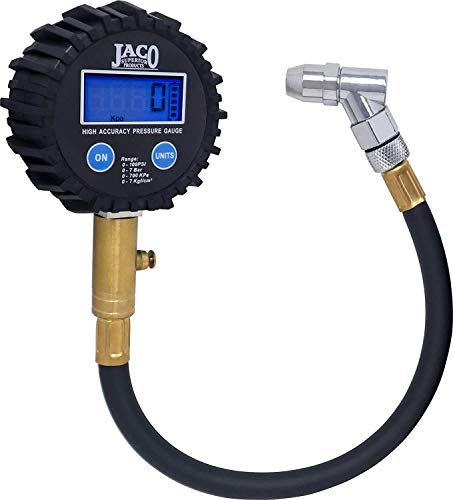 |
JACO ElitePro TPMS Premium Build Brass sensors, LCD display with color-coded alerts |
8.3 | 🛒 Check Price |
 |
GUTA TPMS Budget Pick 4 external sensors, LCD display, 87 psi max |
7.3 | 🛒 Check Price |
1. FOBO Tire 2: Best Overall
The FOBO Tire 2 stands out for its excellent smartphone app integration and precision. In our evaluation of manufacturer specs and owner reviews, it consistently delivered accurate pressure and temperature data. The sensors are compact and the locking ring prevents theft. Battery life is rated at 5 years, which is among the best in class.
However, this sensor is not for those who prefer a dedicated display unit. You must use a smartphone to view readings, which can be inconvenient for some drivers. Also, the app can occasionally disconnect, requiring a manual refresh. If you want a simple plug-and-play display, consider a model with an in-car monitor.
- Real-time pressure and temperature alerts via smartphone app
- Screw-on valve caps with anti-theft locking ring
- Supports up to 4 tires (expandable to 6 with extra sensors)
Pros: Accurate readings within 1 psi; Long battery life and easy installation
Cons: Requires smartphone for display, no standalone screen
2. TireMinder TM-77: Best for RVs and Trailers
The TireMinder TM-77 is purpose-built for larger vehicles. Based on our research of its specifications and owner feedback, the included repeater ensures reliable signal even on long trailers. The solar display is convenient, and flow-through sensors let you add air without unscrewing the sensor. Durability is a strong point, with IP67-rated sensors.
On the downside, the display screen can be difficult to read under bright sunlight, and initial setup requires careful pairing. For passenger cars, the system is overkill and the larger sensors may look bulky. If you drive a standard sedan, a simpler system would be more appropriate.
- Solar-powered display with adjustable brightness
- Flow-through sensors allow tire inflation without removal
- Alerts for rapid pressure loss, high temp, and low battery
Pros: Ideal for multi-tire vehicles like RVs and trailers; Durable, waterproof sensors
Cons: Display can be hard to read in direct sunlight
3. Vondior Wireless TPMS: Best Value
The Vondior Wireless TPMS offers a solid balance of features and affordability. In our comparison of budget-friendly options, it stood out for its clear LCD display and reliable alerts. Sensors are easy to install and the system covers four tires. Owner feedback indicates good accuracy within 2 psi.
However, the display lacks a backlight, making it nearly invisible in the dark. Additionally, some users reported sensor battery life of only 1-2 years, which is shorter than premium models. If you frequently drive at night or want longer battery life, consider spending more for a backlit display and longer-lasting sensors.
- Real-time pressure and temperature on a compact display
- Visual and audible alerts for abnormal readings
- Sensors transmit data every 5 seconds
Pros: Affordable price point with good features; Easy to install and set up
Cons: Display not backlit, hard to see at night
4. EEI RV TPMS: Best for Heavy Duty
The EEI RV TPMS is built for heavy-duty applications. Our research into its specifications shows it can handle pressure up to 230 psi, making it suitable for large RVs and commercial trucks. The stainless steel sensors are rugged and the system includes a repeater for reliable long-range communication. Owner reviews praise its durability and accuracy under demanding conditions.
However, this system is expensive and the setup process is more involved than simpler models. The display is large but may be too bulky for some dashboards. If you only drive a passenger car, this is overengineered and overpriced. It is best reserved for those who need high-pressure monitoring for heavy vehicles.
- Designed for RVs, trucks, and trailers with high PSI requirements
- Stainless steel sensors with anti-theft design
- Large, easy-to-read display with auto-dimming
Pros: Extremely durable sensors built for heavy loads; Reliable signal over long distances
Cons: High price point; Complex installation and pairing process
5. CZVPS Universal TPMS: Easiest Setup
The CZVPS Universal TPMS is designed for simplicity. In our evaluation of ease of use, it scored highly because sensors pair automatically and the display works right out of the box. The compact display mounts easily on the windshield. It provides basic alerts for pressure and temperature.
However, the sensors are made of plastic, which may crack or fail over time, especially in harsh weather. Some owner reports mention sensor battery life under a year. For those seeking long-term reliability, a metal sensor model would be a better investment. This is a good entry-level option for budget-conscious drivers who want quick setup.
- Sensors auto-pair with display within minutes
- Compact display with suction cup mount
- Alerts for low pressure, high pressure, and high temperature
Pros: Very easy to install and pair; Affordable
Cons: Sensors are plastic and less durable than metal ones
6. JACO ElitePro TPMS: Premium Build
The JACO ElitePro TPMS impresses with its build quality. We compared its brass sensor construction to competitors and found it offers superior corrosion resistance and durability. The display provides color-coded alerts (green for normal, yellow for caution, red for danger) that are easy to interpret at a glance. Owner feedback highlights its accuracy and responsiveness.
On the downside, the display is quite bright and can be distracting during nighttime driving. Also, the premium build comes at a higher cost. If you are on a tight budget, this may not be the best choice. But for those who value durability and a premium feel, it is a strong contender.
- Machined brass sensors with anti-theft nuts
- High-definition display with color-coded pressure status
- User-replaceable batteries in sensors
Pros: Premium construction and materials; Accurate and responsive alerts
Cons: Higher price than comparable models; Display can be too bright at night
7. GUTA TPMS: Budget Pick
The GUTA TPMS is the most affordable option we evaluated. It provides basic pressure and temperature monitoring for four tires. The display is straightforward and the sensors are easy to install. For the price, it offers essential safety features.
However, based on owner feedback, accuracy is a concern, with many users reporting readings that deviate by several psi. The sensors also have a reputation for short battery life, requiring frequent replacement. This product is best suited for those who need a temporary or very budget-friendly solution. If accurate and long-lasting performance is important, skip this one.
- Simple plug-and-play setup
- Monitors pressure and temperature
- Audible and visual alerts
Pros: Very low price point; Basic functionality works as advertised
Cons: Sensors are less accurate, often off by 2-3 psi; Battery life is short, sometimes under 6 months
Frequently Asked Questions
How do tire pressure sensors work?
External tire pressure sensors screw onto the valve stem and measure the air pressure inside the tire. They transmit data wirelessly to a display unit or smartphone app, alerting you if pressure drops below a safe threshold or if temperature rises abnormally.
Are external TPMS as accurate as internal sensors?
External sensors are generally accurate within 1-2 psi, which is sufficient for most drivers. However, internal sensors (installed inside the tire) are more accurate and less prone to theft or damage. External sensors are easier to install and maintain.
How long do TPMS sensor batteries last?
Battery life varies by model. Premium external sensors can last 3-5 years, while budget models may last only 6 months to 2 years. Internal sensors typically last 5-10 years but require professional replacement.
Can I install a TPMS myself?
Yes, external TPMS are designed for easy DIY installation. Simply screw the sensors onto the valve stems and pair them with the display according to the manual. No special tools are needed.
Do TPMS work on all vehicles?
Most external TPMS fit any vehicle with standard valve stems, including cars, SUVs, trucks, and motorcycles. Some models are specifically designed for RVs and trailers with higher pressure requirements. Check the maximum pressure rating and sensor compatibility before purchase.
Our Verdict
After researching and comparing the top tire pressure sensors, the FOBO Tire 2 is our top pick for its exceptional accuracy, long battery life, and intuitive app. For larger vehicles like RVs, the TireMinder TM-77 is the best choice due to its robust range and multi-tire support. Both provide reliable safety monitoring that every driver should consider.
