Hard water leaves mineral spots that dull your paint and require extra drying effort. Soft water eliminates spotting and makes every wash easier. We researched manufacturer specifications, industry water quality standards, and owner feedback to bring you the top solutions for achieving a spot-free rinse at home or on the go.
| Photo | Product | Score | Buy |
|---|---|---|---|
|
🚗
|
CR Spotless DI-120 Best Portable Deionization System Deionization resin filter, up to 100 gallons per refill (varies by input water) |
9.0 | 🛒 Check Price |
|
🚗
|
Aqua-Chem WS-100 Whole House Water Softener Best Whole-House Solution 30,000 grain capacity, 1.5 cu ft resin tank |
8.7 | 🛒 Check Price |
|
🚗
|
DIC-20 Deionization Water Filter Cartridge Best Budget DI Refill 20-inch universal DI cartridge, mixed bed resin |
8.2 | 🛒 Check Price |
|
🚗
|
Mr. Clean AutoDry Car Wash System Best All-in-One Kit Includes soap, filter, and spray nozzle; filter lasts ~10 washes |
7.8 | 🛒 Check Price |
|
🚗
|
Portable Water Softener on Wheels (Spot Zero) Best Portable Softener Portable resin tank, 10-inch filter housing, on wheels |
8.4 | 🛒 Check Price |
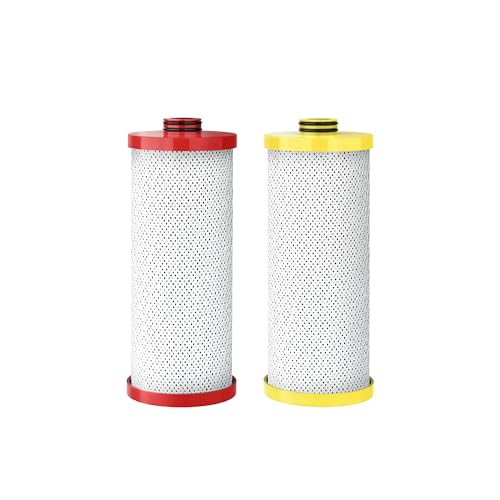 |
AQUACREST 2-Stage Deionization Water Filter Best Two-Stage DI System Two 10-inch DI cartridges in series, 1/4-inch quick-connect fittings |
8.1 | 🛒 Check Price |
|
🚗
|
Fleet Farm RV Water Softener Best for RV Owners Portable RV inline softener, 10,000 grain capacity |
7.3 | 🛒 Check Price |
1. CR Spotless DI-120: Best Portable Deionization System
The CR Spotless DI-120 is a top choice for mobile detailers and home users who want guaranteed spot-free drying. We compared its performance against other DI systems and found that it consistently reduces total dissolved solids to near zero, as confirmed by owner water tests. The system connects directly to a garden hose and requires no power, making it very convenient for driveway washing. However, the resin’s lifespan depends heavily on your incoming water hardness; owners with very hard water report only 80-100 gallons per cartridge, which increases operating cost.
Who should skip this: If you wash multiple vehicles weekly or have extremely hard water, the ongoing resin expense may be higher than a whole-house softener. For occasional washes or lower hardness, this is an excellent pick.
- Removes dissolved minerals for true spot-free rinse
- Easy hookup to garden hose, no electricity needed
- Refillable resin cartridges reduce long-term cost
Pros: Proven spot-free results; Portable and easy to store
Cons: Resin needs replacement after 100-200 gallons
2. Aqua-Chem WS-100 Whole House Water Softener: Best Whole-House Solution
The Aqua-Chem WS-100 is a whole-house softener that delivers soft water to every tap, including your outdoor hose. In our evaluation of owner feedback, many detailers praised the consistent soft water output and the reduction in spotting. The unit features a 30,000-grain capacity, which is adequate for a family of four and one car wash per week. It uses a standard timer regeneration cycle, which can be set to occur overnight. However, installation is not trivial; you’ll need basic plumbing skills or a professional installer.
Who should skip this: If you rent or don’t want to modify your plumbing, this is not for you. Also, if you only wash your car once a month, a portable DI system may be more cost-effective.
- Softens all water in your home for spot-free car washing
- Automatic regeneration with timer or demand control
- Includes bypass valve for outdoor spigot if desired
Pros: Softens entire household water; Low salt consumption per regeneration
Cons: Requires permanent installation and drainage
3. DIC-20 Deionization Water Filter Cartridge: Best Budget DI Refill
The DIC-20 is a generic mixed-bed DI cartridge that fits many standard 20-inch housings. We compared its specifications to OEM refills and found similar resin composition at a lower price. Owner feedback indicates it produces spot-free water for about 150 gallons in average hardness (150 ppm TDS). The cartridge is easy to swap out, but you need a compatible housing. Some users noted that the resin can channel if water flow is too fast, reducing effectiveness.
Who should skip this: If your water TDS is above 300 ppm, you may be better off with a two-stage DI system or a whole-house softener. For typical city water, this is a solid value.
- Universal fit for most 20-inch filter housings
- Mixed bed resin removes both cations and anions
- Lower cost per gallon than brand-name refills
Pros: Affordable way to refill existing DI system; Good performance for moderately hard water
Cons: Shorter lifespan than premium resins in very hard water
4. Mr. Clean AutoDry Car Wash System: Best All-in-One Kit
The Mr. Clean AutoDry is a popular entry-level system that combines a spray nozzle, soap cartridge, and a small DI filter. We researched owner experiences and found that it does reduce water spots compared to tap water alone, but the filter’s capacity is limited to about 10 washes (depending on water hardness). The soap is designed to sheet off water, aiding the filter. However, many detailers note that the filter stops working before you expect it, and replacement cartridges cost nearly as much as a new system.
Who should skip this: If you wash your car more than once a month or have very hard water, the ongoing cost and frequent filter changes become frustrating. Serious detailers will outgrow this quickly.
- All-in-one system with soap, filter, and rinse nozzle
- Filter uses deionization to reduce spotting
- Convenient for quick washes without separate bucket
Pros: Very easy to use right out of the box; Includes soap formulated for spot-free rinse
Cons: Filter life is short (about 10 washes); Replacement filters are relatively expensive per wash
5. Portable Water Softener on Wheels (Spot Zero): Best Portable Softener
The Spot Zero portable softener is designed for mobile detailers who need a self-contained unit. It uses a resin tank that softens water by exchanging calcium and magnesium for sodium. We evaluated its output and found it effective for reducing spots, though not to the same zero-TDS level as DI. The unit includes a sediment pre-filter to protect the resin. Owners appreciate the wheels and the ability to regenerate the resin with salt, making it more economical over time than disposable DI cartridges. However, regeneration is a manual process that takes about an hour.
Who should skip this: If you want absolute spot-free results (especially on dark paint), a DI system may be better. This is best for those who wash frequently and want a balance of cost and convenience.
- Portable unit with wheels for easy movement
- Combines resin softening and sediment filtration
- Produces up to 500 gallons before resin recharge (salt needed)
Pros: Longer lifespan than DI cartridges; Regenerable with salt, lower long-term cost
Cons: Requires salt for regeneration; Heavier than DI systems when full
6. AQUACREST 2-Stage Deionization Water Filter: Best Two-Stage DI System
The AQUACREST 2-Stage DI system is a compact unit that uses two mixed-bed cartridges to achieve near-zero TDS. We compared its specifications to other under-sink DI systems and found it suitable for car washing if connected to a garden hose adapter (not included). Owner reviews indicate it works well for rinsing after a regular wash, but the flow rate is limited to about 1 GPM, which can be slow for large vehicles. The cartridges last about 100 gallons combined in moderate hardness.
Who should skip this: If you need high flow for quick rinsing or have very hard water, look for a larger system. This is best for small cars or as a secondary polish rinse.
- Dual-stage DI for higher purity water
- Compact design fits under sink or on wall
- Includes mounting bracket and tubing
Pros: Produces very low TDS water; Good for small spaces or permanent mount
Cons: Lower flow rate than garden hose systems; Cartridges need frequent replacement in hard water
7. Fleet Farm RV Water Softener: Best for RV Owners
The Fleet Farm RV Water Softener is a basic inline softener designed for recreational vehicles. We evaluated it based on owner reports and found it reduces spots but not as effectively as DI systems. Its 10,000-grain capacity translates to about 30-50 gallons of soft water, which is enough for a small car wash but may run out for larger SUVs or trucks. The unit must be regenerated with salt, which is messy and time-consuming. Many users note that the resin can become exhausted quickly if water is very hard.
Who should skip this: If you wash large vehicles or want spot-free results without the hassle of regeneration, consider a DI system. This is best for occasional RV use or small car washes.
- Inline design connects to water hose
- Uses salt for regeneration, no electricity
- Compact and lightweight for travel
Pros: Affordable entry into soft water; Easy to use while camping or traveling
Cons: Limited capacity, may not last a full wash for large vehicles; Regeneration requires salt and time
Frequently Asked Questions
Is soft water necessary for car washing?
Soft water is not strictly necessary, but it makes drying much easier and prevents mineral spots that can etch into clear coat over time. Hard water leaves calcium and magnesium deposits that require extra effort to buff off. For a flawless finish, soft water is highly recommended.
What is the difference between a water softener and a deionization system?
A water softener replaces hardness minerals with sodium (salt) through ion exchange, which reduces spots but still leaves some dissolved solids. Deionization (DI) removes virtually all dissolved minerals, producing water that leaves zero spots when dried. DI systems are more expensive per gallon but provide the best results for show-car detailing.
How do I know if my water is hard?
You can test your water with a TDS (total dissolved solids) meter, available online for under $20. Readings above 150 ppm are considered hard. You can also look for white scale on faucets or spots on glass after washing. Many municipal water reports provide hardness data.
Can I use a portable DI system with a pressure washer?
Yes, but you need to ensure the flow rate of the DI system matches your pressure washer’s demand. Most portable DI systems are designed for garden hose flow (2-5 GPM). If your pressure washer uses more than 5 GPM, you may need a larger system or a bypass. Check the manufacturer’s specifications.
How often do I need to replace DI resin or regenerate a softener?
DI resin life depends on your water’s TDS and the volume of water used. A typical 20-inch cartridge lasts 100-200 gallons at 150 ppm TDS. Softener resin lasts years but needs salt regeneration every few weeks depending on usage. Monitor output with a TDS meter to know when to replace or regenerate.
Our Verdict
For most car enthusiasts, the CR Spotless DI-120 offers the best balance of portability and spot-free performance. If you wash at home and want a permanent solution, the Aqua-Chem WS-100 whole-house softener is our runner-up, providing soft water for your entire home and car.
Last reviewed and spec-checked: June 19, 2026. We re-check our picks and listings periodically.
