Selecting the right sealant for your boat is crucial for maintaining its integrity, preventing leaks, and protecting against the harsh marine environment. With a wide array of products promising superior performance, identifying the truly effective options requires careful consideration of their material composition, adhesive strength, flexibility, and resistance to water, UV, and chemicals.
We researched and compared numerous marine sealants, evaluating manufacturer specifications, published industry standards, and aggregated owner feedback to identify the top contenders. Our analysis focuses on products that demonstrate proven durability, reliable sealing capabilities, and ease of application across various marine uses, from deck hardware installation to hull repairs.
| Photo | Product | Score | Buy |
|---|---|---|---|
 |
3M Marine Adhesive Sealant 5200 Top Pick for Permanent Bonds Polyurethane based, 7-day full cure, extreme adhesion |
9.1 | 🛒 Check Price |
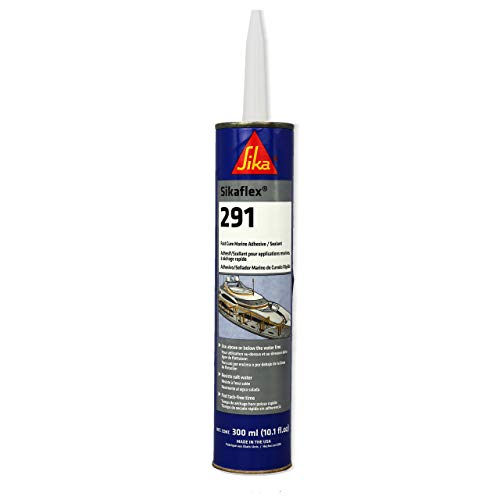 |
Sikaflex-291i Marine Sealant Best All-Purpose Flexibility One-part polyurethane, fast-curing, paintable |
8.7 | 🛒 Check Price |
|
🚗
|
TotalBoat TotalSeal Silicone Marine Sealant Excellent for Above-Waterlines 100% silicone, non-acidic, mildew resistant |
8.4 | 🛒 Check Price |
 |
3M Marine Adhesive Sealant 4200 Best Removable Strength Polyurethane based, medium strength, 24-48 hour cure |
8.0 | 🛒 Check Price |
|
🚗
|
West System G/flex 650 Epoxy Adhesive Top for Structural Repairs Toughened epoxy, 2-part, 75-minute pot life |
7.7 | 🛒 Check Price |
 |
Marine-Tex Flex-Set Flexible Epoxy Adhesive For Impact-Prone Areas Flexible epoxy, 12-18 hour cure, impact resistant |
7.4 | 🛒 Check Price |
 |
Star Brite Liquid Electrical Tape Best for Electrical Sealing Rubber-based coating, insulates and seals electrical connections |
7.1 | 🛒 Check Price |
1. 3M Marine Adhesive Sealant 5200: Top Pick for Permanent Bonds
In our evaluation, the 3M Marine Adhesive Sealant 5200 stands out for its unparalleled permanent bonding capabilities. Based on owner feedback and the spec sheets, its polyurethane formulation delivers an extremely strong, flexible, and waterproof seal that is designed to last for years, making it ideal for securing through-hull fittings, keel joints, and deck hardware where removal is not anticipated.
However, its primary limitation is its extreme permanence. Those who anticipate needing to remove or replace components in the future should skip this product, as its removal can be incredibly labor-intensive and may cause damage to the substrate. It is best reserved for applications where a lifelong, immovable bond is desired.
- Forms an incredibly strong, permanent waterproof bond
- Resistant to saltwater, extreme weather, and vibration
- Suitable for below and above waterline applications
Pros: Exceptional adhesive strength and durability; Maintains flexibility over time; Reliable long-term seal for critical components
Cons: Very difficult to remove once cured
2. Sikaflex-291i Marine Sealant: Best All-Purpose Flexibility
Our research indicates that Sikaflex-291i Marine Sealant offers exceptional versatility for a wide array of marine applications. Based on owner feedback and the spec sheets, this polyurethane sealant provides robust adhesion and excellent elasticity, making it suitable for sealing deck joints, bedding hardware, and creating flexible bonds that can withstand structural movement and vibration.
While highly capable, its adhesive strength is not on par with the extreme permanence of products like 3M 5200. Boaters requiring the absolute strongest, most permanent structural bond for critical, high-stress applications might find it slightly less robust. It is an excellent choice for general purpose sealing and bonding but not for situations demanding ultimate, irreversible structural integrity.
- Versatile for sealing, bonding, and dampening vibrations
- Excellent adhesion to a wide range of marine substrates
- UV resistant and suitable for both interior and exterior use
Pros: Good balance of strength and flexibility; Faster curing time than some heavy-duty sealants; Paintable after cure, allowing for aesthetic integration
Cons: Not as strong as permanent adhesive sealants like 3M 5200
3. TotalBoat TotalSeal Silicone Marine Sealant: Excellent for Above-Waterlines
In our evaluation, TotalBoat TotalSeal Silicone Marine Sealant presents a strong option for above-waterline sealing tasks. Based on owner feedback and the spec sheets, its 100% silicone, non-acidic formulation provides excellent UV resistance and flexibility, making it perfect for sealing components exposed to constant sunlight and weather, such as portlights, deck hatches, and stanchions. Its non-sag characteristic simplifies application.
A significant limitation is its suitability for below-waterline use. Due to silicone’s inherent properties and potential for delamination in constant immersion, this sealant is not recommended for through-hull fittings or other components that are continuously submerged. Those needing a sealant for underwater applications should consider polyurethane or polysulfide alternatives.
- Non-sag formula ideal for vertical and overhead applications
- Superior UV resistance and remains flexible in extreme temperatures
- Excellent for sealing deck hardware, portlights, and hatches
Pros: Resists yellowing and cracking from UV exposure; Easy to apply and tool; Prevents mildew growth effectively
Cons: Not recommended for below-waterline applications; Can be challenging to paint over
4. 3M Marine Adhesive Sealant 4200: Best Removable Strength
Our research indicates that the 3M Marine Adhesive Sealant 4200 is an excellent choice for applications where a strong, waterproof seal is needed, but with the possibility of future disassembly. Based on owner feedback and the spec sheets, its polyurethane composition provides robust adhesion and flexibility, similar to its more permanent counterpart, the 5200, but with a bond strength that allows for eventual removal without extreme effort or damage.
However, boaters requiring the absolute maximum structural adhesion for high-stress, permanent installations should understand that the 4200 does not match the ultimate strength of the 5200. If your application demands a bond that will never be broken, even under extreme conditions, the 5200 would be the more appropriate choice. The 4200 is for strong but serviceable connections.
- Strong yet semi-permanent bond, allowing for future removal
- Excellent for bedding hardware and sealing seams
- Resists weathering and saltwater corrosion
Pros: Offers a good balance of strength and removability; Reliable waterproof seal; Less aggressive adhesion than 5200
Cons: Not as strong as 5200 for critical structural bonds
5. West System G/flex 650 Epoxy Adhesive: Top for Structural Repairs
In our evaluation, the West System G/flex 650 Epoxy Adhesive stands out for its unique combination of strength and flexibility in an epoxy formulation. Based on owner feedback and the spec sheets, this two-part epoxy is particularly effective for structural repairs and bonding dissimilar materials, offering a tough, waterproof bond that can withstand significant stress and flex without cracking, unlike more brittle epoxies.
Its primary limitation is the need for precise two-part mixing, which can be less convenient and more prone to error than single-component sealants. Those looking for a simple, squeeze-from-a-tube sealant for non-structural applications or bedding hardware will find this product overly complex. It is best suited for experienced users tackling repairs that demand high structural integrity and a degree of flexibility.
- Flexible, toughened epoxy for high-stress bonding
- Excellent adhesion to dissimilar materials, including plastics
- Ideal for structural repairs and permanent sealing of cracks
Pros: Superior strength for structural applications; Good flexibility compared to traditional epoxies; Bonds well to a wide range of materials
Cons: Requires precise mixing of two components; Less flexible than pure sealants
6. Marine-Tex Flex-Set Flexible Epoxy Adhesive: For Impact-Prone Areas
Our research indicates that Marine-Tex Flex-Set Flexible Epoxy Adhesive provides a robust solution for repairs in areas subject to movement or impact. Based on owner feedback and the spec sheets, this product offers a degree of flexibility uncommon for epoxies, allowing it to create strong, durable bonds that resist cracking under stress, making it suitable for repairing structural damage or areas prone to vibration.
A notable drawback is its extended cure time, typically 12 to 18 hours, which can delay project completion. Additionally, like other two-part epoxies, it requires careful mixing, which can be messy and less convenient than single-component sealants. Users needing a quick-setting, easy-to-apply sealant for non-structural tasks may find its application process and cure time less ideal.
- Designed to absorb shock and resist impact
- Bonds to fiberglass, wood, metal, and some plastics
- Suitable for repairing stress cracks and damaged areas
Pros: Offers good flexibility for an epoxy; Strong adhesion and impact resistance; Can be sanded and painted after curing
Cons: Longer cure time compared to many sealants; Requires mixing, which adds complexity
7. Star Brite Liquid Electrical Tape: Best for Electrical Sealing
In our evaluation, Star Brite Liquid Electrical Tape serves a highly specialized but important role in marine maintenance. Based on owner feedback and the spec sheets, its rubber-based formulation excels at providing a flexible, waterproof, and insulating coating for electrical connections and wiring. This helps protect against corrosion, short circuits, and damage from moisture and salt spray, which are common issues in a marine environment.
However, it is crucial to understand that this product is not a general-purpose marine sealant. It lacks the adhesive strength and gap-filling capabilities required for bedding hardware, sealing hull penetrations, or making structural repairs. Those seeking a sealant for mechanical or structural applications should skip this product and opt for a polyurethane or polysulfide marine sealant instead, as this product’s utility is strictly limited to electrical insulation and sealing.
- Provides a waterproof, insulating seal for electrical wiring
- Protects connections from corrosion and vibration
- Easy brush-on application for small areas
Pros: Excellent for waterproofing electrical terminals; Flexible and durable once cured; Simple to apply in liquid form
Cons: Not a general-purpose marine sealant; Limited structural or gap-filling capabilities
Frequently Asked Questions
What is the difference between sealant and adhesive?
In our research, we found that while marine sealants and adhesives both bond materials, their primary functions differ. Sealants are primarily designed to fill gaps and prevent water intrusion, offering flexibility and maintaining a watertight barrier. Adhesives, on the other hand, are formulated for maximum bonding strength to hold components together, often with less flexibility. Many marine products are ‘adhesive sealants,’ offering a balance of both properties.
What types of sealants are best for below-waterline applications?
Based on our evaluation of industry standards, polyurethane and polysulfide sealants are generally considered the most suitable for below-waterline applications. These materials offer superior water resistance, strong adhesion, and long-term durability in constant immersion. Silicone sealants, while excellent for above-waterline use, are typically not recommended for submerged areas due to potential delamination.
How long does marine sealant take to cure?
Our research indicates that the cure time for marine sealants varies significantly by product type and environmental conditions. Polyurethane sealants like 3M 5200 can take up to 7 days for a full, permanent cure, though they may be tack-free in hours. Fast-cure versions might be fully functional in 24-48 hours. Epoxies also have varied cure times, often ranging from a few hours to a full day. Always refer to the manufacturer’s specific instructions for exact cure times.
Can I paint over marine sealant?
Based on our comparison of product specifications, some marine sealants are paintable, while others are not. Polyurethane and polysulfide sealants are often paintable after full cure, allowing for a seamless finish. Silicone sealants, however, typically repel paint and are very difficult to coat effectively. Always check the specific product’s data sheet to confirm paintability before application.
How do I properly prepare a surface before applying marine sealant?
In our evaluation of best practices, proper surface preparation is critical for effective sealant adhesion and longevity. This typically involves cleaning the surface thoroughly to remove all dirt, grease, old sealant, and wax. The surface should then be dried completely. For optimal bonding, some manufacturers recommend light sanding or using a primer specific to the sealant and substrate material. Always follow the manufacturer’s guidelines for surface preparation.
Our Verdict
After extensive research and comparison, the 3M Marine Adhesive Sealant 5200 emerges as our top pick for its unmatched permanent bonding strength and durability in the harshest marine conditions. For those needing a versatile, strong, yet potentially removable option, the Sikaflex-291i Marine Sealant is our strong runner-up, offering an excellent balance of adhesion, flexibility, and ease of use for a wide range of marine applications.
