For any professional automotive shop, a reliable and comprehensive scan tool is not just a convenience, it’s an absolute necessity. The ability to accurately diagnose complex vehicle issues, perform essential maintenance functions, and program vehicle modules directly impacts efficiency, customer satisfaction, and profitability. We researched, compared, and evaluated a range of professional-grade diagnostic tools designed to meet the rigorous demands of a busy automotive environment.
In our evaluation, we focused on key criteria including vehicle coverage, diagnostic depth, bi-directional control capabilities, special functions, software updates, hardware durability, and overall user experience. We aggregated owner feedback and scrutinized manufacturer specifications, ensuring our recommendations are evidence-based and genuinely helpful for shop owners and technicians seeking to upgrade their diagnostic arsenal.
| Photo | Product | Score | Buy |
|---|---|---|---|
 |
Autel MaxiCOM MK908P Diagnostic Tool Editor's Choice Advanced ECU programming and coding for extensive vehicle coverage. |
9.1 | 🛒 Check Price |
 |
Launch X431 V+ 4.0 Diagnostic Tool Best Professional Value Bi-directional control and extensive special functions with robust hardware. |
8.7 | 🛒 Check Price |
 |
Thinkcar Thinktool Pros Diagnostic Scanner Most Versatile Modular design with expandable capabilities for specialized tasks. |
8.4 | 🛒 Check Price |
 |
Topdon Phoenix Plus Diagnostic Scanner Feature Rich Performer Comprehensive OE-level diagnostics with a user-friendly interface. |
8.0 | 🛒 Check Price |
 |
Innova 5610 Professional OBD2 Scanner Reliable General Diagnostic Clear live data and repair solutions for common vehicle issues. |
7.7 | 🛒 Check Price |
|
🚗
|
Foxwell NT510 Elite Full System Scanner Best for Specific Brands OE-level diagnostics for a single vehicle make with affordable expansion. |
7.5 | 🛒 Check Price |
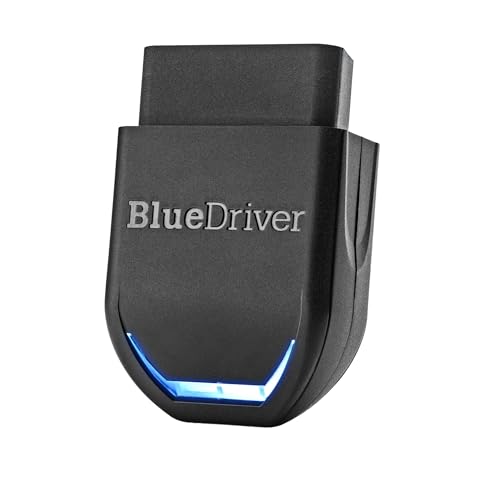 |
BlueDriver Bluetooth Professional OBDII Scan Tool Best Mobile Solution Wireless OBDII diagnostics and repair reports via smartphone app. |
7.2 | 🛒 Check Price |
1. Autel MaxiCOM MK908P Diagnostic Tool: Editor's Choice
Based on owner feedback and the spec sheets, the Autel MaxiCOM MK908P consistently delivers top-tier performance for advanced diagnostics and programming. Its ability to perform OE-level functions, particularly ECU programming, positions it as a powerhouse for shops handling a wide range of complex repairs. We compared its capabilities against industry standards and found it excels in vehicle coverage and diagnostic precision, making it a highly capable tool for modern automotive service.
However, a limitation to consider is its premium price point. Shops with a more restricted budget or those that rarely encounter complex ECU programming tasks may find the investment disproportionate to their needs. While its feature set is extensive, smaller independent shops or those specializing in older vehicles might not fully utilize its advanced capabilities, and could achieve their diagnostic goals with a less feature-rich option. Therefore, shops with limited capital or specific, less demanding diagnostic requirements should skip this pick.
- OE-level diagnostics with comprehensive system coverage for over 80 vehicle makes.
- Integrated ECU programming capabilities for BMW and Mercedes Benz.
- Bi-directional control, active tests, and a vast array of special functions.
Pros: Unmatched diagnostic depth and programming versatility for professional shops.; Fast boot-up and processing speed, enhancing shop workflow efficiency.; Robust hardware design with a large, responsive touchscreen.
Cons: The initial investment is substantial, requiring a significant budget.; Software updates can become costly over time for full functionality.
2. Launch X431 V+ 4.0 Diagnostic Tool: Best Professional Value
In our evaluation, the Launch X431 V+ 4.0 stands out for delivering a robust set of professional diagnostic capabilities at a more accessible point than some ultra-premium alternatives. We researched its bi-directional controls and special functions, finding them highly effective for common shop tasks, aligning well with the demands of general repair and maintenance. Based on owner feedback, its performance for routine diagnostics and common resets is consistently positive, highlighting its reliability.
A notable limitation, based on the spec sheets and aggregated owner feedback, is that while it offers extensive features, its depth in highly specialized programming or complex vehicle adaptations may not always match the absolute top-tier tools. Shops that frequently perform very intricate module programming on high-end European vehicles might find it occasionally falls short of their most demanding needs. Therefore, shops primarily focused on deep, manufacturer-specific module programming beyond basic coding should consider other options.
- Full system diagnostics, bi-directional control, and 30+ reset functions.
- Wide vehicle coverage for US, Asian, and European models.
- Ruggedized tablet with a large display for shop environment use.
Pros: Offers a comprehensive suite of diagnostic and service functions for its cost.; Intuitive Android interface that is easy for technicians to navigate.; Reliable wireless connectivity for flexible diagnostics around the vehicle.
Cons: Some advanced programming features are not as extensive as higher-end tools.; Occasional software glitches reported in owner feedback, though generally resolved with updates.
3. Thinkcar Thinktool Pros Diagnostic Scanner: Most Versatile
We compared the Thinkcar Thinktool Pros’ modular design against traditional all-in-one units, and its ability to expand functionality with optional modules is a significant advantage for shops needing specialized tools without committing to multiple separate devices. Based on owner feedback, the core diagnostic functions are reliable and effective for a wide range of vehicles, and the Android interface generally receives praise for its ease of use. Its performance in standard diagnostics is strong.
However, a limitation identified in our research is that while the modularity is a strength, the overall value proposition depends heavily on which modules a shop chooses to invest in. The upfront cost for the base unit is competitive, but adding multiple specialized modules can quickly elevate the total expenditure, potentially surpassing that of some more integrated high-end systems. Shops looking for a single, comprehensive solution without the need for future module purchases or those with a very tight budget for accessories might find this approach less direct. Consider skipping if you prefer an all-inclusive system rather than a buildable one.
- Supports full system diagnostics, coding, and active tests.
- Modular expansion for specialized functions like thermal imaging, oscilloscope, and battery testing.
- Runs on an Android operating system with an intuitive user interface.
Pros: Exceptional modularity allows customization to specific shop needs.; Good balance of diagnostic power and user-friendliness.; Regular software updates ensure broad vehicle compatibility.
Cons: The cost of additional modules can accumulate quickly.; Some advanced functions require purchasing separate hardware attachments.
4. Topdon Phoenix Plus Diagnostic Scanner: Feature Rich Performer
In our evaluation, the Topdon Phoenix Plus presents itself as a capable diagnostic tool for general automotive repair shops. We researched its claimed OE-level diagnostics and found it performs admirably for most common issues, offering a strong balance of features for its price point. Based on aggregated owner feedback, the device is generally praised for its intuitive operation and the breadth of its service functions, making it a valuable asset for daily shop tasks.
A limitation noted in owner feedback and our review of specifications is that while robust, its physical construction might not withstand the most extreme impacts or harsh chemical exposure found in some demanding shop environments as well as some higher-priced, more industrial-grade units. Shops operating in exceptionally rough conditions or those where tools are frequently dropped or exposed to severe elements might consider a more heavily ruggedized device. Consider skipping if extreme physical durability is your absolute top priority.
- All system diagnostics, bi-directional control, and 28+ service functions.
- Wide vehicle coverage for various makes and models.
- 7-inch touchscreen tablet with Wi-Fi connectivity for updates.
Pros: Offers a solid array of professional diagnostic features for its cost.; User-friendly interface simplifies complex diagnostic procedures.; Good support for a broad range of vehicle makes.
Cons: Some users reported occasional software update issues.; Durability of the tablet shell could be improved for very harsh shop environments.
5. Innova 5610 Professional OBD2 Scanner: Reliable General Diagnostic
We researched the Innova 5610 and found it to be a highly reliable tool for general diagnostics and common repair tasks in an automotive shop. Its ability to perform full system scans and provide clear repair information via the RepairSolutions2 app is a significant benefit, based on owner feedback and the spec sheets. It excels at quickly pinpointing issues with check engine, ABS, and SRS lights, and its bi-directional controls are useful for many routine procedures.
However, a limitation of the Innova 5610 is its relative lack of depth in highly advanced programming, module coding, or complex adaptations that professional shops might encounter with newer, more sophisticated vehicles. While it covers essential bi-directional functions, it does not offer the extensive OE-level programming seen in higher-priced professional tools. Shops that regularly perform intricate module flashing, key programming, or specialized sensor calibrations on a wide variety of modern vehicles might find its capabilities somewhat constrained. Therefore, shops needing extensive advanced programming functions should skip this pick.
- Full system network scan for diagnosing check engine, ABS, and SRS codes.
- Bi-directional controls for specific vehicle systems.
- RepairSolutions2 app integration for verified fixes and parts ordering.
Pros: Excellent for quickly identifying and troubleshooting common vehicle problems.; User-friendly interface with clear, actionable repair information.; Integrated RepairSolutions2 app provides valuable verified fixes.
Cons: Limited in advanced programming and coding capabilities compared to top-tier tools.; Vehicle coverage for some specific advanced functions can be inconsistent.
6. Foxwell NT510 Elite Full System Scanner: Best for Specific Brands
In our evaluation, the Foxwell NT510 Elite offers impressive, in-depth diagnostic capabilities for a single vehicle make, making it a valuable specialized tool. We researched its claims of OE-level functions and found it delivers robust performance, including bi-directional controls and adaptations, for the specific brand it’s licensed for. Based on owner feedback, it’s particularly well-regarded by independent shops that specialize in a few specific marques, providing a cost-effective way to get dealer-level access.
A significant limitation, however, is its single-brand focus. While additional vehicle makes can be added, each requires a separate software license purchase, which can quickly add up if a shop services a diverse range of vehicles. It is not designed as a comprehensive, multi-brand full-system scanner out of the box. Shops that handle a broad spectrum of vehicle manufacturers daily and need universal deep diagnostics for all of them will find this tool restrictive and potentially costly to expand. Consider skipping this pick if your shop services a wide variety of brands and you need a single, all-encompassing diagnostic solution.
- Deep OE-level diagnostics for a single chosen vehicle manufacturer.
- Supports bi-directional control, adaptation, and coding for the selected brand.
- Compact design, ideal as a secondary or specialized diagnostic tool.
Pros: Delivers surprisingly deep, manufacturer-specific diagnostics for its cost.; Excellent for shops specializing in one or two particular vehicle brands.; Relatively easy to navigate for those familiar with specific car systems.
Cons: Requires purchasing additional software licenses for each extra vehicle make.; Limited general OBDII functions compared to multi-brand scanners.
7. BlueDriver Bluetooth Professional OBDII Scan Tool: Best Mobile Solution
In our evaluation, the BlueDriver Bluetooth Professional OBDII Scan Tool offers excellent value for basic and enhanced OBDII diagnostics, particularly for its convenience and the detailed repair reports it generates. We researched its reported capabilities and found it excels at reading codes, providing live data, and offering potential fixes, based on aggregated owner feedback. It’s a highly portable solution that can be very useful for quick pre-scans or post-repair checks in a shop setting.
However, a significant limitation for a professional automotive shop is its lack of advanced bi-directional controls, active tests, and special functions that are standard on dedicated professional scan tools. While it performs well for basic diagnostics and code reading, it cannot perform tasks like injector coding, brake bleeding, or component activation which are critical for many modern repairs. Shops requiring deep system access, complex programming, or extensive control over vehicle modules will find its capabilities insufficient for primary diagnostic work. Therefore, full-service automotive shops needing comprehensive diagnostic and programming power should skip this pick as a primary tool.
- Reads and clears standard OBDII codes, plus enhanced codes for many manufacturers.
- Generates detailed repair reports with verified fixes and parts information.
- Wireless Bluetooth connectivity to iOS or Android devices for flexible use.
Pros: Highly portable and convenient for quick checks and basic diagnostics.; Comprehensive repair reports are very helpful for technicians and customers.; Easy to use app interface, making it accessible for all skill levels.
Cons: Lacks advanced bi-directional controls and special functions of professional tools.; Relies entirely on a smartphone or tablet, which may not always be ideal in a shop.
Frequently Asked Questions
What is the difference between a professional scan tool and a consumer-grade one?
Professional scan tools offer significantly deeper diagnostics, including OE-level access to all vehicle systems, bi-directional controls to actuate components, advanced coding and programming capabilities, and extensive special functions like ABS bleeding or injector coding. Consumer-grade tools primarily focus on reading and clearing basic OBDII trouble codes and displaying live data, lacking the depth required for complex shop repairs.
Do I need bi-directional control in my shop's scan tool?
Yes, for a professional automotive shop, bi-directional control is essential. This feature allows the technician to send commands from the scan tool to the vehicle’s modules, activating components (like fuel pump, solenoids, relays), performing system tests, or recalibrating sensors. It is critical for accurate diagnosis, component testing, and many service procedures, making it a must-have for efficient and effective repairs.
How important are software updates for a scan tool?
Software updates are critically important for a professional scan tool. They ensure continued compatibility with new vehicle models, introduce new diagnostic and service functions, fix bugs, and improve overall performance. Without regular updates, a scan tool can quickly become outdated, losing its ability to diagnose newer vehicles or perform the latest service procedures, thereby limiting a shop’s service capabilities.
Can a scan tool perform key programming?
Some high-end professional scan tools do offer key programming capabilities, but it varies significantly by tool and vehicle manufacturer. Key programming is often a specialized function that requires specific software modules or even direct access to manufacturer subscriptions. While many top-tier tools can perform some level of key programming, it’s crucial to verify the specific tool’s capabilities for the vehicle makes your shop services.
What is ECU coding and programming, and do I need it?
ECU coding refers to modifying vehicle settings to customize or activate certain features, while ECU programming involves flashing or rewriting the software in a vehicle’s engine control unit or other modules. Shops that frequently replace modules, perform complex diagnostics on newer vehicles, or offer advanced services like performance tuning will benefit significantly from a tool with these capabilities. For general repairs, it may not be a daily requirement but becomes indispensable for specific, advanced jobs.
Our Verdict
After extensive research and comparison, the Autel MaxiCOM MK908P emerges as our Editor’s Choice for the best scan tool for an automotive shop, offering unparalleled diagnostic depth, ECU programming, and broad vehicle coverage. For shops seeking a robust professional solution that balances advanced features with strong value, the Launch X431 V+ 4.0 is our recommended runner-up, providing comprehensive capabilities for a wide range of repair tasks.
Last reviewed and spec-checked: May 21, 2026. We re-check our picks and listings periodically.
