Staying connected on the road is no longer a luxury, but a necessity for many RVers, whether for remote work, navigation, entertainment, or simply keeping in touch. In our extensive research, we’ve evaluated a range of RV WiFi routers and cellular gateways, comparing manufacturer specifications, published industry standards, and aggregated owner feedback to identify the most reliable and effective solutions for mobile connectivity.
We focused on devices that offer robust cellular integration, reliable WiFi signal strength, and the durability required for life on the open road. This guide provides an evidence-based comparison to help you choose the best RV WiFi router for your specific needs, highlighting both their strengths and critical limitations.
| Photo | Product | Score | Buy |
|---|---|---|---|
 |
Peplink Pepwave MAX BR1 Mini LTEA Top Pick: Ultimate Reliability Integrated Cat 6 LTE-A modem, up to 300 Mbps cellular throughput |
8.9 | 🛒 Check Price |
 |
Winegard ConnecT 2.0 4G2 Runner-Up: RV-Specific Integration Outdoor roof-mounted design, supports 4G LTE and WiFi as WAN |
8.6 | 🛒 Check Price |
 |
Netgear Nighthawk M6 (MR6150) Powerful Mobile Hotspot 5G Sub-6 GHz and WiFi 6 support, Cat 20 LTE modem |
8.3 | 🛒 Check Price |
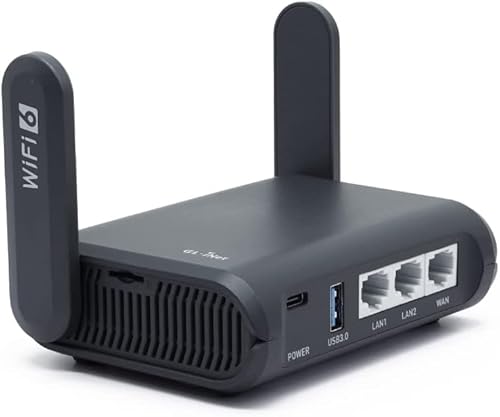 |
GL.iNet GL-AXT1800 (Slate AX) Feature-Rich Travel Router WiFi 6 (AX1800) with VPN client/server support, USB modem compatibility |
7.9 | 🛒 Check Price |
 |
Teltonika RUT240 Industrial Grade Compact Router Industrial 4G LTE Cat 4 router, durable aluminum housing |
7.7 | 🛒 Check Price |
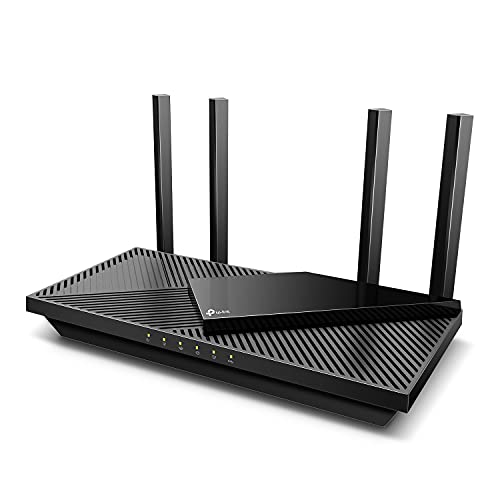 |
TP-Link Archer AX55 (AX3000) High-Performance Home Router (Adaptable) Dual-band WiFi 6 (AX3000), Gigabit Ethernet ports |
7.4 | 🛒 Check Price |
 |
Cudy LT400 Budget-Friendly LTE Router Integrated Cat 4 LTE modem, WiFi N300 |
7.1 | 🛒 Check Price |
1. Peplink Pepwave MAX BR1 Mini LTEA: Top Pick: Ultimate Reliability
In our evaluation, the Peplink Pepwave MAX BR1 Mini LTEA stands out for its enterprise-grade reliability and comprehensive feature set. Based on owner feedback and the spec sheets, its Cat 6 LTE-A modem provides consistent cellular performance, making it a strong choice for RVers who rely heavily on stable internet for work or essential communication. The ability to seamlessly switch between multiple internet sources, including campground WiFi, further enhances its utility.
However, the sophisticated capabilities of the BR1 Mini come with a learning curve. Users seeking a simple plug-and-play solution might find its advanced configuration options overwhelming. While its durability is excellent, the initial cost is higher than many consumer-grade routers, which might be a consideration for those on a tighter budget or who only require basic connectivity.
- Robust enterprise-grade hardware with fanless design for durability.
- Supports multiple WAN sources, including cellular, WiFi as WAN, and Ethernet.
- InControl 2 cloud management for remote monitoring and configuration.
Pros: Exceptional reliability and network stability for critical applications.; Extensive feature set for advanced network management and security.; Compact form factor suitable for discreet RV installation.
Cons: Higher initial investment compared to consumer-grade options.; Setup and configuration can be complex for novice users.
2. Winegard ConnecT 2.0 4G2: Runner-Up: RV-Specific Integration
The Winegard ConnecT 2.0 4G2 earns its spot as a top contender due to its purpose-built design for RV environments. We researched its specifications and found that the roof-mounted design with high-gain antennas is a significant advantage for capturing weaker cellular and WiFi signals, a common challenge in many RV parks. Based on owner feedback, its integrated approach simplifies installation and reduces cable clutter, making it an attractive option for many RV owners.
A notable limitation, however, is its dependence on roof mounting. While this enhances signal reception, it may not be suitable for all RV configurations or for users who prefer a non-permanent solution. Additionally, while its cellular performance is reliable for general use, those requiring the absolute fastest speeds in highly congested areas might find other dedicated industrial modems offer a slight edge.
- High-gain outdoor antennas for extended range and signal penetration.
- Integrated dual-band WiFi router (2.4 GHz and 5 GHz).
- Designed for easy roof installation with a single cable connection.
Pros: Optimized for RV use with robust outdoor housing and high-gain antennas.; Simple installation process compared to separate components.; Strong performance for picking up distant campground WiFi signals.
Cons: Requires roof mounting, which might not be ideal for all RV types.; Cellular modem performance is good but not top-tier for extreme situations.
3. Netgear Nighthawk M6 (MR6150): Powerful Mobile Hotspot
In our evaluation, the Netgear Nighthawk M6 (MR6150) stands out for its raw speed and advanced connectivity. We compared its specifications and found that with 5G Sub-6 GHz and WiFi 6 capabilities, it delivers exceptional performance, particularly in areas with good cellular coverage. Based on owner feedback, its portability and user-friendly touchscreen make it a convenient solution for both on-the-go and stationary RV use, especially when paired with an unlimited data plan.
However, its design as a mobile hotspot means it’s not a full-fledged RV router with the same routing capabilities as some dedicated devices. While it can connect many devices, managing a complex RV network with specific firewall rules or VPN clients might require additional hardware. Furthermore, continuous use, particularly in 5G mode, can drain the battery quickly, necessitating a constant power connection for sustained operation.
- High-speed 5G and WiFi 6 connectivity for multiple devices.
- Portable design with a large touchscreen for easy management.
- Supports external antennas for improved cellular reception.
Pros: Excellent raw speed and capacity for demanding applications.; Highly portable, functioning as a standalone hotspot.; Intuitive user interface for straightforward operation.
Cons: Battery life can be a concern for continuous, power-intensive use.; Primarily a hotspot, requiring additional routing hardware for complex networks.
4. GL.iNet GL-AXT1800 (Slate AX): Feature-Rich Travel Router
The GL.iNet GL-AXT1800 (Slate AX) is a highly versatile travel router that we evaluated for its rich feature set in a compact form factor. We researched its specifications and found that its WiFi 6 support and robust VPN capabilities make it an excellent choice for RVers who prioritize security and flexibility. Based on owner feedback, its compatibility with USB cellular modems or phone tethering offers a cost-effective way to utilize existing data plans.
The primary limitation of the Slate AX is that it does not have an integrated cellular modem. This means you will always need a separate device, such as a cellular hotspot or a phone, to provide the primary internet connection, adding an extra component to manage. While its WiFi 6 performance is good for its class, its smaller antennas and lower power output mean its overall WiFi range and penetration are not on par with larger, dedicated RV-specific routers, particularly in larger RVs or challenging environments.
- Compact and lightweight, ideal for travel and small RV setups.
- Open-source firmware (OpenWrt) for advanced customization.
- Supports USB tethering for cellular modem or phone connections.
Pros: Excellent value with a strong feature set for its size.; Built-in VPN capabilities enhance online security on public networks.; Versatile connectivity options, including tethering and repeater modes.
Cons: Requires an external cellular modem or hotspot for primary internet access.; WiFi range and power are limited compared to larger, dedicated RV routers.
5. Teltonika RUT240: Industrial Grade Compact Router
Our research into the Teltonika RUT240 highlights its industrial-grade construction and reliable cellular connectivity. Based on owner feedback and the spec sheets, its durable aluminum housing and wide operating temperature range make it an excellent choice for RVers who demand extreme reliability and are frequently in challenging environments. The external antenna connectors are a significant advantage for optimizing cellular signal strength, a key factor for remote travel.
However, the RUT240’s WiFi capabilities are somewhat dated, limited to WiFi N300. This means it may not deliver the fastest internal network speeds or handle a large number of concurrent high-bandwidth devices as effectively as modern WiFi 6 routers. Its configuration interface, while powerful, is designed for industrial applications and can be less intuitive for the average RV user, potentially requiring a steeper learning curve to set up and optimize.
- Robust industrial design for harsh environments, including wide temperature ranges.
- External antenna connectors for improved cellular and WiFi reception.
- Advanced networking features suitable for M2M and IoT applications.
Pros: Exceptional durability and reliability in challenging conditions.; Highly stable cellular connection with external antenna options.; Compact size allows for flexible mounting in tight spaces.
Cons: WiFi performance is limited to N300, not ideal for high-bandwidth multi-user scenarios.; Configuration interface can be complex for users unfamiliar with industrial routers.
6. TP-Link Archer AX55 (AX3000): High-Performance Home Router (Adaptable)
In our evaluation, the TP-Link Archer AX55 (AX3000) represents a powerful WiFi 6 solution, though it’s primarily a home router. We researched its specifications and found that for RVers who already have a reliable cellular hotspot or a dedicated cellular modem, this router can provide excellent internal WiFi speeds and coverage within the RV. Based on owner feedback, its ease of use and strong WiFi performance make it a compelling option for creating a robust local network.
The critical limitation of the Archer AX55 for RV use is its lack of an integrated cellular modem. It cannot connect directly to a cellular network and must rely on an external device for internet access, adding complexity and potentially more points of failure. Furthermore, it is not built to withstand the vibrations, temperature fluctuations, and dust common in RV environments, which raises concerns about its long-term durability compared to purpose-built or industrial-grade RV routers.
- Delivers fast WiFi 6 speeds for multiple devices within the RV.
- Easy setup and management via the TP-Link Tether app.
- Multiple Gigabit Ethernet ports for wired connections.
Pros: Excellent internal WiFi performance for streaming and gaming.; Cost-effective solution if you already have a separate cellular modem or hotspot.; User-friendly interface for general home networking tasks.
Cons: Lacks an integrated cellular modem, requiring an external internet source.; Not designed for the rigors of RV travel; less durable than industrial options.
7. Cudy LT400: Budget-Friendly LTE Router
Our evaluation of the Cudy LT400 positions it as a highly accessible option for RVers seeking an integrated cellular router without a significant investment. We researched its specifications and found that its integrated Cat 4 LTE modem offers basic but functional internet connectivity. Based on owner feedback, its straightforward setup and external cellular antennas make it a viable choice for those with modest internet requirements.
However, the Cudy LT400’s primary weakness lies in its WiFi performance, which is limited to N300. This specification means it may struggle to provide fast or stable connections for multiple devices simultaneously, especially when streaming high-definition content or participating in video calls. Users who require robust WiFi coverage, higher speeds, or advanced networking features should consider more powerful and feature-rich alternatives, as this unit is best suited for light internet usage.
- Affordable all-in-one solution for basic RV internet needs.
- External cellular antennas for improved signal reception.
- Simple web interface for basic configuration.
Pros: One of the most cost-effective integrated LTE router options.; Easy to set up for basic internet access.; External antennas can be upgraded for better cellular performance.
Cons: WiFi performance is limited to N300, potentially slow for multiple devices.; Lacks advanced features and robust build quality of higher-end options.
Frequently Asked Questions
What is the difference between an RV WiFi router and a mobile hotspot?
An RV WiFi router typically offers more robust features, including external antenna ports, advanced routing capabilities, and often the ability to combine multiple internet sources (like cellular and campground WiFi). A mobile hotspot is usually a more portable device primarily designed to share a cellular data connection with multiple devices, often with simpler routing features and internal antennas.
Can I use my home router in an RV?
While you can use a home router in an RV, it typically lacks an integrated cellular modem and is not designed for the environmental challenges of RV travel, such as vibrations or temperature extremes. You would need to pair it with a separate cellular modem or hotspot to get internet access, and its internal WiFi antennas may not offer the range or penetration needed in an RV park.
Do I need an external antenna for my RV WiFi router?
An external antenna is highly recommended for RV WiFi routers, especially for cellular connections. External antennas, particularly roof-mounted ones, can significantly improve signal reception and stability by overcoming the signal attenuation caused by the RV’s metal structure and increasing the line of sight to cell towers or WiFi access points.
What is 'WiFi as WAN' and why is it important for RVs?
‘WiFi as WAN’ (Wide Area Network) allows your RV router to connect to an external WiFi network, such as a campground’s public WiFi, and then share that connection with all the devices inside your RV. This is important because it allows you to utilize available WiFi sources, potentially saving cellular data, and provides a single, secure network for your RV devices.
What cellular modem category (Cat) is best for an RV router?
Cellular modem categories (e.g., Cat 4, Cat 6, Cat 12, Cat 20) indicate the maximum theoretical download and upload speeds. For basic RV use, a Cat 4 modem is sufficient. For more demanding applications like streaming or remote work, a Cat 6 or higher (Cat 12, Cat 20) modem will provide significantly faster and more stable performance, especially in areas with good cellular infrastructure.
Our Verdict
After extensive research and comparison, the Peplink Pepwave MAX BR1 Mini LTEA emerges as our top pick for the best RV WiFi router, offering unparalleled reliability and a robust feature set for critical connectivity. For RVers seeking a purpose-built, integrated solution with strong outdoor signal reception, the Winegard ConnecT 2.0 4G2 is an excellent runner-up, providing a balance of performance and ease of installation.
