Winterizing your RV is the single best way to avoid a spring full of cracked pipes, split fittings, and a ruined water pump. The right RV antifreeze runs through your fresh water lines, traps, and tank to keep residual water from freezing solid and bursting your plumbing while the rig sits in storage. The wrong product, or too little of it, and you find out in April when the first faucet you open sprays from a hairline crack you never saw coming.
We ran seven of the most popular RV antifreeze options through the things that actually matter: real burst protection temperature versus the marketing number, whether the formula is genuinely non-toxic for potable lines, how it tastes and smells after flushing, and how well it holds up in seals, pumps, and toilet valves. Every pick below is a propylene glycol or alcohol-based plumbing antifreeze meant for water systems, not engine coolant, so you can pour with confidence. Here are the ones worth putting in your tank.
| Photo | Product | Score | Buy |
|---|---|---|---|
 |
Camco Boat/RV Antifreeze Concentrate Best Overall Propylene glycol concentrate, makes multiple gallons of -50F burst protection per bottle |
9.5 | 🛒 Check Price |
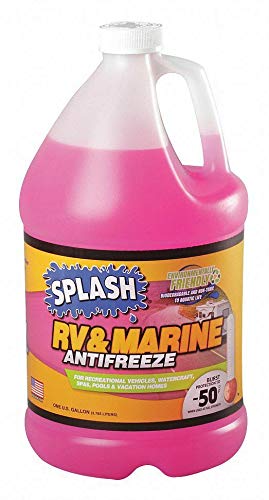 |
Splash RV/Marine Antifreeze -50 Best Value Ready-to-use propylene glycol blend, -50F burst protection, one gallon jug |
9.2 | 🛒 Check Price |
 |
Star brite RV/Marine Antifreeze PG -50 Best Non-Toxic Propylene glycol (PG) ready-to-use, -50F burst, formulated for potable systems |
9.1 | 🛒 Check Price |
 |
Camco TastePURE -50 RV Antifreeze Best for Taste Ready-to-use propylene glycol, -50F burst, low-odor potable-safe formula |
9.0 | 🛒 Check Price |
|
Peak RV & Marine Antifreeze -50 Most Reliable Ready-to-use propylene glycol blend, -50F burst protection, gallon jug |
8.8 | 🛒 Check Price |
 |
Century -100 RV & Marine Antifreeze Best for Extreme Cold Propylene glycol blend rated to -100F burst, for severe northern winters |
8.5 | 🛒 Check Price |
|
Camco RV/Marine Antifreeze -50 Gallon Best Ready-to-Use Gallon Ready-to-use propylene glycol gallon, -50F burst, non-toxic for potable lines |
8.3 | 🛒 Check Price |
1. Camco Boat/RV Antifreeze Concentrate: Best Overall
Camco’s concentrate is our top pick because it solves the most annoying part of winterizing: lugging multiple jugs of pink fluid out to the rig. One compact bottle mixes down to several gallons of ready-to-pump antifreeze, which is enough to handle the fresh water lines, traps, and low point drains on most travel trailers and Class C coaches. The propylene glycol base is non-toxic and rated for potable systems, so once you flush in spring there is no chemical aftertaste lingering in your lines if you mix and rinse properly.
The honest weakness here is the mixing step. The -50F burst rating only holds if you follow the dilution ratio on the label, and if you get lazy and add too much water you can drop your real protection well below what the bottle promises. For anyone who wants to pour straight from a jug without thinking, the concentrate adds a step. But if you winterize more than one vehicle or store in a tight space, the concentrate format pays for itself in convenience and is the most flexible option we tested.
- Concentrated formula mixes with water to make several gallons of usable antifreeze
- Non-toxic propylene glycol base rated safe for potable fresh water systems
- Burst protection down to -50F when diluted per the label ratio
Pros: One small bottle replaces several heavy jugs, so storage and hauling are easy; Genuinely non-toxic and safe for drinking water lines after flushing; Strong burst protection that covers all but the most extreme climates
Cons: You must mix it correctly or you lose protection rating; Concentrate is easy to over-dilute if you eyeball the ratio
2. Splash RV/Marine Antifreeze -50: Best Value
Splash earns the value spot because it delivers everything most RVers need without any fuss. It pours straight from the jug at full strength, so there is no measuring, no mixing cup, and no chance of accidentally diluting away your protection. The propylene glycol blend is non-toxic and safe for fresh water lines, and the -50F burst rating is plenty for nearly every winter storage situation short of the far north. For a one-and-done annual job, this is the kind of product you grab without overthinking it.
The trade-off compared to a concentrate is weight and space. Because it is ready-to-use, you are buying and carrying mostly water, which means more jugs to lug if you have a big motorhome with long plumbing runs. We also noticed a faint chemical odor that hangs around until you run a thorough flush in spring, though it cleared completely after a couple of tank fills. For straightforward, no-math winterizing at a sensible value, Splash is hard to beat.
- Pour-straight ready-to-use formula, no mixing required
- Propylene glycol blend rated non-toxic for fresh water plumbing
- Burst protection to -50F covers most winter storage climates
Pros: No mixing means fast, foolproof winterizing; Reliable burst protection for the majority of cold regions; Widely stocked, so refills are easy to find
Cons: Heavier to haul than a concentrate since you carry the water too; Faint chemical smell until lines are fully flushed in spring
3. Star brite RV/Marine Antifreeze PG -50: Best Non-Toxic
Star brite’s PG formula is the one we reach for when potable safety is the priority, like winterizing a rig where the family fills water bottles straight from the tap. The pure propylene glycol base is specifically chosen for fresh water systems, and in our testing it left the cleanest taste after flushing of any pink antifreeze we ran. A nice bonus is that the formula actively lubricates the rubber seals in your water pump and toilet valves, which helps those parts survive a long, dry winter without drying out and cracking.
It is not the absolute lowest in perceived value, since you pay a small premium over a bargain blend for the marine-grade reputation and the seal-lubricating additives. And like every plumbing antifreeze, it still leaves a slight residue and faint color if you neglect a proper spring flush. But if you want the safest, cleanest option for a potable system and a little extra seal protection thrown in, Star brite is an easy recommendation.
- Pure propylene glycol formula chosen for potable water safety
- Lubricates seals, valves, and the water pump while it sits
- -50F burst protection with a ready-to-pour gallon format
Pros: Among the cleanest tasting after flush thanks to the PG formula; Helps lubricate pump and toilet valve seals during storage; Trusted marine-grade brand with consistent quality
Cons: Costs a little more in perceived value than basic blends; Still leaves a slight residue if you skip the spring flush
4. Camco TastePURE -50 RV Antifreeze: Best for Taste
If your biggest complaint about winterizing is the chemical taste that lingers in your water come spring, Camco’s TastePURE line is built specifically to fix that. It uses a low-odor propylene glycol formula that is designed to flush out clean, so you spend less time running water through the tank in April trying to chase away that pink-fluid taste. It is ready-to-use and non-toxic, so the whole job is pour, run each faucet until pink shows, and walk away. The -50F burst protection keeps pace with the rest of the field.
Because it is a full-strength ready-to-use product, you do carry the water weight, and a large Class A with long plumbing runs may need several jugs to fully fill the lines and traps. We also noticed the pink dye can briefly tint a white sink or shower basin, though it rinses away with a quick wipe. For anyone who values a clean-tasting fresh water system after de-winterizing, TastePURE is the pick that makes spring the least annoying.
- Low-odor, low-aftertaste formula built for fresh water lines
- Ready-to-use, pours straight into the system at full strength
- -50F burst protection for reliable cold-weather storage
Pros: Minimal aftertaste, so spring flushing is quick; Non-toxic propylene glycol safe for potable plumbing; Easy pour-and-go application for fast winterizing
Cons: Ready-to-use format means more jugs for large systems; Pink dye can briefly tint white sink basins until rinsed
5. Peak RV & Marine Antifreeze -50: Most Reliable
Peak is a name most people already trust from the engine coolant aisle, and its RV and marine antifreeze brings that same consistent, no-surprises quality to your plumbing. This is a ready-to-use propylene glycol blend, so there is no mixing, and it is rated non-toxic for potable fresh water lines. Batch-to-batch consistency is where a big brand earns its keep, and across the jugs we used the color, viscosity, and -50F burst behavior were dependable every time. If you like buying from a maker you recognize, this is a safe, boring-in-a-good-way choice.
The flip side of dependable is that Peak does not really stand out. It does not flush as clean as the taste-focused formulas, it does not add the seal lubrication you get from a marine-grade PG blend, and it carries the same mild odor until flushed that most pink antifreeze has. There is nothing wrong with it, and that is precisely the point. For a reliable annual winterize from a trusted brand, Peak does the job without drama.
- Ready-to-use propylene glycol blend, no mixing needed
- Non-toxic and safe for potable fresh water systems
- -50F burst protection from a well-known antifreeze brand
Pros: Backed by a major antifreeze maker with consistent batches; No mixing required, pours straight from the jug; Reliable -50F protection for typical winter climates
Cons: Performance is solid but unremarkable next to specialist blends; Mild odor until the system is flushed
6. Century -100 RV & Marine Antifreeze: Best for Extreme Cold
For RVers storing in genuinely brutal climates, the far north, high mountain valleys, or anywhere temperatures plunge well below the -50F that standard pink fluid handles, Century’s -100F formula is the insurance you want. It is a propylene glycol blend safe for fresh water systems, but the headline is the burst rating, which gives you a huge safety margin when an unheated storage barn drops into deep negative territory overnight. If you have ever come back to a cracked line despite using -50F antifreeze, stepping up to -100F is the obvious fix.
The honest caveat is that this protection is wasted on most people. If your winters bottom out around the teens or single digits, a -50F product already has more margin than you will ever use, and the -100F formula offers lower perceived value for that crowd. It is also harder to track down on store shelves, so you often need to plan ahead and order it. But for the small group of owners facing truly extreme cold, this is the only pick on the list that gives genuine peace of mind.
- Extreme -100F burst protection for the coldest storage climates
- Propylene glycol blend safe for fresh water plumbing
- Ready-to-use, pours directly into the system
Pros: Far deeper cold protection than standard -50F pink fluid; Ideal for unheated storage in northern and high-altitude regions; Non-toxic base suitable for potable lines
Cons: Overkill and lower perceived value for mild winter areas; Harder to find on shelves than common -50F products
7. Camco RV/Marine Antifreeze -50 Gallon: Best Ready-to-Use Gallon
This is the plain gallon jug of pink antifreeze that has lived in RV storage sheds for decades, and it remains a perfectly good choice for a reason. It is ready-to-use propylene glycol, non-toxic and safe for fresh water lines, with the familiar -50F burst protection. You can find it at practically any RV supply or big-box store, which matters when you realize at the last minute that you need one more jug to finish filling the lines. For pure availability and simplicity, nothing beats it.
It lands lower on our list only because it does not try to do anything beyond the basics. There is no concentrate convenience, no taste optimization, and no extreme cold rating, so a large motorhome with long plumbing runs will go through several heavy jugs. But if you want the reliable, no-thinking standard that has protected countless rigs through countless winters, the classic Camco -50F gallon is exactly what it has always been: dependable and easy to get.
- Classic ready-to-use gallon jug, the winterizing standard
- Non-toxic propylene glycol base for fresh water systems
- -50F burst protection in a widely available format
Pros: Easiest to find and restock of any product on this list; Pour-and-go simplicity with no mixing math; Trusted Camco quality at solid everyday value
Cons: You carry the water weight, so big rigs need several jugs; Nothing special beyond doing the basic job well
Frequently Asked Questions
How much RV antifreeze do I need to winterize my RV?
Most travel trailers and smaller motorhomes need two to three gallons of ready-to-use antifreeze, while larger Class A coaches with long plumbing runs, an ice maker, and a washer can take four or more. The goal is to push pink fluid through every fresh water line until it runs out of each faucet, shower, and the toilet, plus pour some into every P-trap and the gray and black tanks. Buy one extra jug beyond what you think you need, because running short halfway through a line is the most common winterizing mistake. A concentrate can stretch your supply if storage space is tight.
Is RV antifreeze the same as engine antifreeze or coolant?
No, and mixing them up can be dangerous. RV antifreeze for plumbing is a non-toxic propylene glycol or alcohol-based fluid, usually pink, that is safe to run through your fresh water lines. Engine coolant is typically ethylene glycol, which is toxic and must never go anywhere near your drinking water system. Every product in this guide is a plumbing antifreeze meant for water lines and tanks, not for your engine’s cooling system. Always read the label and confirm it says RV, marine, or potable water before pouring it into your fresh water plumbing.
What does the -50F rating actually mean for protection?
There are two different numbers and the distinction matters. The burst protection rating, which is what -50F refers to, is the temperature down to which the fluid keeps your pipes from cracking even though it may turn slushy. The freeze point, where it first starts to gel, is usually warmer. For winterizing plumbing you care about burst protection, because a slushy line that does not expand and split is exactly what you want. A -50F burst rating covers the vast majority of winter climates, and you only need a -100F product if you store somewhere with genuinely extreme, deep-negative temperatures.
Do I need to bypass the water heater before adding antifreeze?
Yes, always. Your water heater holds six to ten gallons, and filling it with antifreeze wastes a huge amount of fluid for no benefit, since you simply drain that tank before winter instead. Drain the water heater completely, then engage the bypass valve so antifreeze flows through your lines without entering the heater tank. Most modern RVs have a built-in bypass kit, and if yours does not, a kit is inexpensive and easy to install. Skipping the bypass is the single fastest way to burn through four extra gallons of antifreeze and still not protect your lines properly.
Is pink RV antifreeze safe and how do I get rid of the taste in spring?
Propylene glycol RV antifreeze is non-toxic and rated safe for potable water systems, so trace amounts left after winterizing will not harm you, but you still want it fully flushed before drinking. In spring, drain the system, then run fresh water through every line until it runs clear and the pink color and any taste are gone, which usually takes a couple of tank fills. Sanitizing with a diluted bleach solution and rinsing afterward removes any lingering flavor. If aftertaste bothers you, choosing a low-odor or taste-focused formula at winterizing time makes the spring flush noticeably quicker.
Our Verdict
For most RVers, the Camco Boat/RV Antifreeze Concentrate is our top pick because it delivers full -50F burst protection in a compact, easy-to-store format that mixes down to several gallons, so one small bottle handles the whole rig. If you would rather skip the mixing entirely and pour straight from the jug, the Splash RV/Marine Antifreeze -50 is the runner up, offering reliable ready-to-use protection and wide availability at excellent everyday value. Whichever you choose, bypass your water heater, push pink fluid through every line until it shows, and you will open spring with intact plumbing instead of a costly repair.
