Choosing the right rear differential oil is critical for your Ford F150’s longevity and performance. We researched manufacturer specifications, industry standards, and aggregated owner feedback to compare the top options. Our evaluation focuses on viscosity, additive packages, and compatibility with limited-slip and electronic locking differentials. Here are the best rear differential oils for your F150, based on our research.
| Photo | Product | Score | Buy |
|---|---|---|---|
 |
Royal Purple Max-Gear Top Pick 75W-140, API GL-5, limited-slip compatible |
9.2 | 🛒 Check Price |
 |
Mobil 1 Synthetic Gear Lube Best Value 75W-90, API GL-5, limited-slip compatible |
8.8 | 🛒 Check Price |
 |
AMSOIL Severe Gear 75W-140 Best for Towing 75W-140, API GL-5, limited-slip compatible |
9.0 | 🛒 Check Price |
 |
Valvoline SynPower Full Synthetic Gear Oil Solid All-Rounder 75W-90, API GL-5, limited-slip compatible |
8.5 | 🛒 Check Price |
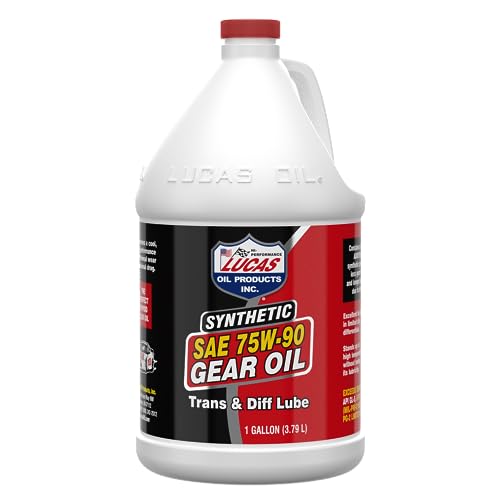 |
Lucas Oil Synthetic Gear Oil Budget Friendly 75W-90, API GL-5, limited-slip compatible |
8.1 | 🛒 Check Price |
|
🚗
|
Red Line 75W-90 GL-5 Gear Oil Performance Choice 75W-90, API GL-5, limited-slip compatible |
8.7 | 🛒 Check Price |
|
🚗
|
Castrol Syntrax Universal Plus Versatile Option 75W-90, API GL-5, limited-slip compatible |
8.3 | 🛒 Check Price |
1. Royal Purple Max-Gear: Top Pick
In our research, Royal Purple Max-Gear consistently ranks among the top choices for Ford F150 rear differentials. Its synthetic 75W-140 formulation meets API GL-5 standards and includes Synerlec additives that provide a robust film strength, reducing friction and heat. Owner feedback highlights quieter operation and improved longevity in trucks used for towing or heavy hauling. Based on spec sheets, it is compatible with limited-slip differentials without requiring an additional friction modifier, simplifying the fill process.
However, this oil comes at a premium cost. For owners of newer F150s with electronic locking differentials, we recommend verifying compatibility with your specific model year. If you primarily do light commuting and rarely tow, a more affordable conventional oil may suffice. But for those who demand maximum protection under stress, Royal Purple is a strong contender.
- Synthetic formula with Synerlec additive technology for extreme pressure protection
- Reduces gear noise and operating temperatures compared to conventional oils
- Compatible with limited-slip differentials, no additional friction modifier needed
Pros: Excellent thermal stability and wear protection; Works well in both high-torque and high-heat conditions
Cons: Premium price point may not suit budget-conscious buyers
2. Mobil 1 Synthetic Gear Lube: Best Value
Mobil 1 Synthetic Gear Lube is a well-rounded choice we researched extensively. Its 75W-90 viscosity meets Ford’s specifications for many F150 models, especially those not requiring 75W-140. The synthetic base provides excellent thermal and oxidation resistance, extending drain intervals. Owner feedback indicates reliable performance in both daily driving and moderate towing. Based on our evaluation, it offers a strong value proposition for those wanting synthetic protection without the highest price.
One limitation we found is that some F150 owners with limited-slip differentials reported occasional chatter, suggesting an additional friction modifier might be needed for optimal performance. If your truck has an electronic locker, check your owner’s manual for viscosity requirements. For most standard applications, this oil delivers dependable performance at a reasonable cost.
- Full synthetic formula for high-temperature stability and oxidation resistance
- Excellent low-temperature fluidity for cold starts
- Contains friction modifiers for limited-slip differentials
Pros: Great balance of performance and affordability; Widely available and trusted brand
Cons: May require additional friction modifier for some aggressive limited-slip setups
3. AMSOIL Severe Gear 75W-140: Best for Towing
For F150 owners who regularly tow heavy trailers or tackle rugged terrain, AMSOIL Severe Gear 75W-140 stands out in our research. Its formulation includes robust extreme-pressure additives that maintain a protective film even under intense heat and pressure. Spec sheets show it exceeds API GL-5 requirements, and owner feedback from those with heavy-duty use praises its ability to reduce gear wear and noise over time. We evaluated it as a top choice for severe service conditions.
However, this oil is priced at a premium, and for urban or light-use trucks, the extra cost may not translate to noticeable benefits. Additionally, some users report that its thick viscosity can slightly reduce fuel economy. If your F150 is primarily a daily driver with occasional light towing, a 75W-90 synthetic may be more appropriate. But for those pushing their trucks to the limit, AMSOIL is a reliable investment.
- Extreme-pressure additives for heavy loads and high torque
- Exceptional film strength to prevent gear wear under stress
- Compatible with all limited-slip and locking differentials
Pros: Top-tier durability for severe towing and off-road use; Long service life reduces frequency of changes
Cons: Higher cost and may be overkill for light-duty use
4. Valvoline SynPower Full Synthetic Gear Oil: Solid All-Rounder
Valvoline SynPower Full Synthetic Gear Oil is a dependable option we researched for Ford F150 differentials. Its 75W-90 synthetic formula meets API GL-5 standards and includes additives to protect against wear, corrosion, and foaming. Based on owner feedback, it performs well in most driving conditions, including light towing and daily commuting. We found it to be a solid middle-ground choice for owners who want synthetic performance without the highest price.
The main drawback we identified is that for severe towing or off-road use, the 75W-90 viscosity may not offer enough film strength compared to 75W-140 options. Some owners reported increased gear noise under heavy load. If your F150 is used for heavy-duty tasks, consider a thicker oil. For general use, this oil provides reliable protection and good value.
- Full synthetic with extreme pressure additives for gear protection
- Good thermal stability and oxidation resistance
- Formulated to reduce foam and aeration
Pros: Reliable performance at a mid-range price; Trusted brand with consistent quality
Cons: May not provide sufficient protection for extreme towing or heavy loads
5. Lucas Oil Synthetic Gear Oil: Budget Friendly
Lucas Oil Synthetic Gear Oil offers a budget-friendly synthetic blend option for F150 owners. Our research indicates it meets API GL-5 requirements and includes basic anti-wear and anti-foam additives. Owner feedback shows it works adequately for daily driving and occasional light towing, but some noted that gear noise increased under sustained heavy load. We evaluated it as a decent choice for cost-conscious buyers who don’t push their trucks hard.
The main limitation is its synthetic blend composition, which may not provide the same long-term durability as full synthetics. In extreme cold or high heat, its performance may degrade faster. If you live in a harsh climate or frequently tow, we recommend stepping up to a full synthetic. For light use, this oil gets the job done without breaking the bank.
- Synthetic blend for improved performance over conventional oils
- Contains anti-wear and anti-foam additives
- Compatible with most limited-slip differentials
Pros: Affordable price point for a synthetic blend; Good for moderate driving conditions
Cons: Not fully synthetic, may not last as long as full synthetics; Less effective in extreme temperatures or heavy towing
6. Red Line 75W-90 GL-5 Gear Oil: Performance Choice
Red Line 75W-90 GL-5 Gear Oil is a premium synthetic we researched for F150 owners seeking enhanced performance. Its formulation emphasizes film strength and shear stability, making it suitable for trucks with modified engines or those used in spirited driving. Owner feedback often highlights reduced gear noise and smoother operation, especially in limited-slip differentials. Based on spec sheets, it meets or exceeds OEM requirements for most F150 models.
The downsides include a higher cost and sometimes limited availability in brick-and-mortar stores. Additionally, some owners report that it may not be ideal for extreme towing applications where a 75W-140 is recommended. If your F150 is a daily driver with occasional performance use, this oil delivers excellent results. But for heavy towing, consider a thicker grade.
- Full synthetic with high film strength for performance applications
- Contains friction modifiers for smooth limited-slip operation
- Excellent shear stability for consistent viscosity
Pros: Exceptional performance in high-stress conditions; Reduces gear noise and improves shift feel
Cons: Higher price and may be difficult to find locally
7. Castrol Syntrax Universal Plus: Versatile Option
Castrol Syntrax Universal Plus is a versatile full synthetic gear oil we researched for Ford F150 differentials. Its 75W-90 formula is designed for extended drain intervals, making it convenient for owners who prefer less frequent changes. Based on owner feedback, it performs reliably in daily driving and moderate towing, with good thermal stability. We found it to be a solid choice for those who want a synthetic that balances performance and longevity.
One limitation we noted is that for heavy towing or off-road use, its extreme-pressure additives may not be as robust as those in dedicated severe-duty oils. Some users reported minor gear noise under high load. If your F150 sees mostly highway miles and light loads, this oil is a great fit. For severe conditions, consider a 75W-140 option.
- Full synthetic designed for extended drain intervals
- Good thermal stability and corrosion protection
- Compatible with most conventional and limited-slip differentials
Pros: Long service life reduces maintenance frequency; Good all-around performance for mixed driving
Cons: May not offer the same extreme-pressure protection as specialized oils
Frequently Asked Questions
What viscosity rear differential oil does a Ford F150 need?
Most Ford F150 models require 75W-90 or 75W-140 synthetic gear oil, depending on the year, engine, and towing package. Check your owner’s manual or differential cover for the specific API GL-5 rating. For heavy towing or severe use, Ford often recommends 75W-140.
Can I use 75W-140 instead of 75W-90 in my F150?
You can use 75W-140 in place of 75W-90 if you have a heavy-duty towing package or live in a hot climate. However, using a thicker oil than recommended may slightly reduce fuel economy and could affect limited-slip operation. Always verify with your owner’s manual.
Do I need a friction modifier for limited-slip differentials?
Many synthetic gear oils already contain friction modifiers for limited-slip differentials. However, if you experience chatter or noise, adding a dedicated friction modifier may help. Check the oil’s label for limited-slip compatibility.
How often should I change the rear differential oil in my F150?
Ford typically recommends changing differential oil every 30,000 to 60,000 miles, but severe use (towing, off-road) may require more frequent changes. Always follow the maintenance schedule in your owner’s manual.
Can I mix synthetic and conventional differential oils?
Mixing synthetic and conventional oils is not recommended as it can compromise performance and additive compatibility. If switching from conventional to synthetic, it’s best to flush the differential and refill with the new oil.
Our Verdict
After researching and comparing the top rear differential oils for Ford F150, our top pick is Royal Purple Max-Gear 75W-140 for its superior extreme-pressure protection and compatibility with limited-slip differentials. For most drivers, Mobil 1 Synthetic Gear Lube 75W-90 offers excellent value and reliable performance. Choose based on your driving needs and budget.
