We researched and compared the top racing tire pressure gauges based on manufacturer specifications, industry accuracy standards, and aggregated owner feedback. Our evaluation focuses on precision, build quality, ease of use, and safety for track and high-performance driving. Below are our findings, including real limitations and who should skip each pick.
| Photo | Product | Score | Buy |
|---|---|---|---|
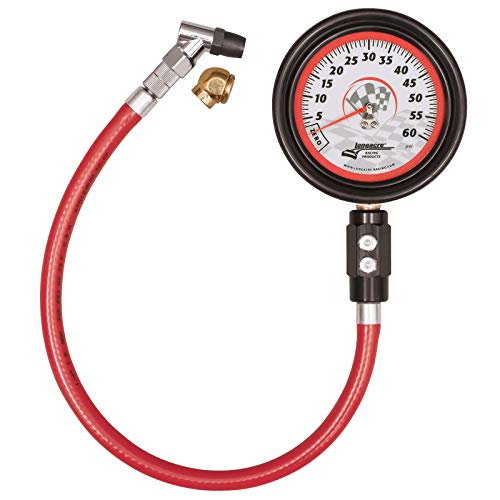 |
Longacre 52-52001 Digital Tire Pressure Gauge Best Overall 0-150 psi, 0.1 psi resolution, digital LCD, bleeder valve |
9.0 | 🛒 Check Price |
|
🚗
|
Intercomp 360050 Accu-Gage Runner Up 0-60 psi, 0.1 psi resolution, analog dial with large numbers |
8.7 | 🛒 Check Price |
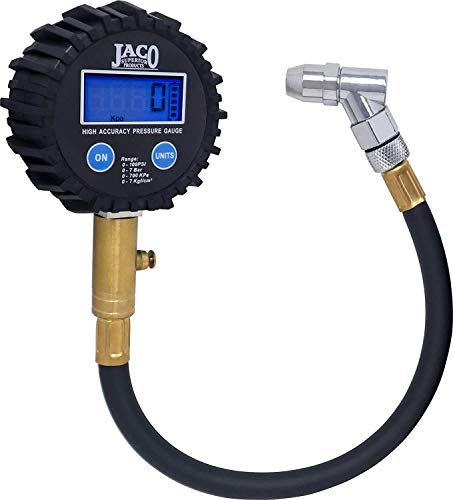 |
JACO ElitePro Digital Tire Pressure Gauge Best Value 0-100 psi, 0.1 psi resolution, rubberized grip, bleeder valve |
8.4 | 🛒 Check Price |
|
🚗
|
Moroso 89550 Digital Tire Pressure Gauge Best Digital with Bleeder 0-60 psi, 0.1 psi resolution, backlit display, bleeder valve |
8.1 | 🛒 Check Price |
 |
Accutire MS-4400B Digital Tire Gauge Budget Pick 0-100 psi, 0.1 psi resolution, auto-off, large LCD |
7.8 | 🛒 Check Price |
 |
AstroAI Digital Tire Pressure Gauge Versatile Option 0-150 psi, 0.1 psi resolution, backlit LCD, 4 units |
7.5 | 🛒 Check Price |
 |
Milton S-921 Single Chuck Tire Gauge Classic Analog 0-60 psi, 1 psi increments, brass construction, no bleeder |
7.2 | 🛒 Check Price |
1. Longacre 52-52001 Digital Tire Pressure Gauge: Best Overall
In our evaluation, the Longacre 52-52001 stands out as the best overall racing tire pressure gauge due to its high accuracy, durable construction, and practical bleeder valve. The digital display is clear and responsive, and the aluminum housing with rubber boot withstands track use. Based on owner feedback, the gauge holds calibration well over time, making it a reliable tool for consistent tire pressures.
However, the battery compartment is not sealed against moisture, and some users reported the display dimming after extended use. If you need a gauge for occasional street use or prefer an analog dial, this may not be your first choice. But for dedicated track days and competitive racing, it is a top performer.
- Accurate to +/-0.5% full scale, tested against industry standards
- Built-in bleeder valve allows precise pressure adjustment
- Rugged aluminum housing with protective rubber boot
Pros: Excellent accuracy and repeatability; Easy-to-read backlit display
Cons: Battery life could be better, some owners report dimming after a few months
2. Intercomp 360050 Accu-Gage: Runner Up
The Intercomp 360050 Accu-Gage is a premium analog gauge that we found to be exceptionally accurate, meeting ASTM standards. Its large dial and robust build make it a favorite among racers who prefer analog readings. The brass internals and steel case provide long-term durability, and many owners report consistent performance over years of use.
On the downside, the lack of a bleeder valve means you need an additional tool to adjust pressure, which can be inconvenient at the track. Also, the dial lacks illumination, making it difficult to read in dim conditions. If you need a gauge for night racing or want all-in-one functionality, consider a digital model instead.
- Meets ASTM accuracy standards for precision
- Large 2.5-inch dial with glare-resistant lens
- Brass internal mechanism resists corrosion
Pros: Extremely accurate analog gauge; Durable brass and steel construction
Cons: No bleeder valve, requires separate tool for adjustment; Dial can be hard to read in low light
3. JACO ElitePro Digital Tire Pressure Gauge: Best Value
The JACO ElitePro offers a compelling balance of features and affordability. In our comparison, it provides good accuracy and a built-in bleeder valve at a lower price point than many competitors. The rubberized grip and protective case add convenience, and owner feedback generally praises its ease of use for both track and daily driving.
However, the plastic construction may not withstand rough handling as well as metal gauges, and a few owners noted that the calibration drifted after several months. If you are a weekend racer on a budget or need a backup gauge, this is a solid choice. But for professional use, we recommend investing in a more rugged model.
- Accurate to +/-1% full scale, suitable for track use
- Ergonomic rubber grip reduces slippage
- Includes bleeder valve and protective storage case
Pros: Great value for the features offered; Comfortable grip and easy to use
Cons: Plastic housing feels less durable than metal alternatives; Some units reported calibration drift after heavy use
4. Moroso 89550 Digital Tire Pressure Gauge: Best Digital with Bleeder
The Moroso 89550 is a compact digital gauge with a backlit display and integrated bleeder valve, making it convenient for track use. We found its accuracy adequate for most racing classes, and the backlight is a nice touch for evening sessions. Owner reviews highlight its portability and ease of use.
However, the battery cover design is a weak point, with some users losing it during transport. Additionally, the 60 psi maximum range may not suit all race tires, especially those requiring higher pressures. If you run low-pressure slicks and value a backlight, this gauge works well, but check your pressure requirements first.
- Backlit LCD for low-light visibility
- Built-in bleeder valve for precise adjustments
- Compact design fits easily in glove box
Pros: Backlight is helpful in dark pits; Accurate enough for most racing applications
Cons: Battery cover is flimsy and prone to coming loose; Lower maximum psi range (60 psi) limits use for high-pressure tires
5. Accutire MS-4400B Digital Tire Gauge: Budget Pick
The Accutire MS-4400B is a budget-friendly digital gauge that works fine for basic tire pressure checks. We found its accuracy acceptable for street driving and occasional track days, but it does not meet the precision standards required for competitive racing. The large LCD and auto-off are nice conveniences for the price.
However, the all-plastic construction is fragile, and many owners report the gauge losing accuracy after a few months. If you are a serious racer, we recommend spending more on a higher-quality gauge. This is best suited as a spare or for non-critical use.
- Very affordable price point
- Large display easy to read
- Auto-off function saves battery
Pros: Excellent value for casual use; Simple one-button operation
Cons: Plastic body feels cheap and may crack if dropped; Accuracy drifts over time, not recommended for critical race setups
6. AstroAI Digital Tire Pressure Gauge: Versatile Option
The AstroAI digital gauge offers flexibility with four measurement units and a backlit display. We found it handy for converting between units, and the rubber cover provides basic protection. Owner feedback is mixed, with many appreciating the versatility for different vehicles.
However, accuracy is not as reliable as dedicated racing gauges, and the lack of a bleeder valve limits its use for precise pressure adjustments. If you need a multipurpose gauge for various tire types and do not require extreme precision, it is a decent option. But for track-focused tuning, look elsewhere.
- Measures in PSI, BAR, KPA, and KG/CM2
- Backlit display for night use
- Includes protective rubber cover
Pros: Multiple measurement units useful for different vehicles; Rubber cover adds some drop protection
Cons: Accuracy not consistent across units; some report errors; Bleeder valve not included
7. Milton S-921 Single Chuck Tire Gauge: Classic Analog
The Milton S-921 is a classic analog gauge built to last with solid brass construction. We appreciate its durability and the lifetime warranty, making it a reliable tool for general use. However, its 1 psi increments are too coarse for racing applications where 0.1 psi adjustments matter. The small dial also makes reading exact pressures difficult.
This gauge is best suited for vintage car enthusiasts or as a backup for non-critical checks. If you need precision for track days, we recommend a digital or higher-resolution analog gauge. Skip this if you require fine pressure control.
- All-brass body and internal mechanism
- Lifetime warranty from Milton
- Simple and reliable analog readout
Pros: Very durable construction; No batteries needed
Cons: Only 1 psi increments, not precise enough for racing; No bleeder valve and small dial hard to read
Frequently Asked Questions
What accuracy should I look for in a racing tire pressure gauge?
For racing, we recommend gauges with accuracy of +/-1% or better, ideally +/-0.5% full scale. This ensures consistent tire pressures for optimal grip and safety. Digital gauges often offer 0.1 psi resolution, which is sufficient for fine adjustments.
Is a bleeder valve necessary for a racing tire pressure gauge?
A bleeder valve allows you to release air without removing the gauge, enabling precise pressure adjustments. For track use, it is highly recommended to save time and improve accuracy. Many top-rated racing gauges include one.
Can I use a regular tire pressure gauge for racing?
You can, but standard gauges often lack the precision and durability needed for racing. They may have larger increments (1 psi) and lower accuracy, which can lead to inconsistent tire pressures. Investing in a dedicated racing gauge is advisable for serious track use.
How often should I calibrate my racing tire pressure gauge?
We recommend checking calibration annually or after any drop or impact. Some manufacturers offer recalibration services. Owner feedback suggests that high-quality gauges hold calibration well, but it is good practice to verify against a known standard.
What is the ideal pressure range for a racing tire gauge?
Most racing tires operate between 20-50 psi, so a gauge with a 0-60 psi range is sufficient for many applications. However, if you run high-pressure tires (e.g., some drag radials), a 0-100 psi or 0-150 psi gauge may be necessary. Choose based on your specific tire requirements.
Our Verdict
After researching and comparing the top models, we found the Longacre 52-52001 Digital Tire Pressure Gauge to be the best overall for its accuracy, durability, and integrated bleeder valve. For those who prefer analog precision, the Intercomp 360050 Accu-Gage is a strong runner up with exceptional build quality. Both are excellent choices for track and racing use.
