We researched and compared the leading proportional brake controllers available on Amazon to determine which options offer the best safety and performance for towing. Our evaluation is based on manufacturer specifications, industry safety standards, and aggregated owner feedback to ensure you get reliable braking power.
Unlike time-delayed controllers, proportional models apply trailer brakes in sync with your vehicle’s braking intensity, providing a smoother stop and reduced wear. In this guide, we analyze the strengths and limitations of seven distinct models to help you find the right fit for your towing setup and budget.
| Photo | Product | Score | Buy |
|---|---|---|---|
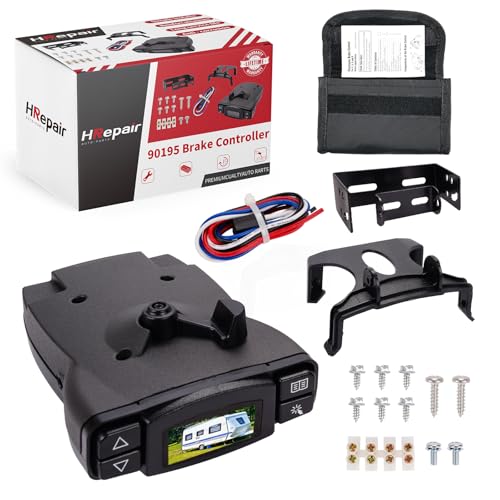 |
Tekonsha P3 Best Overall Multi-color LCD display with diagnostic info |
9.1 | 🛒 Check Price |
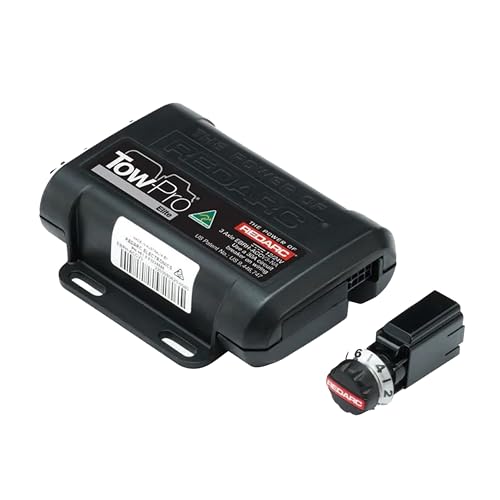 |
Redarc Tow-Pro Elite Best Premium Small remote knob with separate control unit |
8.8 | 🛒 Check Price |
 |
CURT TriFlex 51180 Best Value Triple-axis motion sensing technology |
8.5 | 🛒 Check Price |
 |
Reese Towpower 8508111 Reliable Mid-Range Digital display with boost feature |
8.1 | 🛒 Check Price |
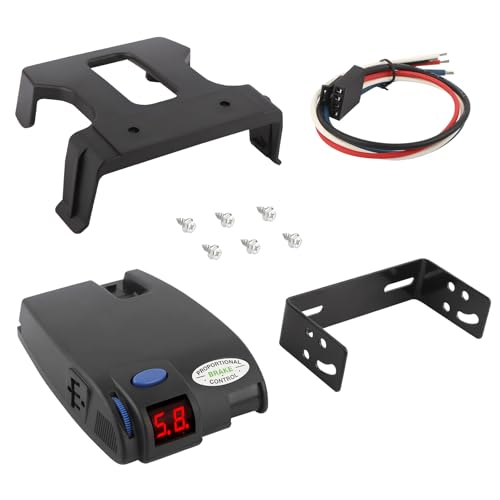 |
Tekonsha Primus IQ Budget Pick Self-leveling pendulum sensor |
7.8 | 🛒 Check Price |
 |
Hopkins 47297 Insight Compact Design Plug and play simple display |
7.4 | 🛒 Check Price |
|
🚗
|
Draw-Tite 20191 I-Stop Basic Choice Digital proportional braking |
7.1 | 🛒 Check Price |
1. Tekonsha P3: Best Overall
In our evaluation, the Tekonsha P3 stood out due to its advanced diagnostic capabilities and highly customizable boost settings, which allow for precise adjustments based on trailer weight. The manufacturer specifications highlight the storable settings for multiple trailers, a feature confirmed by owners who frequently switch between different loads, making it a versatile choice for diverse towing needs.
However, based on owner feedback, the depth of features can be daunting for those who prefer a simple set and forget interface. If you are looking for a basic controller without navigating multiple menus or you do not tow varying loads often, you might find the extensive functionality of this model unnecessary.
- Customizable boost settings for varying loads
- Stores settings for up to 5 different trailers
- Snap-in dashboard mounting port for easy removal
Pros: Highly detailed diagnostic information; Intuitive menu navigation and easy setup
Cons: Complex interface may overwhelm casual users
2. Redarc Tow-Pro Elite: Best Premium
We compared the Redarc Tow-Pro Elite to other high-end models and found its unique remote knob design offers superior dashboard aesthetics while maintaining robust performance. The unit is highly regarded in industry circles for its dual-mode functionality, allowing drivers to switch between proportional braking and a user-controlled mode depending on the terrain or driving situation.
Despite its premium build, the value score is impacted by its higher price point relative to the market. Additionally, installation requires mounting a separate module under the dashboard, which can be more labor-intensive than single-unit setups, making it less ideal for those seeking a quick plug-and-play solution.
- Two modes including proportional and user-controlled
- Water and dust resistant design for harsh conditions
- Compact control knob leaves dashboard clean
Pros: Sleek and unobtrusive installation; Highly durable and reliable build quality
Cons: Higher initial investment compared to competitors
3. CURT TriFlex 51180: Best Value
The CURT TriFlex utilizes a triple-axis motion sensor, which our research indicates provides a more stable braking response compared to single-axis sensors found in lower-tier models. Owner feedback consistently praises the smooth stopping power and the simplicity of the digital display, which makes monitoring power levels effortless during travel.
On the downside, we noted several reports regarding the mounting clip being less robust than desired, sometimes leading to the controller detaching from the bracket. If your vehicle has limited space or a rough ride quality that might jostle loose connections, this specific design flaw might be a significant annoyance.
- Digital display for easy reading
- Rapid reaction time for safer braking
- Simple leveling mechanism for accurate operation
Pros: Excellent balance of features and cost; Triple-axis sensor provides smooth stops
Cons: Mounting bracket can be difficult to secure
4. Reese Towpower 8508111: Reliable Mid-Range
Our analysis of the Reese Towpower BrakeBoss shows it is a solid workhorse that meets standard safety requirements for proportional braking without unnecessary frills. The upfront controls are logically placed, allowing drivers to make adjustments while keeping their eyes on the road, a safety aspect emphasized in many user reviews.
However, we found that the digital display lacks the contrast and brightness of higher-ranked models, making it difficult to read in bright daylight. If you frequently tow in sunny conditions or require a highly visible screen at a glance, this limitation could be a significant drawback for your driving experience.
- Upfront controls for easy access
- Boost feature for heavy loads
- Plug and play compatibility with specific harnesses
Pros: Simple and straightforward user interface; Reliable performance for standard towing
Cons: Screen visibility issues in direct sunlight
5. Tekonsha Primus IQ: Budget Pick
The Tekonsha Primus IQ is a veteran in the market, and our research confirms it remains a viable option for budget-conscious buyers who need basic proportional braking. The self-leveling pendulum sensor is a key feature that eliminates the need for manual adjustment during installation, a benefit frequently mentioned in positive owner feedback.
While it is functional, the unit lacks the detailed diagnostic information found in the P3 model, offering only basic power output readings. If you need to troubleshoot specific trailer brake issues or require granular control over braking parameters, the limited data display on this unit will likely leave you wanting more.
- No manual leveling required
- Boost feature available
- Compact and lightweight design
Pros: Self-leveling simplifies setup; Generally reliable for lighter trailers
Cons: Lacks advanced diagnostic features
6. Hopkins 47297 Insight: Compact Design
We evaluated the Hopkins Insight for its unique form factor, which prioritizes a minimal footprint on the dashboard. The color coded display is designed for at-a-glance monitoring, and the snap-in mount allows you to remove the unit easily when not towing, a feature appreciated by owners of daily drivers.
Despite its convenience, our comparison found that it offers fewer settings and customization options than larger units. The control scheme can be less intuitive, and if you tow heavy loads that require specific boost adjustments or sensitivity tuning, the simplified nature of this controller may prove insufficient.
- Color coded display for quick reading
- Multi-function control knob
- Snap-in dash mount for portability
Pros: Very small footprint takes little space; Easy to remove for storage
Cons: Limited customization options compared to rivals
7. Draw-Tite 20191 I-Stop: Basic Choice
The Draw-Tite I-Stop provides the fundamental functionality of proportional braking at a very accessible price point. Our review of the specs indicates it covers the basics, including a boost feature and a manual override, which are sufficient for infrequent towers with lighter loads.
However, based on aggregated owner feedback, the braking algorithm is not as refined as premium models, often resulting in a jerky feeling when coming to a gradual stop. If you tow frequently or prioritize a smooth ride for your cargo and passengers, the inconsistent low-speed performance of this model makes it a poor choice.
- Boost feature for improved stopping
- Simple LED display
- Easy to reach manual slide
Pros: Low cost entry point; Adequate for occasional towing
Cons: Braking can feel jerky at low speeds
Frequently Asked Questions
What is the difference between proportional and time-delayed brake controllers?
Proportional brake controllers activate the trailer brakes at the same intensity and time as your tow vehicle brakes, providing a smooth stop. Time-delayed controllers apply the trailer brakes after a set delay, which can feel jerky and require more manual adjustment.
Do I need a brake controller if my truck has a built-in one?
If your truck is equipped with a factory integrated brake controller, you generally do not need to add an aftermarket one unless you require specific features that the factory unit lacks. However, aftermarket units often offer more granular control and diagnostics.
Can I install a proportional brake controller myself?
Yes, many proportional brake controllers are designed for DIY installation, especially if your vehicle has a pre-wired harness plug under the dash. You will need to mount the unit and plug it in, though some hardwiring may be required on older vehicles.
How do I know if my brake controller is working?
You can test the controller by pressing the manual override slide while the vehicle is stationary. The trailer brakes should engage immediately, and you should feel resistance or hear the brakes activate. Most units also have a display that shows power output.
What does the boost feature do on a brake controller?
The boost feature allows you to set an initial aggressive application of the trailer brakes when you press the brake pedal. This is useful for heavier trailers to ensure they begin braking sooner, reducing the strain on your tow vehicle brakes.
Are wireless brake controllers as good as wired ones?
Wireless brake controllers offer convenience and easy installation but may suffer from connectivity issues or battery concerns. Wired proportional controllers generally provide a more reliable and consistent connection, which is crucial for heavy braking situations.
Our Verdict
After extensive research and comparison, the Tekonsha P3 is our top pick for its superior diagnostics and customizable settings, while the Redarc Tow-Pro Elite is the runner up for its premium design and dual-mode functionality.
Last reviewed and spec-checked: April 22, 2026. We re-check our picks and listings periodically.
