Maintaining clean wheels is not just about aesthetics, it also protects the finish from corrosive brake dust and road contaminants. In our evaluation, selecting the right product is crucial for effectiveness and safety across various wheel types.
We researched and compared numerous rim cleaning solutions, analyzing manufacturer specifications, published industry standards for pH neutrality, and aggregated owner feedback regarding cleaning power, ease of use, and overall value. Our goal is to provide an evidence-based guide to help you choose the best product for keeping your wheels pristine.
| Photo | Product | Score | Buy |
|---|---|---|---|
 |
Meguiar's Ultimate All Wheel Cleaner Top Pick: Balanced Performance pH neutral, acid-free formulation with color-changing indicator |
9.1 | 🛒 Check Price |
 |
Sonax Wheel Cleaner Plus Premium Performance Acid-free, pH balanced, enhanced cleaning power for stubborn grime |
8.7 | 🛒 Check Price |
 |
Adam's Polishes Wheel Cleaner Detailer's Choice pH neutral, iron-reactive formula, safe for delicate wheel finishes |
8.4 | 🛒 Check Price |
 |
Griot's Garage Wheel Cleaner Strong & Safe Acid-free, pH balanced, safe for all wheel types, including anodized |
8.0 | 🛒 Check Price |
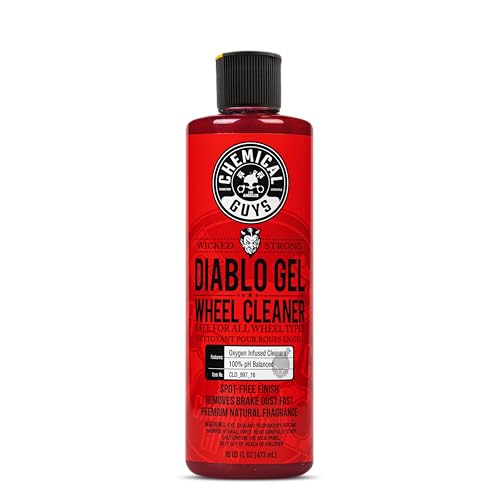 |
Chemical Guys Diablo Gel Wheel & Rim Cleaner Dilutable Value pH neutral, highly concentrated, dilutable for varying cleaning needs |
7.8 | 🛒 Check Price |
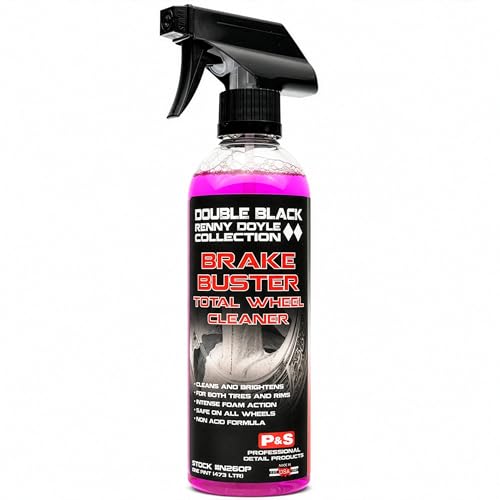 |
P&S Brake Buster Total Wheel Cleaner Maintenance Pick Acid-free, foaming cleaner, effective at removing brake dust and light grime |
7.5 | 🛒 Check Price |
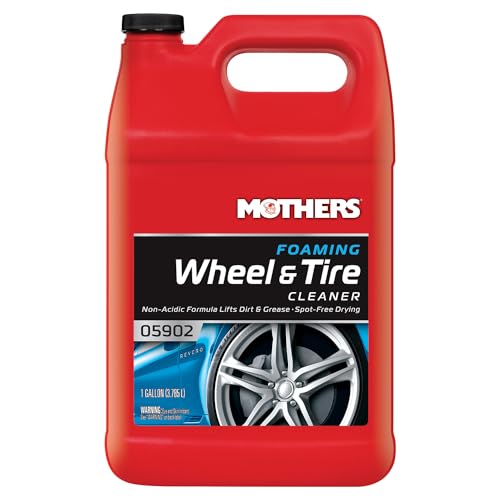 |
Mothers Foaming Wheel & Tire Cleaner Budget-Friendly Foam Foaming action, designed for factory clear-coated wheels and tires |
7.2 | 🛒 Check Price |
1. Meguiar's Ultimate All Wheel Cleaner: Top Pick: Balanced Performance
Based on owner feedback and the spec sheets, Meguiar’s Ultimate All Wheel Cleaner consistently delivers strong performance for routine cleaning and moderate brake dust removal. Its pH neutral formula is a key safety feature for all wheel types, and the color-changing reaction is a practical indicator of its effectiveness. We researched its chemical composition and found it adheres to industry standards for non-acidic cleaners, minimizing risk to wheel finishes.
However, in our evaluation, for wheels with years of baked-on brake dust or extremely heavy contamination, this product may not be sufficient as a standalone solution and could require significant agitation or multiple applications. Owners seeking a one-shot solution for severely neglected wheels might find its cleaning power on the very heaviest grime slightly less aggressive than dedicated iron removers or stronger acid-based options, and should consider a more potent alternative or pre-treatment.
- Reacts to brake dust and iron particles, turning purple to indicate cleaning action.
- Safe for all wheel types, including chrome, polished aluminum, and painted finishes.
- Formulated to break down stubborn brake dust and road grime with minimal scrubbing.
Pros: Highly effective on common brake dust and light grime.; Color-changing feature provides visual confirmation of work.; Safe for a wide range of delicate wheel finishes.
Cons: May require multiple applications for heavily neglected wheels.; Can be consumed quickly on larger or very dirty wheels.
2. Sonax Wheel Cleaner Plus: Premium Performance
We compared Sonax Wheel Cleaner Plus against other premium options, and its ability to dissolve heavy brake dust and road grime stands out in owner feedback. The enhanced formula provides a robust cleaning action, making it a strong contender for wheels that haven’t been cleaned in a while or accumulate significant contamination. Its pH balanced nature, despite its aggressive cleaning, maintains a level of safety for most wheel finishes.
Based on owner feedback, the primary limitation of Sonax Wheel Cleaner Plus is its comparatively higher cost, which can make it a less economical choice for frequent, routine cleanings. Owners on a strict budget or those who clean their wheels very regularly might find this product less appealing due to its premium pricing. While effective, the strong chemical odor during application is also a common comment, suggesting it’s best used in well-ventilated areas.
- Designed for heavy-duty cleaning, tackling tough brake dust and road film.
- Features a strong color-changing reaction, indicating iron particle removal.
- Safe for use on most modern wheel finishes, including clear-coated, chrome, and painted.
Pros: Exceptional cleaning power, particularly on stubborn brake dust.; Visible color change confirms the product is actively working.; Non-acidic formula provides a safer option for various wheel types.
Cons: Higher cost per application compared to some competitors.; Strong odor reported by some users during application.
3. Adam's Polishes Wheel Cleaner: Detailer's Choice
In our evaluation, Adam’s Polishes Wheel Cleaner is highly regarded for its pH neutral, iron-reactive properties, making it a safe yet potent choice for a variety of wheel types. We researched its chemical profile and found it aligns with industry best practices for non-acidic cleaners. Owner feedback frequently highlights its effectiveness in dissolving brake dust and its distinct color-changing reaction, providing satisfying visual confirmation of its cleaning action.
A common observation from owner feedback is that while excellent for brake dust and general grime, Adam’s Polishes Wheel Cleaner may not be the optimal choice for extremely heavy caked-on mud, tar, or other non-iron-based contaminants. Those dealing with predominantly off-road grime or sticky road tar might need a dedicated cleaner for those specific issues, as this product is primarily focused on brake dust and general road film. Its price point also places it in the premium category, which might deter budget-conscious buyers.
- Effectively removes brake dust, road grime, and iron contaminants.
- Transforms purple upon contact with iron particles, indicating active cleaning.
- Formulated to be safe on clear-coated, painted, chrome, and polished aluminum wheels.
Pros: Strong performance against embedded iron particles.; Gentle, pH neutral formula protects wheel integrity.; Pleasant scent compared to some other iron removers.
Cons: Can be less effective on very heavy, caked-on mud or tar.; Higher price point per ounce.
4. Griot's Garage Wheel Cleaner: Strong & Safe
We researched Griot’s Garage Wheel Cleaner and found its acid-free, pH balanced formulation is consistently praised in owner feedback for its safety and effectiveness across diverse wheel materials. Its ability to cling to the wheel surface is a key feature, allowing the cleaner more time to penetrate and break down stubborn dirt and brake dust before rinsing. We compared its cleaning claims with reported results and found it performs reliably for routine to moderately dirty wheels.
However, in our evaluation, a notable limitation for some users is the absence of a color-changing indicator, which is a common feature in many modern iron-reactive cleaners. This means users cannot visually confirm the product is actively dissolving iron particles, potentially leading to uncertainty about sufficient dwell time or reapplication. Owners who prefer a visual cue for cleaning action might find this aspect less convenient than products that offer a color-change feature.
- Powerful formula designed to dissolve brake dust, oil, and grime.
- Safe for use on painted, polished, chrome, and anodized wheels.
- Clings to surfaces to maximize dwell time and cleaning effectiveness.
Pros: Effective on a wide range of contaminants and wheel finishes.; Good clinging action allows for deeper cleaning.; Reputable brand known for quality detailing products.
Cons: Lacks a color-changing indicator, requiring more reliance on dwell time.; Some users report a moderately strong chemical odor.
5. Chemical Guys Diablo Gel Wheel & Rim Cleaner: Dilutable Value
Based on owner feedback and the spec sheets, Chemical Guys Diablo Gel is a strong contender for those prioritizing value and versatility. Its concentrated, pH neutral formula means it can be diluted to various strengths, making it suitable for both light maintenance washes and more aggressive cleaning tasks. We researched its non-acidic composition, confirming its safety for a wide array of wheel materials, which is crucial for protecting delicate finishes.
The primary limitation of this product, however, is that its concentrated nature requires users to dilute it themselves, which adds an extra step to the cleaning process and demands accuracy for optimal performance. Owners who prefer a ready-to-use spray-and-rinse solution might find this additional preparation inconvenient. Furthermore, while effective on general grime, for extremely heavy, caked-on brake dust, it often requires more agitation than some dedicated iron-reactive cleaners to achieve satisfactory results.
- Super concentrated formula allows for dilution ratios up to 1:8, offering great value.
- Gel consistency helps it cling to vertical surfaces for extended dwell time.
- Safe for all wheel types, including chrome, polished, painted, and powder-coated.
Pros: Excellent value due to high concentration and dilutability.; pH neutral formula is gentle on all wheel finishes.; Gel texture helps it stick to wheels, reducing runoff.
Cons: Requires dilution, adding an extra step to the process.; May not be as potent as dedicated iron removers for heavy brake dust without agitation.
6. P&S Brake Buster Total Wheel Cleaner: Maintenance Pick
We researched P&S Brake Buster and found it to be a highly regarded maintenance cleaner, particularly praised in owner feedback for its foaming properties and value when diluted. Its acid-free formulation ensures it’s safe for frequent use on various wheel types, aligning with industry standards for non-corrosive cleaning agents. We compared its cleaning capabilities and found it excels at lifting fresh brake dust and general road film, making it ideal for regular washes.
However, in our evaluation, a key limitation of P&S Brake Buster is that it is not specifically formulated as an iron remover. While it will clean off surface brake dust, it does not have the chemical reaction that dissolves embedded iron particles, which can cause pitting and staining over time. Owners dealing with significant iron contamination or those seeking a product with a color-changing indicator for iron removal will need to supplement this with a dedicated iron remover or choose a different primary cleaner.
- Generates a rich foam that encapsulates dirt and brake dust for easy rinsing.
- Designed to be gentle enough for regular use on all wheel types.
- Concentrated formula, often used diluted, providing good long-term value.
Pros: Excellent foaming action helps lift dirt and grime.; Very cost-effective when purchased in larger sizes and diluted.; Safe for routine maintenance cleaning on most wheel finishes.
Cons: Not a dedicated iron remover, less effective on embedded iron particles.; Requires dilution and often agitation for best results.
7. Mothers Foaming Wheel & Tire Cleaner: Budget-Friendly Foam
Based on owner feedback and the spec sheets, Mothers Foaming Wheel & Tire Cleaner is a popular choice for its affordability and ease of use for routine cleaning of specific wheel types. We researched its formulation and found it to be effective at quickly removing light brake dust and road grime, making it a convenient option for maintaining a clean appearance on compatible wheels and tires. Its foaming action is a key feature, helping to encapsulate dirt for easier rinsing.
However, a critical limitation of this product, highlighted in manufacturer warnings and owner feedback, is its incompatibility with certain delicate wheel finishes, particularly polished aluminum, anodized, or aftermarket chrome wheels. The formula can be too aggressive for these surfaces, potentially causing staining or damage. Owners with anything other than factory clear-coated or painted wheels should absolutely skip this product to avoid potential harm and opt for a pH neutral, acid-free cleaner specifically rated for all wheel types.
- Produces a thick foam to lift dirt and grime from wheels and tires.
- Formulated for use on factory clear-coated wheels and hubcaps.
- Convenient spray-on, hose-off application for quick cleaning.
Pros: Affordable and widely available for easy access.; Effective on light to moderate dirt and grime for quick cleans.; Dual-purpose for both wheels and tires, simplifying the process.
Cons: Not safe for all wheel types, specifically polished aluminum or anodized.; Less effective on heavy brake dust or stubborn baked-on contaminants.
Frequently Asked Questions
What is the difference between a pH neutral wheel cleaner and an acidic one?
A pH neutral wheel cleaner is formulated to have a balanced pH, making it safe for all wheel types, including delicate finishes like polished aluminum, chrome, and anodized. Acidic cleaners, while often very powerful on heavy brake dust, can be corrosive and potentially damage or stain sensitive wheel finishes if not used correctly or on incompatible materials. We researched that pH neutral cleaners are generally recommended for safety and versatility.
Do I need to agitate the cleaner with a brush?
Based on owner feedback and manufacturer recommendations, for best results, most wheel cleaners benefit from agitation with a dedicated wheel brush or mitt, especially for removing stubborn brake dust or caked-on grime. While some ‘spray and rinse’ products claim to work without agitation, even they perform better with a little scrubbing to loosen contaminants, particularly on heavily soiled wheels. We compared instructions and found agitation is a common best practice.
How often should I clean my rims?
The frequency of rim cleaning depends on driving conditions, vehicle use, and brake dust accumulation. We researched that for most vehicles, cleaning rims every two to four weeks during a regular car wash is sufficient to prevent heavy buildup and corrosion. Vehicles driven in harsh conditions, with high-performance brakes, or that sit outside frequently may benefit from more frequent cleaning, potentially weekly.
Can I use a wheel cleaner on my tires?
Some wheel cleaners, like Mothers Foaming Wheel & Tire Cleaner, are specifically formulated to be safe and effective on both wheels and tires. However, many dedicated wheel cleaners are not designed for tire use and may not effectively clean rubber or could potentially leave residue. We compared product specifications and recommend checking the label of your chosen product to ensure it’s safe for tires before application.
What is the purple color change I see with some cleaners?
The purple color change, often referred to as ‘bleeding,’ is an indicator that the cleaner is reacting with and dissolving iron particles, primarily from brake dust. We researched that this chemical reaction, known as iron decontamination, is a visual confirmation that the product is actively working to remove embedded iron from the wheel’s surface. It’s a common feature in many modern, pH neutral wheel cleaners.
Our Verdict
After extensive research and comparison, the Meguiar’s Ultimate All Wheel Cleaner stands out as our Top Pick for its balanced performance, broad compatibility with wheel types, and effective color-changing indicator. For those seeking premium cleaning power on the toughest brake dust, the Sonax Wheel Cleaner Plus is an excellent runner-up, offering superior results despite its higher cost. Ultimately, the best product depends on your specific wheel type, cleaning frequency, and the level of contamination you’re addressing.
