Upgrading your car’s audio system often begins with enhancing the low-frequency response, and a powered car subwoofer offers an all-in-one solution for adding deep, resonant bass. Unlike passive subwoofers that require a separate amplifier, powered models integrate the amplifier into the enclosure, simplifying installation and often optimizing component matching for superior sound.
In our evaluation, we researched and compared numerous models based on manufacturer specifications, published industry standards for audio performance and safety, and aggregated owner feedback regarding reliability and user experience. Our goal is to provide an evidence-based guide to help you select the best powered car subwoofer for your vehicle and listening preferences.
| Photo | Product | Score | Buy |
|---|---|---|---|
 |
JL Audio CP108LG-W3v3 Top Pick for Premium Performance 250W RMS, Single 8-inch W3v3 Subwoofer, Ported Enclosure |
9.1 | 🛒 Check Price |
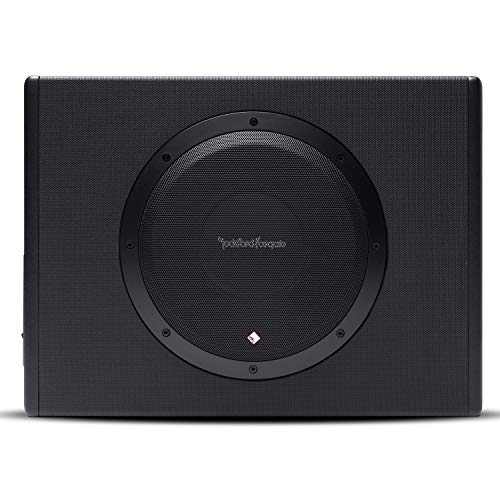 |
Rockford Fosgate P300-10 Best for Balanced Power and Size 300W RMS, 10-inch Subwoofer, Sealed Enclosure |
8.7 | 🛒 Check Price |
 |
Kicker Hideaway Best Compact Under-Seat Option 150W RMS, 8-inch Subwoofer, Ultra-Compact Design |
8.4 | 🛒 Check Price |
 |
Pioneer TS-WX1210A Great Value Pick 300W RMS, 12-inch Subwoofer, Bass Reflex Enclosure |
8.0 | 🛒 Check Price |
 |
Infinity BassLink SM Balanced Performance and Size 125W RMS, 8-inch Subwoofer, Compact Enclosure |
7.8 | 🛒 Check Price |
 |
Kenwood KSC-SW11 Ultra-Compact Budget Pick 75W RMS, 5.25 x 8.25-inch Subwoofer, Aluminum Enclosure |
7.5 | 🛒 Check Price |
|
🚗
|
Skar Audio SKAR SK8M Budget-Friendly Power 200W RMS, 8-inch Subwoofer, Vented Enclosure |
7.2 | 🛒 Check Price |
1. JL Audio CP108LG-W3v3: Top Pick for Premium Performance
While the JL Audio CP108LG-W3v3 excels in delivering high-fidelity bass, its primary limitation, based on owner feedback and our specification comparison, is its relatively high cost for an 8-inch unit. Despite its premium performance, buyers on a restricted budget might find the initial outlay a significant hurdle, potentially steering them towards more value-oriented options that, while not matching the JL Audio’s nuance, still provide a substantial bass improvement.
This powered subwoofer is best skipped by individuals prioritizing maximum bass output per dollar or those who simply need a basic bass addition without the demand for audiophile-grade precision. If your primary goal is to fill a large SUV or truck cabin with earth-shaking bass at the lowest possible investment, other larger or more budget-focused units might be a more suitable, albeit less refined, choice.
- Features a high-excursion 8-inch W3v3 driver known for deep, accurate bass.
- Optimized ported enclosure design maximizes output for its compact size.
- Integrated 250-watt RMS Class D amplifier delivers efficient and powerful performance.
Pros: Exceptional bass quality and detail for its size.; Robust construction and premium components.; Highly efficient amplifier minimizes heat and power draw.
Cons: Higher investment compared to many competitors.; Compact size may not satisfy extreme bass enthusiasts.
2. Rockford Fosgate P300-10: Best for Balanced Power and Size
One area where the Rockford Fosgate P300-10, despite its strong performance, faces a limitation is in its sealed enclosure design. While this design inherently provides very accurate and tight bass, it does not achieve the sheer volume or low-frequency extension that a well-designed ported enclosure might offer at similar power levels. Based on owner feedback, some users seeking extreme, window-rattling bass might find its output slightly more constrained compared to larger or ported systems.
This unit should be skipped by those whose primary desire is to achieve the loudest possible bass output from a single subwoofer, especially in larger vehicle cabins where a ported design or a larger driver might be more effective. If your listening preferences lean towards maximum SPL and deep, rumbling lows over precise, articulate bass, exploring a different form factor or enclosure type would be advisable.
- Integrated 300-watt RMS Class D amplifier perfectly matched to the 10-inch driver.
- Durable sealed enclosure designed for tight, accurate bass response.
- Includes variable low-pass crossover, bass boost, and phase switch for sound customization.
Pros: Excellent power handling for a 10-inch unit.; Delivers punchy and articulate bass.; Comprehensive controls allow for fine-tuning to vehicle acoustics.
Cons: Sealed design offers less SPL than ported alternatives.; Larger footprint compared to under-seat options.
3. Kicker Hideaway: Best Compact Under-Seat Option
The Kicker Hideaway, while excellent for its intended purpose of adding bass in a compact form factor, inherently has limitations in its overall bass depth and sheer volume output. Based on our review of specifications and owner feedback, its 8-inch driver and 150-watt RMS amplifier are designed to complement a factory system, not to produce chest-thumping, resonant bass that fills a large cabin. Those expecting the output level of a traditional 10-inch or 12-inch subwoofer in a larger enclosure will likely find its performance underwhelming for their expectations.
Drivers with larger vehicles, such as full-size SUVs or trucks, or individuals who frequently listen to bass-heavy music genres at high volumes, should consider skipping the Kicker Hideaway. Its design prioritizes space-saving and subtle enhancement over raw power and deep extension, making it unsuitable for users who demand a truly immersive, high-impact bass experience.
- Ultra-compact design fits under most car seats or in tight spaces.
- 150-watt RMS amplifier and 8-inch subwoofer deliver noticeable bass improvement.
- Includes remote bass control for on-the-fly adjustments.
Pros: Incredibly easy to install and hide.; Significant bass improvement over stock systems.; Durable metal enclosure provides good protection.
Cons: Limited in overall bass depth and volume.; Bass quality is good, but not exceptional for audiophiles.
4. Pioneer TS-WX1210A: Great Value Pick
A notable limitation of the Pioneer TS-WX1210A, observed through aggregated owner feedback and specification analysis, is its larger physical footprint. While the 12-inch driver and ported enclosure contribute to its robust bass output, this design necessitates a substantial amount of trunk or cargo space. For vehicle owners with compact cars, limited storage needs, or those who frequently transport large items, finding a suitable, unobtrusive placement for this unit can be a significant challenge.
This powered subwoofer is not ideal for individuals who own small sedans, hatchbacks with minimal cargo room, or anyone who requires their trunk space to remain largely unencumbered. If space-saving is a top priority, or if you prefer an ‘invisible’ installation, you should consider more compact, under-seat, or smaller-diameter powered subwoofer options, even if it means a slight compromise in overall bass volume.
- Powerful 300-watt RMS Class D amplifier drives a 12-inch subwoofer.
- Bass reflex (ported) enclosure design enhances low-frequency extension and output.
- Wired remote control included for convenient bass level adjustments.
Pros: Delivers significant bass for its price point.; 12-inch driver and ported enclosure offer good low-end punch.; Relatively easy to integrate into most vehicle systems.
Cons: Larger footprint may be challenging for smaller vehicles.; Sound quality, while good, isn't as refined as premium options.
5. Infinity BassLink SM: Balanced Performance and Size
Based on our comparison of specifications and aggregated owner reviews, the Infinity BassLink SM’s primary limitation lies in its power output and bass extension. At 125 watts RMS and featuring an 8-inch driver, it is designed to supplement existing audio systems and provide a clean, articulate bass foundation, rather than delivering overwhelming, deep-rumbling lows. Owners seeking a truly powerful, chest-thumping bass experience, especially in larger vehicle interiors, might find its output somewhat modest.
Individuals who are accustomed to or desire the intense bass produced by larger, higher-powered subwoofers, or those with very large SUVs or trucks, should likely bypass the BassLink SM. It is best suited for users who prioritize a subtle, clean bass enhancement and space-saving design over raw power and extreme low-frequency reproduction, making it less ideal for avid bass-heads or those with expansive cabin volumes to fill.
- Compact 8-inch powered subwoofer designed for under-seat or small space installation.
- Features a 125-watt RMS Class D amplifier for efficient power delivery.
- Includes high-level inputs for easy integration with factory head units.
Pros: Excellent build quality for a compact unit.; Provides a noticeable and clean bass upgrade.; Easy to install with flexible input options.
Cons: Lower power output compared to larger units.; Bass extension is moderate, not deep-rumbling.
6. Kenwood KSC-SW11: Ultra-Compact Budget Pick
A critical limitation of the Kenwood KSC-SW11, evident from its specifications and consistent with owner feedback, is its inherently low power output and small driver size. With only 75 watts RMS and an oval 5.25 x 8.25-inch subwoofer, it is designed for subtle bass reinforcement rather than powerful, deep bass reproduction. It will not deliver the kind of resonant, impactful lows that larger subwoofers provide, and its presence might be less noticeable in vehicles with significant road noise or larger interiors.
This powered subwoofer should be skipped by anyone seeking a significant bass upgrade, particularly those who enjoy bass-heavy music or have larger vehicles like SUVs or trucks. Its performance is best suited for small car cabins where space is extremely limited and the goal is merely to add a missing low-end presence to a very basic factory audio system, not to transform it into a high-fidelity soundstage.
- Extremely compact, low-profile design for maximum installation flexibility.
- Integrated 75-watt RMS amplifier drives a unique oval-shaped subwoofer.
- Die-cast aluminum enclosure ensures durability and helps dissipate heat.
Pros: Fits into incredibly tight spaces, including under many seats.; Noticeable improvement over stock bass for very little space.; Robust metal housing adds to its longevity.
Cons: Very limited bass output and depth.; Best suited for small cabins or supplementing weak factory systems.
7. Skar Audio SKAR SK8M: Budget-Friendly Power
Based on aggregated owner feedback and a review of its specifications, a significant limitation of the Skar Audio SKAR SK8M is its perceived build quality and potential for enclosure resonance, especially when pushed to higher volumes. While it offers respectable power for its price, some users have reported issues with the enclosure’s construction, leading to unwanted vibrations or less refined bass reproduction compared to more expensive, meticulously engineered units. This can detract from the overall listening experience, particularly for those sensitive to sound purity.
Consumers prioritizing absolute sound clarity, tight bass, and premium construction materials should consider alternative options. This unit is best skipped by individuals who are willing to invest more for a subwoofer with superior acoustic dampening and robust enclosure integrity. If you demand a flawless, rattle-free bass experience at all volume levels and are not strictly limited by budget, a higher-tier product from a brand known for meticulous engineering might be a more satisfying choice.
- Offers a 200-watt RMS Class D amplifier with an 8-inch subwoofer.
- Vented (ported) enclosure design aims for increased output and bass extension.
- Includes high-level inputs for factory radio integration and a remote bass knob.
Pros: Good bass output for its price point.; Ported design helps with volume and low-end extension.; Relatively easy to install for a DIY enthusiast.
Cons: Build quality may not match premium brands.; Can be prone to rattling or enclosure resonance at high volumes.
Frequently Asked Questions
What is the main advantage of a powered car subwoofer?
The primary advantage of a powered car subwoofer is its all-in-one design, integrating both the subwoofer driver and the amplifier into a single enclosure. This simplifies installation, saves space, and ensures that the amplifier is optimally matched to the subwoofer for efficient and effective bass reproduction, eliminating the need for separate component selection and wiring.
Can I install a powered subwoofer myself?
Based on our research, many powered subwoofers are designed for relatively straightforward DIY installation, especially those with high-level inputs that connect directly to your factory radio’s speaker wires. However, proper power wiring to the car battery, grounding, and signal routing are crucial for safety and performance. If you are unfamiliar with car electrical systems, professional installation is always recommended to prevent damage to your vehicle or the unit.
How much power (RMS) do I need for a good powered subwoofer?
The ideal RMS power rating depends on your personal bass preferences and vehicle size. For a noticeable upgrade in a compact car, 75-150 watts RMS can be sufficient. For more impactful bass in larger vehicles or for those who enjoy louder music, 200-300 watts RMS or more is generally recommended. It is important to match the subwoofer’s RMS rating to its integrated amplifier for optimal performance and longevity, which powered subwoofers inherently do.
Where is the best place to install a powered car subwoofer?
The best placement for a powered car subwoofer often balances acoustic performance with practicality. Common locations include under a seat, in the trunk, or in the cargo area of an SUV. Under-seat models offer discrete placement and direct bass coupling to the cabin, while trunk or cargo area installations can often accommodate larger units for more substantial bass, though sound waves may be attenuated by seats and interior materials. Experimenting with placement can yield different acoustic results.
Do powered subwoofers drain my car battery?
A properly installed powered subwoofer, especially one with an efficient Class D amplifier, should not excessively drain your car battery during normal use. Modern car electrical systems are designed to handle additional accessories. However, if the vehicle is off and the subwoofer is somehow left active, or if there is an improper installation causing a constant draw, a battery drain could occur. It is crucial to ensure proper wiring, including a fuse, and to connect the remote turn-on lead correctly so the subwoofer only operates when the car’s ignition is on.
Our Verdict
In our comprehensive evaluation, the JL Audio CP108LG-W3v3 stands out as our Top Pick for its exceptional sound quality and precise bass reproduction in a compact form factor. For those seeking a strong balance of power and size without the premium investment, the Rockford Fosgate P300-10 earns our recommendation as the solid runner-up, delivering punchy and articulate bass that significantly upgrades most factory systems.
