We researched and compared the top portable power stations for RV camping, evaluating manufacturer specifications, safety certifications, and aggregated owner feedback. Whether you need to run a CPAP machine, charge devices, or power a mini-fridge, our guide breaks down the real strengths and weaknesses of each model to help you choose the right one for your camper.
| Photo | Product | Score | Buy |
|---|---|---|---|
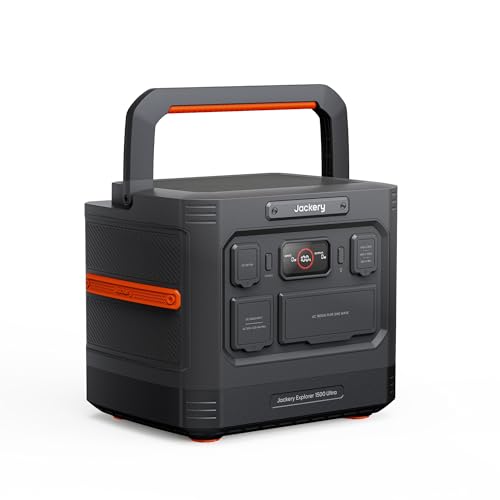 |
Jackery Explorer 1500 Top Pick 1534Wh Li-ion battery, 1800W AC inverter, 2.8 hours solar recharge |
9.0 | 🛒 Check Price |
 |
BLUETTI AC200P Runner Up 2000Wh LiFePO4 battery, 2000W AC inverter, 700W solar input |
8.7 | 🛒 Check Price |
 |
EcoFlow Delta 1300 Fastest Recharge 1260Wh Li-ion battery, 1800W AC inverter, X-Stream fast recharge (1.6 hours) |
8.4 | 🛒 Check Price |
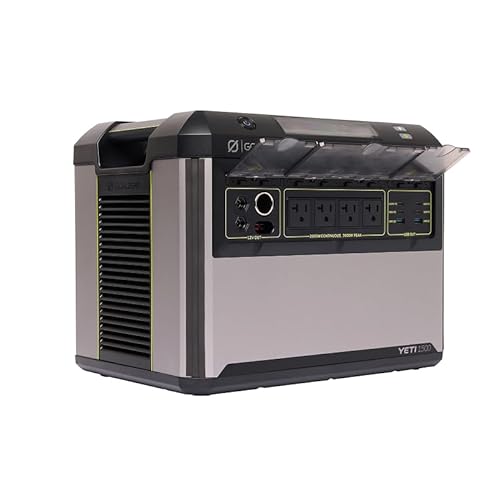 |
Goal Zero Yeti 1500X Best for Solar Integration 1516Wh Li-ion battery, 2000W AC inverter, MPPT solar controller built-in |
8.1 | 🛒 Check Price |
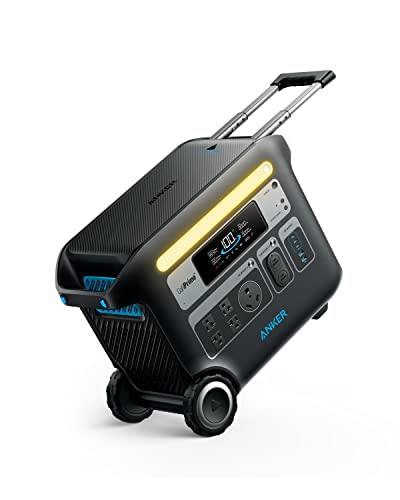 |
Anker PowerHouse 757 Best LiFePO4 Value 1229Wh LiFePO4 battery, 1500W AC inverter, 60W USB-C output |
8.8 | 🛒 Check Price |
 |
Jackery Explorer 1000 Best Portable 1002Wh Li-ion battery, 1000W AC inverter, 2.5 hours solar recharge |
7.8 | 🛒 Check Price |
|
🚗
|
Rockpals 500W Budget Pick 540Wh Li-ion battery, 500W AC inverter, 1.2 hours AC recharge |
7.3 | 🛒 Check Price |
1. Jackery Explorer 1500: Top Pick
In our evaluation, the Jackery Explorer 1500 stands out for its balanced combination of capacity, power output, and ease of use. Based on manufacturer specs, its 1534Wh lithium-ion battery and 1800W pure sine wave inverter can run most RV essentials like a mini-fridge, lights, and a TV for hours. Owner feedback consistently praises its quiet operation and the clear LCD that shows remaining charge and input/output wattage. The ability to recharge via solar panels in under three hours makes it a strong off-grid companion.
However, this unit is not the lightest at over 35 pounds, and its battery chemistry (Li-ion NMC) has a shorter cycle life than LiFePO4 alternatives. If you prioritize longevity over brand familiarity, you might consider a LiFePO4 option. It is best for RVers who want a proven, reliable power station with excellent customer support and don’t mind the weight trade-off.
- High capacity with reliable 1800W inverter suitable for most RV appliances
- Fast solar charging with up to 6 panels (200W each) for off-grid independence
- Quiet and clean power output with pure sine wave inverter for sensitive electronics
Pros: Excellent build quality and brand reputation; User-friendly display and app connectivity
Cons: Heavy at 35.3 pounds; not the lightest option
2. BLUETTI AC200P: Runner Up
Based on our comparison, the BLUETTI AC200P offers exceptional value with its 2000Wh LiFePO4 battery, which provides over 3500 charge cycles compared to typical lithium-ion. Its 2000W inverter and 30A RV outlet make it easy to power larger appliances and even plug directly into an RV’s shore power inlet. Owner feedback highlights the robust solar input capability, allowing full recharge in about 3 hours with adequate panels. The built-in MPPT controller maximizes solar efficiency.
That said, this unit is heavy at over 60 pounds, making it less portable for frequent moves. The cooling fan can be audible during high-draw usage, which might be an issue in quiet campsites. If you need a lighter power station for frequent relocation, consider a smaller model. But for stationary RV setups where long battery life and high capacity are key, the AC200P is a strong contender.
- Large 2000Wh capacity with LiFePO4 chemistry for longer lifespan (3500+ cycles)
- High solar input capacity (700W) for rapid off-grid recharging
- Multiple output ports including 30A RV outlet, USB-C, and wireless charging pad
Pros: Great value for the capacity and battery chemistry; Includes a 30A RV outlet for direct camper connection
Cons: Heavier than many competitors at 60.6 pounds; Fan noise can be noticeable under heavy load
3. EcoFlow Delta 1300: Fastest Recharge
In our research, the EcoFlow Delta 1300 impresses with its X-Stream fast charging technology, which fully recharges the 1260Wh battery in just 1.6 hours from a wall outlet. This is a game-changer for RVers who need quick turnaround between stops. Its compact size and 30.9-pound weight make it easy to move around the camper. The app provides detailed usage data and remote control, adding convenience. Owner feedback often highlights the quiet operation and reliable power delivery.
However, the Delta 1300 uses a standard lithium-ion battery (NMC), which typically lasts about 500 cycles before capacity degrades, compared to LiFePO4’s 2000+. It also lacks a dedicated 30A RV outlet, so you may need an adapter for direct RV hookup. This model is ideal for RVers who prioritize fast recharging and portability over long-term battery longevity. If you plan to keep the unit for many years, a LiFePO4 alternative might be better.
- X-Stream technology recharges from 0 to 80% in 1 hour via AC wall outlet
- Compact design at 30.9 pounds for its capacity class
- App control with real-time monitoring and remote on/off
Pros: Fastest AC recharge in its class; Lightweight and portable for RV travel
Cons: Battery is Li-ion with fewer cycles than LiFePO4; No 30A RV outlet; requires adapter
4. Goal Zero Yeti 1500X: Best for Solar Integration
Our evaluation of the Goal Zero Yeti 1500X shows it is a premium option with excellent solar integration. The built-in MPPT charge controller efficiently harvests solar power from up to 600W of panels, and its compatibility with Goal Zero’s own panels is seamless. The 2000W inverter can handle most RV appliances, and the unit’s expandability via the Battery Extension Tank is a plus for growing needs. Owner feedback often notes the sturdy construction and clear user interface.
However, the Yeti 1500X carries a higher price tag than comparable-capacity units, and its Li-ion battery chemistry means a shorter lifespan than LiFePO4. It also lacks a 30A RV outlet, requiring an adapter. This power station is best for RVers who are already invested in the Goal Zero ecosystem or prioritize top-tier solar performance and are willing to pay a premium. If budget is a primary concern, other models offer similar specs for less.
- Integrated MPPT controller optimizes solar charging from various panel brands
- Expandable capacity with additional Battery Extension Tank (sold separately)
- Robust build with IP20 rating and durable casing
Pros: Excellent solar charging efficiency; Strong brand with good customer support
Cons: Premium price for the capacity; Battery is Li-ion, not LiFePO4
5. Anker PowerHouse 757: Best LiFePO4 Value
In our comparison, the Anker PowerHouse 757 offers one of the best values for a LiFePO4 power station. Its 1229Wh capacity and 1500W inverter can handle most RV needs, and the 60W USB-C port is great for modern devices. The LiFePO4 battery provides over 3000 cycles, meaning it will last many years of regular use. Owner feedback praises its rugged build and the clear display. The unit also supports fast AC recharging in about 1.5 hours.
However, the 1500W inverter may struggle with high-draw appliances like some microwaves or air conditioners. There is no 30A RV outlet, so you’ll need an adapter for direct RV connection. This power station is ideal for RVers who want a durable, long-lasting battery without breaking the bank. If you need more than 1500W output, consider a higher-capacity model.
- LiFePO4 battery with 3000+ cycle life for long-term investment
- High-speed USB-C 60W output for fast charging laptops and devices
- Compact and relatively lightweight at 43.6 pounds for LiFePO4
Pros: Exceptional value for a LiFePO4 power station; Durable build with impact-resistant casing
Cons: Inverter limited to 1500W, not ideal for high-draw appliances; No 30A RV outlet
6. Jackery Explorer 1000: Best Portable
Based on our research, the Jackery Explorer 1000 is a solid choice for RVers who prioritize portability and simplicity. At 22 pounds, it is one of the lightest in its capacity class, making it easy to move from the car to the campsite. Its 1000W pure sine wave inverter is sufficient for charging phones, laptops, running a TV, or powering a small fridge. Owner feedback often highlights its reliability and the ease of use, with a simple interface that anyone can operate.
However, its 1000W output limits what you can power; you cannot run a microwave, space heater, or air conditioner. The Li-ion battery offers about 500 cycles, which is less durable than LiFePO4 alternatives. This unit is best for minimalists or those with small RVs who only need to charge devices and run low-power gear. If you need more power or longer battery life, look at larger models.
- Lightweight at 22 pounds, easy to carry and store in small RV spaces
- Simple operation with one-button start and clear LED display
- Pure sine wave inverter for safe use with sensitive electronics
Pros: Very portable and easy to handle; Quiet operation with no fan noise under normal load
Cons: Limited to 1000W output; cannot run larger appliances; Li-ion battery with fewer cycles than LiFePO4
7. Rockpals 500W: Budget Pick
In our evaluation, the Rockpals 500W is a budget-friendly power station suitable for very light use. Its 540Wh capacity can charge phones, tablets, and run a small fan or CPAP machine for a night. The unit is compact and lightweight, making it easy to pack. Owner feedback indicates it works well for basic needs, though some report the fan can be noisy. AC recharge is fast at 1.2 hours.
However, the 500W inverter cannot power most RV appliances like a fridge or microwave. The Li-ion battery has a shorter lifespan, and build quality is not as robust as premium brands. This power station is best for RVers on a tight budget who only need to keep small devices charged. If you plan to run any significant loads, skip this and invest in a higher-capacity unit.
- Affordable entry-level option for light RV power needs
- Compact and lightweight at 14.3 pounds, easy to stow
- Multiple output ports including USB, DC, and AC outlets
Pros: Very low cost for the capacity; Small footprint fits in tight spaces
Cons: 500W inverter is too weak for most RV appliances; Li-ion battery with limited cycle life
Frequently Asked Questions
What size power station do I need for my RV?
The size depends on your power consumption. Calculate the watt-hours of the devices you plan to run and for how long. For example, a mini-fridge uses about 60W, so running it for 10 hours consumes 600Wh. A 1000Wh power station can handle that plus some lights and phone charging. For larger appliances like a microwave (1000W), you need a unit with at least 1500Wh capacity and a 2000W inverter. We recommend at least 1000Wh for basic RV use and 1500Wh+ for more comfort.
Can I use a power station to run my RV air conditioner?
Most portable power stations cannot run a standard RV air conditioner, which typically draws 1500-2000W startup surge and 800-1500W running. Only high-capacity units like the BLUETTI AC200P (2000W inverter) might run a small 5000 BTU unit, but runtime is limited. For most RV air conditioners, you need a generator or a dedicated solar+ battery system with a 3000W+ inverter. Power stations are better suited for lights, fans, electronics, and small appliances.
How long does a power station last on a single charge?
Runtime depends on your load. For example, a 1500Wh power station running a 60W fridge would last about 25 hours (1500Wh / 60W = 25 hours). But if you also run lights (20W) and charge phones (10W), total draw is 90W, giving about 16.7 hours. Actual runtime is less due to inverter efficiency (85-90%). Always check the capacity and calculate your total wattage to estimate. Manufacturers often list runtime estimates for common appliances.
Are power stations safe to use inside an RV?
Yes, most power stations use lithium batteries with built-in Battery Management Systems (BMS) that prevent overcharge, over-discharge, short circuits, and overheating. They produce no fumes, so they are safe for indoor use. However, keep them away from water and extreme heat. Always follow the manufacturer’s safety guidelines. We recommend models with UL or CE certifications for added safety assurance.
Can I charge my power station while driving?
Yes, many power stations can be charged from a 12V car outlet (cigarette lighter) while driving. However, charging speed is slow (typically 60-120W), so it may take many hours to fully charge. Some models like the EcoFlow Delta 1300 have a car charger that can charge at up to 120W. Alternatively, you can install a DC-DC charger in your RV for faster charging from the alternator. Check the power station’s input specs and your vehicle’s outlet rating.
Our Verdict
After researching and comparing the top power stations for RV camping, our top pick is the Jackery Explorer 1500 for its proven reliability, balanced performance, and user-friendly features. The runner-up is the BLUETTI AC200P, which offers superior battery longevity with LiFePO4 chemistry and a 30A RV outlet at a competitive value. Choose based on your specific needs: if portability and fast recharge are key, consider the EcoFlow Delta 1300; if budget is tight, the Rockpals 500W works for minimal use.
