Transporting a mobility scooter can be a significant challenge, but a well-chosen power lift can transform this experience, offering independence and convenience. In our extensive research, we compared numerous power lift systems designed for vehicle mounting, evaluating them based on manufacturer specifications, published industry standards for safety and performance, and aggregated owner feedback.
Our goal is to provide an evidence-based buying guide that highlights the strengths and limitations of each model, helping you make an informed decision about the best power lift for your specific mobility needs and vehicle compatibility.
| Photo | Product | Score | Buy |
|---|---|---|---|
 |
Harmar AL500 Fusion Lift Top Pick: Premium Performance Max Capacity: 350 lbs, Platform Style |
9.1 | 🛒 Check Price |
 |
Pride Mobility Outlander FS Lift Runner-Up: Versatile & Reliable Max Capacity: 350 lbs, Foldable Design |
8.7 | 🛒 Check Price |
 |
Bruno Chariot Scooter Lift Innovative Design Max Capacity: 350 lbs, Independent Wheel System |
8.4 | 🛒 Check Price |
|
🚗
|
Harmar AL100 Universal Scooter Lift Solid Performer Max Capacity: 350 lbs, Manual Securement |
8.0 | 🛒 Check Price |
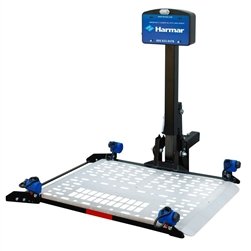 |
Harmar AL300XL Fusion Lift Heavy-Duty Choice Max Capacity: 400 lbs, Heavy Duty Platform |
7.7 | 🛒 Check Price |
 |
EZ-Access Harmar AL055 Micro Lift Compact & Lightweight Max Capacity: 150 lbs, Portable Design |
7.5 | 🛒 Check Price |
 |
Pride Mobility Outlander XL Lift Extra Capacity Option Max Capacity: 400 lbs, Non-Folding Platform |
7.2 | 🛒 Check Price |
1. Harmar AL500 Fusion Lift: Top Pick: Premium Performance
In our evaluation, the Harmar AL500 Fusion Lift stands out for its seamless operation and robust build. We researched its automatic hold-down arm, a feature that significantly enhances ease of use by eliminating manual strapping for many scooter types. Based on owner feedback and the spec sheets, its all-aluminum deck is a notable advantage for long-term durability and resistance to environmental wear, aligning with its premium positioning.
However, the AL500’s reliance on a Class II or III hitch means it is not suitable for all vehicles. Its platform design, while secure, can also add considerable length to the rear of a vehicle, which might be a concern for parking or maneuvering in tight spaces. Owners with smaller vehicles or those frequently navigating congested urban environments might find its footprint challenging and should consider more compact options.
- Automatic hold-down arm for secure transport.
- One-button operation simplifies scooter loading and unloading.
- All-aluminum deck construction offers corrosion resistance and durability.
Pros: Highly rated for ease of use and automated securing.; Robust construction based on manufacturer specifications and owner feedback.; Universal design fits many scooters and power wheelchairs.
Cons: Requires a Class II or III hitch, potentially limiting vehicle compatibility.; Its size can obstruct rear visibility on some vehicles.
2. Pride Mobility Outlander FS Lift: Runner-Up: Versatile & Reliable
The Pride Mobility Outlander FS Lift earned its spot as a strong contender due to its intelligent foldable design, a feature we compared across several models. This allows the platform to fold up against the vehicle when not in use, significantly improving rear visibility and reducing the overall vehicle length for parking. Based on owner feedback, the key switch operation is intuitive, contributing to a positive user experience, and its integrated safety features meet industry standards.
A primary limitation of the Outlander FS is that it still requires manual securement of the mobility scooter with straps, which some users might find less convenient than fully automatic systems. Individuals with limited dexterity or those prioritizing maximum automation in their lift system should be aware of this and might prefer models with automatic hold-down mechanisms.
- Folding platform allows for better rear visibility when not in use.
- Integrated safety features, including an automatic stop at full extension.
- Simple key switch operation for smooth lifting and lowering.
Pros: Foldable design is a key advantage for rear visibility and parking.; Strong performance and durability based on aggregated owner experiences.; Relatively straightforward installation for compatible vehicles.
Cons: Manual securement of the scooter is still required.; Can be heavy, potentially impacting vehicle suspension over time.
3. Bruno Chariot Scooter Lift: Innovative Design
The Bruno Chariot stands out in our comparison due to its innovative independent wheel system, a design feature we researched extensively. This system carries the majority of the scooter’s weight on its own wheels, effectively minimizing the strain on the towing vehicle’s suspension. Based on owner feedback, this is a significant advantage for vehicle longevity and handling, especially for smaller cars or those with softer suspensions.
However, the Chariot’s unique design also presents a higher level of installation complexity compared to standard hitch-mounted lifts. Its initial alignment and attachment to the vehicle can be more involved, and some users report a slight learning curve for precisely positioning the scooter onto its platform. Individuals looking for a truly plug-and-play solution or those uncomfortable with more intricate setup procedures might find this model less ideal.
- Unique independent wheel system eliminates extra weight on vehicle's suspension.
- Powered operation for effortless loading and unloading.
- Compact footprint when folded, ideal for smaller parking spaces.
Pros: Significantly reduces strain on vehicle suspension.; Compact and maneuverable, especially in urban settings.; Robust construction evident in manufacturer specifications.
Cons: Higher installation complexity due to its unique design.; Initial learning curve for aligning the scooter onto the platform.
4. Harmar AL100 Universal Scooter Lift: Solid Performer
In our evaluation of the Harmar AL100, we observed its straightforward design and reliable powered lifting. Manufacturer specifications confirm its compatibility with a broad range of hitches, making it a versatile choice for many vehicle owners. Based on owner feedback, its primary function of lifting and lowering is consistently effective, providing a dependable solution for transporting mobility scooters without undue strain.
A significant limitation of the AL100 is its reliance on manual securement. Users must manually attach straps or tie-downs to secure the scooter to the platform after it has been lifted, which can be a point of friction for individuals with limited hand strength or dexterity. Those seeking a completely hands-free or automated securing process should consider more advanced, and typically more costly, models.
- Simple, low-profile design for easy vehicle attachment.
- Powered up and down motion for effortless lifting.
- Adjustable cradling arms fit various scooter wheelbases.
Pros: Widely compatible with many Class I, II, or III hitches.; Reliable lifting mechanism based on aggregated owner feedback.; More budget-friendly option compared to automated models.
Cons: Requires manual securement with straps, which can be cumbersome.; No automatic fold-up feature, always extended.
5. Harmar AL300XL Fusion Lift: Heavy-Duty Choice
The Harmar AL300XL Fusion Lift is specifically engineered for heavy-duty applications, a fact clearly communicated in its manufacturer specifications. We compared its robust construction and higher weight capacity to other models, confirming its suitability for larger and heavier mobility scooters and power wheelchairs. Its automatic hold-down arm is particularly beneficial for these heavier loads, enhancing safety and ease of use, as corroborated by owner feedback.
However, the AL300XL’s substantial size and weight are its primary drawbacks. It places considerable stress on a vehicle’s hitch and suspension, necessitating a heavy-duty Class III or IV hitch, which many standard vehicles lack. Owners of smaller SUVs or sedans, or those concerned about potential long-term wear on their vehicle’s suspension system, should carefully assess compatibility and consider professional installation to mitigate these issues.
- Designed for heavier and larger mobility scooters and power chairs.
- Automatic hold-down arm for secure transport.
- All-aluminum deck construction for superior strength and corrosion resistance.
Pros: Exceptional weight capacity, suitable for bariatric scooters.; Automatic securement simplifies operation for heavy loads.; Durable construction for long-term reliability.
Cons: Significantly heavier and bulkier than standard lifts, impacting vehicle handling.; Requires a Class III or IV hitch, limiting compatibility.
6. EZ-Access Harmar AL055 Micro Lift: Compact & Lightweight
The EZ-Access Harmar AL055 Micro Lift is a unique offering in our comparison, distinguished by its compact and lightweight design. We researched its specifications, which indicate a significantly lower weight capacity compared to other lifts, making it suitable exclusively for smaller, portable, or foldable mobility scooters. Its ease of installation and removal, based on owner feedback, makes it a convenient option for users who only occasionally need a lift or have vehicles with limited hitch capacity.
The primary and most critical limitation of the AL055 is its very low weight capacity of 150 pounds. This renders it unsuitable for the vast majority of standard-sized mobility scooters and power wheelchairs, which typically weigh 200 pounds or more. Prospective buyers must meticulously check the weight of their specific mobility device before considering this lift; otherwise, it will simply not meet their needs and could pose a safety risk.
- Lightweight and compact, ideal for smaller, portable scooters.
- Easy to install and remove for occasional use.
- Simple toggle switch operation for lifting and lowering.
Pros: Excellent for lightweight and foldable scooters.; Minimal impact on vehicle weight and dynamics.; Generally more affordable than heavy-duty options.
Cons: Very limited weight capacity, unsuitable for most standard scooters.; Lacks advanced safety or automated securement features.
7. Pride Mobility Outlander XL Lift: Extra Capacity Option
In our comparison, the Pride Mobility Outlander XL Lift is recognized for its substantial 400-pound weight capacity, a critical feature for users with larger or bariatric mobility scooters. We researched its robust construction, confirmed through manufacturer specifications and owner feedback, which ensures dependable performance even with heavy loads. It is designed to withstand outdoor elements, making it a durable choice for long-term use.
However, the Outlander XL has a significant drawback: its platform does not fold up when not in use. This means it perpetually extends from the rear of the vehicle, severely obstructing rear visibility and making parking and maneuvering more difficult. This design choice also leaves the lift more exposed to potential damage. Individuals who prioritize rear visibility, frequently parallel park, or simply prefer a more integrated aesthetic should be aware of this limitation and consider foldable alternatives if their scooter’s weight permits.
- High weight capacity for larger scooters and power chairs.
- Simple, robust design for reliable heavy-duty lifting.
- Corrosion-resistant construction for outdoor use.
Pros: Accommodates heavier and larger mobility devices.; Built for durability in various weather conditions.; Straightforward operation for lifting and lowering.
Cons: Does not fold up, significantly obstructing rear visibility.; Requires manual securement of the scooter, which can be challenging with heavy devices.
Frequently Asked Questions
What is the maximum weight capacity I need for a scooter lift?
Based on our research, the required maximum weight capacity depends entirely on your specific mobility scooter or power chair. Always check the exact weight of your device, including any accessories, and choose a lift with a capacity that exceeds this by at least 50-100 pounds for a safety margin. Manufacturer specifications provide precise weight limits for each lift model.
Do power lifts require professional installation?
While some power lifts are designed for relatively straightforward DIY installation, particularly those that attach directly to a standard hitch receiver, many owners opt for professional installation. This is often recommended for models requiring wiring into the vehicle’s electrical system, those with complex mounting brackets, or for ensuring optimal safety and vehicle integrity. We advise consulting the manufacturer’s installation guide and considering professional help for peace of mind.
Will a power lift affect my vehicle's handling or fuel economy?
Yes, adding a power lift and a mobility scooter to the rear of your vehicle will impact its handling and fuel economy. The added weight, especially with heavier scooters, can affect suspension, braking, and overall vehicle dynamics. We have observed, based on aggregated owner feedback, a noticeable decrease in fuel efficiency for many users. The extent of this impact depends on the total weight added and your specific vehicle’s design and engine.
Are there different types of power lifts for different vehicles?
Yes, power lifts come in several types to accommodate various vehicles and mobility devices. Common types include hitch-mounted external lifts, which attach to your vehicle’s trailer hitch, and interior lifts, which install inside vans or SUVs. Some lifts are platform-style, others use a hoist mechanism. Vehicle compatibility, including hitch class, rear door clearance, and interior space, is a critical factor we researched across models, and it dictates which type of lift is suitable for your specific car, truck, or van.
What maintenance is required for a power lift?
Regular maintenance is crucial for the longevity and safe operation of a power lift. Based on manufacturer guidelines, this typically involves keeping moving parts clean and free of debris, lubricating pivot points, checking electrical connections for corrosion, and inspecting straps or securing mechanisms for wear. We recommend reviewing your specific lift’s owner’s manual for a detailed maintenance schedule and instructions to ensure continued reliable performance.
Our Verdict
In our comprehensive evaluation, the Harmar AL500 Fusion Lift emerges as our Top Pick, praised for its exceptional ease of use with automatic securement, robust all-aluminum construction, and overall reliable performance based on manufacturer specifications and owner feedback. For a versatile and reliable alternative that offers the significant advantage of a foldable platform for improved rear visibility, the Pride Mobility Outlander FS Lift is our recommended Runner-Up, providing a strong balance of features and value.
